
Prosthodontists Data & Contact Lists
Prosthodontist data for dental prosthetics specialists including implant, crown, and denture providers.
How Big Is the Prosthodontist Market for Outreach?
The American College of Prosthodontists puts the US specialty at only a few thousand practitioners, a fraction of the 200,000+ professionally active dentists counted by the ADA Health Policy Institute. For a vendor selling implant systems, milling units, or premium ceramics, that small universe is the point. Each prosthodontist controls more restorative and laboratory spend than a typical general dentist, and a complete, correctly coded national list fits in a single account executive's book.
What NPI specialty classifications identifies prosthodontists?
Prosthodontics carries the dental specialty classifications 1223P0700X in the NPPES file. The code is where a build starts, and where most generic databases go wrong in both directions. Some prosthodontists registered under the general dentist code (122300000X) during residency and never updated the record, so a code-only pull misses them. Meanwhile general dentists who market implant or denture services sometimes appear in commercial databases coded as prosthodontists, so the same pull includes people who never completed the residency. We check the credential itself, beyond the code, against board and program signals before a record makes the file. Our walkthrough on verifying NPI numbers in bulk shows how to run that kind of check on any vendor's list. Source: CMS NPPES files.
Which fields matter to which buyers?
| Buyer | Field that decides fit |
|---|---|
| Implant and full-arch system makers | Implant and full-arch case focus, private vs academic setting |
| Verify the measured value and observation date before use. | In-house digital lab status and current systems |
| Ceramic and material suppliers | Case complexity signals and lab relationships |
| Digital design services | Practices outsourcing design work rather than running a lab |
None of these fields exists in the NPI file. They come from practice websites, lab directories, and program rosters, read record by record. That per-record work is affordable at this specialty's scale precisely because the universe is small.
Where can you verify prosthodontists for free?
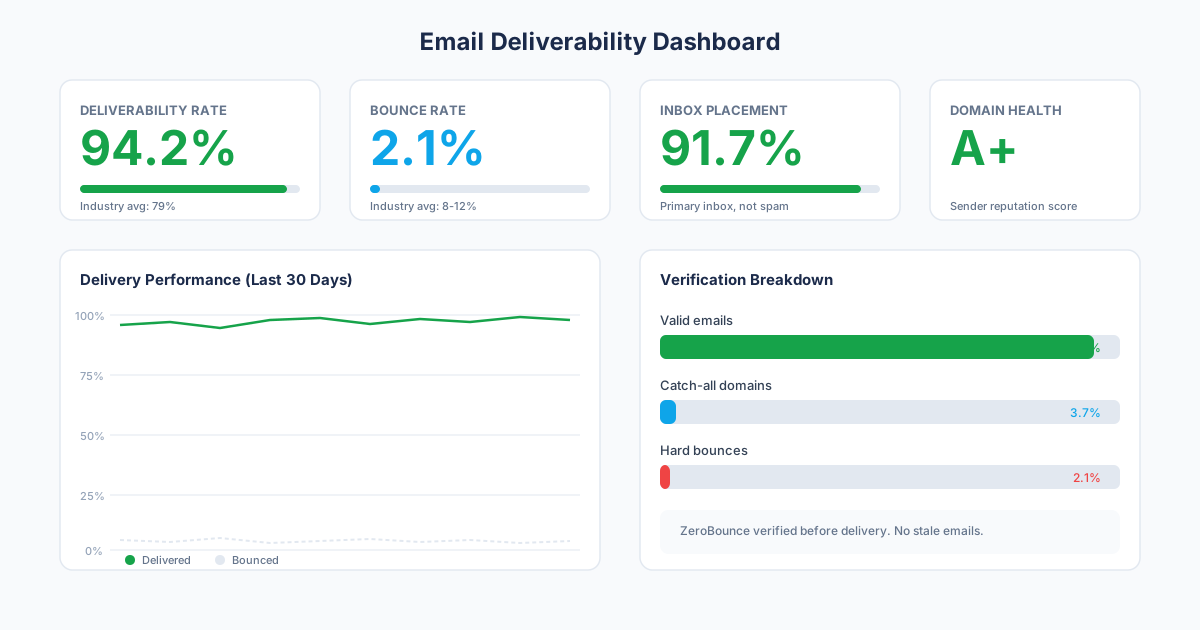
The CMS NPI Registry confirms enumeration and registered classification for any individual. The American College of Prosthodontists runs a patient-facing directory that is a public signal of active specialty practice. Neither source gives you lab capability, case focus, or a working owner email. Provyx builds each prosthodontist list at order time, checks NPI status against CMS, and validates every email through ZeroBounce before delivery. Projects start at $2,500 with no annual contract, and the delivery date is confirmed with your scope. Teams comparing options can start with our healthcare data vendor comparison or browse the wider dental provider data hub for adjacent specialties.
The Prosthodontists Market
Prosthodontists handle the most complex restorative and implant dentistry, from full-arch reconstruction to advanced crowns, bridges, and dentures. It is a small, high-value specialty whose cases carry significant material, implant, and laboratory spend. Many prosthodontists invest in digital workflows and in-house labs, which makes them early adopters of CAD/CAM and digital-restorative technology. Demand is steady and tied to complex restorative and implant needs across dentistry.
Where Prosthodontists Concentrate
Prosthodontists concentrate in metros and around the dental schools that train them, since the specialty is small and academically anchored. High-complexity referral cases flow toward the practices and institutions equipped for them. Private prosthodontists cluster where the patient base supports premium restorative work. Targeting by metro and academic affiliation matters more than population for a specialty this small.
Who Controls Prosthodontists Purchasing Decisions
In a private practice the prosthodontist owner controls purchasing, often making technology decisions personally given the complexity of the work. In academic settings, lab and department contacts handle equipment, with institutional procurement involved. The specialist's deep involvement in materials and workflow makes them an unusually hands-on buyer. Reaching the owner-specialist directly is usually the path.
What Makes Prosthodontists Data Hard to Get Right
The population is small enough that generic databases often miscode prosthodontists as general dentists, so a clean pull requires verifying the specialty record by record. Whether a practice runs an in-house digital lab, which determines fit for CAD/CAM and material vendors, is a capability with no code. Identifying the true specialists and their lab capability are the core data challenges.
The Data Fields That Matter Most for Prosthodontists
Buyers want verified prosthodontics credentials, implant and full-arch volume, whether the practice has an in-house digital lab, academic versus private setting, and the owner contact. The CAD/CAM and material systems in use matter to manufacturers. Because miscoding is common, credential verification and lab capability are the fields that make this list trustworthy.
How Provyx Keeps Prosthodontists Data Current
What goes stale is technology and workflow, because prosthodontists adopt new CAD/CAM systems, add or expand in-house labs, and shift case mix. Miscoding in source data also has to be corrected each build. Provyx rebuilds each list at order time and works to verify the prosthodontics credential and confirm current lab capability, so technology and material vendors reach the right specialists.
Who Buys Prosthodontists Data
How Teams Use Prosthodontists Data
An implant maker builds a list of high-volume full-arch specialists. A CAD/CAM vendor reaches practices running or expanding an in-house digital lab, and a material supplier targets complex restorative practices. A design-service company sells to specialists outsourcing digital design. Each use case depends on verified credentials and lab capability that a miscoded general-dentist list lacks.
What Accurate Prosthodontists Data Is Worth
Verified, lab-aware targeting is what the data is worth, because pitching advanced CAD/CAM or implant systems to a miscoded general dentist wastes a high-value lead. Reaching true specialists with the right technology fit converts far better in a small, high-spend specialty. For premium dental technology, the precision of a verified list pays for itself on a single closed account.
Outreach That Works for Prosthodontists
Reach the owner-specialist with technically credible messaging about workflow, precision, and case outcomes, since prosthodontists are sophisticated, hands-on buyers. Email and professional networks outperform generic outreach. Lead with how a product fits complex restorative and implant work rather than generic dental benefits. Outreach that demonstrates technical understanding lands far better with this audience.
When to Reach Prosthodontists
Technology buying aligns with practice investment cycles and the decision to build or expand an in-house lab. New CAD/CAM or implant-system launches and digital-workflow transitions are strong triggers. Reaching a specialist as they invest in technology or expand lab capability beats an untimed pitch.
Common Mistakes When Targeting Prosthodontists
Trusting source coding that blurs prosthodontists into general dentistry is the central mistake, since it pollutes the list. Pitching advanced technology to miscoded general dentists is the second. Using generic dental messaging on a sophisticated specialist is the third. The fourth is ignoring in-house lab capability, which determines fit for the highest-value technology sales.
The Bottom Line on Prosthodontists Data
For prosthodontists, verify the credential record by record and flag in-house lab capability, because miscoding is common and lab status decides technology fit. Reach the owner-specialist with technically credible messaging, and time it to investment and lab-expansion cycles. A verified, lab-aware list turns a small, high-value specialty into precise, high-conversion targets.
How to Segment Your Prosthodontists List
- Implant and full-arch volume
- In-house digital lab
- CAD/CAM systems used
- Academic vs private
- Verified specialty credential
- Region
Data Available for Prosthodontists
- Provider name and credentials
- NPI number and specialty classifications
- Practice name and address
- Direct email address
- Phone number (direct line where available)
- Practice size and type
- State license information
How It Works
- Tell us what you need: Specify the prosthodontists subtypes, geography, and any other filters for your target list.
- We build your list: We pull matching records from our verified database and deliver a clean CSV or Excel file.
- Start your outreach: Use the data for email campaigns, direct mail, phone outreach, or CRM enrichment.
Frequently Asked Questions
How many records are in a prosthodontists email list?
A complete national build runs to a few thousand records, since the American College of Prosthodontists counts only a few thousand practitioners in the US. Regional builds are much smaller, often a few dozen to a few hundred records clustered around metros and dental schools. Provyx sizes the exact universe for your scope before you commit.
What does a prosthodontist email list cost?
Pricing depends on geography, record fields, and whether the project includes lab capability, equipment signals, or additional decision-maker research. Define those requirements first; Provyx then provides a fixed project quote before work begins. Source: https://getprovyx.com/pricing/.
What specialty classifications do prosthodontists use in the NPI registry?
Prosthodontics is coded 1223P0700X in the NPPES file. Code-only pulls miss specialists still registered under general dentistry and include general dentists miscoded as specialists, so we verify the credential itself rather than trusting the code alone. Source: CMS NPPES files.
How do you avoid miscoding prosthodontists as general dentists?
Generic databases often blur this small specialty into general dentistry, so we verify the prosthodontics credential record by record rather than trusting a single source's coding.
Can you find practices with in-house digital labs?
Where a practice markets in-house CAD/CAM or a digital lab, we flag it so vendors can prioritize offices invested in digital restorative workflows.
Can you focus on high-volume implant and full-arch specialists?
Where procedure signals are available, we flag implant and full-arch focus so implant and material vendors can prioritize the highest-value practices.
Can you identify the CAD/CAM systems in use?
Where a practice discloses its systems, we capture them so technology vendors can target switch or expansion opportunities.
Can you separate academic from private specialists?
Yes. We distinguish academic and private settings, since the buyer and the procurement process differ between them.
How current is the technology data?
We rebuild each list at order time and work to confirm current lab capability and systems, since prosthodontists adopt new technology and expand labs over time.
Can you reach the owner-specialist directly?
Yes. Prosthodontists are hands-on buyers, so we attach the owner-specialist contact for technology and material outreach.
Can you scope a list to one region?
Yes. We can scope a build to a region and segment by volume and lab capability so a technology team works the right accounts.
Can you find prosthodontists outsourcing digital design?
Where a practice works with outside design or milling services rather than an in-house lab, we work to flag it, since design-service companies target exactly those practices.
Can you flag practices doing high volumes of full-arch cases?
Where case-mix signals are available, we flag full-arch and complex restorative focus so implant and material vendors can prioritize the highest-value specialists.
Can you reach academic prosthodontists for education or research?
Yes. We can isolate academic prosthodontists for continuing-education, key-opinion-leader, or research outreach, which follows a different path than private-practice sales.
Can you combine credential verification with lab-capability filters?
Yes. We verify the prosthodontics credential and layer in in-house-lab status, so technology vendors reach verified specialists with the workflow their product fits.
How accurate is the prosthodontists contact data?
Our prosthodontists data is verified against multiple sources including the CMS NPI Registry, state licensing boards, and commercial databases. We continuously verify records to catch moves, closures, and contact changes.
Can I filter prosthodontists data by geography?
Yes. You can filter prosthodontists records by state, metro area, ZIP code, or custom radius. We can build targeted lists for specific regions or provide nationwide coverage.
How often is Prosthodontists data updated?
We verify prosthodontists records on a continuous basis. Our system cross-checks the CMS NPI Registry for status changes, monitors practice websites for updated contact info, and flags records when providers move, retire, or change practice groups. You won't get a static list that goes stale after a month.
Is the prosthodontists data verified?
Where prosthodontists hold NPIs, records are verified against the CMS NPI registry and triangulated with state licensing boards and current public records. For prosthodontists that operate as businesses without an NPI, we source from business records and confirm against live signals at build time.
Can you scope a prosthodontists list to a specific geography?
Yes. We can scope a prosthodontists build to a single state, a metro, a county, or a custom radius around a location, so a territory or local team works only the area that matters to them.
What fields can you include for prosthodontists?
Beyond name and practice address, we can include the owner or decision-maker contact, NPI and classification where applicable, phone, website, and the segmentation attributes that matter for prosthodontists. Every contact includes a validated email, and verified mobile numbers are available as an add-on.
Related Resources
Sources and References
Get the Provider Data You Need
Tell us what you're looking for. We'll build a custom list matched to your target market.
Trusted by healthcare sales teams, medical device companies, and health IT vendors across the US.