
B2B Healthcare Lead Generation with Provider Data
Most B2B healthcare lead generation advice is actually about patient acquisition. If you sell to providers, practices, or health systems, you need a different playbook built on provider data infrastructure.
Updated September 2026
TLDR
B2B healthcare lead generation targets the people and organizations buying healthcare products. The program combines credible inbound content, focused outbound sequences, and account-based outreach built on verified provider data. Better data gives sales more viable conversations and keeps paid, outbound, and ABM spend aimed at actual buyers.
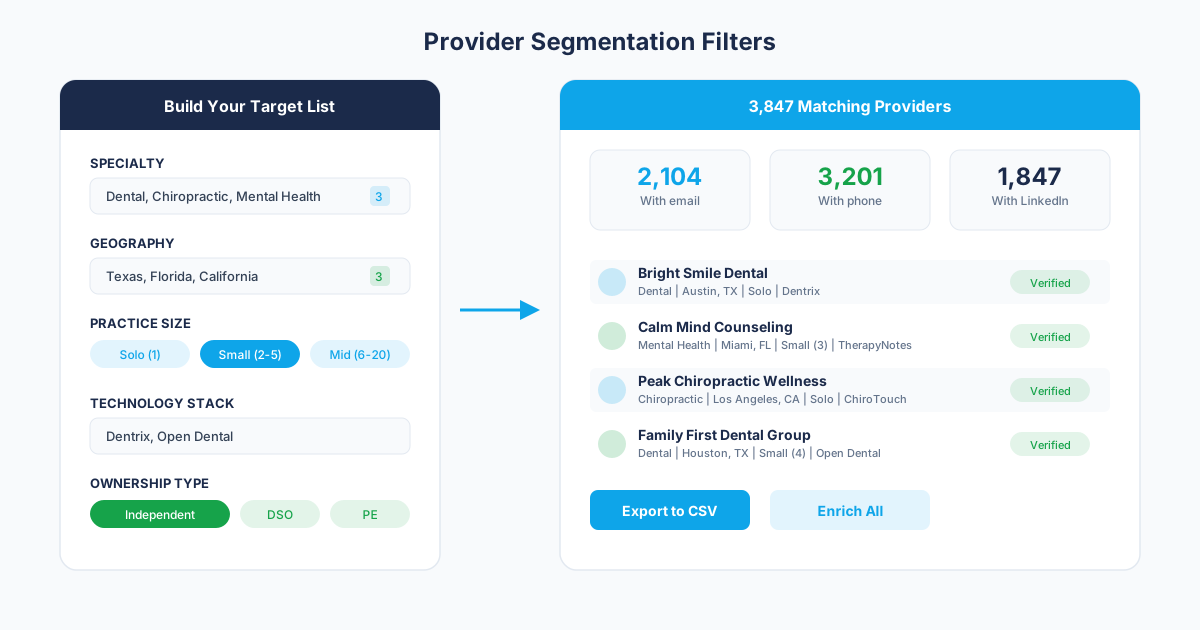
What Is B2B Healthcare Lead Generation?
B2B healthcare lead generation has an annoying search problem. Most advice under the broader healthcare lead generation label focuses on patient acquisition: search ads, appointment requests, reviews, and getting a patient through a provider's front door.
That advice helps provider organizations fill schedules. Companies selling software, devices, services, or supplies to providers need a program built around a different buyer, a longer purchasing process, and provider data that sales can trust.
Healthcare buyers carry full calendars, layered approval processes, and crowded inboxes. A form fill or webinar registration can be useful, but it rarely carries the whole pipeline.
Your program needs to identify the right organizations, find the people who influence a purchase, and give sales a credible reason to start a conversation. Verified provider data sits underneath every part of that work.
B2B healthcare lead generation is the work of finding and engaging physicians, practice administrators, health system executives, clinical leaders, and other decision-makers who may buy your product.
The audience changes with the product. A clinical software company may need specialty physicians and operational leaders. A device manufacturer may need clinical champions, supply-chain stakeholders, and executives who control capital spending. A services business may sell through administrators who care about utilization, staffing, reimbursement, or workflow.
That makes broad contact acquisition a weak starting point. A growth team needs a market definition that reflects who experiences the problem, who evaluates a solution, who manages implementation, and who approves spending.
Provider-side selling also runs through organizations, not isolated people. A physician may love a product and still lack authority to buy it. An administrator may own the contract but need clinical support. A health system executive may care most about integration risk and rollout burden.
The job is to map those relationships before sales starts improvising. Good healthcare lead generation creates a path into an account. It gives the team enough context to make the outreach sound like it came from someone who understands the care setting.
That is why healthcare provider data needs more than names and email addresses. The useful record includes specialty, organization, location, role, and enough verification to keep outreach from drifting into dead ends.
Provyx maintains 2.4M+ NPI-verified provider contacts in the Provyx dataset. A verified market foundation of that size gives a team room to define an audience with precision, rather than accepting whatever an old list happens to contain.
Provider-Side vs Patient Acquisition
Patient acquisition and provider-side lead generation can share channels. They do not share the same operating logic.
| Factor | Patient acquisition | Provider-side lead generation |
|---|---|---|
| Primary audience | People seeking care | Physicians, administrators, executives, and clinical stakeholders |
| Core objective | Drive appointments and care access | Create qualified buying conversations |
| Buying context | Individual decision | Organizational evaluation and approval |
| Useful targeting data | Location, service need, insurance, intent | Specialty, organization, role, care setting, and verified contact details |
| Common channels | Search, local listings, reviews, referral networks | Inbound content, outbound sequences, events, partnerships, and ABM |
| Conversion event | Appointment request or call | Sales conversation, account engagement, evaluation, or purchase process |
| Sales motion | Often direct and immediate | Usually consultative, account-based, and multi-stakeholder |
| Compliance focus | Patient communications and consumer privacy | Promotional claims, truthful advertising, state marketing rules, and procurement requirements |
The patient-acquisition trap shows up when a B2B company adopts consumer tactics without changing the underlying audience model. It may produce activity. It may even produce leads. Sales then discovers that those leads sit outside the buyer group, lack purchasing authority, or belong to organizations that could never use the product.
Provider-side work starts with a tighter question: which organizations have the conditions that make this offer useful? That question leads to better account selection, more relevant content, and outreach that carries a reason for being in the recipient's inbox.
A practice management platform might focus on organizations with a certain clinical model. A device company may need a specialty, a care setting, and an operational use case. A revenue-cycle service may need organizations dealing with a particular administrative burden.
Those distinctions sound mundane. They decide whether your sales team spends the week talking to likely buyers or climbing out of a pile of vague form fills.
Build the Program Around Provider Data
Provider data is the infrastructure layer under inbound, outbound, and account-based marketing. If the data is inaccurate, every channel inherits the error.
Inbound content needs a clear audience to attract. Outbound needs a verified way to reach that audience. ABM needs account records that identify the clinical and operational people who will shape a purchase.
Start with the account. Define the provider organization, care setting, specialty mix, and operational condition that fit your product. Then map the people who use the product, influence the evaluation, handle procurement, and carry executive responsibility.
This keeps marketing and sales from pursuing separate versions of the market. Marketing can build content around the problems that matter inside the account. Sales can use the same account definition to decide where personal outreach belongs.
The best data programs also make room for movement. Providers change organizations. Administrators take on new roles. Health systems acquire practices, centralize purchasing, or split responsibilities across departments. A list that looked acceptable when it entered the CRM can age into a liability.
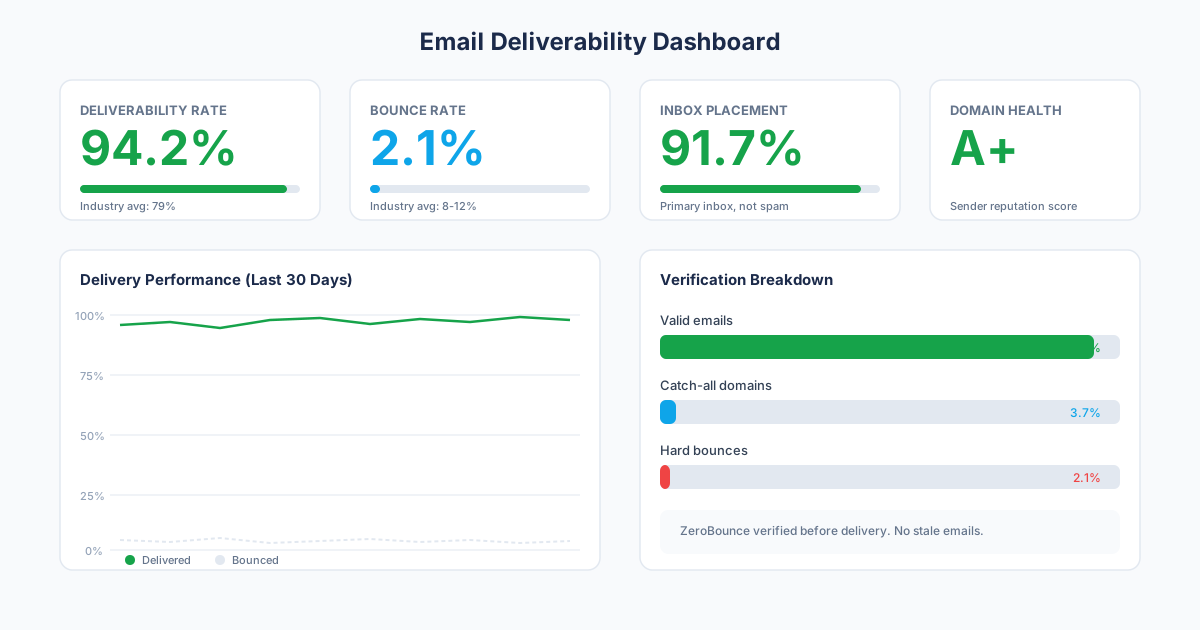
That is why verification belongs in the operating model, not in a cleanup project that happens after a poor quarter. Sales reps quickly lose faith in campaigns that create bounced emails, disconnected calls, and contacts who have no reason to care.
A strong provider-data workflow gives every team a shared answer to basic questions: who is this person, where do they work, what role do they hold, and why does this account belong in the program?
The Data Infrastructure Math
Data quality becomes easier to defend when you translate it into activity that sales can see. Deliverability and connect rates may sound operational, but they determine how much expensive work reaches a human being.
A 5% deliverability gain on 10,000 sends is 500 more inboxes. Those inboxes are where your positioning, content, and sales effort either get a chance or disappear before the conversation begins.
A 10% connect-rate gain on 1,000 dials is 100 more conversations. A team can spend months improving scripts while overlooking the fact that the calling list gives representatives too few valid paths to a real prospect.
This is where bad data gets expensive. A rep working a weak list spends time researching accounts that no longer fit, leaving messages for people who moved roles, and correcting records that should have been reliable before the campaign launched.
The downstream effects are worse than wasted activity. Teams begin blaming messaging, offer quality, or channel selection because those are easier to see. The list remains invisible until enough campaign results pile up to make the problem obvious.
Clean data also gives you better experimentation. When the audience is stable, a weak response tells you something useful about the message, timing, or offer. When the audience is unreliable, the result is mud. You cannot tell whether the campaign missed because the idea was weak or because the recipients were wrong.
This matters most in healthcare because the total reachable market can be narrower than a generic business category suggests. A company selling into a specific specialty, care setting, or workflow needs enough accuracy to avoid exhausting the relevant market with forgettable outreach.
The practical standard is simple: each record should help a seller decide whether to contact the account and what to say when they do. If it cannot answer those questions, it is a directory entry, not lead-generation infrastructure.
Which Healthcare Lead Generation Strategies Work Best?
Three strategies carry most provider-side programs: inbound content aimed at a defined buyer, outbound sequences built on verified contacts, and account-based marketing that concentrates effort on organizations with a credible reason to buy. The teams that grow fastest run all three against the same account definition instead of treating them as separate campaigns.
Healthcare buyers do research before they respond. They also talk to peers, pay attention to risk, and hesitate when a vendor appears to misunderstand the clinical or operational environment.
Inbound content earns attention by helping the buyer frame a problem. It should speak directly to the workflow, financial pressure, compliance concern, or implementation burden your product addresses. Generic thought leadership tends to create generic leads.
The strongest content makes a specific reader feel understood. A practice administrator should recognize the operational problem. A clinical leader should see the patient-care implication. An executive should understand the commercial case without having to translate the message into their own environment.
Outbound works when it carries the same understanding into a personal conversation. A sequence should connect an account characteristic to a relevant point of view. It should not read like a mass email with a specialty inserted into the opening line.
That means segmentation has to be real. A message to an independent practice may need a different offer, proof point, and call to action than a message to a health system. Those organizations buy differently because they operate differently.
ABM pulls the account together. It gives marketing and sales a way to focus content, outreach, events, and executive attention on organizations with a credible reason to buy. In healthcare, that shared focus helps because the buyer group can spread across clinical, operational, financial, and technical functions.
Do not treat these channels as separate campaigns competing for credit. Inbound gives the market something useful to find and share. Outbound creates a direct path to people who fit. ABM keeps the team focused on the accounts where multiple stakeholders can move an evaluation forward.
The question is whether each channel reinforces the same account thesis. If they point at different audiences, pipeline becomes a collection of unrelated activity.
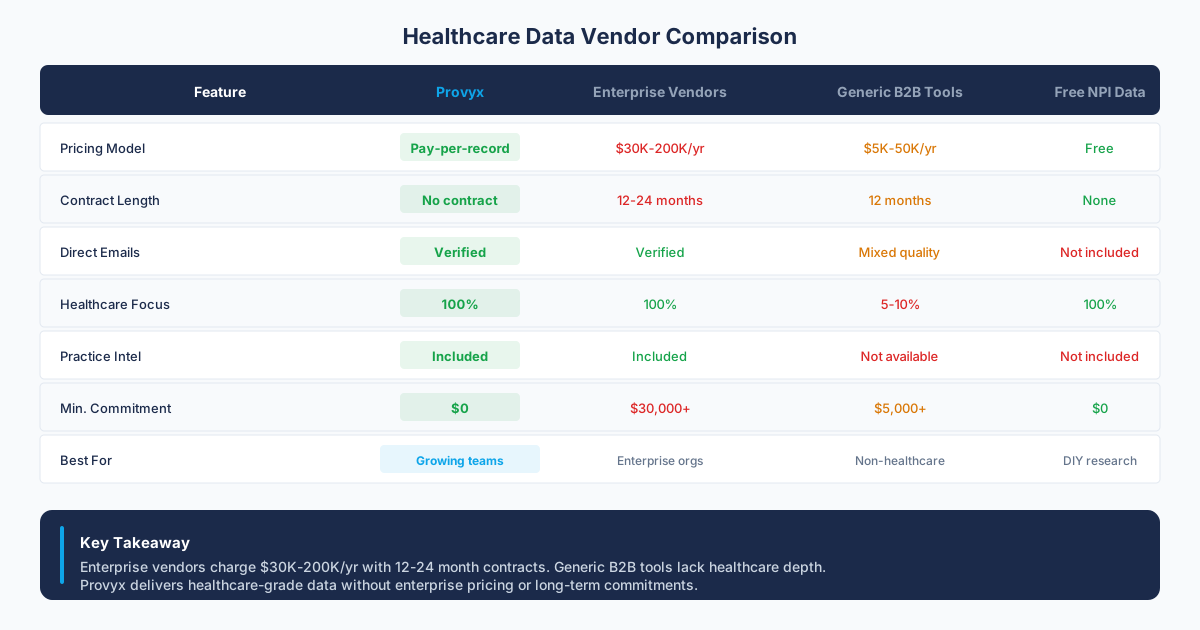
What Does Provider Data Cost?
Pricing matters because provider data is often evaluated as a line item while the cost of weak targeting disappears across payroll, media, and sales activity.
Provyx lists $2,500 for 2,500 verified contacts ($1.00 per contact) on the starter tier. That is a useful benchmark for a focused market test, a specialty campaign, or an initial account list that needs verification before sales begins outreach.
The larger tier lists $5,000 for 10,000 verified contacts ($0.50 per contact) on the growth tier. The per-contact difference reflects a familiar operating reality: teams planning a broader provider-data motion can spread the fixed work of audience definition, verification, and campaign setup across more records.
The right purchase depends on the sales motion. A company with a narrow target market may need a smaller, more precise contact universe. A company selling across specialties or provider segments may need broader coverage and a clear segmentation plan before any records enter a sequence.
Do not buy volume before defining use. A large dataset without an account model turns into a large cleanup project. A smaller dataset with tight fit criteria can produce better sales behavior because every contact has a known role in the campaign.
Pricing should also include the cost of delay. If sales is waiting on research, correcting records by hand, or working around invalid contact information, the apparent savings from cheap data vanish inside the operating budget.
You can review provider data pricing alongside the market definition before deciding what coverage makes sense. The useful question is not how many contacts you can acquire. It is whether the team can turn those contacts into relevant, credible conversations.
Compliance Shapes the Program From Day One
Healthcare marketing carries compliance requirements that should shape the program before a campaign reaches the copy stage. The FDA governs promotional claims for regulated products. The FTC requires advertising to be truthful and supported. State-level marketing regulations can add further constraints.
Those rules affect the claims you make, the proof you need, and the approval process around campaign materials. A healthcare lead-generation program works better when compliance has a defined role in planning instead of appearing as a late-stage obstacle.
The same goes for audience selection. A program aimed at providers needs clear boundaries around who receives communications and why. The team should know whether it is speaking to clinical users, operational buyers, procurement stakeholders, or a defined mix.
Content needs domain credibility. Healthcare readers can spot vague claims quickly because their work involves systems, patients, budgets, and risk. They do not need a vendor to explain that their time matters. They need a reason to believe the vendor understands the problem well enough to help.
That puts pressure on every asset. Case studies should describe the context that made the customer relevant. Product pages should explain the workflow. Outreach should avoid claims that legal or clinical review cannot support.
Compliance can improve the message when the team treats it as a discipline. It forces marketers to choose evidence, remove inflated language, and explain what the product does with enough specificity for a sophisticated buyer.
The real question is whether your program has built that discipline into the work before sales scales outreach.
How Do You Choose a Healthcare Lead Generation Company?
Start by figuring out which of three vendor categories you're actually shopping. Healthcare lead generation companies split into agencies that run campaigns for you, appointment-setting firms that sell booked meetings, and data vendors that supply the verified contact universe your own team works. They get compared as if they were interchangeable. They aren't, and the failure modes differ.
Agencies charge $5,000 to $15,000 per month for outbound management and take 60 to 90 days to show results. The good ones bring channel expertise and sending infrastructure you don't have to build. The weak ones run the same sequences for every client and burn your market with generic outreach. Ask any agency two questions before signing: where does your provider data come from, and can we keep the contact list if we part ways? An agency that rents you access to its list leaves you with nothing when the retainer ends.
Appointment-setting firms price per meeting, usually $300 to $1,000 each in healthcare. That model looks attractive until you audit who's showing up. Meeting quotas reward booked calendars, and a front-desk manager with no purchasing authority counts the same as a practice owner. If you test one, define who qualifies as a meeting in writing.
Data vendors sit underneath both. Whether you run outbound in-house or through an agency, the contact records determine what's possible. Our healthcare data vendor comparison walks through how the major sources differ on coverage, verification, and contract structure.
In-house programs built on verified data usually cost less than an agency retainer once a team exists to run them. One SDR plus a few thousand dollars in data and tooling runs well under a $10,000 monthly retainer, and the market knowledge compounds inside your company instead of the agency's.
Do Health Insurance and Home Health Leads Work the Same Way?
Mostly no, and the difference is worth understanding before you borrow tactics from those markets. Health insurance lead generation is a consumer business. Companies in that space buy intent data on individuals shopping for coverage, run call centers against aged internet leads, and operate under TCPA consent rules that don't apply to B2B provider outreach. If you sell software or services and went looking for "healthcare lead generation," insurance lead advice will point you at the wrong playbook entirely.
Home health is the interesting middle case. Acquiring patients for a home health agency is consumer marketing through physician referrals and hospital discharge planners. Selling to home health agencies is provider-side lead generation, and it follows everything in this guide. There are roughly 11,700 Medicare-certified home health agencies in the US per CMS, each with an administrator and a director of nursing who make purchasing decisions. The same account-definition, data-verification, and outreach logic applies, just with a different specialty filter.
The pattern repeats across senior care, behavioral health, and dental service organizations. Figure out whether you're acquiring patients or selling to the organizations that treat them. The second problem is the one provider data solves.
Turn Provider Data Into a Repeatable Motion
A repeatable B2B healthcare lead generation program begins with a defined market and ends with sales learning from real conversations. The steps in between need to preserve context.
Give marketing a clear account profile. Give sales a provider-data foundation they can trust. Give the buyer content and outreach that reflects the actual environment in which they work.
Then pay attention to the feedback that comes back. Which provider segments respond? Which roles create internal momentum? Which accounts have the problem but lack a workable buying path? Those answers improve the next campaign far more than a broader generic list.
The same feedback should influence content. If sales keeps hearing a specific concern around implementation, integration, procurement, or adoption, that concern belongs in the next resource. If a specialty responds to a particular use case, build a page that goes deeper rather than flattening the message for everyone.
Our provider data guides can help teams develop the market definition, outreach approach, and data standards behind that work.
Healthcare buying is relationship-heavy and operationally specific. The companies that win treat data quality, channel coordination, and credible domain knowledge as parts of the same system. Can your current program tell a seller why this provider, this organization, and this message belong together?
Frequently Asked Questions
How is B2B healthcare lead generation different from regular B2B lead gen?
Three main differences. First, the buyers are healthcare providers and practice administrators who are difficult to reach during business hours because they are seeing patients or managing clinical operations. Second, the buying cycle involves regulatory, clinical, and integration considerations that do not exist in general B2B. Third, standard B2B data tools (ZoomInfo, Apollo, etc.) have lower coverage and accuracy for healthcare providers compared to healthcare-specific data sources. These differences mean you need healthcare-specific data, timing, messaging, and channels.
What is a realistic meeting set rate from cold outbound to healthcare providers?
For well-targeted outbound with verified contact data, expect email-to-meeting conversion rates of 1-3% and phone-to-meeting conversion rates of 3-8% based on connected calls. These rates vary significantly by specialty, practice type, product category, and data quality. Teams with verified decision-maker data, specialty-specific messaging, and disciplined timing consistently achieve the higher end of these ranges. Teams using unverified lists with generic messaging often fall below 0.5% on email and 2% on phone.
Should healthcare B2B companies focus more on inbound or outbound lead generation?
Most healthcare B2B companies should lead with outbound and build inbound as a long-term investment. The addressable market for most healthcare products is finite and identifiable, which makes outbound highly efficient. Inbound works but takes 6-12 months to build momentum and produces lower volume in niche healthcare segments. The exception is companies selling broadly applicable products (e.g., general practice management software) to large buyer segments, where search volume is high enough to support an inbound-led strategy.
What is a lead in healthcare lead generation?
A lead is a person or organization that has shown a plausible path to buying from you, either by raising a hand (form fill, demo request, event signup) or by matching your target profile closely enough that outreach is justified. In provider-side healthcare, the useful unit is usually the account rather than the individual, because purchases run through practices and health systems with multiple stakeholders. A contact record only becomes a lead when it carries enough context (specialty, organization, role, verified contact details) for a seller to act on it.
What do healthcare lead generation companies charge?
Agencies that manage outbound campaigns typically charge $5,000 to $15,000 per month on retainer. Appointment-setting firms charge $300 to $1,000 per booked meeting in healthcare markets. Data vendors price per record or per project. Provyx charges $2,500 for 2,500 verified provider contacts on the starter tier, with delivery in 3-5 business days. Enterprise data platforms run $25,000 to $100,000+ per year on annual subscriptions. Which model fits depends on whether you need execution, meetings, or the contact foundation your own team will work.
How much should a healthcare B2B company budget for lead generation data?
Data costs depend on your target market size and outreach volume. A team running outbound to 5,000 provider contacts per quarter should budget based on project-based pricing from their data vendor, typically ranging from a few hundred dollars for basic NPI enrichment to several thousand for fully verified contact records with firmographics. Enterprise data platforms with annual subscriptions range from $25,000 to $100,000+ per year. Per-record vendors like Provyx offer a pay-as-you-go model that scales with your actual usage, which is typically more cost-effective for teams with defined target segments.
Sources and References
- Provyx B2B healthcare lead generation guide: 5% deliverability gain on 10,000 sends is 500 more inboxes
- Provyx B2B healthcare lead generation guide: 10% connect-rate gain on 1,000 dials is 100 more conversations
- Provyx: 2.4M+ NPI-verified provider contacts in the Provyx dataset
- Provyx pricing: $2,500 for 2,500 verified contacts ($1.00 per contact) on the starter tier
- Provyx pricing: $5,000 for 10,000 verified contacts ($0.50 per contact) on the growth tier
Related Resources
Get the Provider Data You Need
Tell us what you're looking for. We'll build a custom list matched to your target market.
Trusted by healthcare sales teams, medical device companies, and health IT vendors across the US.