
Healthcare Provider Contact Data: Direct Numbers
Direct-dial phone numbers, verified practice addresses, NPI records, and decision-maker names for healthcare providers across the United States.
Why Provider Contact Data Breaks Outbound Campaigns
Your sales team pulls a list of orthopedic surgeons in Texas. They start dialing. Half the numbers ring to a hospital switchboard. A quarter go to fax machines. The rest hit voicemails for providers who left that practice two years ago. Meanwhile, the mailers your marketing team sent last month are sitting in a pile at an address the practice vacated in 2022.
That is the default experience when you rely on a single data source for healthcare provider contact intelligence. The CMS NPI Registry is a solid starting point, but it only captures what providers self-report during enrollment and revalidation. Providers aren't required to update their phone numbers when they change, and many don't. State licensing boards carry different contact details than commercial databases, and neither one tells you who actually makes purchasing decisions at a group practice.
Bad contact data wastes time, inflates your cost per acquisition, tanks sender reputation when emails bounce, and burns through your SDR team's morale. If you're selling into healthcare, the accuracy of your provider contact data is the single biggest variable in whether outbound works or doesn't.
How Is Provider Contact Data Different From a Healthcare Email List?
An email list is one column of data. Provider contact data is the full record behind that column: the NPI number, the practice the provider works from today, the business phone that rings at the front desk, the person who owns the practice, and the source each field came from. When a campaign underperforms, the list tells you nothing. The record tells you which field failed and where it was sourced.
This matters most for specialty outreach. A purchased chiropractor email list gives you 40,000 addresses and no way to tell which ones belong to associates who left the clinic in 2023. A contact data pull for the same specialty starts from the NPI registry, confirms the practice still operates through business listings, and then attaches email as an add-on field with its own verification status. Bounce rates drop because the underlying entity was checked first, before anyone validated an inbox.
The same logic applies whether the target is chiropractors, dentists, or a niche segment like the buyers covered in our med spa owners contact list guide. Start from the provider record. Add channels on top.
What Does Provider Contact Data Cost?
Provyx projects start at $2,500 and are priced by record count and included fields. There is no annual license, no per-seat subscription, and no clawback of the data if you stop working with us. Most scoped lists deliver in 3-5 business days.
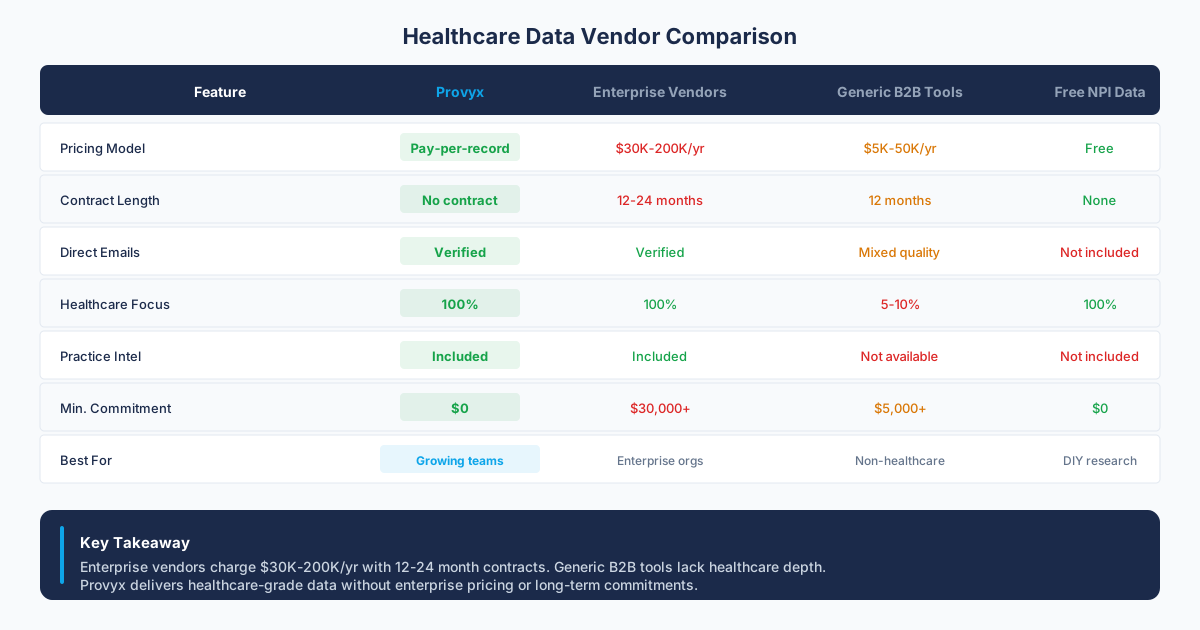
Enterprise healthcare data platforms price the same information differently. Annual contracts commonly run into five or six figures, and the license usually expires with the contract, so the data disappears when you stop paying. If you run two or three campaigns a year, a per-project purchase costs a fraction of a platform seat you use twice. If you prospect every week across a dozen specialties, a platform can make sense. Our healthcare data vendor comparison walks through the pricing math vendor by vendor.
Which Fields Are Standard and Which Are Add-Ons?
The base record covers the practice and the people who run it. Direct email and mobile phone are add-ons because they decay faster and need their own validation pass before delivery.
| Field | Tier | How it's verified |
|---|---|---|
| NPI number and specialty labels | Standard | Matched against the CMS NPI Registry at build time |
| Practice name and business address | Standard | Cross-checked across NPI, state licensing, and business listings; USPS-standardized |
| Business phone, fax, website | Standard | Confirmed active; call-center routing flagged in the record |
| Owner and decision-maker name, title, LinkedIn | Standard | State business registrations, NPI enumeration data, and web intelligence |
| Direct email address | Add-on | Validated through ZeroBounce before delivery |
| Mobile phone number | Add-on | Line-type and validity checked through Twilio Lookup |
How Do Teams Use Provider Contact Data for Lead Generation?
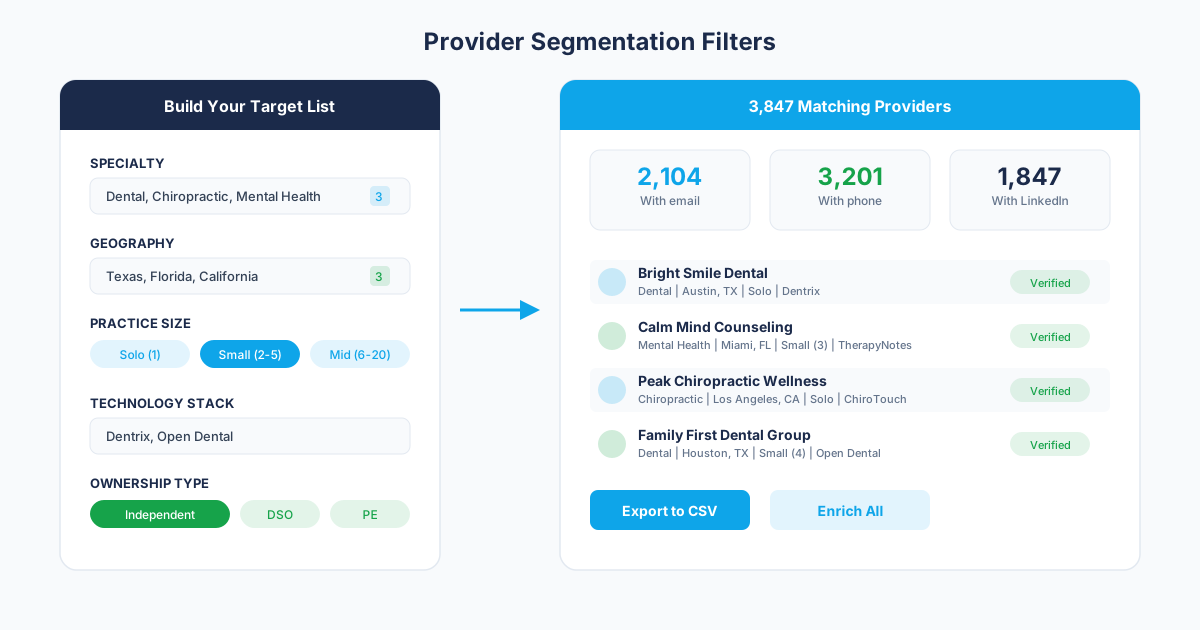
The pattern that works: define a tight segment, pull verified records for that segment only, then run one channel at a time against it. An EHR vendor selling to independent primary care in the Southeast doesn't need 200,000 physician records. It needs the 6,000 practices that match its ICP, with owner names attached, so the first call goes to the person who signs the contract.
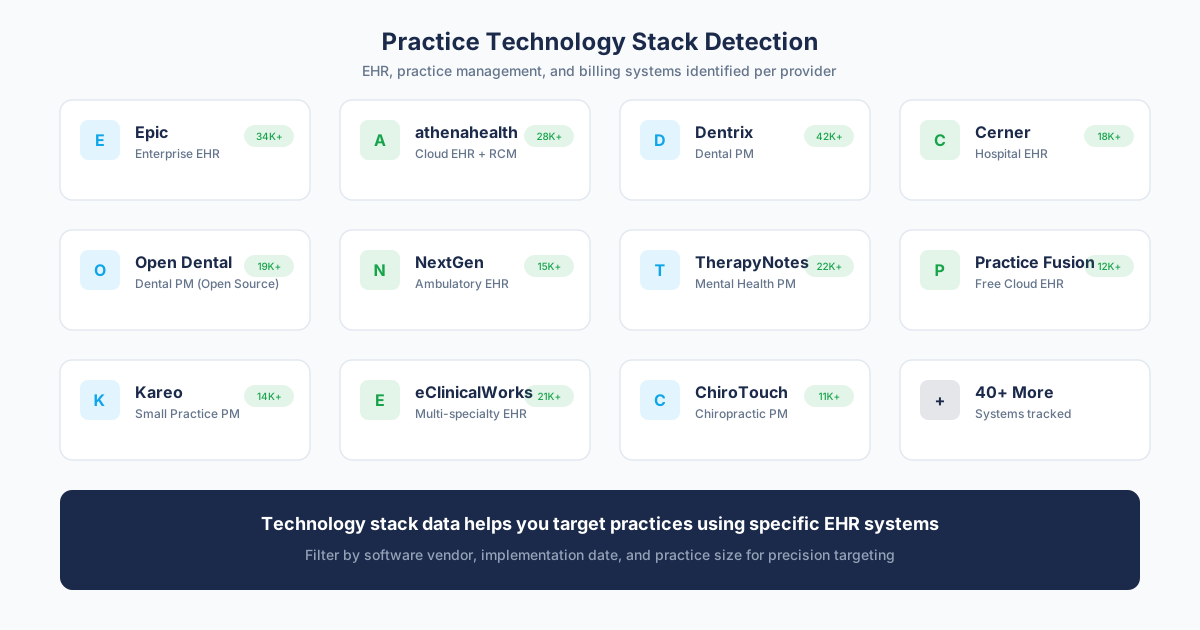
Segment definition usually needs one more layer than contact fields. Practice size, ownership structure, and technology in use decide whether a record belongs on the list at all. That layer is covered by our practice firmographic data service, and the campaign mechanics, from list sizing through sequencing, are covered in the B2B healthcare lead generation guide.
Teams that skip the segmentation step and blast the full specialty file get the opposite result. Reply rates sit under 1%, the sending domain takes reputation damage, and the next campaign starts in a hole.
What's in a Provyx Provider Contact Record
Practice Name and Business Address
Every record includes the full legal practice name and a USPS-standardized business address. We differentiate between the practice location where patients are seen and the mailing address used for correspondence, because they're often different. For multi-site practices, we map each location separately so you know exactly which office your contact works from.
Business Phone, Fax, and Website
We provide the main business phone line, fax number, and practice website URL for each record. Phone numbers are verified active so your team connects on the first call. If a number routes to a call center or answering service rather than the practice directly, we flag that in the record.
Owner and Decision-Maker Identification
Knowing the practice exists isn't enough. You need to know who runs it. We identify practice owners, office managers, and clinical directors using a combination of state business registration records, NPI enumeration data, and web intelligence. For solo practices, the provider is usually the decision-maker. For group practices and multi-location organizations, we identify the administrative and clinical leadership separately. Each contact includes their name, title, and role classification.
NPI Number, Specialty Labels, and LinkedIn Profile
Every provider record is anchored to their National Provider Identifier, which serves as a unique, permanent key for matching across data systems. We include plain-language specialty and subspecialty labels for precise targeting, but we do not deliver licensed classification code values. Where available, we also match providers to their LinkedIn profiles using our proprietary identity resolution process that cross-references NPI data, name, location, and specialty to confirm the match.
Add-ons: Optional add-ons include verified direct email addresses and mobile phone numbers. Direct emails bypass the info@ inbox and reach the provider or administrator personally. Mobile numbers are verified for ownership before delivery. Both add-ons are priced separately and available on request.
How We Source and Verify Provider Contact Data
How We Source and Verify Provider Contact Data
Every record is cross-referenced across multiple independent sources. Each field is delivered with the source it came from.
practice address
group affiliations
current address
employer, profile URL
Every field in a delivered record includes a source column so your team knows exactly where each data point came from.
Data is built at the time of your request, not pulled from a static database. Refresh cadence is set by you, not by our update cycle. And the data you receive is yours permanently. There is no subscription license and no clawback if you stop working with us.
Who Uses Provider Contact Data
Healthcare SaaS sales teams use provider contact data to build targeted outbound lists by specialty and geography. If you're selling EHR software to independent primary care practices in the Southeast, you need direct phone numbers and decision-maker names, not hospital switchboards. See our health tech page for more.
Medical device and pharmaceutical reps rely on accurate practice addresses and provider names to plan territory routes and identify new accounts. Stale address data means wasted windshield time. Updated contact records mean more meetings per day. Check our medical device solutions.
Healthcare staffing agencies use provider contact intelligence to reach practice managers who make hiring decisions for locum tenens and permanent placement roles. Reaching the right person on the first call shortens the sales cycle dramatically.
Managed care organizations need current provider contact data for network adequacy reporting and provider directory maintenance. Outdated directories create regulatory risk and patient frustration.
Data Quality and Accuracy
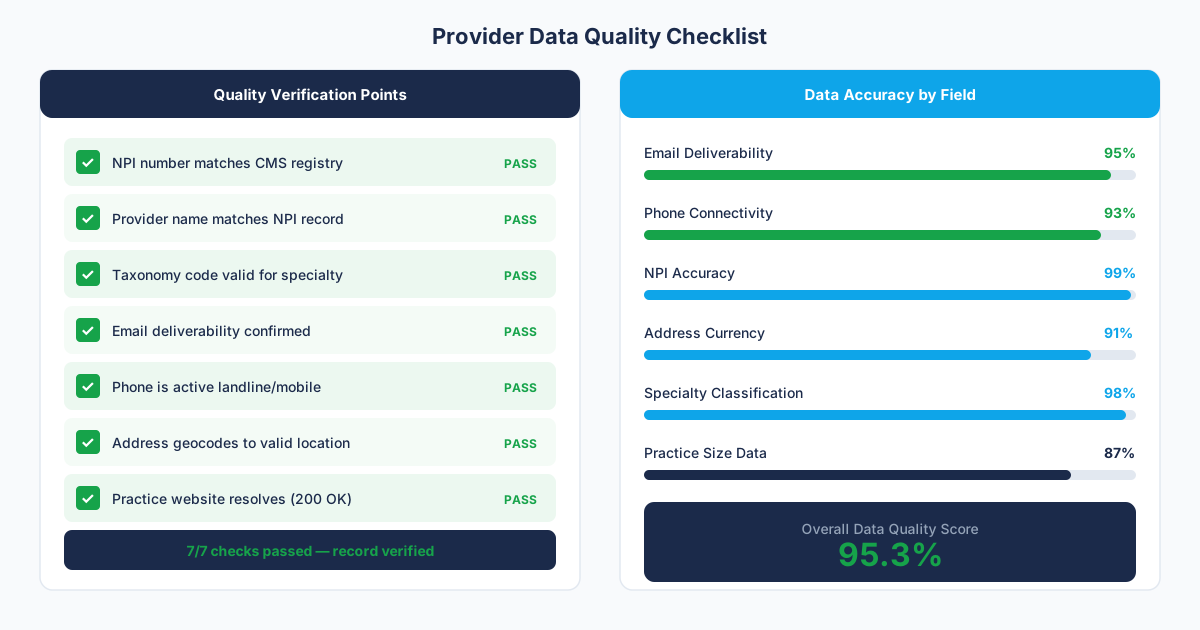
We don't claim 100% accuracy because that's not realistic in a dataset of this size and velocity. Providers move, retire, change phone numbers, and merge practices constantly. What we do commit to is transparency about our verification status.
Every field in a provider contact record carries a confidence indicator: verified (multi-source confirmed), unverified (single source), or flagged (sources conflict). Our overall verified rate across the full database sits above 85% for core fields like practice address and business phone. Direct emails and mobile numbers carry lower confidence rates because they change more often. We publish our methodology and refresh timelines so you can make informed decisions about how to use the data.
"We cut our list-building time from two weeks to two days. The direct phone numbers actually connect to the right people, which was the biggest problem with our previous vendor."
What is Provider Contact Data?
Provider Contact Data is verified contact intelligence for healthcare providers, including direct phone numbers, practice addresses, NPI numbers, and decision-maker names, compiled from multiple authoritative sources and cross-verified for accuracy.
Unlike generic B2B contact databases, provider contact data uses NPI registry verification and multi-source cross-referencing to ensure phone numbers reach the right person at the right practice location.
How to Get Verified Provider Contact Data
- Define your target specialty and geography:: Choose from 40+ healthcare specialties and filter by state, metro area, or zip code radius.
- We compile from multiple sources:: Records are built from the CMS NPI Registry, state licensing boards, commercial databases, and web intelligence.
- Multi-source verification:: Phone numbers, addresses, and names are cross-verified across sources to eliminate stale or incorrect data.
- Receive your verified list:: Get clean, ready-to-use contact data in CSV or Excel format within 3-5 business days.
Frequently Asked Questions
How often is provider contact data updated?
Data is refreshed on demand. If you find a stale record, you can flag it and we'll re-verify within five business days.
What's the difference between the base record and the add-ons?
The base record includes practice name, business address, business phone, fax, website, NPI number, specialty labels, decision-maker name, and LinkedIn profile where available. Add-ons are direct email addresses and mobile phone numbers, which are priced separately because they require additional sourcing and validation steps.
Can I get contact data for a specific specialty or region?
Yes. You can filter by any combination of specialty, subspecialty, state, city, zip code, practice size, and other criteria. If you need a tightly scoped list, our custom list building service will handle the filtering and quality checks for you. Most filtered lists are delivered within three to five business days.
How do you handle providers who work at multiple locations?
We create separate location records for each practice site and link them to the provider's NPI. If a cardiologist practices at both a hospital outpatient clinic and an independent office, you'll see both addresses with clear primary and secondary designations. This prevents duplicate outreach and helps you target the right location.
How much does provider contact data cost?
Projects start at $2,500 and are priced by record count and included fields. There is no annual license or seat fee, and the data is yours to keep after delivery. A scoped specialty list typically costs a fraction of an enterprise healthcare data platform contract.
Is this the same as buying a healthcare email list?
No. Email is an optional add-on field on top of the provider record. The base record covers NPI number, practice, business phone, and decision-maker name, each verified against its source. Email add-ons are validated through ZeroBounce before delivery, so bounces stay low.
How long does delivery take?
Most scoped lists deliver in 3-5 business days as a CSV or Excel file. Larger or multi-specialty builds can take longer, and we confirm the timeline when we scope the project.
Get the Provider Data You Need
Tell us what you're looking for. We'll build a custom list matched to your target market.
Trusted by healthcare sales teams, medical device companies, and health IT vendors across the US.