
Healthcare Tech Stack Data for 2026: EHR, PM, & RCM
Identify which EHR, practice management, billing, and telehealth systems healthcare practices use so you can target, time, and tailor your outreach.
Why Do Sales Teams Need Healthcare Technology Data?
If you sell software or services to healthcare practices, the first question your sales team needs answered is "what are they currently using?" A practice running Epic has no reason to look at your standalone EHR. A clinic that just signed a three-year contract with athenahealth won't switch next quarter. But a practice still running an on-premise legacy system from a vendor that's been acquired twice? That's a live opportunity.
Without technology detection data, your team is cold-calling blind. They're pitching billing solutions to practices that already use the same platform. They're offering patient portal integrations to clinics whose EHR doesn't support them. They're wasting discovery calls on qualification questions that data could have answered before the dial.
The challenge is that healthcare practices don't publish their tech stacks. There's no central registry of which clinic uses which EHR. The ONC certified health IT product list covers certification status, and certification says nothing about which practices installed the product. You need a different approach to get this data.
Which Practice Systems Can You Target With Technology Detection?
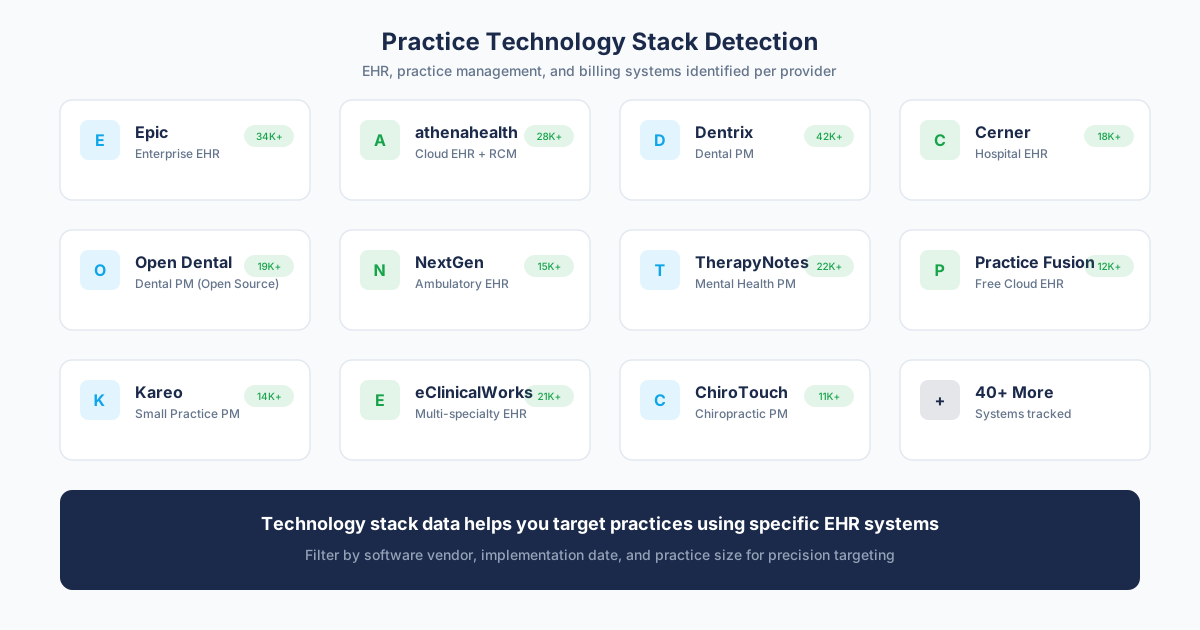
Provyx detects five categories of practice technology, each mapped to the vendors that dominate that category. Coverage spans more than 80 EHR and practice management vendors, plus billing, telehealth, and patient engagement platforms.
| Category | Example platforms detected | Who buys this data |
|---|---|---|
| EHR systems | Epic, Oracle Health (Cerner), athenahealth, eClinicalWorks, NextGen, Greenway, DrChrono | EHR vendors, integration platforms, health IT startups |
| Practice management | Kareo, AdvancedMD, CareCloud, integrated EHR/PM suites | PM vendors, scheduling tools, intake solutions |
| Billing / RCM | Waystar, Availity, Trizetto, outsourced billing signals | RCM companies, clearinghouses, payment platforms |
| Telehealth | Doxy.me, Teladoc, Amwell | Virtual care platforms, remote monitoring vendors |
| Patient engagement | Klara, Luma Health, Relatient, online scheduling widgets | Patient communication tools, marketing agencies |
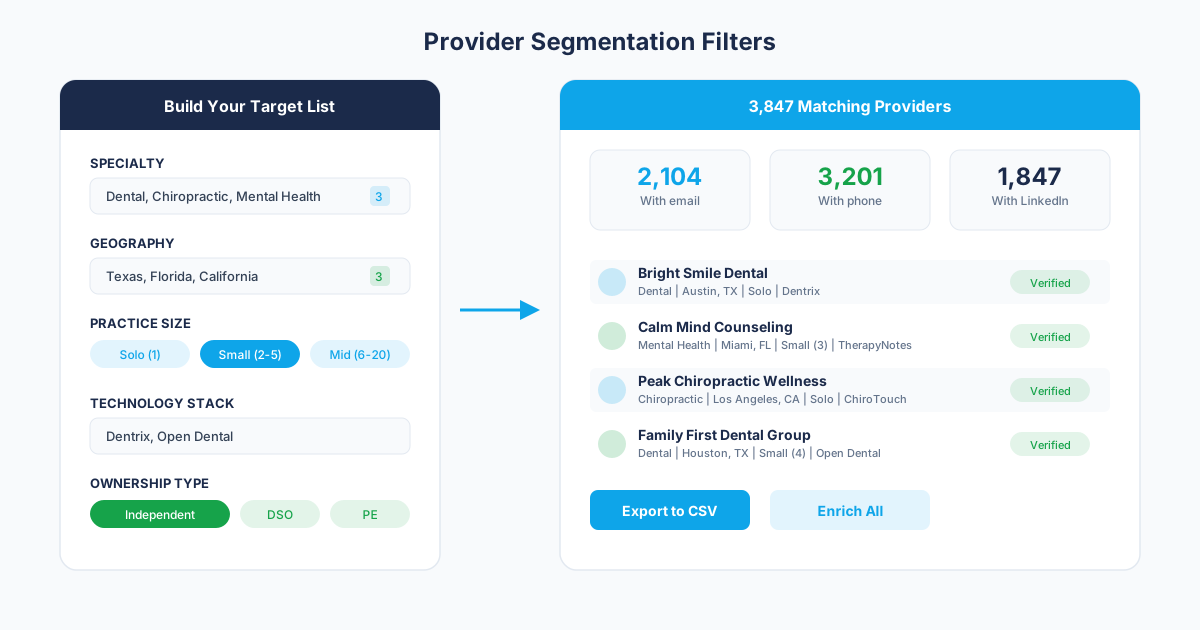
Each detection ties back to the practice's NPI record, so you can filter any of these categories by specialty, state, practice size, or ownership type in the same pull.
How Do You Run EHR Lead Generation With Install Base Data?
Start with the installed system, then narrow. An EHR lead generation list built from install base data follows four steps: pick the platforms you integrate with or displace, filter those practices by specialty and size, attach verified decision-maker contacts, and write outreach that references the system by name.
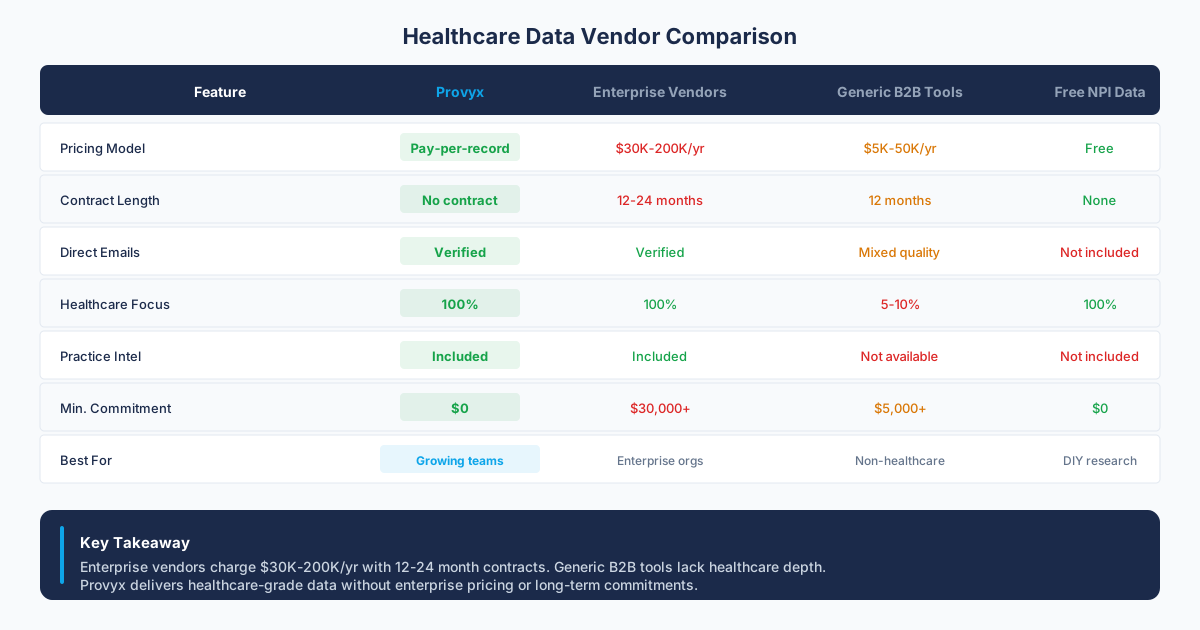
The order matters. Teams that start with specialty lists and try to guess technology later end up with a pipeline full of practices they can't serve. Teams that start with the install base only ever talk to practices where the pitch fits. Our B2B healthcare lead generation guide covers the full workflow, and the healthcare data vendor comparison shows how install base sourcing differs across providers.
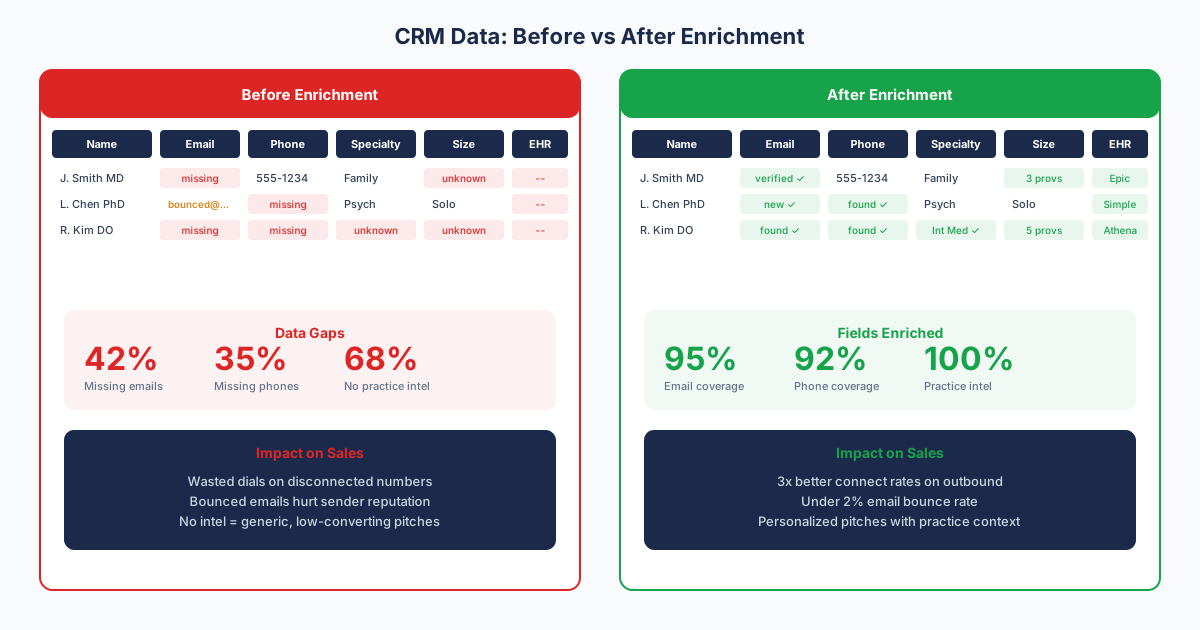
One caution from experience: an install base segment is only as good as the contact data attached to it. A perfect list of 900 practices running a legacy EHR is worthless if the emails bounce. Every Provyx technology record ships with NPI-verified practice information, and contact records are validated before delivery. If you're building the outreach layer yourself, our guide on verifying NPI numbers in bulk covers the validation side.
What Technology Data Does Provyx Detect?
EHR System Identification
We identify the electronic health record system in use at each practice, covering major platforms like Epic, Cerner (now Oracle Health), athenahealth, eClinicalWorks, Greenway Health, NextGen, DrChrono, and dozens of smaller vendors. For larger organizations with multiple EHR instances, we identify both primary and departmental systems.
Practice Management Software Detection
Practice management software handles scheduling, registration, and administrative workflows. Many practices use a PM system from a different vendor than their EHR. We detect standalone PM platforms like Kareo, AdvancedMD, and CareCloud, as well as integrated EHR/PM suites. Knowing whether a practice uses an integrated or best-of-breed stack tells you a lot about their buying patterns and openness to new point solutions.
Patient Engagement and Telehealth Platforms
We detect patient-facing technology including telehealth platforms (Doxy.me, Teladoc, Amwell), patient communication tools (Klara, Luma Health, Relatient), online scheduling platforms, and patient portal solutions. These signals are particularly valuable if you sell competing or complementary patient engagement tools. Post-pandemic telehealth adoption varies widely by specialty and practice size, and our detection data quantifies that adoption at the practice level.
Billing and Revenue Cycle Management Systems
We identify billing software and revenue cycle management vendors including Waystar, Availity, Trizetto, Kareo Billing, and AdvancedMD Billing. We also flag practices that appear to use outsourced billing services based on web signals and job posting patterns. This data is valuable for RCM vendors, clearinghouse companies, and anyone selling into the financial operations side of healthcare practices.
EHR Install Base for Sales Targeting
Technology detection becomes a sales weapon when you use it to build install base segments. Instead of cold-calling from a generic list, you target practices running specific systems with messaging tailored to that platform. A medical device company targeting practices on eClinicalWorks can filter 4,200+ practices nationally using that EHR, then layer on specialty and practice size to build a segment of 800 orthopedic practices with 3+ providers, ready for outreach. A patient engagement startup identifies 1,200 dermatology practices still using on-premise EHR systems with no telehealth integration. These practices are displacement targets for cloud-based solutions. A billing company spots 600 multi-location pain management groups using legacy RCM software from a vendor acquired last year. Contract uncertainty creates a 6-month window for competitive pitches. Every outreach list starts with the installed system, then narrows by specialty and geography. Knowing the EHR turns a cold call into a warm one because you already know what they are running and where the friction points are. The ONC Health IT certified product list tracks what's available for purchase, and install base data tells you what's deployed at each practice.
Healthcare Software ABM Workflows
Account-based marketing in healthcare software starts with technology data. The workflow: identify target accounts by EHR type, segment by practice size and specialty, score by replacement cycle signals (contract age, vendor instability, regulatory deadlines like information blocking rules), and route qualified accounts to reps with full technology context attached. Knowing the installed EHR changes the first conversation. Instead of a generic pitch, your rep opens with "I see you're running athenahealth. We integrate natively with that platform and most practices go live in under two weeks." Or for displacement plays: "Practices switching from [legacy system] to a cloud platform typically cut 6 hours per week of manual data entry. We've helped three groups your size make that transition." The scoring layer is where technology data compounds. A practice on a stable, modern EHR with a fresh contract scores low. They are not buying. A practice on an EHR whose vendor was acquired 18 months ago, running a version approaching end-of-life, with no patient portal integration? That practice scores high. Layer in firmographic data from our practice firmographics service (practice size, revenue range, ownership type) and you have a fully scored ABM target list that tells reps who to call, why, and when.
Add-ons: Enhanced technology intelligence includes estimated contract renewal windows based on install date signals, and technology change alerts that notify you when a practice switches vendors.
How Does Provyx Detect Healthcare Technology Stacks?
We combine web presence analysis, commercial database cross-referencing, vendor directory checks, and public procurement records to identify what each practice runs. Healthcare needs this layered approach because clinical software sits behind logins with few public-facing signals, unlike CMS platforms or analytics tools that announce themselves in page source.
Beyond EHR, we detect patient engagement platforms, scheduling widgets, telehealth tools, and billing systems. Each technology detection is linked to the practice's NPI record, so you can cross-reference technology data with provider contact information and firmographics.
Who Uses Technology Detection Data
Healthcare software companies use technology detection to identify prospects running competing or complementary platforms. If you sell a patient intake solution that integrates with athenahealth but not Epic, you can target only athenahealth practices and skip the rest. That kind of precision raises conversion rates. See our health tech solutions.
EHR and PM vendors use competitive intelligence from technology detection to understand market share by region, specialty, and practice size. This informs product positioning, pricing strategy, and M&A decisions.
Healthcare consultants and advisory firms use technology data to benchmark their clients against peers and identify modernization opportunities. When a practice is running outdated systems, consultants can quantify the gap.
Investors evaluating healthcare IT companies use technology adoption data to validate vendor claims about market penetration and growth trajectory. When a vendor says they have 10,000 customers, technology detection data provides an independent check on that number.
How Accurate Is Technology Detection Data?
Every technology detection record carries a confidence level so you know which records to prioritize for outbound campaigns versus broader market analysis. High-confidence records rest on two or more independent signals, such as a web presence marker confirmed against a commercial database entry. Single-signal detections are labeled as such and priced into how you should use them: fine for market sizing, weaker for a one-to-one displacement pitch.
Technology data is refreshed quarterly to reflect vendor changes. Because every detection is linked to an NPI record, a practice that merges, relocates, or closes gets caught by the same NPI monitoring that maintains our provider contact data. You never end up holding a technology profile for a practice that no longer exists.
"Knowing which EHR a practice runs before the first call completely changed our conversion rate. We tailor the pitch to their current stack and the close rate went up noticeably."
What is Healthcare Technology Detection?
Healthcare Technology Detection is the process of identifying which EHR, practice management, billing, scheduling, and telehealth software systems a healthcare practice currently uses, enabling targeted sales outreach based on technology stack.
Technology detection data lets sales teams identify practices using competitor products, outdated systems, or complementary tools, turning a cold call into a relevant conversation.
How Healthcare Technology Detection Works
- Web presence analysis:: Practice websites are scanned for technology signatures, script tags, login portals, and integration markers.
- Data source cross-referencing:: Detected technologies are verified against commercial databases, vendor directories, and public procurement records.
- Stack classification:: Each practice's technology profile is categorized by EHR, practice management, billing, telehealth, and patient engagement systems.
- Delivery with provider records:: Technology data is delivered alongside contact and practice records so you can segment and prioritize outreach.
Frequently Asked Questions
How many EHR vendors can you detect?
We currently detect over 80 EHR and PM vendors, covering the vast majority of the installed base in the US healthcare market. This includes all top-20 vendors by market share and extends to specialty-specific systems used in dental, optometry, behavioral health, and other verticals. If you need detection for a specific vendor not on our list, contact us and we can usually add it.
Can technology detection tell me when a contract is up for renewal?
Not directly. We don't have access to contract terms. However, we can help you identify practices approaching likely renewal windows. Our enhanced tier also includes technology change alerts that notify you when a practice switches.
Does technology detection work for solo practices?
Coverage is strongest for group practices with five or more providers. Solo practice coverage is available but more limited. We're transparent about coverage upfront so you know what to expect before you buy.
How current is the technology detection data?
Technology data is refreshed quarterly. Healthcare practices don't switch EHR systems frequently. The average EHR contract runs three to seven years, so quarterly detection catches most transitions. For practices going through an active technology change, there may be a lag of one to two quarters before the new system appears in our data.
Can I get a list of practices using a specific EHR?
Yes, that's the most common request. Tell us the platform (or platforms) and any filters you want layered on top: specialty, state, provider count, ownership type. We deliver a CSV of matching practices with verified contact records attached. Typical turnaround is 3-5 business days, and pricing starts at $2,500 per project rather than an annual platform subscription.
How is this different from website technology tools like BuiltWith?
Website profilers read public page source, which works for marketing technology but misses clinical systems. An EHR leaves few traces on a practice's public website because staff log into it through private portals. We cross-reference web signals with commercial databases, vendor directories, and procurement records, then tie each detection to the practice's NPI record so the technology profile comes attached to verified practice and contact data.
Get the Provider Data You Need
Tell us what you're looking for. We'll build a custom list matched to your target market.
Trusted by healthcare sales teams, medical device companies, and health IT vendors across the US.