
Med Spa Owners Contact Lists: Roles and Verification
Scope business, clinical, and operating roles separately. A provider credential or business filing alone does not establish who evaluates or approves a purchase.
Updated September 2026
The Med Spa Ownership Problem
Medical-spa ownership and clinical-oversight arrangements vary by jurisdiction and business. A medical director, business owner, operator, and practice manager can be different people. Treat each as a separate research question rather than inferring a role from a credential or title.
Public provider registries, business filings, practice websites, and directories can provide useful evidence for different parts of a record. Each source has limits: a registry can support provider identity, for example, but does not on its own establish business ownership or purchasing authority.
For an aesthetics, equipment, software, financing, or marketing campaign, define the role that should receive the message and the evidence needed to support it. The project can then keep commercial and clinical stakeholders separate when the available evidence supports both.
That distinction matters for list building because public records can describe an entity, a clinician, or a location without establishing the commercial role your campaign needs. Treat each relationship as a separate evidence question and keep the source with the field.
Ownership and clinical-oversight arrangements can differ by jurisdiction and entity structure. Do not turn a filing title, registered agent, or clinical credential into a sales-role label without supporting evidence. Where sources disagree, retain the uncertainty for review.
What a Med Spa Owners List Should Include
Business owner name and title. The most important field is the actual business owner or managing partner. This is the person who controls the budget, selects vendors, and signs contracts. Their title might be "owner," "CEO," "managing partner," or "practice administrator," depending on the corporate structure.
Services offered. "Med spa" covers a range of services: injectables (Botox, fillers), laser treatments (hair removal, skin resurfacing), body contouring, IV therapy, hormone therapy, skin care. Your product may only be relevant to med spas offering specific service categories. A list that includes service classification lets you filter for the right fit.
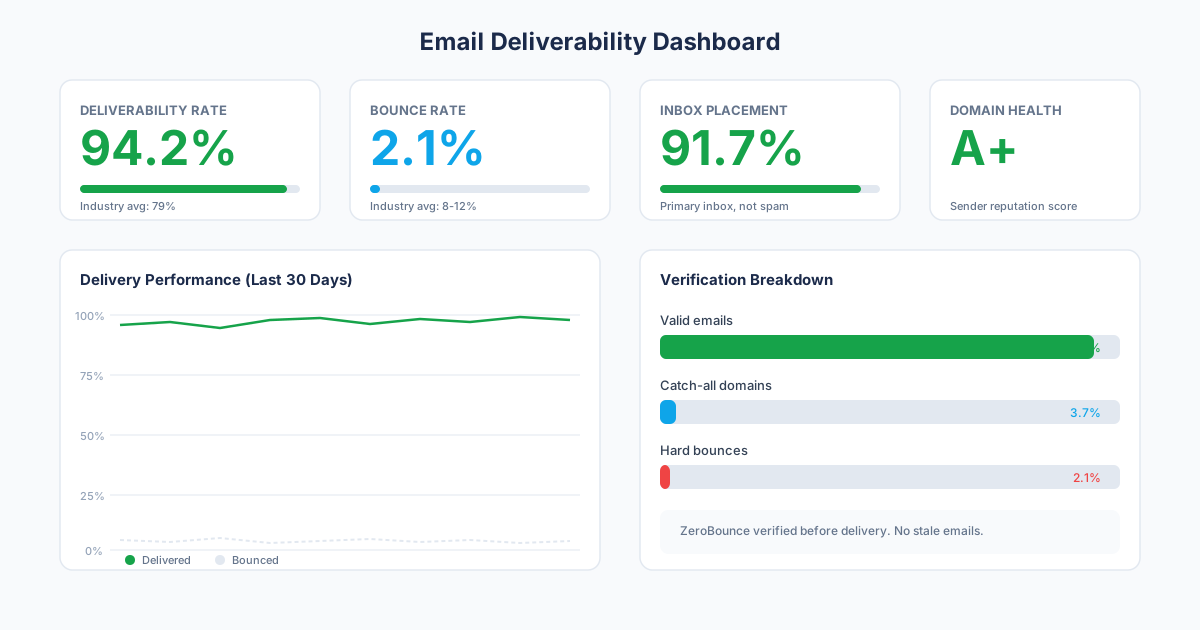
Contact channels. Keep the published business phone and website distinct from requested direct-email or mobile enrichment. Confirm field availability and the check definition separately; a contact-channel check does not promise delivery, inbox placement, or response.
Why Standard Provider Data Misses Med Spa Owners
Provider databases are physician-centric. They're built to catalog healthcare providers by their NPI, specialty classifications, and clinical credentials. The concept of a "business owner who isn't the physician" doesn't fit the data model. When you query a provider database for med spas, you get the medical director's information because that's the physician associated with the practice entity's NPI.
Business directories and healthcare sources can each describe different parts of a record. Confirm the source and date behind a requested owner, clinical, service, or location field instead of assuming one source establishes every relationship.
Web scraping captures some ownership data from "About Us" pages and team bios on med spa websites. But many med spa websites feature the medical director and clinical staff prominently while the business owner stays behind the scenes. The owner might not appear on the public website, especially if the med spa's branding is built around the physician's clinical credibility.
State business registration records can identify the registered agent and officers of the corporate entity, but matching that to a specific med spa location and linking it to the practice's healthcare data requires entity resolution that goes beyond what most data providers offer.
How Do You Build a Med Spa Owners List Yourself?
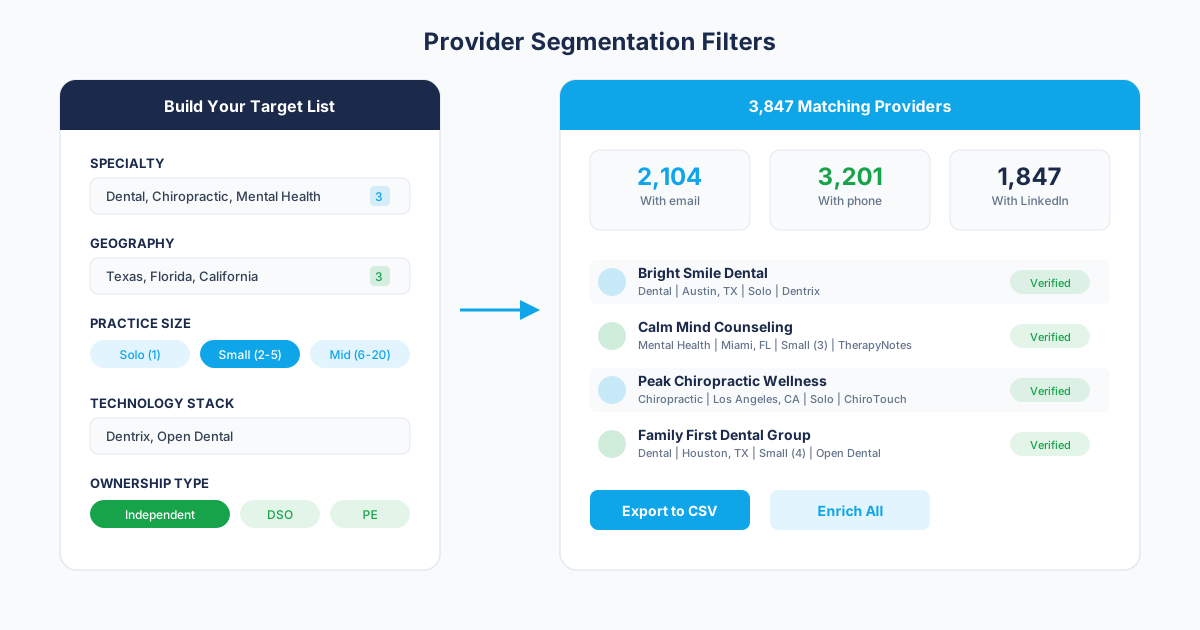
Four public sources get you partway. The CMS NPI Registry covers med spas that registered an organizational NPI and gives you the medical director and practice address at no cost. State business entity searches (each Secretary of State runs one) surface the LLC or PC behind a med spa name, with officers and registered agents. Google Business Profiles and the med spa's own website supply services, hours, and sometimes team bios. AmSpa publishes market research and a member directory that helps with sizing.
Scope the Buying Role Before Research Starts
Define whether the project needs a business owner, operator, practice manager, medical director, or another stakeholder. Treat those as separate roles. A business filing, clinical credential, or public team page can help investigate a record, but does not by itself establish purchasing authority.
Agree which sources may support each requested role, what evidence is sufficient, and whether an uncertain role is excluded, flagged, or retained as business-only. Keep clinical context separate from business ownership so a project does not relabel one as the other.
What to Confirm Before a Med Spa Data Build
List size is a result of the agreed geography, services, role definition, exclusions, and requested fields. A location count, a unique-business count, and a named-owner count are different measures; confirm each one separately rather than relying on a national headline.
- Market definition: geography, advertised services, and inclusion or exclusion rules.
- Unit of count: location, business, or person, with duplicate handling agreed in advance.
- Role evidence: the source and observation date that support a requested owner, operator, or clinical role.
- Contact fields: business channels and any direct enrichment are separate requests, with unavailable fields kept explicit.
- Acceptance review: a representative sample checked against the agreed definitions before delivery.
Pricing and acceptance criteria
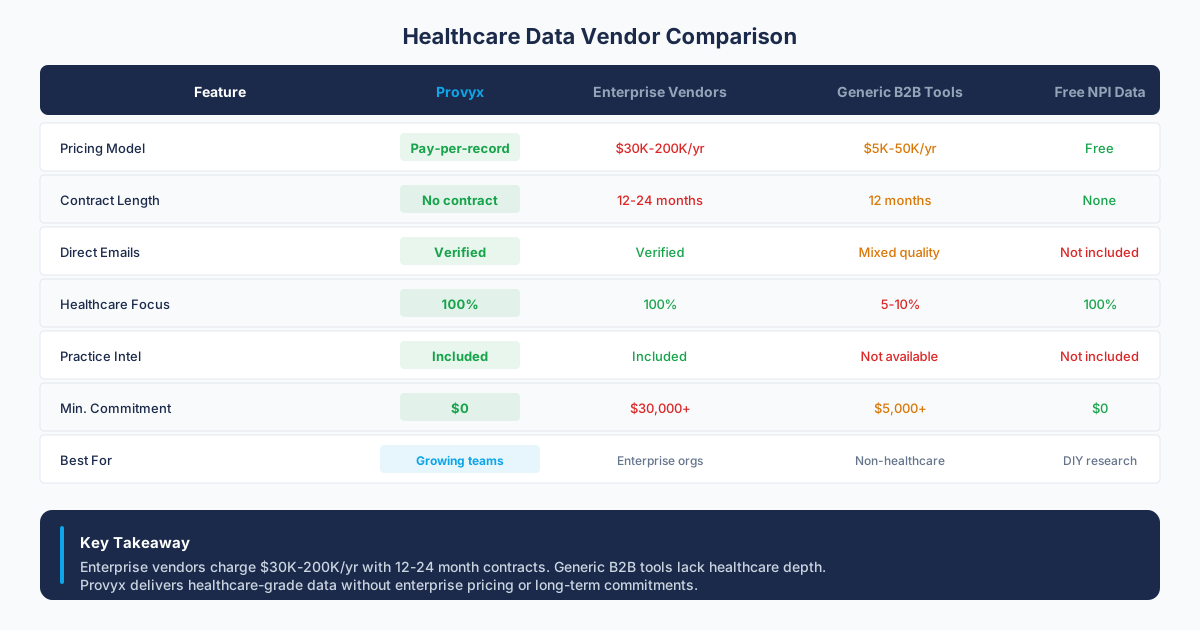
Use current Provyx pricing as the commercial reference, then request a written project scope for volume, fields, enrichment options, format, and acceptance review. The provider contact-data service explains the field categories; availability is confirmed for the requested scope.
Contact and verification status
A business website match, a supported role, and a contact-channel check answer different questions. Confirm what each status means, the source and date behind it, and how unavailable or uncertain fields will appear in the deliverable. Do not treat an email check as a guarantee of delivery, inbox placement, or response.
A Practical Acceptance Review
Review a representative proposed sample against the written scope before treating it as a delivery. The review should test the decisions that make the list useful for the campaign: whether the account meets the service and geography criteria, whether the row represents the agreed unit of count, and whether the requested role is supported by the recorded evidence.
Use a simple field-by-field review. For the business identity, compare the name, website, and address to the supporting source. For a service field, verify that the definition is clear enough to distinguish an advertised service from a related but different offering. For a role, check that the evidence supports the stated relationship rather than merely placing a person near the business. For a contact channel, distinguish the published business channel from any requested direct enrichment.
Decide how to handle common exceptions before the build: a single person connected to more than one location, multiple brands at one address, a group relationship that cannot be confirmed, an owner name that conflicts across sources, or a clinician associated with several businesses. A consistent rule for each exception is more useful than silently forcing records into a single category.
Record the source and observation date for the fields that matter to the campaign. That creates a usable review trail when a salesperson finds a closed location, an outdated role, or a contact route that is unavailable. It also separates a correction to one field from a broad claim about an entire market.
After the acceptance review, keep the project scope with the deliverable: market definition, exclusions, field definitions, check definitions, dates, and treatment of unknowns. That lets the team judge whether the result fits its outreach purpose without mistaking a partial field for a universal fact.
Plan a correction path as well. Outreach feedback can identify a closed location, a changed role, or a field that no longer fits the agreed definition. Keep those observations separate from unverified assumptions, review them against the project criteria, and update the affected record only when the evidence supports the change. This gives the team a clear way to improve a future scope without turning individual findings into an unsupported market-wide statistic.
For repeat work, compare the new scope with the prior one before combining results. A broader geography, a new service definition, or a different role threshold can change the apparent count without showing a change in the market. Keeping those changes visible protects the sales team from comparing unlike records and helps the next acceptance review focus on the right questions.
The same discipline applies to exclusions. Record why a business, person, or field was outside scope so the team can revisit the decision without reconstructing it from a headline number.
Frequently Asked Questions
What should a med spa project define first?
Define geography, services, the unit of count, requested buyer roles, fields, exclusions, and acceptance criteria before research starts.
Can I request a service filter?
Yes. State the services and account criteria relevant to your campaign. Available supporting evidence determines which fields can be supplied.
How should owner and medical-director records be linked?
Keep business ownership, clinical oversight, operating location, and parent relationships separate. Connect them only where the source supports the relationship and record the observation date.
How are contact fields represented?
Keep published business channels separate from requested direct enrichment. Confirm each field's check definition, source, date, and treatment of unavailable or uncertain values.
Disclosure and Sources
Document each exception clearly.
Related Resources
Get the Provider Data You Need
Tell us what you're looking for. We'll build a custom list matched to your target market.
Trusted by healthcare sales teams, medical device companies, and health IT vendors across the US.