
General Dentists Data & Contact Lists
General dentist practice data with verified owner contacts, NPI records, and practice details for the largest dental segment.
Also known as: family dentist, general dentistry
General Dentists Email List: Filtering the Biggest Universe in Dentistry
The American Dental Association counts more than 200,000 professionally active dentists in the US, per the ADA Health Policy Institute, and roughly four in five practice general dentistry. Every other dental specialty is a rounding error next to this segment. That scale flips the data problem on its head compared with a niche like prosthodontics or oral pathology: finding general dentists is trivial, and the entire job is cutting a six-figure universe down to the accounts a team can profitably work.
Why is a raw general dentist pull unusable?
An unfiltered registry pull identifies providers and registered practice locations, but it does not establish which records represent current, independent buying accounts. The same dentist may appear with multiple locations, and registry addresses do not supply practice ownership or purchasing authority. A usable outreach list therefore needs person-level deduplication, current-location checks, and separate ownership and contact verification before segmentation.
Which filters turn the universe into a working list?
Four cuts do most of the work, in roughly this order:
- Keep measured values only when the source, scope, and observation date travel with the record.
- Geography: Territory teams work metros rather than states. A metro-scoped build keeps a rep's list at a workable size.
- Ownership: Separate independent practices from DSO-affiliated locations so outreach reaches the person or corporate function that controls purchasing.
Where can you verify general dentists for free?
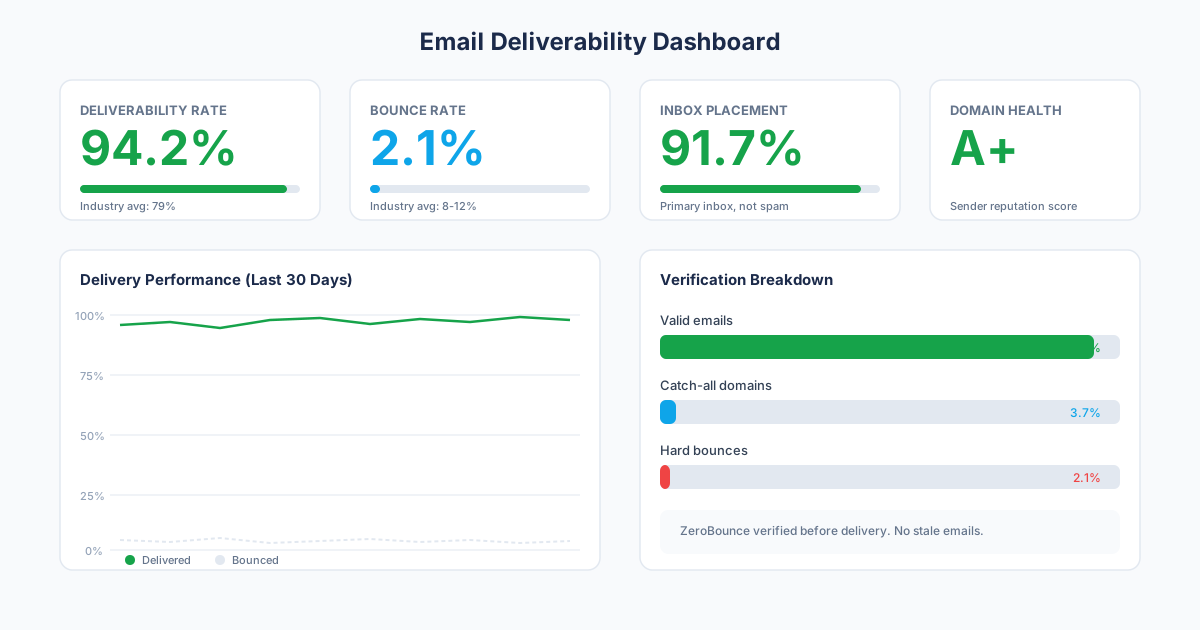
The CMS NPI Registry confirms enumeration, classification, and registered addresses one record at a time, and every state dental board runs a public license lookup that confirms active licensure. Both are fine for spot checks and useless for building at scale, since neither carries ownership, practice size, or a working owner email. Provyx builds each general dentist list at order time, deduplicates by person, verifies NPI status against CMS, validates every email through ZeroBounce, and flags ownership before delivery. Projects start at $2,500 with no annual contract, and the delivery date is confirmed with your scope. Our healthcare data vendor comparison covers how the major vendors handle this segment, and the B2B healthcare lead generation guide picks up once the list is in hand.
The General Dentists Market
Where General Dentists Concentrate
General dentists distribute with population, with practice density higher in metros and suburbs. DSO consolidation concentrates in certain regions and markets the platforms have entered, so ownership patterns vary by geography. Targeting by metro and ownership status matters more than raw counts.
Who Controls General Dentists Purchasing Decisions
In an independent practice the dentist owner controls purchasing. In a DSO-affiliated office, supply, equipment, and software decisions often run through a regional or corporate function while the dentist handles clinical choices. Knowing whether a practice is independent or DSO-affiliated tells you whether to reach the owner or the corporate office.
What Makes General Dentists Data Hard to Get Right
The general-dentist universe is enormous and consolidating fast under DSOs, so ownership data goes stale quickly as independents get acquired. Knowing who still owns a practice, and whether purchasing has moved to a corporate function, is the central challenge. Practice size and the systems in use, which buyers care about, also have to be added beyond the basic record.
The Data Fields That Matter Most for General Dentists
For general-dentistry outreach, verify the practice owner, location count, DSO affiliation, services offered, and the business contact independently. The clinician’s specialty identifies the provider but does not establish ownership or purchasing authority. Preserve the source date for each practice-level field so changes in brand or affiliation remain reviewable.
How Provyx Keeps General Dentists Data Current
What goes stale is ownership, because DSO acquisition moves practices from independent to corporate-controlled faster than generic databases track. A practice independent last year may now buy through a DSO. Provyx rebuilds each list at order time and works to confirm current ownership and the right contact, so suppliers reach the decision-maker rather than a former owner.
Who Buys General Dentists Data
Dental supply distributors build territory routes across practices. Practice-management, imaging, and software vendors target owners who control technology. DSO acquirers scout independent practices, and insurers and buying groups round out the set.
How Teams Use General Dentists Data
A supply distributor builds a territory list and routes reps efficiently. A software vendor reaches independent owners who still control technology decisions, and a DSO acquirer builds a pipeline of independent practices by size and location. An imaging vendor targets practices upgrading equipment. Each use case depends on ownership and size data the registry does not keep current.
What Accurate General Dentists Data Is Worth
Knowing current ownership is what the data is worth, because pitching an independent-practice owner who has been acquired, or missing that purchasing moved to a DSO, wastes the contact. An ownership-aware list lets suppliers and software vendors reach the actual decision-maker, where the return is large given the size of the segment. A stale ownership view misroutes outreach across thousands of practices.
Outreach That Works for General Dentists
When to Reach General Dentists
Buying aligns with practice budget cycles, technology refreshes, and acquisition events. A newly acquired practice or one upgrading equipment is a high-intent window. Reaching owners ahead of a budget cycle or after an ownership change beats an untimed pitch.
Common Mistakes When Targeting General Dentists
Using a stale ownership view is the central mistake, since consolidation moves practices quickly. Treating DSO-affiliated offices like independents is the second, because purchasing centralizes. Pitching the front desk instead of the owner or corporate contact is the third. The fourth is ignoring practice size, which shapes product fit.
The Bottom Line on General Dentists Data
For general dentistry, current ownership is the decisive attribute, because consolidation moves practices between independent and DSO control quickly and that decides who buys. Reach the owner for independents and corporate for DSOs, and segment by practice size. An ownership-aware, current list turns the largest dental segment into reachable, correctly targeted accounts.
How to Segment Your General Dentists List
- Independent vs DSO-affiliated
- Practice size by operatories
- Insurance participation
- Systems in use
- Patient-volume signals
- Metro area
Data Available for General Dentists
- Provider name and credentials
- NPI number and specialty classifications
- Practice name and address
- Direct email address
- Phone number (direct line where available)
- Practice size and type
- State license information
How It Works
- Tell us what you need: Specify the general dentists subtypes, geography, and any other filters for your target list.
- We build your list: We pull matching records from our verified database and deliver a clean CSV or Excel file.
- Start your outreach: Use the data for email campaigns, direct mail, phone outreach, or CRM enrichment.
Frequently Asked Questions
What does a general dentists email list cost?
Provyx prices per project starting at $2,500 with no annual contract, invoiced after you approve the delivery. For this segment the work is deduplication, practicing-status verification, and ownership flagging rather than sourcing, since the raw names are public and the filtering is what makes the list workable. Source: current Provyx scope and pricing. Source: https://getprovyx.com/pricing/.
How do you handle dentists who appear at multiple locations?
We deduplicate by person, then attach each practicing location as a separate field rather than a separate record. Group-practice associates commonly appear at two or three addresses in raw registry data, and counting them three times inflates the file while breaking any per-contact outreach math.
Can you separate independent dentists from DSO-affiliated practices?
Yes. Ownership matters for acquirers and vendors alike, so we work to flag whether a practice is still independent or has been absorbed into a dental support organization.
Can you size practices by operatories or provider count?
Where the data supports it, we flag practice size so suppliers and SaaS vendors can focus on offices that match their target footprint.
How current is the ownership data?
We rebuild each list at order time and work to confirm current ownership, since DSO acquisition moves practices from independent to corporate-controlled quickly.
Can you identify the systems a practice uses?
Where a practice discloses its practice-management or imaging systems, we capture them so software and equipment vendors can target switch opportunities.
Can you reach the corporate contact for DSO practices?
Yes. For DSO-affiliated offices, purchasing often runs through a corporate function, so we work to flag ownership and reach the right contact.
Can you target by insurance participation?
Where the data supports it, we flag insurance participation, since payer mix shapes how a practice buys.
Can you build a DSO acquisition pipeline?
Yes. We can scope a build to independent practices by size and location, which is exactly what DSO acquirers target.
Can you reach the owner directly?
Yes. For independents, we attach the owner contact so outreach reaches the decision-maker rather than a front-desk line.
Can you scope a list to one metro?
Yes. We can scope a build to a metro and segment by ownership and practice size for territory work.
How do you handle such a large segment?
We scope and segment by ownership, size, and geography so a build is a focused, workable list rather than an unusable dump of a statewide dentist directory.
Can you flag practices recently acquired by a DSO?
Where the data supports it, we flag recent acquisitions, since a newly acquired practice shifts purchasing to a corporate function, changing who to reach.
Can you target practices by the equipment they own?
Where a practice discloses imaging or technology, we flag it so equipment and software vendors can target upgrade and switch opportunities.
How accurate is the general dentists contact data?
Our general dentists data is verified against multiple sources including the CMS NPI Registry, state licensing boards, and commercial databases. We continuously verify records to catch moves, closures, and contact changes.
Can I filter general dentists data by geography?
Yes. You can filter general dentists records by state, metro area, ZIP code, or custom radius. We can build targeted lists for specific regions or provide nationwide coverage.
How often is General Dentists data updated?
We verify general dentists records on a continuous basis. Our system cross-checks the CMS NPI Registry for status changes, monitors practice websites for updated contact info, and flags records when providers move, retire, or change practice groups. You won't get a static list that goes stale after a month.
Is the general dentists data verified?
Where general dentists hold NPIs, records are verified against the CMS NPI registry and triangulated with state licensing boards and current public records. For general dentists that operate as businesses without an NPI, we source from business records and confirm against live signals at build time.
Can you scope a general dentists list to a specific geography?
Yes. We can scope a general dentists build to a single state, a metro, a county, or a custom radius around a location, so a territory or local team works only the area that matters to them.
What fields can you include for general dentists?
Beyond name and practice address, we can include the owner or decision-maker contact, NPI and classification where applicable, phone, website, and the segmentation attributes that matter for general dentists. Every contact includes a validated email, and verified mobile numbers are available as an add-on.
Related Resources
Sources and References
Get the Provider Data You Need
Tell us what you're looking for. We'll build a custom list matched to your target market.
Trusted by healthcare sales teams, medical device companies, and health IT vendors across the US.