
Dermatologists Data & Contact Lists
Dermatologist practice data with specialty focus, practice size, and verified owner contact information.
Also known as: dermatology clinic, medical dermatology
How Many Dermatologists Can an Email List Reach?
Roughly 13,200 practicing dermatologists work in the US, per the Bureau of Labor Statistics. That makes dermatology one of the smallest physician specialties a sales team can target, and it changes the math on list quality. A 5% error rate on a 500,000-record primary care universe is background noise. The same rate on a specialty this size means hundreds of your best accounts are wrong. Small specialty, expensive products, thin margin for bad records.
What fields should a dermatologist email list include?
Nine fields separate a workable dermatologist list from a registry export:
- Physician name, NPI number, and specialty classifications (207N00000X for dermatology)
- Verified email at the practice domain, not a pattern guess
- Practice phone and confirmed current address
- Medical versus cosmetic service mix, read from the practice's own site and service menu
- Independent versus PE-platform ownership
- Subspecialty flags: Mohs, pediatric, dermatopathology
- Practice size and provider count per location
- Cosmetic device and injectable lines where the practice discloses them
- The practice manager or group contact where purchasing runs through one
The first three come from public sources. The other six are the work, because none of them carries a code in any registry. A vendor selling you a "dermatologist email list" built purely from the NPI file is selling you the first three fields and a guess at the rest.
Why does the medical-versus-cosmetic split decide who you should buy from?
A biologics rep and a laser vendor can buy the same 13,200 names and waste opposite halves of the list. The biologics team burns calls on cosmetic-dominant offices that write few systemic prescriptions. The laser vendor pitches medical-only practices that will never buy an energy platform. Since no classification distinguishes them, the split has to be read practice by practice from service menus, booking pages, and how each office describes itself. That per-practice read is what you are paying a specialty data vendor to do. If a vendor cannot tell you how they derive the split, they have not done it.
Ownership decays even faster than service mix. Dermatology has been a top private-equity target for a decade, and each platform acquisition moves purchasing from the physician owner to a central office without changing a single NPI record. Provyx builds each dermatologist list at order time, confirms NPI status against CMS, validates every email through ZeroBounce, and checks ownership signals before delivery. Standard builds take 3-5 business days and projects start at $2,500 with no annual contract.
Where can you verify dermatologists for free?
Two public sources cover the licensing layer. The CMS NPI Registry confirms enumeration, classification, and the registered practice address for any individual dermatologist. The American Academy of Dermatology maintains a patient-facing directory useful for spot-checking board certification. Neither tells you whether a practice leans medical or cosmetic, who owns it, or which email address the physician reads, and those are the fields a campaign lives or dies on. Teams comparing specialty vendors can check our healthcare data vendor comparison, and the B2B healthcare lead generation guide covers the outreach side once a list is in hand. To pressure-test any vendor's records yourself, our walkthrough on verifying NPI numbers in bulk shows the process.
The Dermatologists Market
Dermatology sits at the intersection of medical and cash-pay aesthetic care, and it is consolidating quickly under private-equity-backed groups. A single dermatologist may run a medical practice treating disease and a cosmetic line selling injectables and lasers, which makes the specialty unusually high-value for drug, device, and skincare companies alike. The medical side is reimbursement-driven, while the cosmetic side is cash-pay and competitive. That split is the defining feature of how these practices buy.
Where Dermatologists Concentrate
Dermatologists concentrate in metros and affluent suburbs, with the cosmetic-heavy practices clustering where cash-pay aesthetic demand is strongest. Medical-only practices spread more evenly with population and disease burden. Private-equity roll-ups concentrate in markets the platforms have entered, reshaping ownership region by region. Targeting by the medical-versus-cosmetic split and by ownership matters more than raw geography.
Who Controls Dermatologists Purchasing Decisions
In an independent practice the physician owner or practice manager controls purchasing. In a private-equity-backed group, drug and device decisions may run through a central clinical or procurement function while the local physician still influences cosmetic product choices. Knowing whether a practice is independent or part of a platform tells you whether to approach the physician or the group office. The cosmetic and medical sides may even have different buyers within the same practice.
What Makes Dermatologists Data Hard to Get Right
The NPI record gives no hint whether a dermatology practice leans medical or cosmetic, and buyers care deeply about that split, so it has to be added separately. Rapid consolidation moves ownership faster than generic databases track, so independence data goes stale. Cosmetic focus is not a classification, so the aesthetic side has to be identified by services and device inventory rather than a code.
The Data Fields That Matter Most for Dermatologists
Buyers want the medical-versus-cosmetic revenue mix, whether the practice is independent or PE-backed, practice size, the device and product lines on the cosmetic side, and the physician or group contact. Subspecialty focus such as Mohs or pediatric dermatology matters to some buyers. The registry record is only a starting point, since the medical-cosmetic split and ownership have to be layered on.
How Provyx Keeps Dermatologists Data Current
What goes stale is ownership and service mix, because consolidation reshuffles practices and clinics add or drop cosmetic lines. A practice that was independent last year may now be part of a platform, and its cosmetic offerings shift with the market. Provyx rebuilds each list at order time and works to confirm current ownership and the medical-cosmetic split, so a biologics team and a device maker each reach the right practices.
Who Buys Dermatologists Data
Biologics and drug manufacturers build prescriber call plans for medical dermatology. Aesthetic-device and energy-platform makers target cosmetic-heavy practices. Medical-grade skincare brands place professional lines, and EHR and practice-management vendors sell across the field. Group acquirers and lenders use ownership data to build pipelines.
How Teams Use Dermatologists Data
A biologics team builds a call plan among medical-focused prescribers for a new dermatologic drug. A device maker reaches cosmetic-heavy practices for a laser platform, and a skincare brand places a professional line in practices with the right clientele. An acquirer screens independent practices before a platform absorbs them. Each use case depends on the medical-cosmetic split and ownership data the registry omits.
What Accurate Dermatologists Data Is Worth
Segmenting medical from cosmetic is what the data is worth, because a biologics rep wastes effort on a cosmetic-only practice and a device maker wastes it on a medical-only one. A correctly split list lets each buyer spend only on the practices that fit, which lifts response and avoids mismatched outreach. For high-value drug and device sales, that targeting precision pays for the data many times over.
Outreach That Works for Dermatologists
Reach the physician or practice manager for independent practices and the group office for platform-owned ones, and remember the medical and cosmetic sides may have different buyers. Lead with clinical value for the medical side and patient demand and margin for the cosmetic side. Email and LinkedIn to named contacts outperform a general line. Outreach that reflects which side of the practice you are selling to lands far better.
When to Reach Dermatologists
Medical-side buying aligns with formulary and drug-launch cycles, while cosmetic-side buying follows aesthetic demand peaks ahead of summer and the holidays. Ownership changes and new device launches are strong triggers. Reaching a practice after a consolidation event or ahead of a demand peak beats an untimed pitch.
Common Mistakes When Targeting Dermatologists
Treating dermatology as one undifferentiated audience is the central mistake, since medical and cosmetic practices buy entirely differently. Ignoring ownership is the second, because purchasing may sit at a platform. Pitching the wrong side of a practice is the third. The fourth is using a stale list in a fast-consolidating field where independence data decays quickly.
The Bottom Line on Dermatologists Data
For dermatology, split medical from cosmetic and independent from platform-owned before you spend on outreach, because those two cuts decide both the buyer and the message. Reach the physician for independents and the group for platforms, and time it to the relevant cycle. A split-aware, current list turns a high-value but mixed specialty into precise targets.
How to Segment Your Dermatologists List
- Medical vs cosmetic revenue mix
- Independent vs PE-backed group
- Practice size
- Cosmetic device and product lines
- Subspecialty focus
- Metro area
Data Available for Dermatologists
- Provider name and credentials
- NPI number and specialty classifications
- Practice name and address
- Direct email address
- Phone number (direct line where available)
- Practice size and type
- State license information
How It Works
- Tell us what you need.: Specify the dermatologists subtypes, geography, and any other filters for your target list.
- We build your list.: We pull matching records from our verified database and deliver a clean CSV or Excel file.
- Start your outreach.: Use the data for email campaigns, direct mail, phone outreach, or CRM enrichment.
Frequently Asked Questions
How many records are in a dermatologists email list?
The US has roughly 13,200 practicing dermatologists per the Bureau of Labor Statistics, so a national list tops out near that figure once retired, non-practicing, and duplicate records are removed. Scoped builds run smaller: a single-state list may hold a few hundred records, and a cosmetic-only or medical-only cut reduces the count further. Provyx sizes the exact universe for your scope before you commit.
What does a dermatologist email list cost?
Provyx prices per project starting at $2,500 with no annual contract, and delivers in 3-5 business days. Generic B2B platforms like ZoomInfo or Apollo sell annual subscriptions that include partial dermatology coverage, but they classify by SIC or NAICS code rather than NPI classification, so their dermatology counts mix in other physician types and carry no medical-versus-cosmetic segmentation.
Do dermatologist email lists include the practice manager contact?
Where purchasing runs through a practice manager or a PE platform's central office, we attach that contact alongside the physician. In an independent practice the physician owner usually decides, but in platform-owned groups the physician may only influence cosmetic product choices while drug and device purchasing sits centrally.
How is a dermatologist email list verified before delivery?
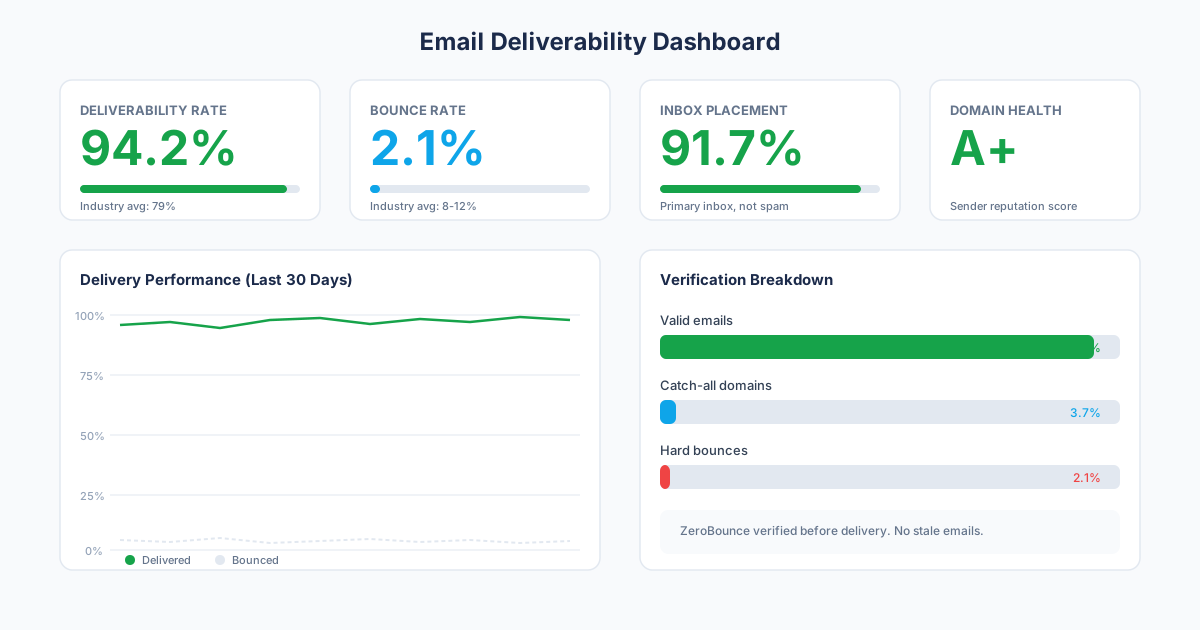
Each list is built when you order rather than exported from a static database. NPI status is checked against the CMS registry, every email runs through ZeroBounce validation, and practice addresses are confirmed against live business listings. Records that fail verification are flagged or removed before the file ships.
Can you separate medical from cosmetic dermatology practices?
The NPI record does not show the medical-versus-cosmetic split, so we add it from practice signals, which lets a biologics team and an aesthetic-device maker each target the right offices.
Can you flag PE-backed dermatology groups?
Yes. Dermatology is consolidating quickly, so we work to distinguish independent practices from those already part of a private-equity platform.
Can you identify the cosmetic device lines a practice uses?
Where a practice discloses its lasers or energy platforms, we capture them so device makers can target competitors' accounts or support their installed base.
Can you segment by subspecialty?
Where a provider lists a focus such as Mohs or pediatric dermatology, we flag it so drug and device buyers can prioritize the relevant practices.
Can you reach the group office for platform-owned practices?
Yes. For PE-backed groups, drug and device purchasing may run through a central function, so we work to flag ownership and reach the right contact.
How current is ownership data?
We rebuild each list at order time and work to confirm current ownership, since consolidation moves practices between independent and platform status quickly.
Can you build a medical-only or cosmetic-only list?
Yes. We can scope a build to medical-focused prescribers or to cosmetic-heavy practices depending on whether your product serves the disease or the aesthetic side.
Can you scope to one metro?
Yes. We can scope a list to a market and segment it by the medical-cosmetic split and ownership so a territory team works the right accounts.
What dermatologists data does Provyx provide?
We provide verified practice data for dermatologists including owner contacts, NPI details, specialty classifications, practice addresses, website, and LinkedIn profile. Every record is verified against the CMS NPI Registry. Direct email and mobile enrichment available as add-ons.
How accurate is the dermatologists contact data?
Our dermatologists data is verified against multiple sources including the CMS NPI Registry, state licensing boards, and commercial databases. We continuously verify records to catch moves, closures, and contact changes.
Can I filter dermatologists data by geography?
Yes. You can filter dermatologists records by state, metro area, ZIP code, or custom radius. We can build targeted lists for specific regions or provide nationwide coverage.
How often is Dermatologists data updated?
We verify dermatologists records on a continuous basis. Our system cross-checks the CMS NPI Registry for status changes, monitors practice websites for updated contact info, and flags records when providers move, retire, or change practice groups. You won't get a static list that goes stale after a month.
What format does the Dermatologists data come in?
We deliver dermatologists data in CSV, Excel, or CRM-ready formats. If you need custom field mapping to match your CRM or marketing platform, we'll handle that before delivery so you can import and start outreach immediately.
How do you deliver a dermatologists list?
We deliver dermatologists data in CSV, Excel, or CRM-ready format with the fields you specify. Each list is built when you order, so it reflects current dermatologists rather than a stale snapshot, and we can map columns to your CRM before delivery.
Is the dermatologists data verified?
Where dermatologists hold NPIs, records are verified against the CMS NPI registry and triangulated with state licensing boards and current public records. For dermatologists that operate as businesses without an NPI, we source from business records and confirm against live signals at build time.
Can you start with a sample dermatologists list?
Yes. We can build a small sample of dermatologists records so you can check fit and accuracy before committing to a full list, with no annual contract required.
Can you scope a dermatologists list to a specific geography?
Yes. We can scope a dermatologists build to a single state, a metro, a county, or a custom radius around a location, so a territory or local team works only the area that matters to them.
What fields can you include for dermatologists?
Beyond name and practice address, we can include the owner or decision-maker contact, NPI and classification where applicable, phone, website, and the segmentation attributes that matter for dermatologists. Direct email and mobile enrichment are available as add-ons.
Related Resources
Sources and References
Get the Provider Data You Need
Tell us what you're looking for. We'll build a custom list matched to your target market.
Trusted by healthcare sales teams, medical device companies, and health IT vendors across the US.