
Acupuncturist Email Lists: Coverage and Verification
If you've been searching for an acupuncturist email list, the realistic universe is around 35,000 to 40,000 licensed practitioners. Most lists on sale show you the 60 to 70% of acupuncturists with NPIs and miss the cash-pay practitioners entirely. Provyx builds the list per order, combining the NPI Registry, NCCAOM certification data, and state board files to cover the whole population. Source: CMS NPPES files.
Updated September 2026
Singular or Plural, You Want the Same Thing
"Acupuncturist email list" and "acupuncturists email list" return slightly different vendor pages on Google, but the buyer behind each search is asking the same question: who are the licensed practitioners in this profession and how do I reach them. This page covers that. If you want a deeper look at the data engineering behind the list, see our acupuncturists email list explainer. The data is the same; the framing here is faster and more action-oriented for buyers who already know they need a custom list.
How Many Acupuncturists Can You Reach by Email?
Start with the certified population. The NCCAOM has certified over 40,000 acupuncturists since the credential was introduced, and roughly 35,000 practice actively today across the 47 states with a separate acupuncture license (Oklahoma, South Dakota, and Wyoming license the technique under other credentials). From there the funnel narrows. The CMS NPI Registry covers the 60 to 70% who bill insurance or joined Medicare's chronic low back pain program after coverage opened in 2020. Layering in state board rosters and business listings recovers most of the cash-pay remainder.
Which States Have the Most Acupuncturists?
Licensure density follows the West Coast and the big coastal metros rather than population alone.
| State | Approximate licensed acupuncturists | Notes for outreach |
|---|---|---|
| California | ~5,500 | Largest concentration by far; dense in LA and the Bay Area |
| New York | ~4,000 | Strong insurance participation, more NPI coverage |
| Florida | ~3,000 | Licensed as Acupuncture Physicians with broader scope |
| Texas | ~1,500 | Growing fast off a smaller base |
| Washington | ~1,400 | High per-capita density, wellness-market oriented |
What Does an Acupuncturist Email List Cost?
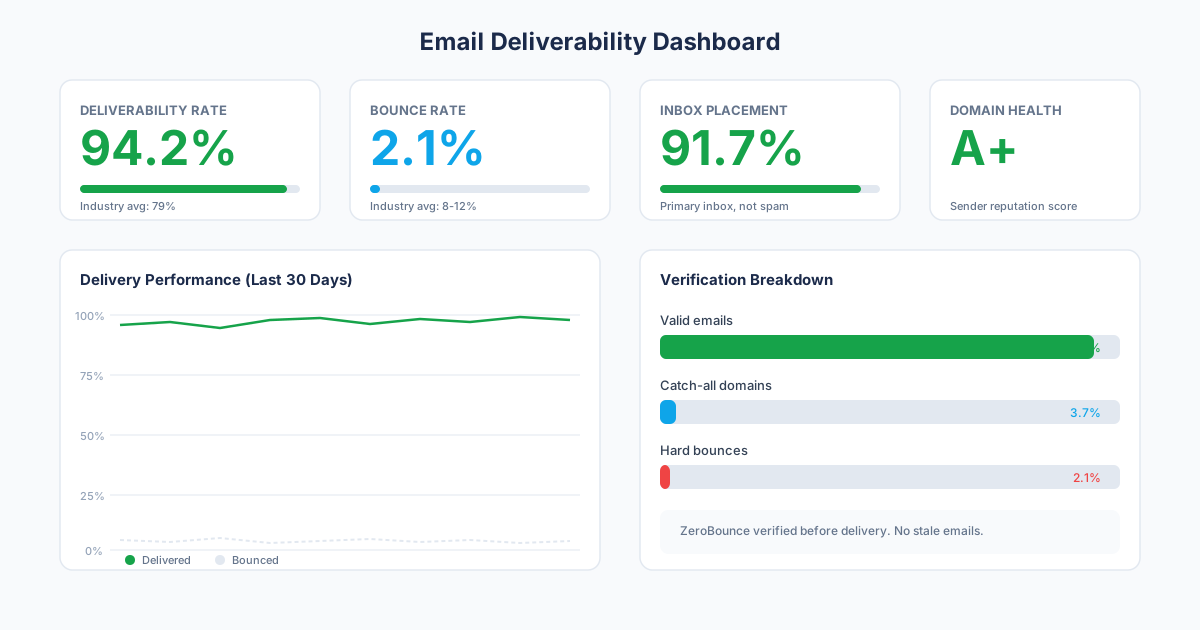
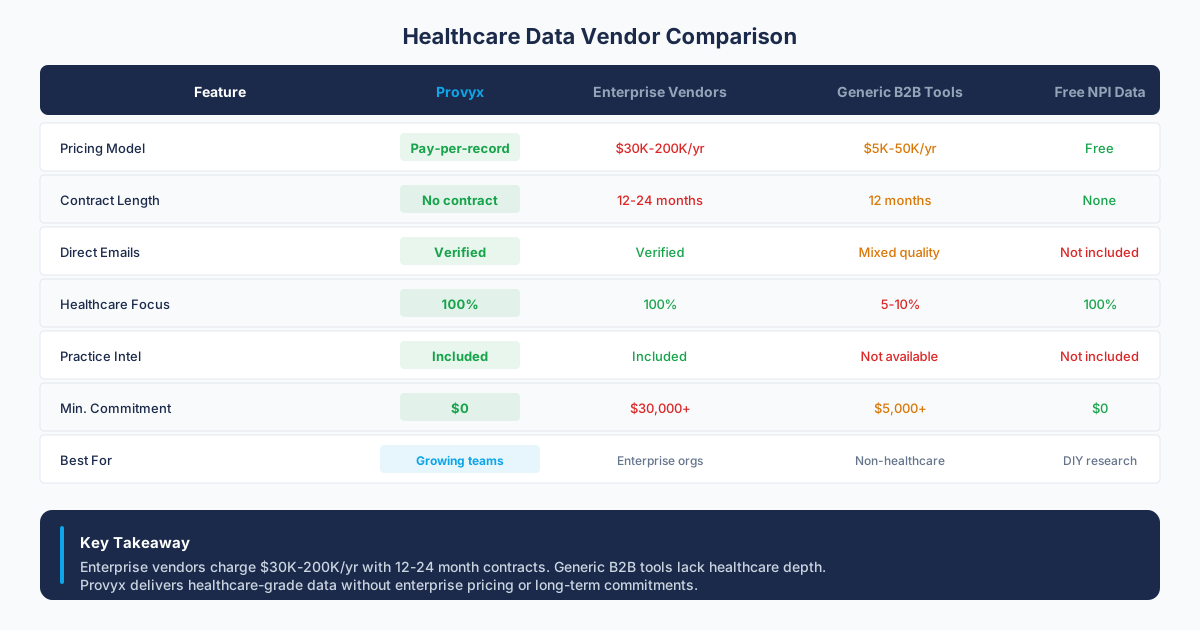
Provyx prices per project. Standard builds start at $2,500, and every emailed record is verified through ZeroBounce at build time rather than at some point in the database's past. The fastest way to judge whether any vendor's acupuncturist coverage is real: check ten records against state license lookups and send a small test batch. For how Provyx compares to the platforms and list brokers selling into this space, see the healthcare data vendor comparison. Source: current Provyx scope and pricing.
How Do You Keep Bounce Rates Down With This Audience?
Acupuncture is a harder deliverability environment than most provider specialties. Solo practitioners on free email providers change addresses more often than practices with domains, and a bounced send to a dead Gmail address damages your sender reputation the same as any other bounce. Three practices keep campaigns healthy.
Verify at send time, and again if the list ages past a quarter. Provyx validates every address at the mail-server level at build time, and we recommend revalidating any list older than 3-4 months before a large send. Second, warm up volume gradually; a brand-new domain blasting 10,000 acupuncturists in a day trips spam filters regardless of list quality. Third, respect CAN-SPAM basics: a physical address in the footer, a working unsubscribe, and business-relevant content. Provider business emails sit outside HIPAA (this is business contact data, no patient information), so CAN-SPAM and state privacy laws are the rules that apply. Our B2B healthcare lead generation guide covers sequencing and sender setup in detail. Source: FTC CAN-SPAM guide.
Who Buys Acupuncturist Email Lists and What Works
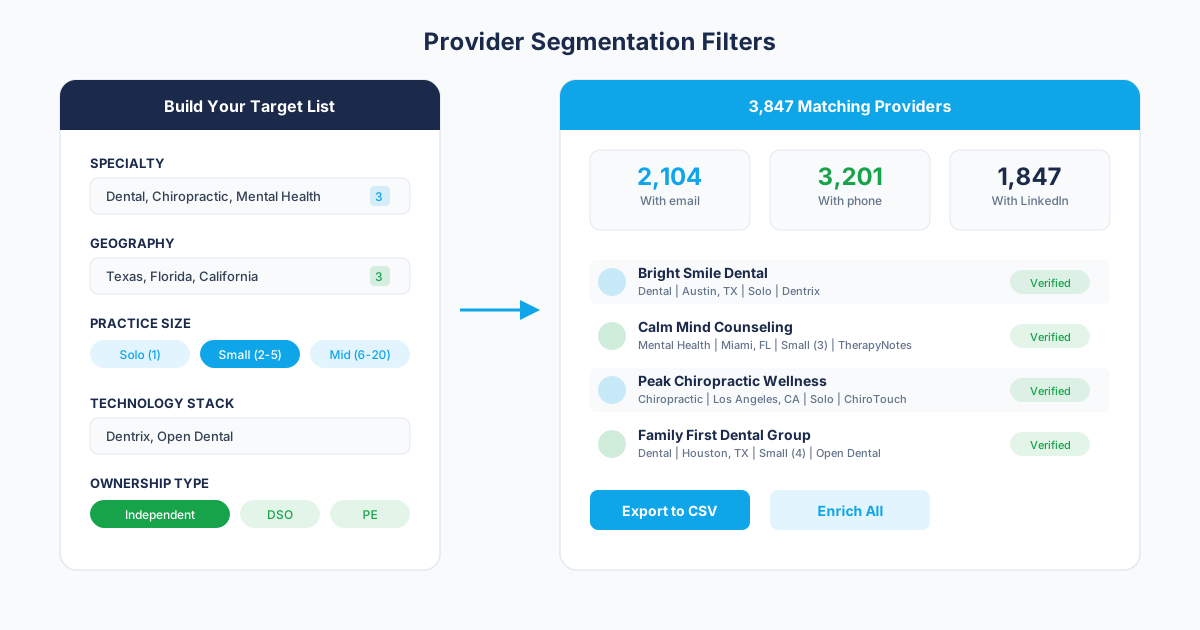
Needle and supply distributors, herbal and supplement brands, practice management and booking software, continuing education providers, and insurers building acupuncture networks make up most of the demand. The segmentation that matters differs by buyer. A supply distributor cares about practice volume and whether the practitioner buys direct or through a clinic. An herbal brand wants the NCCAOM herbal medicine certification flag, because certified herbalists stock and dispense. A software vendor wants solo and small-group practices still running on paper or generic booking tools.
An acupuncturist list should distinguish licensed practitioners, NPI-enumerated providers, and the practice businesses where outreach will land. Check the current practice, decision-maker role, email status, phone, and state license source independently. Preserve unresolved identity or affiliation conflicts so a small specialty list is not padded with plausible but unusable contacts.
Frequently Asked Questions
How many acupuncturists can you reach by email?
Out of roughly 35,000 to 40,000 licensed acupuncturists in the US, a multi-source build (NPI Registry, NCCAOM records, state boards, business listings) surfaces a verified email for the large majority of active practitioners. The exact count depends on geography and filters, which is why Provyx scopes each build to order rather than quoting one national number. Source: CMS NPPES files.
Is it legal to email acupuncturists from a purchased list?
Yes, for business-to-business outreach. Acupuncturist business contact data contains no patient information, so HIPAA does not apply. CAN-SPAM governs the sends: include a physical mailing address, honor unsubscribes promptly, and keep the content business-relevant. State privacy laws like CCPA add obligations for California contacts. Source: FTC CAN-SPAM guide. Source: https://www.ftc.gov/business-guidance/resources/can-spam-act-compliance-guide-business.
How is this page different from your acupuncturists email list page?
Same underlying data, different depth. This page is the buyer-focused version: counts, costs, deliverability, and legality. The acupuncturists email list explainer goes deeper on the data engineering, source triangulation, and credential filtering behind the build.
How should license and NPI evidence be combined?
Use licensing evidence for professional status and NPI data for reported provider identity where available. Keep the sources separate because they may describe different practice relationships.
Which practice details help segment acupuncturists?
Practice model, treatment focus, location, website, ownership, and business contact path can make the list actionable. Each field should carry a source and observation date.
Disclosure and Sources
How to Review a List Before Importing It
Ask for a field dictionary before approving the build. It should distinguish the practitioner, the practice location, the license or credential source, the contact channel, and the date each field was checked. Keep source evidence beside the delivered value so your team can resolve conflicts without guessing which record is newer.
Review a small sample against the public sources that matter for your campaign. Confirm that the practitioner and practice are separate entities, that the location is current, and that the role you plan to contact is supported by the cited source. A website, registry, professional profile, and business listing answer different questions; agreement across sources is stronger than a single match.
Plan the CRM import before outreach begins. Map the incoming fields, define duplicate rules, preserve existing opt-out and suppression data, and decide which conflicts require manual review. After import, segment the audience by geography, practice type, and evidenced role instead of treating every record as interchangeable. This review process makes the list easier to audit, refresh, and use responsibly.
Related Resources
Get the Provider Data You Need
Tell us what you're looking for. We'll build a custom list matched to your target market.
Trusted by healthcare sales teams, medical device companies, and health IT vendors across the US.