
Specialty Practice Owner Data: A Sales Guide
The person listed on the NPI record is often not the person who decides what to buy. Here's how to find the one who does.
2026-03-29
Why Ownership Data Changes Everything
You have a list of 5,000 dermatology practices. You know the providers, the addresses, the phone numbers. You start calling. Three weeks later, you've learned something painful: half your calls are going to physicians who can't authorize a purchase because they don't own the practice. They're employees of a PE-backed management company, or they work under a hospital system that controls purchasing centrally.
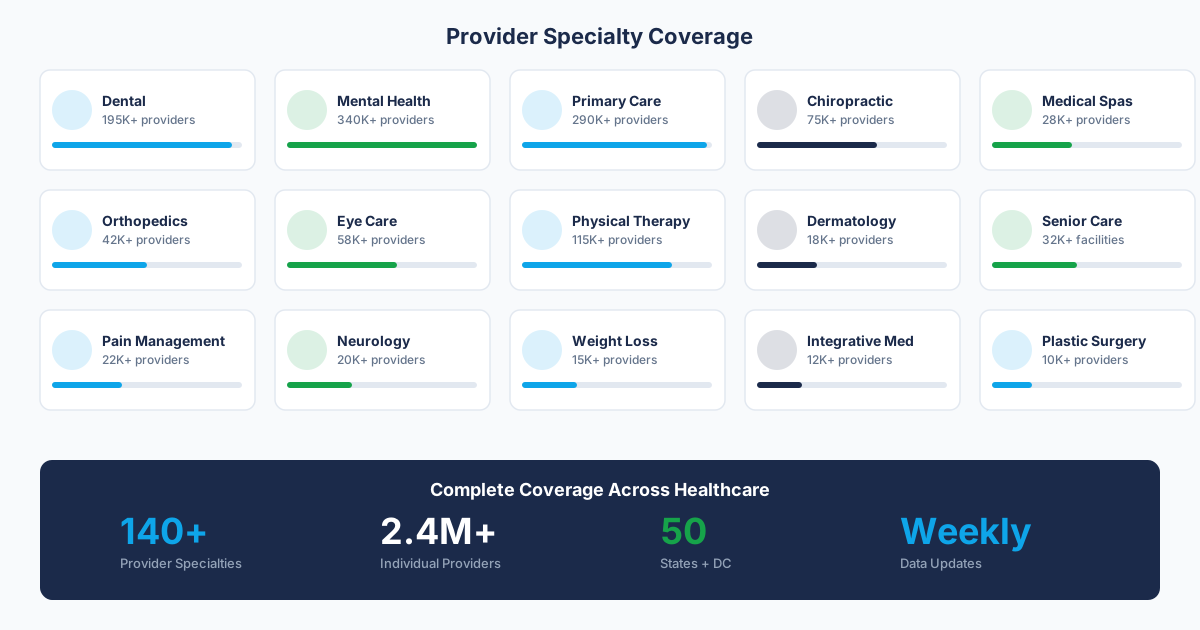
This is the ownership data problem, and it's getting worse every year. The AMA's 2025 benchmark survey found that fewer than 47% of US physicians now own their practices. That means more than half the providers in your database work for someone else. And that someone else is who you should be calling.
The Four Ownership Models
Understanding who owns what is the first step to knowing who to call.
1. Physician-Owned Independent Practices
The simplest model. One or more physicians own the practice as sole proprietors, partners, or through an LLC/S-corp. The physician-owner controls all purchasing decisions. These are your fastest sales cycles because the decision-maker and the end user are the same person.
How to identify them: State Secretary of State filings often list the registered agent or manager of the LLC. Cross-reference the LLC name with the practice name and NPI records. If the registered agent is a physician listed on the practice's NPI, you've likely found a physician-owned practice.
Prevalence: Still the most common model in some specialties (dental, chiropractic, optometry), but declining in others.
2. Private Equity-Backed Groups
PE firms have been acquiring specialty practices aggressively since 2017. They typically buy 5-15 practices, install a management company, and make purchasing decisions centrally through a regional operations director or VP of procurement. The physicians at each location are employees or partners with limited buying authority.
How to identify them: PE-backed groups often operate under a management company name that's different from the individual practice names. Look for patterns: multiple practices with different names but the same phone system, the same email domain, or the same website template. News searches for "[practice name] acquisition" surface PE deals. PitchBook and similar platforms track healthcare PE transactions.
Key specialties: dermatology, ophthalmology, dental (DSOs), gastroenterology, and increasingly orthopedics and physical therapy.
3. Hospital System-Employed Practices
Health systems employ physicians directly and operate their practices as outpatient clinics under the system's umbrella. Purchasing goes through the system's supply chain and IT departments. The individual physicians have zero purchasing authority for anything beyond minor office supplies.
How to identify them: CMS provider enrollment data links individual NPIs to organizational NPIs. If a provider's practice address matches a hospital system's known locations, or their email domain is the hospital system's domain (e.g., @clevelandclinic.org), they're almost certainly employed. The NPI Type 2 record for the organization often lists the system affiliation.
4. Management Services Organizations (MSOs)
MSOs sit between full physician ownership and PE acquisition. The physician technically owns the practice but contracts with an MSO for billing, operations, marketing, and often technology purchasing. The MSO may have significant influence over vendor selection even though the physician is the nominal owner.
How to identify them: MSO relationships are the hardest to detect from public data. Look for practices that share a billing address or billing NPI with other unrelated practices. MSO-managed practices sometimes share website infrastructure, phone system vendors, or even Google Business Profile management. The patterns are subtle.
Ownership Data Sources
No single source gives you a complete picture of practice ownership. Here are the sources that matter, ranked by reliability.
State Secretary of State Filings
Most medical practices are registered as LLCs, PLLCs, PCs, or S-corps with their state's Secretary of State. These filings typically include the registered agent, manager or managing member, and sometimes officer names. Cross-referencing the entity name with the practice's NPI record connects the ownership data to the provider data.
Limitation: some states allow registered agents to be third parties (lawyers, corporate formation services), obscuring the actual owner. And filings aren't always current. Practices that changed ownership may not have updated their state filings for months.
NPI Registry Authorized Official
Every Type 2 (organizational) NPI has an authorized official listed in the NPPES registry. This is often the practice owner or a senior administrator. It's not always the current owner (records lag behind ownership changes), but it's a useful data point to cross-reference against other sources.
Practice Websites
Many independent practices list their owner, medical director, or founding physician on their "About" page. Web scraping at scale can extract these names and match them to NPI records. This is one of the highest-quality sources for ownership identification because it reflects how the practice presents itself publicly.
State Licensing Boards
Medical licensing boards in some states publish practice ownership or affiliation information alongside license records. This varies significantly by state. Some states are excellent sources. Others provide only the licensee's name and address with no ownership information.
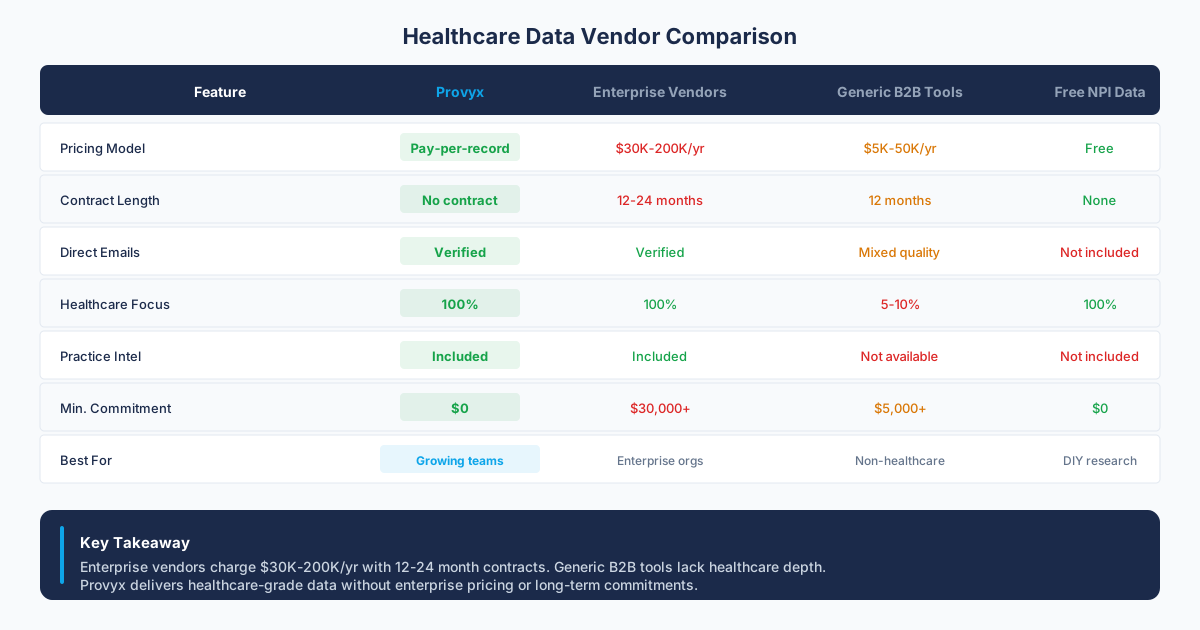
Physician LinkedIn profiles often include titles like "Owner," "Founder," "Managing Partner," or "Medical Director." For non-physician decision-makers (practice administrators, regional managers), LinkedIn is often the best source for name, title, and contact information. Our social profiles service extracts and verifies these signals at scale.
Ownership Rates by Specialty
Not all specialties are created equal when it comes to ownership structure. Here's what the landscape looks like in 2026:
High Physician Ownership (60%+ independent)
- Chiropractic:: ~75% independently owned. Chiropractors overwhelmingly own their practices. Low startup costs and a solo-practice culture keep this specialty heavily independent.
- Dental (non-DSO):: ~65% independently owned, but declining fast. DSOs now account for roughly 30% of dental practice revenue and the percentage is growing.
- Optometry:: ~60% independently owned. Similar to dental, with private equity interest growing but still in earlier stages.
Medium Physician Ownership (35-60% independent)
- Dermatology:: ~45% independently owned. PE consolidation hit dermatology earlier and harder than most specialties.
- Primary care:: ~40% independently owned. Amazon, CVS/Oak Street, and hospital systems are absorbing independent PCPs at scale.
- Plastic surgery:: ~50% independently owned. Cosmetic practices tend to stay independent longer than reconstructive practices.
Low Physician Ownership (Under 35% independent)
- Orthopedics:: ~30% independently owned. Hospital systems and PE firms have been aggressive here.
- Cardiology:: ~25% independently owned. Most cardiologists are now hospital-employed.
- Oncology:: ~20% independently owned. The capital requirements for oncology (imaging, infusion centers, drug costs) push practices toward health system affiliation.
Using Ownership Data in Your Sales Process
Segment Before You Outreach
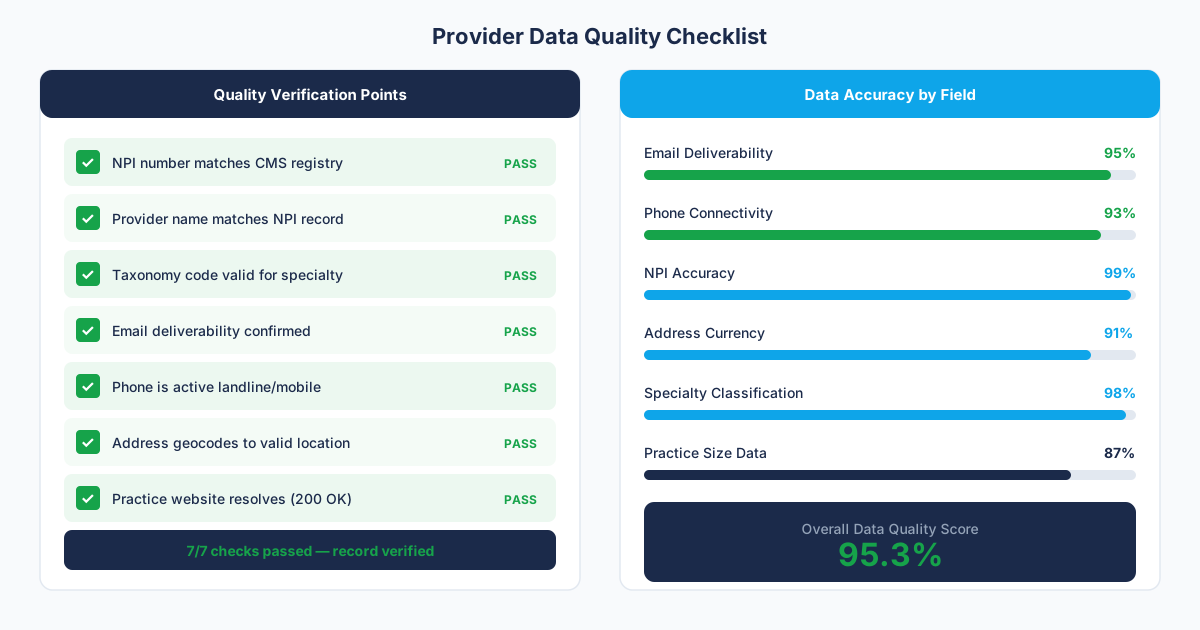
Before launching any campaign, segment your list by ownership type. The messaging, the contact, and the sales cycle are different for each:
- Physician-owned independents:: Target the owner-physician. Direct email and phone. Fast decision cycles. Emphasize personal ROI and practice-level outcomes.
- PE-backed groups:: Target the regional operations director or VP of procurement at the management company. Longer cycle. Emphasize scalability across locations and group-wide ROI.
- Hospital system-employed:: Target the department head and relevant VP at the system level. Longest cycle. See our guide to selling into health systems.
- MSO-managed:: Target both the physician-owner and the MSO's operations team. Decision-making is shared, so you need both relationships.
Prioritize Physician-Owned for Velocity
If your sales team needs quick wins and pipeline velocity, weight your outreach toward physician-owned independent practices. The deal sizes are smaller, but the sales cycles are 3-5x faster than PE or system deals. One person decides. One conversation closes. For teams building initial traction in a new specialty, ownership-prioritized targeting cuts time-to-revenue dramatically.
Use Ownership to Identify Consolidation Opportunities
PE firms that just acquired 10 practices in your target specialty are about to standardize technology, vendors, and processes across all 10 locations. That's a window of opportunity. They're actively evaluating solutions for the group. If you can identify the acquisition within 3-6 months of close, you can position your solution during the consolidation process when decisions are being made.
Track PE healthcare deals through industry news, PitchBook, and changes in practice email domains or website branding. A practice that suddenly changes its website from "Dr. Johnson's Dermatology" to "SkinHealth Partners - Johnson Location" just got acquired.
Building an Ownership-Enriched Database
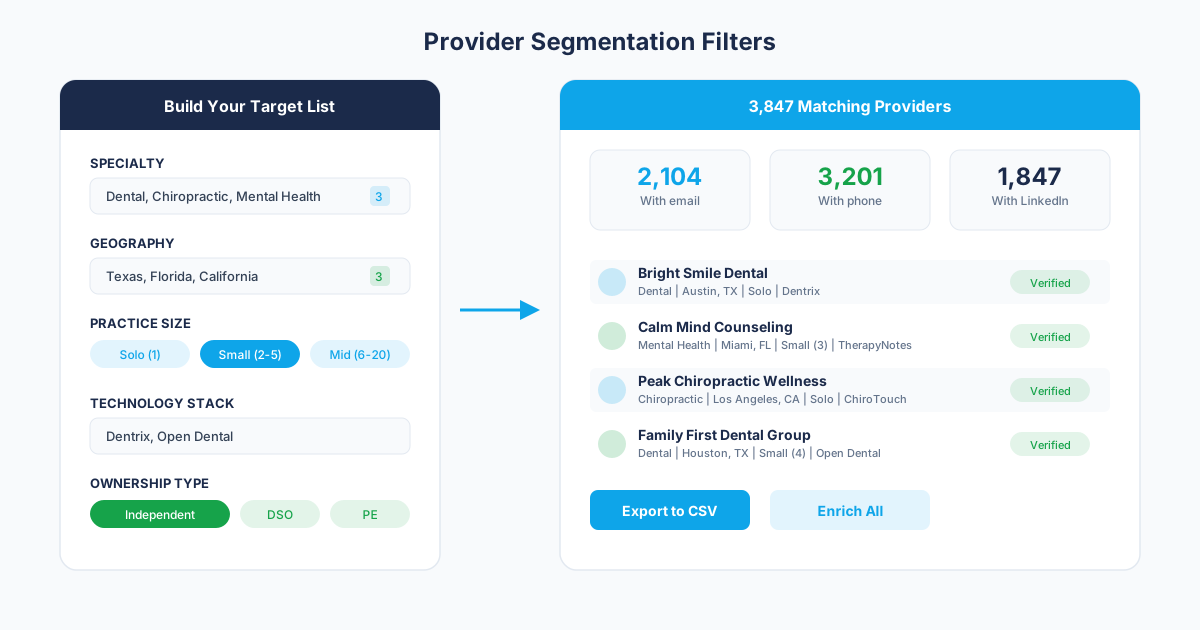
Assembling ownership data at scale requires combining multiple sources through a multi-step pipeline:
- Start with NPI.: Pull your target specialty and geography from the NPPES registry. This gives you the provider universe.
- Match to state filings.: Cross-reference practice names and addresses against Secretary of State business entity databases. Match LLC managers to provider names.
- Enrich from web.: Scrape practice websites for owner names, "About" pages, and team directories. Match extracted names to NPI records.
- Layer LinkedIn.: Search for providers with ownership titles (Owner, Founder, Managing Partner) at practices matching your NPI records.
- Flag PE and system affiliations.: Use email domain analysis, shared billing NPIs, and management company cross-references to identify non-independent practices.
- Validate and score.: Assign confidence levels based on the number of corroborating sources. A practice where the SOS filing, website, and LinkedIn all point to the same owner gets a high confidence score. A practice where only one source mentions ownership gets a lower score.
This is non-trivial work. Building and maintaining an ownership-enriched database across even one specialty requires data engineering, regular refresh cycles, and quality control. For most sales teams, buying this data from a provider that specializes in it makes more sense than building from scratch.
The Ownership Data Gap Is Your Opportunity
Most of your competitors are still prospecting from basic NPI lists. They're calling the physician listed on the NPI record and hoping that person can buy something. Half the time, they can't. That means half those calls are wasted before the rep even dials.
If your data tells you who owns each practice and who controls purchasing decisions, you skip the wasted calls entirely. Your reps spend 100% of their time talking to people who can actually say yes. That's not an incremental improvement. It's a structural advantage that compounds over every campaign you run.
Frequently Asked Questions
What percentage of physicians own their own practices?
Less than 47% as of the AMA's 2025 benchmark survey, down from 53% five years ago. Ownership rates vary dramatically by specialty. Chiropractic and dental remain heavily physician-owned (60-75%), while orthopedics, cardiology, and oncology have dropped below 35% independent ownership due to PE acquisitions and hospital system employment.
How do I find out who owns a medical practice?
Cross-reference multiple sources: State Secretary of State LLC filings (registered agent and manager names), NPI registry authorized official, practice website 'About' pages, state licensing board records, and LinkedIn profiles with ownership titles. No single source is reliable alone. Confidence increases with each corroborating source.
Why does practice ownership matter for healthcare sales?
Ownership determines who controls purchasing decisions. At physician-owned practices, the owner-physician decides. At PE-backed groups, a regional operations director or VP of procurement decides. At hospital system-employed practices, purchasing goes through the system's supply chain. Calling the wrong person wastes your rep's time and the prospect's patience.
Which medical specialties have the most PE acquisition activity?
Dermatology, ophthalmology, dental (through DSOs), and gastroenterology saw the earliest PE activity starting around 2017. Orthopedics and physical therapy are the most active current targets. Cardiology and oncology are increasingly hospital system-employed rather than PE-backed, driven by high capital requirements for equipment and drugs.
Sources and References
Related Resources
Get the Provider Data You Need
Tell us what you're looking for. We'll build a custom list matched to your target market.
Trusted by healthcare sales teams, medical device companies, and health IT vendors across the US.