
How to Sell to Healthcare Systems in 2026
Selling to health systems is a different sport than selling to independent practices. Different stakeholders, different timelines, different data needs.
2026-03-29
Healthcare Systems Are Not Big Practices
The biggest mistake companies make when moving upmarket into healthcare systems is treating them like scaled-up independent practices. They're not. A 200-bed hospital system with 15 outpatient clinics and 400 employed physicians operates nothing like a solo dermatology practice. The decision-making structure is different. The buying cycle is different. The stakeholders are different. And the data you need to sell effectively is fundamentally different.
According to the American Hospital Association, there are roughly 6,100 hospitals in the US, belonging to about 350 large health systems. Those 350 systems employ the majority of US physicians. If you're selling into healthcare and ignoring systems, you're ignoring where most of the buying power sits.
But getting in the door is hard. Here's what actually works.
Understanding the Health System Org Chart
Health system purchasing decisions involve multiple layers of stakeholders. Knowing who they are, what they care about, and how they interact is the foundation of any system-selling strategy.
The C-Suite
CEO, CFO, COO, CMO, CIO, CNIO. These executives set strategic priorities and approve major expenditures. You won't close a deal without their sign-off on anything above $50K, and often much lower. But you also won't get a meeting with them by cold-calling. C-suite access comes through internal champions and board-level referrals.
What they care about: financial performance, quality metrics, regulatory compliance, competitive positioning, and operational efficiency. They don't care about your product's features. They care about the outcomes it produces for their organization.
Vice Presidents and Directors
VP of Supply Chain, VP of Clinical Operations, Director of IT, Director of Physician Services. These are the people who evaluate solutions, run pilots, and make recommendations to the C-suite. They're your primary working contacts during the sales process.
What they care about: implementation complexity, integration with existing systems, vendor track record, and how your solution affects their team's workload. They're the ones who have to live with whatever gets purchased.
Value Analysis Committees
Most health systems with 100+ beds have a Value Analysis Committee (VAC) that reviews and approves new vendor relationships, especially for clinical products and services. The VAC typically includes representatives from clinical departments, supply chain, finance, and quality. Getting on the VAC agenda requires an internal sponsor, and the review process can take 3-12 months. For a detailed breakdown, see our VAC navigation guide.
Clinical Champions
The physician or nurse leader who actually wants your solution and is willing to advocate for it internally. Without a clinical champion, health system deals stall. The champion doesn't have to be the most senior person. A department chief or section head with credibility and energy can move a deal faster than a lukewarm CMO.
Finding the champion is the hard part. They won't come to you through a cold email. They emerge through clinical events, peer referrals, and targeted outreach to providers who are already signaling interest in the problem you solve.
The Health System Buying Cycle
If you're used to 30-60 day sales cycles with independent practices, health system selling will test your patience. Average enterprise healthcare deals take 6-18 months from first meaningful conversation to signed contract. Some take longer.
Phase 1: Problem Recognition (Months 1-3)
The health system acknowledges they have a problem. Maybe their quality scores are slipping. Maybe they're losing market share to a competitor. Maybe a new regulation requires technology they don't have. At this point, they're researching the problem, not shopping for solutions.
Your job in Phase 1: be visible. Publish content that speaks to the problem. Get referenced in industry publications. Present at conferences where their clinical leaders attend. You're not selling yet. You're establishing credibility on the problem.
Phase 2: Solution Exploration (Months 3-6)
The system starts evaluating options. They'll talk to 3-5 vendors, request demos, and ask for references. This is where having the right contact data matters. You need to know which stakeholders are involved in the evaluation and how to reach them directly, not through the general switchboard. Org chart mapping is essential here.
Phase 3: Internal Alignment (Months 6-12)
This is where deals go to die. The clinical champion likes your solution. The VP of IT has concerns about integration. Finance wants a different pricing model. Legal is reviewing your BAA. The VAC wants more clinical evidence. All of these conversations happen internally, without you in the room.
Your job in Phase 3: make it easy for your champion to sell internally. Provide ROI calculators, implementation timelines, reference customers who look like them, and anything else that addresses objections you can't directly counter because you're not in the meeting.
Phase 4: Decision and Contracting (Months 12-18)
Vendor selection, contract negotiation, legal review, and final approval. Healthcare contracting is notoriously slow. Expect 2-4 months from verbal commitment to signed contract. Don't celebrate the verbal. It's not done until it's signed.
The Data You Need to Sell Into Systems
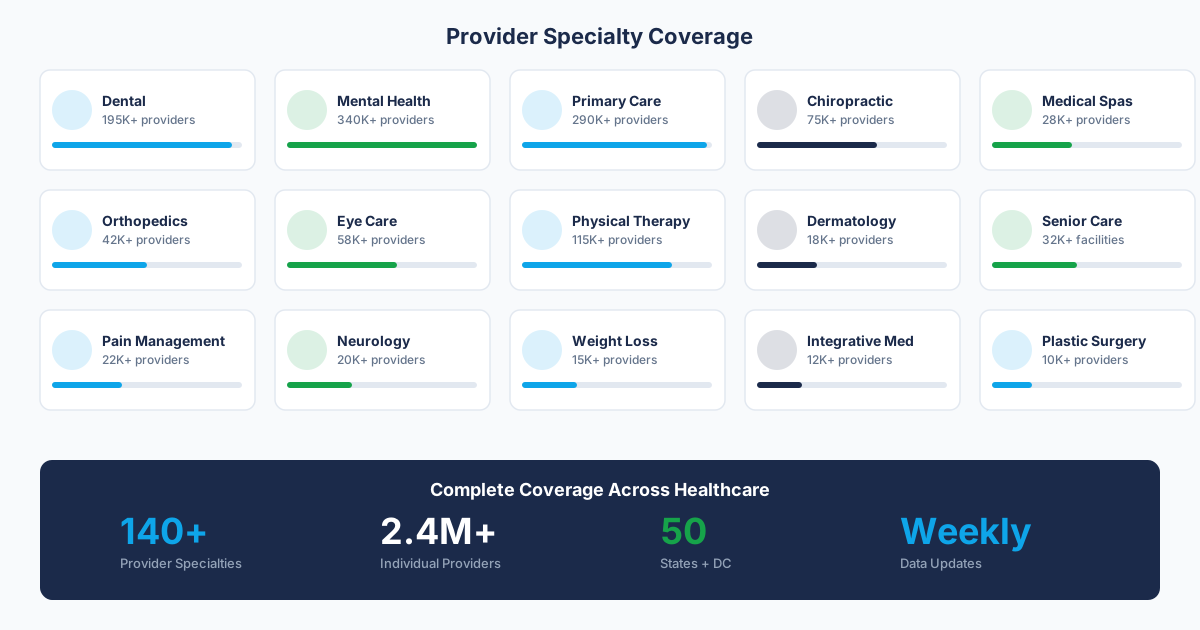
Selling to health systems requires different data than selling to independent practices. Here's what your data stack needs to include.
Organizational Hierarchy
You need to understand the system's structure. Which hospitals belong to the system? Which outpatient clinics? Which physician groups are employed vs. Affiliated? How many beds? How many employed physicians? What specialties do they operate?
This data exists across multiple sources: AHA annual surveys, CMS provider enrollment files, the NPI registry (Type 2 organizational NPIs), state licensing records, and the system's own website. No single source gives you the complete picture. You need to merge them.
Stakeholder Contact Data
Named contacts with titles, email addresses, phone numbers, and LinkedIn profiles for the specific people involved in purchasing decisions. "the CMO's actual name, their background, their tenure at the organization, and how to reach them.
This is where most provider databases fall short. They're optimized for Type 1 NPI records (individual providers), not the administrative and executive contacts who control purchasing at health systems. You often need to supplement NPI-based data with LinkedIn data and web-scraped org chart information.
Technology Stack
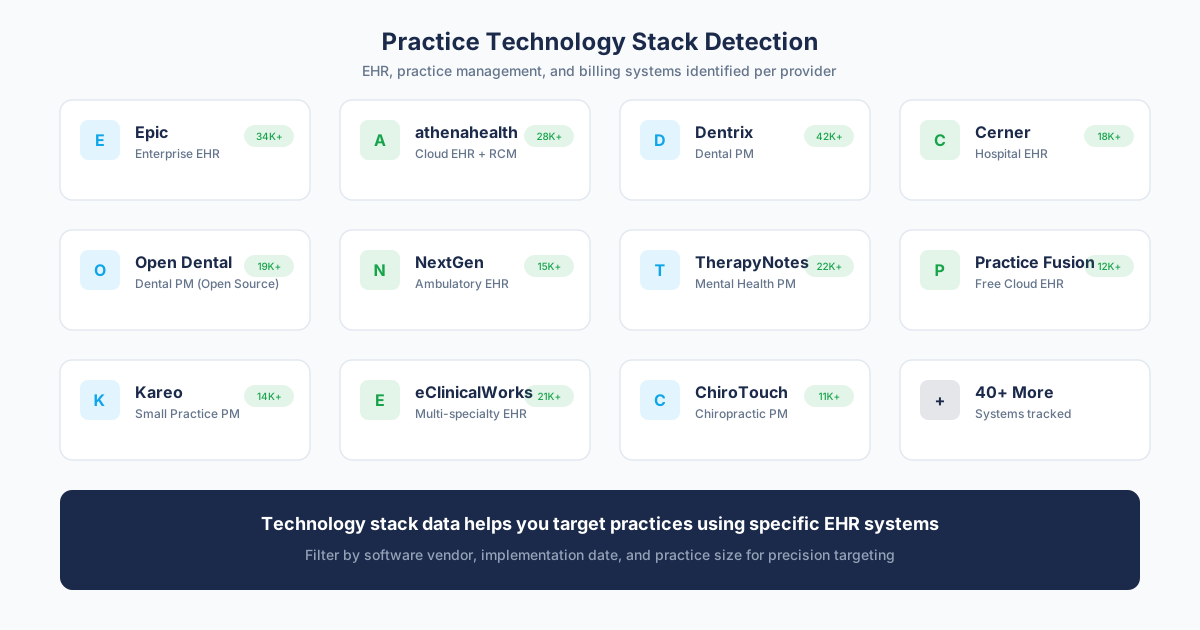
What EHR does the system run? What revenue cycle management platform? What telehealth solution? Technology stack data tells you about integration requirements, competitive displacement opportunities, and the system's overall technology maturity. Our technology detection service identifies these signals across practice websites and job postings.
Financial and Operational Metrics
CMS publishes hospital financial data through the Healthcare Cost Report Information System (HCRIS). You can find revenue, expenses, bed counts, case mix indices, and payer mix data for every Medicare-participating hospital. This data tells you whether a system can afford your solution and where their financial pressure points are.
Competitive Intelligence
Which of your competitors already have contracts with the system? If they're using a competitor, your pitch is displacement, which is a different conversation than greenfield adoption. If they use nobody, there's likely an internal resistance to the category that you need to understand and address. Competitive intelligence data prevents wasted pitches to systems that are locked into multi-year contracts with your competitor.
Outreach Tactics That Work for Health Systems
Account-Based Marketing
Health system selling is ABM or nothing. You can't spray-and-pray into enterprise healthcare. Pick 20-50 target systems, research each one deeply, and run multi-channel campaigns tailored to each organization's specific situation, priorities, and stakeholders.
Effective healthcare ABM requires multi-stakeholder contact data (3-5 named contacts per target system), personalized messaging by role and department, and coordination between marketing and field sales. For a complete playbook, see our healthcare ABM strategy guide.
Clinical Events and Conferences
Healthcare conferences remain the single best channel for initiating health system relationships. HIMSS, RSNA, specialty-specific annual meetings, and regional health system CIO forums put you in front of decision-makers who are in buying mode. But only if you do the pre-work. Showing up without a target list and meeting schedule is tourism, not selling.
Physician-Led Introductions
The highest-converting path into a health system is through a physician who already uses your solution at another organization. Physicians who move between systems carry their tool preferences with them. A cardiologist who used your device at their previous hospital and now leads a department at a new system is your best possible internal champion.
Tracking physician affiliations over time helps you identify these opportunities. When a champion changes systems, that's a sales trigger worth acting on immediately.
GPO and IDN Channels
Group Purchasing Organizations (GPOs) and Integrated Delivery Networks (IDNs) control purchasing for their member systems. Getting on a GPO contract can open doors to hundreds of hospitals simultaneously. But the GPO contracting process is its own sales cycle, often taking 12-24 months. Consider GPO strategy as a long-term play, not a shortcut. Our GPO navigation guide covers this in detail.
Common Mistakes When Selling to Health Systems
Leading With Product Instead of Problem
Health system executives hear 50 vendor pitches a month. They tune out anyone who leads with features. Lead with the problem you solve, quantified in terms they care about: dollars, quality scores, patient outcomes, staff time saved. Your product is the mechanism. The outcome is the pitch.
Treating It as a Single-Thread Deal
Relying on one contact inside the system is how deals die quietly. Your single contact goes on vacation, changes roles, or loses internal political capital, and your deal evaporates. Multi-thread every health system deal with contacts in at least three departments: clinical, operational, and financial.
Underestimating Legal and Compliance
Healthcare legal departments are thorough and slow. They'll review your BAA, security questionnaire, data handling practices, and liability clauses in detail. Start the legal process early. Send your BAA and security documentation proactively before legal review becomes the bottleneck.
Ignoring the Installed Base
If the system has a multi-year contract with your competitor, spending 6 months on an aggressive sales campaign is a bad allocation of resources. Know the competitive landscape before you invest heavily in any target account. Better to identify the 10 systems where you have a realistic path than to pursue 50 where half are locked up.
The Payoff
Health system deals are long, complex, and frustrating. They require patience, multi-stakeholder coordination, and data infrastructure that most sales teams don't invest in until they've failed several times.
But the economics are compelling. A single health system contract is worth 10-50x the value of an independent practice deal. The system's physicians become users who carry your solution to their next organization. And system contracts renew at higher rates than individual practice contracts because the switching costs are substantial.
The companies winning in health system sales aren't the ones with the best product. They're the ones with the best intelligence on organizational structure, stakeholder access, and buying cycle timing. Data is the strategic advantage that separates the companies closing system deals from the ones getting stuck in voicemail.
Frequently Asked Questions
How long does it take to close a deal with a healthcare system?
Average enterprise healthcare sales cycles run 6-18 months from first meaningful conversation to signed contract. Complex deals involving clinical products, IT integration, or system-wide deployment can take 24 months or longer. Budget for 2-4 months of legal and contracting after receiving a verbal commitment.
How many stakeholders are typically involved in a health system purchase?
Expect 5-12 stakeholders across clinical departments, operations, IT, finance, legal, and supply chain. Most systems with 100+ beds also route vendor decisions through a Value Analysis Committee. Multi-threading your deal across at least three departments is essential to prevent single-point-of-failure risk.
What data do I need to sell into healthcare systems?
Five categories: organizational hierarchy (which facilities belong to the system), stakeholder contact data (named decision-makers with direct contact information), technology stack (EHR, RCM, telehealth platforms), financial and operational metrics (revenue, bed count, case mix), and competitive intelligence (existing vendor contracts). No single data source covers all five. You need a merged dataset from NPI, AHA, CMS cost reports, and commercial data providers.
What's the best way to get an initial meeting with a health system?
The three highest-converting channels are clinical events and conferences (HIMSS, specialty meetings), physician-led introductions from providers who used your solution at a previous organization, and targeted ABM campaigns with personalized outreach to 3-5 named stakeholders per system. Cold calling the main switchboard converts at near-zero rates for health system sales.
Sources and References
Related Resources
Get the Provider Data You Need
Tell us what you're looking for. We'll build a custom list matched to your target market.
Trusted by healthcare sales teams, medical device companies, and health IT vendors across the US.