
What Private Equity Firms Need from Healthcare Provider Data
PE firms are buying healthcare practices at record pace. The ones with the best data pick the best targets.
2026-02-15
Private Equity's Healthcare Acquisition Boom
Private equity firms completed over 1,400 healthcare provider transactions in 2025, according to PitchBook data. That's up from roughly 800 in 2020. The pace hasn't slowed in 2026.
The thesis is straightforward. Healthcare practices are fragmented, often owner-operated, and ripe for consolidation. A PE firm buys a platform practice, bolts on additional locations, centralizes back-office operations, improves margins through purchasing power and operational efficiency, and exits at a higher multiple than entry.
It works. Healthcare services has been one of the best-performing PE sectors over the past decade, with median IRRs north of 20% for well-executed roll-ups. But the strategy lives or dies on target selection. And target selection is a data problem.
This guide covers what healthcare provider data PE firms need, how diligence data requirements differ from sales prospecting, which specialties PE is targeting, and how to build the data infrastructure for a healthcare roll-up strategy.
How PE Healthcare Data Needs Differ from Sales Prospecting
Most provider data is built for sales teams. A rep needs a name, a phone number, an email, and maybe the practice's current EHR system. That's enough to make a call and book a demo.
PE firms need something fundamentally different. They need data that supports investment decisions worth tens or hundreds of millions of dollars. The stakes are higher, the questions are more complex, and the data needs to be both broader and deeper.
Sales Data vs. Investment Data
Here's how the requirements compare:
- Sales prospecting:: Who's the decision-maker? What's their email? What software do they use? Can I reach them this week?
- PE target identification:: How many providers work at this practice? What's their estimated revenue? Who owns it? Is it already PE-backed? What's the competitive density in their market? How old is the practice? What's the provider-to-staff ratio?
- PE diligence:: What insurance panels are they on? What's their payer mix? What's their online reputation? Are there compliance issues? What technology do they run? How does their pricing compare to market? Is the owner approaching retirement age?
A sales rep can work with 70% accurate data and compensate with volume. A PE associate running a screen needs 90%+ accuracy because every false positive wastes diligence resources, and a missed target is a missed deal.
The Data Points PE Firms Need
Based on working with PE firms and their portfolio companies, here are the data categories that matter most for healthcare acquisitions.
Practice Revenue Indicators
PE firms want to estimate practice revenue before they ever make a call. Direct revenue data for private practices is rarely available (they don't file public financial statements), so firms rely on proxies:
- Provider headcount:: The number of revenue-generating providers at a location is the strongest proxy for practice size and revenue. A dental practice with 4 dentists and 6 hygienists generates significantly more than a solo dentist with one hygienist.
- Location count:: Multi-location practices typically indicate higher revenue and more sophisticated operations. They also indicate management capability, which PE values highly.
- Specialty mix:: A dermatology practice that does cosmetic procedures alongside medical dermatology has a different revenue profile than one that's purely medical. Specialty and sub-specialty data helps estimate revenue per provider.
- Insurance panel breadth:: Practices on many insurance panels typically have higher patient volume but lower per-visit revenue. Practices with a strong cash-pay component often have higher margins.
- Years in operation:: Older practices tend to have more established patient bases, which means more predictable revenue. A 20-year-old practice with an aging owner is the classic PE acquisition target.
Ownership Structure
This is the most critical and hardest-to-obtain data point for PE. A firm can't acquire a practice that's already owned by another PE firm (or at least, the economics change dramatically). They need to know:
- Current ownership:: Is it owner-operated? PE-backed? Hospital-affiliated? Part of a DSO/MSO? Knowing this upfront avoids wasting time on targets that aren't available.
- Owner demographics:: Age and career stage matter. An owner approaching retirement is more likely to sell and often more motivated to close quickly. A 35-year-old owner who just opened their second location probably isn't selling.
- Corporate affiliation:: Is the practice independent, or is it a franchise/affiliate of a larger organization? Aspen Dental, Heartland Dental, and similar DSOs control thousands of locations that appear independent from the outside.
Ownership data is notoriously difficult to compile at scale. It requires cross-referencing state corporate filings, dental board records, SEC filings (for larger groups), and direct research. Custom research is often necessary for ownership identification at the practice level.
Geographic and Competitive Intelligence
PE firms don't just evaluate individual practices. They evaluate markets. The data they need includes:
- Provider density:: How many competing practices exist within a defined radius? High-density markets mean more acquisition targets but also more competition for patients. Low-density markets mean less competition but smaller TAM.
- Market share concentration:: Is the market fragmented (dozens of independent practices) or consolidated (one or two large groups dominating)? PE prefers fragmented markets where a roll-up strategy has room to run.
- Demographic data:: Population growth, median household income, insurance coverage rates, and age distribution in the practice's service area. A pediatric dental practice in a zip code with declining birth rates has a different growth trajectory than one in a fast-growing suburban area.
- New practice formation:: How many new practices have opened in the area in the last 2-3 years? High new-practice formation can signal either a growing market or oversaturation.
Practice location data combined with geographic analysis tools lets PE firms map competitive density and identify white-space opportunities.
Technology Stack
A practice's technology stack tells PE firms several things:
- Operational maturity:: Practices running modern, cloud-based systems are generally better-run than practices still on paper charts or legacy on-premise software. This correlates with cleaner financials and smoother integration post-acquisition.
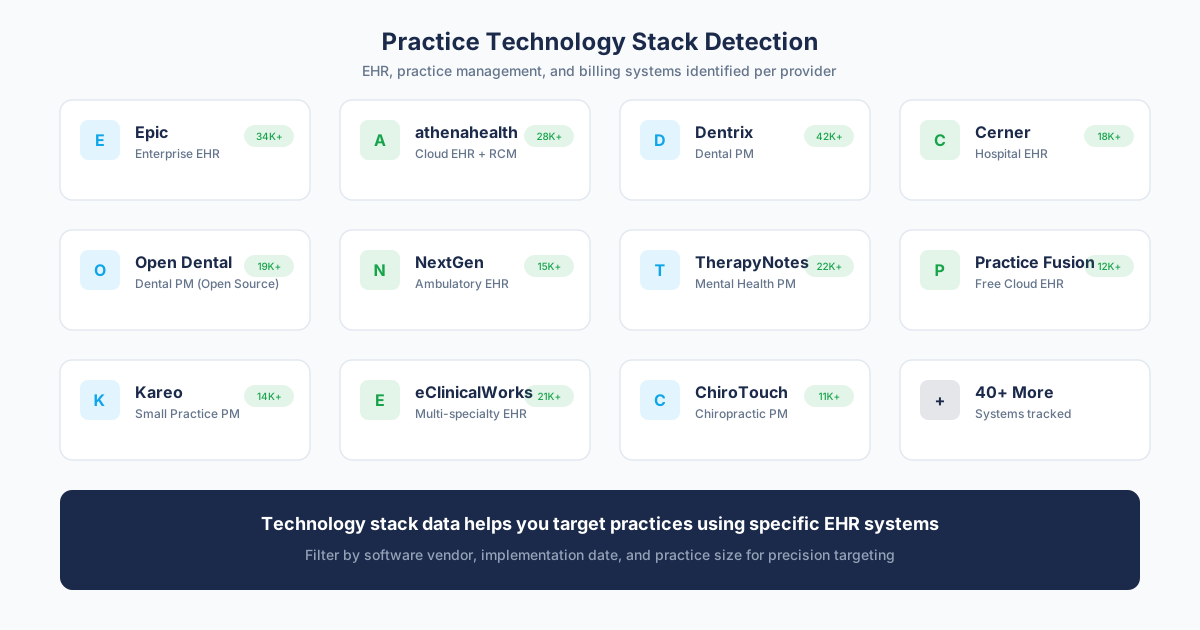
- Integration cost:: When rolling up multiple practices, standardizing technology is a major cost center. If your platform practice runs Dentrix and a target runs Open Dental, someone's migrating. Knowing the tech stack upfront helps estimate integration costs.
- Improvement opportunity:: Practices with outdated or no technology often have significant operational inefficiencies. PE firms see this as an opportunity: install modern systems, improve scheduling efficiency, reduce no-show rates, and increase revenue per chair hour.
Technology detection data identifies EHR, practice management, imaging, and billing systems at the practice level, giving PE firms a pre-diligence view of operational readiness.
Online Reputation and Patient Sentiment
Google review scores and volume have become a standard part of PE healthcare diligence. A practice with a 4.8-star average across 500+ reviews has demonstrable patient loyalty. A practice with a 3.2-star average and complaints about billing has a different risk profile.
Review data also helps PE firms identify practices where a reputation problem is depressing revenue. Acquiring a practice with fixable reputation issues at a discount is a legitimate PE strategy.
Which Specialties PE Is Targeting
Not all healthcare specialties attract PE interest equally. The most active segments share common characteristics: high fragmentation, recurring revenue, limited reimbursement risk, and clear consolidation economics.
Dental
Dental is the most active PE healthcare segment by deal volume. There are roughly 200,000 dental practices in the U.S., the vast majority independently owned. DSOs (Dental Service Organizations) have consolidated aggressively but still account for only about 15-20% of all practices. That leaves a huge runway.
PE likes dental because: visits are recurring (twice-yearly cleanings), a significant revenue share is cash-pay or less dependent on insurance reimbursement changes, and operational improvements (extended hours, better scheduling, adding specialists) drive revenue growth quickly.
Dental practice data for PE needs to include provider counts, ownership status, location details, and technology stack at a minimum.
Dermatology
Dermatology is the second most active PE specialty. The cosmetic/aesthetic revenue component is highly attractive because it's entirely cash-pay, high-margin, and growing at 10-15% annually. A dermatology roll-up can blend medical derm (insurance-based, steady) with cosmetic derm (cash-based, high-margin) for a compelling financial profile.
Key data needs: distinguishing medical-only practices from practices with cosmetic capabilities, identifying provider mix (dermatologists, PAs, NPs, aestheticians), and flagging practices with med spa components.
Ophthalmology and Optometry
LASIK, cataract surgery, and other vision procedures create a similar dynamic to dermatology: a mix of insurance-based and elective/cash-pay revenue. PE has been active in ophthalmology since the mid-2010s, and the pace is accelerating.
The data challenge here is distinguishing between surgical ophthalmology practices (high-value targets) and routine optometry practices (smaller, lower-margin, but useful as referral feeders in a platform strategy).
Veterinary
Technically not "healthcare" in the traditional sense, but veterinary practice acquisitions follow the exact same PE playbook and often use the same data infrastructure. The U.S. Has roughly 32,000 veterinary practices, consolidation is still early (large groups control about 20-25% of the market), and pet spending is growing at 6-8% annually.
Behavioral Health
PE interest in behavioral health has surged since 2022. The demand/supply imbalance (growing demand, provider shortages) makes practices highly valued. The challenge is that behavioral health practices tend to be smaller and more provider-dependent, which creates key-person risk. PE firms mitigate this by building larger group practices that don't depend on any single therapist.
Physical Therapy and Orthopedics
Physical therapy is highly consolidated already (USPH, ATI, Athletico), but there are still thousands of independent practices. Orthopedic physician practices are a newer PE target, driven by the shift of procedures from hospitals to ambulatory surgery centers (ASCs).
Medical Spas
Medical spas are a small but rapidly growing PE target. The market is estimated at $15-20 billion and growing 12-15% annually. Med spas are almost entirely cash-pay, have high margins (40-60% EBITDA margins for well-run locations), and the customer base has high lifetime value.
Roll-Up vs. Platform Strategies: Different Data Needs
PE firms use two primary strategies for healthcare practice investments. Each has different data requirements.
Platform Strategy
The firm acquires a large, well-run practice as the "platform" and then uses it as the foundation for add-on acquisitions. The platform practice provides management infrastructure, brand identity (sometimes), purchasing power, and operational playbooks.
Data needs for platform identification:
- Multi-location practices with 5+ providers
- Evidence of operational sophistication (modern technology, strong online presence)
- Markets with high target density for subsequent add-ons
- Owner demographics suggesting openness to a partial sale (owner retains equity and continues managing)
Roll-Up Strategy
The firm acquires many smaller practices, often simultaneously, and integrates them into a new centralized entity. This is more operationally intensive but can create value faster through scale economics.
Data needs for roll-up target identification:
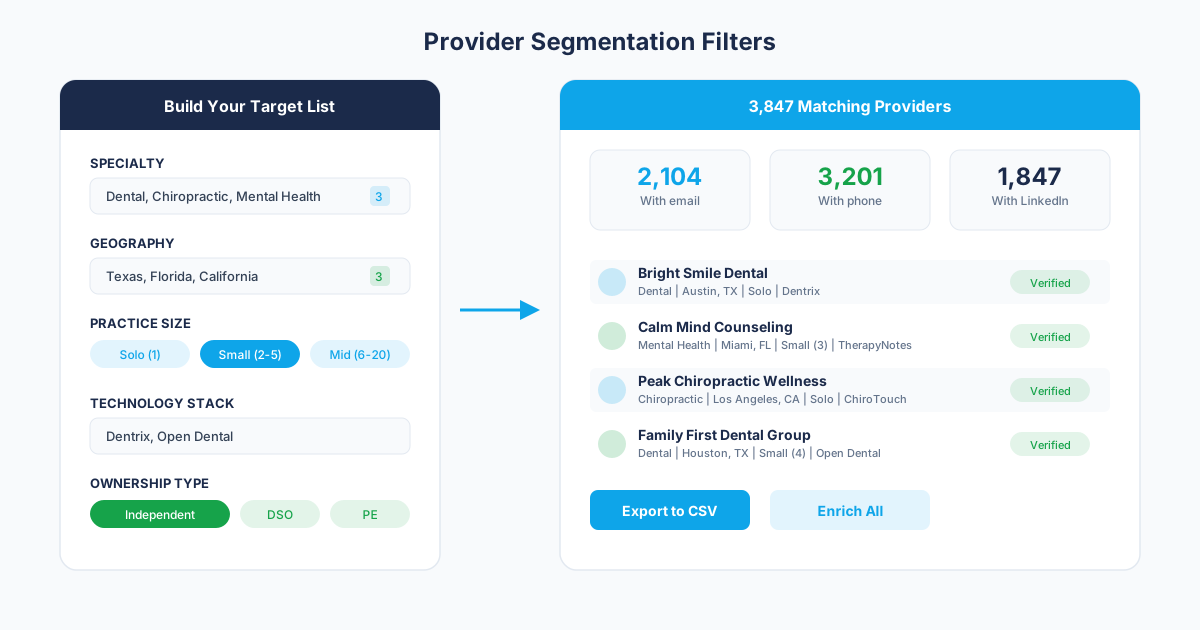
- Large lists of independent practices in a defined geography or specialty
- Owner age and career stage data (approaching retirement is ideal)
- Practice size filters (1-3 providers is the typical roll-up target)
- Technology stack consistency (targets on similar systems are cheaper to integrate)
- Competitive density mapping to identify geographic clusters
How PE Firms Use Data in Their Workflow
The data needs map to a specific deal workflow. Understanding this workflow helps data providers deliver information in the format PE teams need.
Phase 1: Market Screening (Data-Heavy)
The deal team runs broad screens to identify target-rich markets. This requires:
- Complete practice census for the target specialty in the target geography
- Ownership status flags (independent, PE-backed, hospital-affiliated)
- Practice size estimates (provider count as proxy)
- Competitive density metrics
At this stage, coverage matters more than depth on individual records. The team needs to see the full landscape before zooming in.
Phase 2: Target Identification (Precision-Heavy)
The team narrows from hundreds of practices to a shortlist of 20-50 targets. This requires:
- Verified owner/decision-maker contact information
- Revenue proxies (provider count, location count, payer mix)
- Technology stack assessment
- Online reputation scores
- Any available financial indicators
At this stage, accuracy on individual records matters enormously. Every bad phone number or wrong owner name costs the deal team time and credibility.
Phase 3: Outreach and Relationship Building
PE associate or operating partner contacts practice owners to gauge interest. This is closer to traditional sales prospecting, but with a twist: the "pitch" is "we want to buy your business," which requires different messaging than "we want to sell you software."
Data needs at this stage: direct contact information for the practice owner (not the office manager, not the front desk), owner's name and background, and enough practice context to have an informed first conversation.
Phase 4: Diligence (Deep Research)
Once a target is interested, the PE firm's diligence process kicks in. This is typically handled by diligence teams using financial documents provided by the seller, not provider databases. But the data collected in phases 1-3 sets the context for diligence questions and helps the team spot inconsistencies in the seller's representations.
Building a Healthcare Data Infrastructure for PE
PE firms that do multiple healthcare deals benefit from building a persistent data infrastructure rather than sourcing data ad hoc for each deal. Here's what that looks like.
The Target Database
Maintain a continuously updated database of all practices in your target specialties. Tag each record with ownership status, PE-backed/independent flag, estimated size, and deal team notes. This becomes your deal pipeline. When an owner reaches out saying they're ready to sell, you can pull up everything you know about their practice in seconds.
Market Maps
Build geographic heat maps showing practice density, competitive concentration, and demographic trends for your target specialties. These maps inform market entry decisions and help operating partners at portfolio companies identify add-on targets in adjacent markets.
Ongoing Monitoring
Track changes in your target universe: new practice openings, practice closures, ownership changes, technology upgrades. A practice that just switched EHR systems is probably not selling (they just invested in infrastructure). A practice whose founding partner just retired might be ready to talk.
How Provyx Serves PE Clients
The standard sales prospecting dataset won't cut it for PE healthcare work. Here's how Provyx addresses the specific needs outlined in this guide.
- Practice-level data, not just provider-level:: We map providers to specific practice locations and aggregate to give you provider counts, specialty mix, and multi-location visibility at the practice level.
- Technology detection:: Our technology stack identification tells you what EHR, practice management, imaging, and billing systems each practice runs. That's critical for integration planning.
- Custom research for ownership:: Ownership data at scale requires manual research and cross-referencing. Our custom list building service can identify ownership status, owner demographics, and corporate affiliations for your target list.
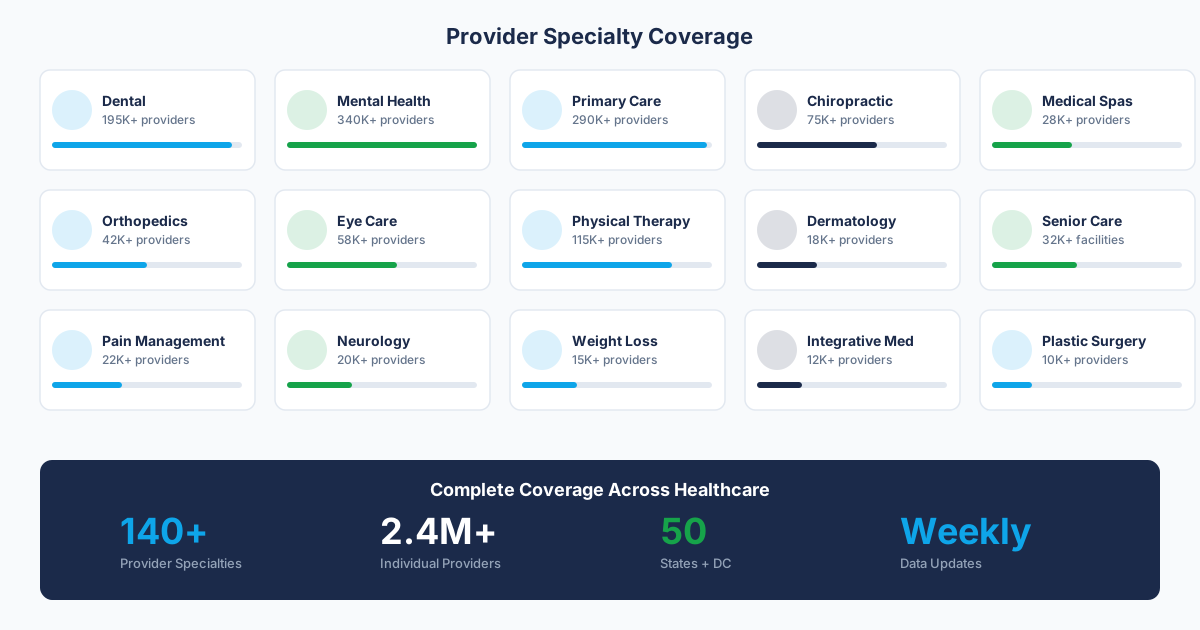
- Specialty depth:: We maintain deep data across the specialties PE targets most: dental, medical spas, behavioral health, chiropractic, primary care, and senior care.
- Geographic density analysis:: Our practice location data supports the market mapping and competitive density analysis that PE teams need for screening.
If you're a PE firm sourcing healthcare deals, or a portfolio company building add-on target lists, let's talk about your data requirements. We'll build a dataset matched to your investment thesis.
The Data Advantage in PE Healthcare
Healthcare practice acquisitions are fundamentally a sourcing game. The best deals go to firms that find them first, understand them deepest, and move fastest. Data is the foundation of all three.
The PE firms still running target screens on spreadsheets built from Google searches are leaving deals on the table. The firms building persistent, continuously updated practice databases with ownership intelligence, technology detection, and geographic analysis are seeing more deals, picking better targets, and paying lower multiples because they're finding sellers before the investment bankers do.
In a market where entry multiples for healthcare services deals averaged 12-14x EBITDA in 2025, the difference between a good target and a great target can be worth millions in returns. That difference starts with data.
Frequently Asked Questions
What healthcare data do private equity firms need for acquisitions?
PE firms need data that goes far beyond sales prospecting. Key requirements include provider headcount per location (as a revenue proxy), ownership structure and owner demographics, competitive density mapping, technology stack identification, insurance panel participation, multi-location visibility, and practice age. The data needs to support both broad market screening and precise target identification.
Which healthcare specialties are private equity firms targeting most?
The most active PE healthcare segments by deal volume are dental (the largest by far), dermatology (especially practices with cosmetic revenue), ophthalmology, veterinary, behavioral health, physical therapy, and medical spas. These specialties share key characteristics: high fragmentation, recurring revenue, limited reimbursement risk, and clear consolidation economics.
What's the difference between a PE platform strategy and a roll-up strategy in healthcare?
A platform strategy acquires one large, well-run practice as a foundation, then makes smaller add-on acquisitions. It requires data on multi-location practices with 5+ providers and strong operations. A roll-up strategy acquires many smaller practices simultaneously and integrates them into a new entity. It requires large target lists of independent 1-3 provider practices, owner age data, and technology stack consistency analysis.
How do PE firms identify independent practices that aren't already PE-backed?
Ownership identification is the hardest data challenge in PE healthcare. It requires cross-referencing state corporate filings, dental/medical board records, SEC filings for larger groups, and direct research. DSOs and PE-backed groups often keep the original practice name, making them look independent from the outside. Specialized data providers like Provyx offer custom research to identify ownership status at the practice level.
Sources and References
Related Resources
Get the Provider Data You Need
Tell us what you're looking for. We'll build a custom list matched to your target market.
Trusted by healthcare sales teams, medical device companies, and health IT vendors across the US.