
Post-Event Follow-Up for Medical Device Events: The 48-Hour Playbook
The event is over. Your attendee data is sitting in a spreadsheet. What you do in the next 48 hours determines whether the event generated pipeline or just goodwill.
2026-03-07
The 48-Hour Window
The first 48 hours after a physician event are the highest-leverage follow-up window you'll get. Attendees still remember the presentations. They haven't yet slotted back into their clinic routine. The device they held in their hands or the clinical data they saw is still fresh.
After 48 hours, attention decays fast. By day 5, most attendees have mentally moved on. By day 10, your event is a vague memory competing with every other vendor touchpoint in their inbox.
The problem is that most event teams spend day 1 post-event packing up equipment, debriefing, and traveling home. Follow-up starts on day 3 or 4. By then, the window is half closed.
Fix this by building your follow-up sequences before the event. Automate what you can. Have the templates ready. The only thing you should do on event day +1 is press send.
Step 1: Segment Your Registrant List
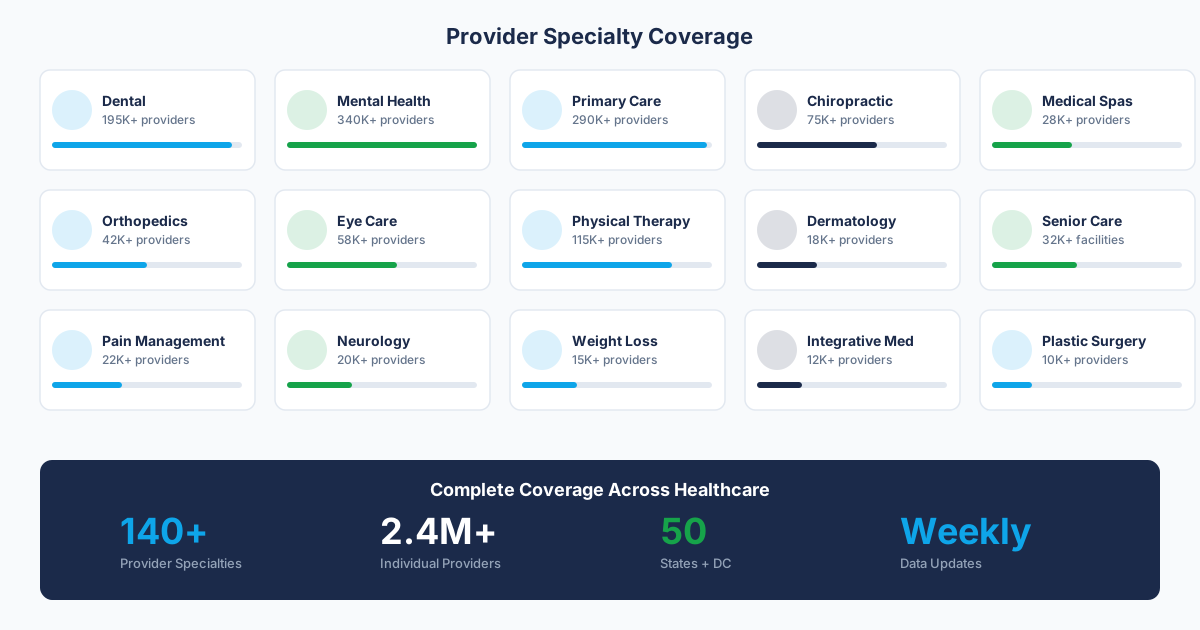
Before you send anything, segment your registrants into four groups. Each group gets a different message.
Group A: Attended + Showed Buying Intent
These are the attendees who asked about pricing, requested a follow-up meeting, asked about financing or leasing, or spent time at the device demo stations. They're warm leads. Your sales team needs to contact them within 48 hours, not within a week.
Group B: Attended, No Explicit Intent
They came, they listened, they ate the lunch, they left. No buying signals, but they showed up. That's still a higher-quality lead than a cold contact. They've seen the product. They've met your team. They're further down the funnel than someone who just received an email.
Group C: Registered, Didn't Attend
These are no-shows. They had enough interest to register but something prevented attendance. Don't treat them like they don't exist. They're still warmer than a cold contact. Research from Bizzabo's event benchmarks shows that event no-show rates average 35-45% across industries. That's a large pool of contacts worth following up with.
Group D: Didn't Register
The rest of your invite list. They didn't register, so the event messaging didn't resonate. Don't follow up about this specific event. But keep them in your general nurture sequence for the next event in the same or nearby metro.
Step 2: Send Group-Specific Follow-Up
Group A Email (Send Within 24 Hours)
Subject line: Following up from [Event Name], next steps for [Practice Name]
This should come from the sales rep or clinical specialist who spoke with the physician, not from a marketing email address. Personalized, short, and with a specific next step: "I'd like to schedule 30 minutes to walk through the financial model for your practice. Are you available this Thursday or Friday?"
Include a link to any presentation slides or clinical data handouts from the event. Attach the speaker's contact information if applicable.
Group B Email (Send Within 48 Hours)
Subject line: Thanks for joining us at [Event Name], here's what you missed in the Q&A
Provide value beyond "thanks for coming." Share a summary of questions asked during the event and the answers given. Include clinical data highlights. Link to a recorded presentation if available. Close with a soft CTA: "If you'd like to explore how [product] fits into your practice, reply to this email or book a call here."
Group C Email (Send Within 48-72 Hours)
Subject line: Sorry we missed you at [Event Name], here's what happened
Acknowledge that they registered but couldn't make it. Don't guilt-trip. Provide the same event recap (slides, Q&A summary, clinical data). Offer an alternative: "We're running the same event in [next city] on [date]. Want us to save you a spot?" or "We'd be happy to schedule a private demo at your practice."
Group D: No Event-Specific Follow-Up
Add them to a nurture sequence that includes the next event invitation when it's ready. Don't send them a "sorry you missed our event" email. They didn't try to attend.
Step 3: Hand Off to Sales
The follow-up email is not the end point. It's the beginning of a sales motion.
Within 48 hours of the event, deliver the following to your sales team:
- Hot lead list (Group A):: Names, practice names, specialties, and specific notes on what they were interested in. "Dr. Martinez asked about Emsculpt Neo pricing for a chiropractic practice with 3 providers. Interested in leasing options."
- Warm lead list (Group B):: Names, specialties, and attendance confirmation. Less detail, but confirmed engagement.
- No-show list (Group C):: Registered but didn't attend. Worth a rep follow-up call if the rep already has a relationship.
Tag every contact in your CRM with the event name, attendance status, and interest level. This data feeds pipeline tracking and ROI measurement. For the framework on connecting event data to revenue, see our event marketing ROI guide.
Step 4: Build the Intelligence Report
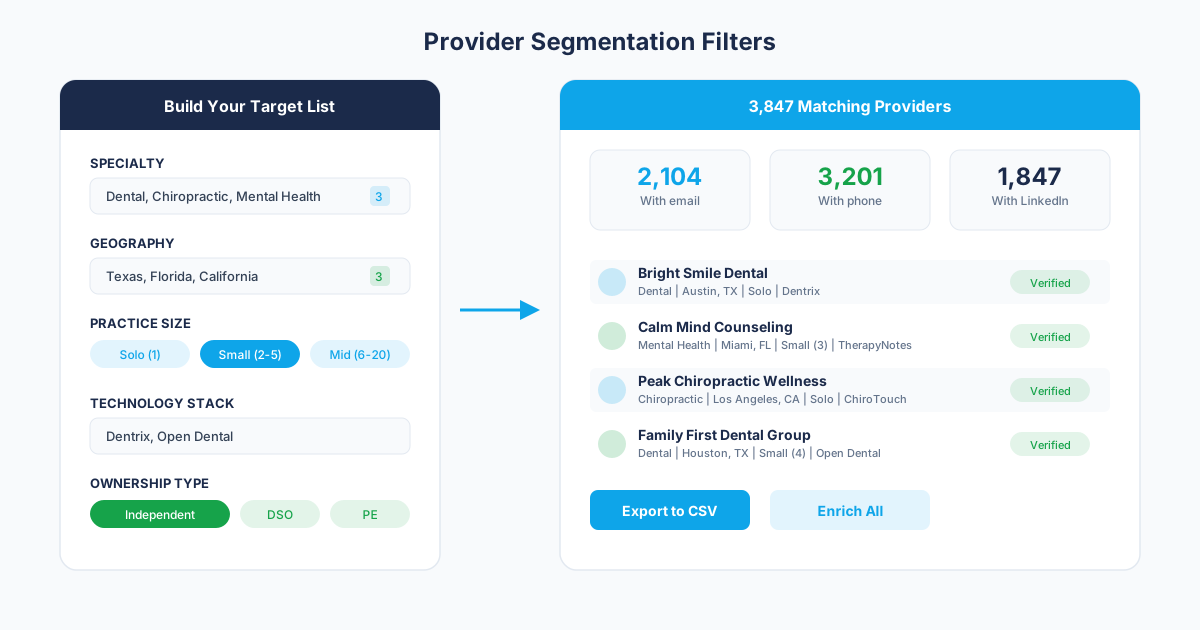
Beyond sales handoff, the post-event data should answer strategic questions for the next event:
- Which specialties registered at the highest rates?: If chiropractors registered at 8% and dermatologists at 2%, that tells you something about messaging, product-market fit, or list quality for each specialty.
- Which channels drove registrations?: Email blast, sales rep referral, peer sharing, organic? Invest more in the channel that worked.
- What was the specialty mix of actual attendees?: Did it match the registration mix, or did one specialty have a higher no-show rate?
- What questions came up most during the event?: These questions should inform the landing page copy and email templates for the next city.
Our event marketing service includes a post-event intelligence report with per-specialty conversion data, channel attribution, and targeting recommendations for your next event.
Step 5: Seed the Next Event
The best time to promote your next event is immediately after the current one. Attendees are warm. No-shows have fresh guilt. Your team has momentum.
In your Group B follow-up email, include a teaser: "We're bringing this event to [next city] in [month]. Know a colleague who'd benefit? Forward this email." In your Group C email, offer a direct registration link for the next event.
If you're running a multi-city event series, each event should feed registrations for the next one. For more on scaling events across cities, see our guide on multi-city physician event planning.
The Follow-Up Checklist
- Day 0 (event day):: Confirm final attendance list. Note any hot leads or specific questions from attendees.
- Day 1:: Send Group A emails (from the rep, not marketing). Upload attendance data to CRM.
- Day 2:: Send Group B emails. Deliver hot and warm lead lists to sales. Send Group C emails.
- Day 3-5:: Sales reps follow up with Group A by phone. Begin building the post-event intelligence report.
- Day 7:: Deliver the intelligence report. Include specialty-level conversion data, channel attribution, and next-event recommendations.
- Day 14:: Send Group B a second touchpoint (case study, ROI calculator, or invitation to a private demo).
- Day 30:: First pipeline review. How many event leads have moved to opportunity stage?
The difference between a good event and a revenue-generating event is entirely in the follow-up. Build the system before the event, execute it within 48 hours, and measure at 30/60/90 days.
Frequently Asked Questions
How quickly should you follow up after a medical device event?
Within 48 hours. Hot leads (attendees who showed buying intent) should receive a personalized email from their sales rep within 24 hours. General attendees should receive a follow-up with event recap and materials within 48 hours. No-shows should receive a 'sorry we missed you' email with event highlights within 48-72 hours. After day 5, attention decays significantly.
What should you send physicians who registered but didn't attend?
Send a non-judgmental follow-up within 48-72 hours. Acknowledge they registered, share event highlights (slides, Q&A recap, clinical data), and offer an alternative: registration for the next event in a nearby city, or a private demo at their practice. No-shows are still warmer than cold contacts because they showed enough interest to register.
How do you hand off event leads to the sales team?
Within 48 hours, deliver three segmented lists to sales: hot leads (attended + showed buying intent, with specific notes on their interests), warm leads (attended, no explicit intent), and no-shows (registered but absent). Tag every contact in your CRM with event name, attendance status, and interest level. This enables pipeline tracking and ROI measurement at 30/60/90 days.
Sources and References
Related Resources
Get the Provider Data You Need
Tell us what you're looking for. We'll build a custom list matched to your target market.
Trusted by healthcare sales teams, medical device companies, and health IT vendors across the US.