
How to Run the Same Physician Event in Multiple Cities
Your first event in Detroit worked. Now your VP wants the same thing in Miami, Dallas, Chicago, and Phoenix. Here's how to scale without rebuilding from scratch.
2026-03-07
The Multi-City Trap
Most teams approach their second city the same way they approached the first: start from scratch. New agency brief. New site design. New email templates. New provider list. New timeline. Six weeks of work per city.
At $15,000-25,000 per event through an agency, four cities costs $60,000-100,000. The ROI per event might be strong, but the scaling cost is brutal. By the time you've run the same event in four cities, you've spent six figures on registration sites that all look 80% identical.
The alternative is a reusable event system. Build the template once. Deploy new cities by changing a handful of variables. Cut per-city costs by 60%+ and reduce launch timelines from weeks to hours.
What Stays the Same Across Cities
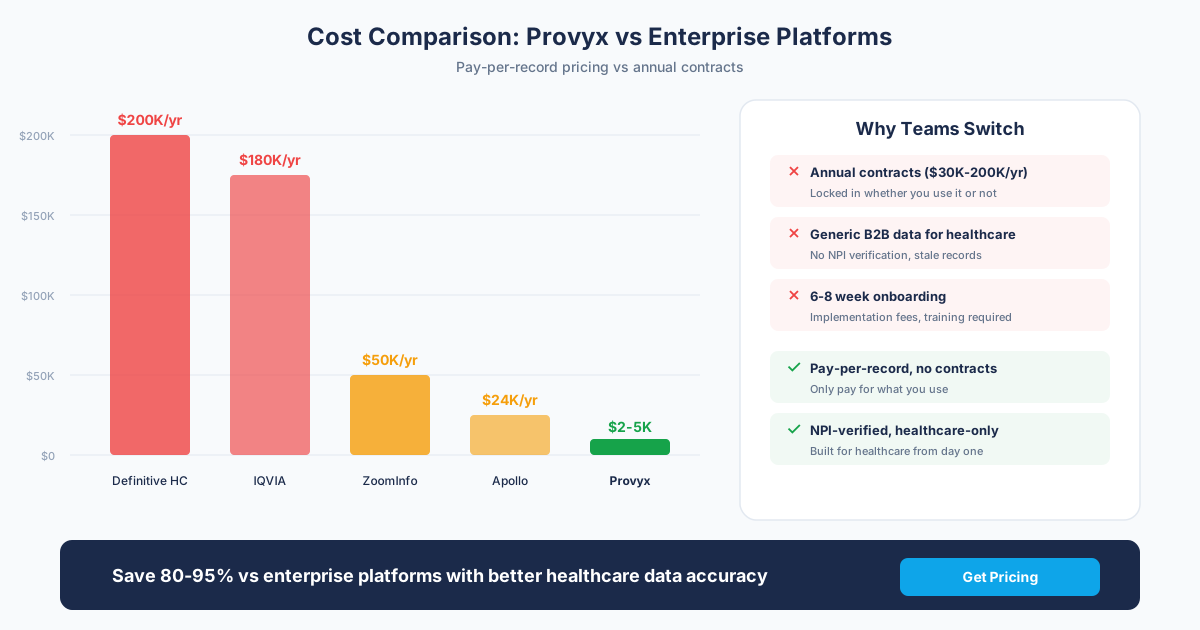
When you run the same event type across multiple cities, roughly 80% of the registration system is identical:
- Specialty-specific landing pages.: The chiropractic page, the dermatology page, the med spa page, the messaging angle for each specialty doesn't change by geography. A chiropractor in Miami has the same clinical interest in pelvic floor rehabilitation as a chiropractor in Detroit.
- Product/device information.: The product grid, clinical data, procedure descriptions, and testimonials are the same nationwide (unless you're dealing with state-by-state regulatory differences).
- Registration form and flow.: Form fields, confirmation page, calendar integration, referral sharing system, all identical.
- Conversion mechanics.: Capacity meters, countdown timers, exit-intent capture, the system that drives urgency and follow-through doesn't change by city.
- Email templates.: The invitation structure, subject line formulas, and follow-up sequences carry over. Only the event-specific details (date, venue, city name) change.
What Changes Per City
The 20% that varies:
- Venue and date.: Different hotel, different date, different capacity.
- Local testimonials.: If you have a physician testimonial from a local practitioner, swap it in. If not, use a regional or national testimonial.
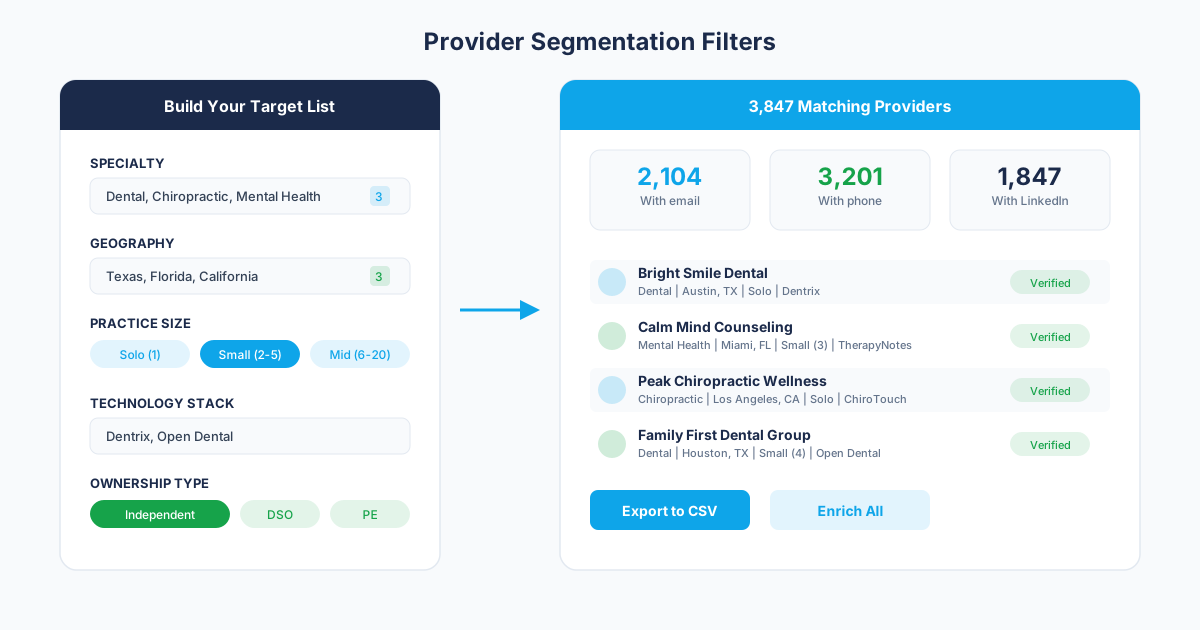
- Provider contact list.: New metro means new providers. You need a fresh invite list filtered by specialty and geography for the new city.
- Personalized registration links.: New provider list means new pre-filled links generated from the metro-specific contact data.
- City-specific logistics.: Parking info, hotel room blocks, local contact numbers.
The Math: First City vs. Additional Cities
Here's how the cost structure changes with a reusable template approach:
First city (full build):
- Registration site with specialty pages: $3,500-5,000
- Provider contact list + pre-fill links: $1,000-2,000
- Email template creation: included in site build
- Registration infrastructure total: $4,500-7,000
Each additional city (template relaunch):
- Update venue, date, local details: ~2 hours of work
- New metro provider list + pre-fill links: $1,000-2,000
- Email template updates (date/venue swap): minimal
- Registration infrastructure total: $1,500-2,500
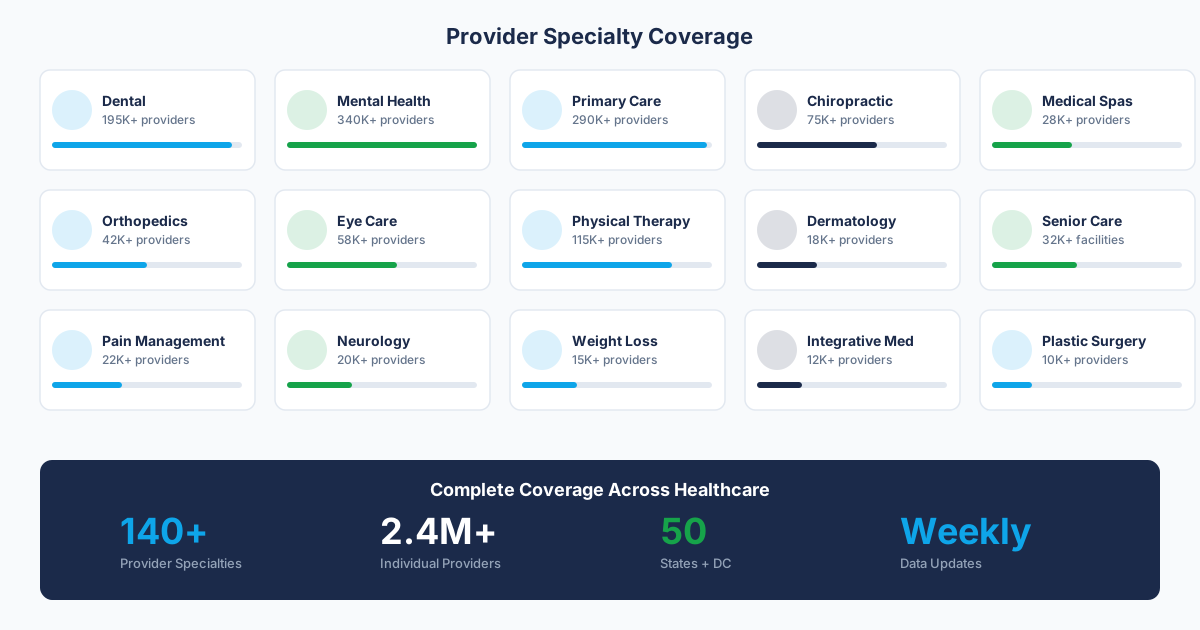
Compare that to $10,000-15,000 per city through an agency that rebuilds the site each time. Over 4 cities, the reusable approach saves $30,000-50,000 on registration infrastructure alone.
How to Prioritize Which Cities to Add
Don't expand to every city at once. Prioritize based on three factors:
1. Provider Density
Use BLS occupational employment data to identify metros with the highest concentration of your target specialties. A dermatology device event makes sense in Miami (high cosmetic derm density) but may underperform in a rural metro with 12 dermatologists.
2. Sales Team Coverage
Events work best when your sales team has existing relationships in the metro. The event warms contacts that reps then follow up with. If you have no rep coverage in Atlanta, running an event there produces leads with no one to work them.
3. Competitive Landscape
Which markets has your competitor already saturated with events? Running your event in a market they've neglected gives you first-mover advantage with those providers. Your post-event data from the first city can help identify which specialties to prioritize in the expansion cities.
The Quarterly Event Calendar
For companies running events as a sustained marketing channel, a quarterly event calendar keeps the motion organized:
- Month 1:: First city. Full build. Refine messaging, measure results.
- Month 2:: Cities 2 and 3. Template relaunch. Apply learnings from city 1 (which specialties converted best, which email subject lines performed, which channels drove registrations).
- Month 3:: City 4, plus a return to city 1 with an updated event (new products, new speaker, or a follow-up event for attendees from the first run).
Each event feeds intelligence into the next. Specialty conversion data from Detroit informs targeting in Miami. Channel attribution from Miami informs budget allocation in Dallas. By city 4, your event playbook is dialed in.
For the post-event data that drives this optimization loop, see our guide on post-event follow-up for medical device events.
What a Reusable Event System Looks Like
The practical implementation of "build once, deploy everywhere" requires:
- Specialty pages that are parameterized.: The page template is fixed. The venue, date, and city name are variables that get swapped per deployment. You don't redesign the page for each city. You update the variables.
- A provider data pipeline by metro.: For each new city, you need a segmented provider contact list filtered by specialty and geography. This is where having a verified provider database matters, you can pull a new metro list in hours, not weeks.
- A link generation system.: Pre-filled registration links need to be generated from the new metro's provider list and organized by specialty. This should be automated, not manual.
- Templatized email sequences.: Invitation emails, reminders, and follow-ups with placeholders for city, date, and venue that get populated per deployment.
Our event marketing service is built around exactly this model. First event: 5-7 business days. Each additional city: approximately 2 hours. The same specialty pages, the same conversion mechanics, new city details and fresh provider links.
For the cost breakdown comparing DIY, agency, and reusable template approaches, see our medical device lunch and learn cost guide.
Frequently Asked Questions
How much does it cost to run the same physician event in a new city?
With a reusable event template, additional cities cost $1,500-2,500 for registration infrastructure (template relaunch + new metro provider links), compared to $10,000-15,000+ through an agency that rebuilds the site each time. Add venue, catering, and staffing costs on top. The reusable approach saves $30,000-50,000 across 4 cities on registration infrastructure alone.
How long does it take to launch a physician event in a new city with a template?
Approximately 2 hours for the registration infrastructure: update venue, date, and local details in the template, then generate new pre-filled registration links from the metro-specific provider list. Compare this to 3-6 weeks for a full agency build. The specialty pages, conversion mechanics, and email templates carry over unchanged.
How do you decide which cities to expand a physician event to?
Prioritize based on three factors: provider density (BLS data on target specialty concentration by metro), sales team coverage (events need a rep to follow up on leads), and competitive landscape (first-mover advantage in markets your competitor hasn't covered). Post-event data from your first city (which specialties converted, which channels worked) informs targeting for expansion cities.
Sources and References
Related Resources
Get the Provider Data You Need
Tell us what you're looking for. We'll build a custom list matched to your target market.
Trusted by healthcare sales teams, medical device companies, and health IT vendors across the US.