
How to Get Doctors to Attend Your Events (Without Begging)
The average physician gets 20+ event invitations per month. Here's why they ignore yours and what gets them in the room.
2026-03-07
The Physician Attendance Problem
You sent 3,000 invitations. 47 people registered. 31 showed up. Sound familiar?
Field marketing teams running physician events face the same pattern everywhere: high send volume, low registration rates, and a show rate that makes the per-attendee cost painful to calculate. The standard response is to send more invitations. Blast a bigger list. Follow up harder. Run more reminder emails.
That approach treats the symptom. The causes are structural, and they have nothing to do with how many emails you send.
Why Physicians Don't Show Up
After running registration campaigns targeting thousands of healthcare providers, the reasons physicians skip events cluster into three categories.
1. The Invitation Is Irrelevant
A dermatologist gets an invitation to a device education event. The headline says "Transform Your Practice with Advanced Treatment Technologies." The description mentions body contouring, pelvic floor rehabilitation, skin tightening, and TMJ treatment.
The dermatologist cares about skin tightening. Everything else is noise. She scans the email, doesn't see anything specific to her practice, and deletes it. Multiply this by every specialty on your invite list.
According to the AMA's physician time study, physicians spend an average of 15.6 hours per week on administrative tasks outside of patient care. They're not going to spend time parsing a generic invitation to figure out whether it's relevant to them. If the headline doesn't speak to their specialty in the first three seconds, it's gone.
2. Registration Has Too Much Friction
The physician who does find your event relevant clicks through to register. She's on her phone between patients. The registration page asks for her name, email, phone, practice name, NPI number, specialty, address, and how she heard about the event.
She closes the tab.
Form abandonment data backs this up. WPForms reports that the average online form abandonment rate is 67%. For mobile users, it's worse. And 64% of web traffic is now mobile. Your registration form is competing against every other demand on a physician's 30-second break between patients.
3. The Follow-Up Loop Is Broken
Some physicians intend to register but don't get to it in the moment. They need a reminder. Most event follow-up sequences are three emails: the initial invitation, a reminder a week later, and a "last chance" email the day before.
The problem is that these follow-ups repeat the same generic messaging. If the first email wasn't specific enough to convert, the reminder won't be either. More of the same message doesn't fix a relevance problem.
What Actually Works: Specialty Targeting
The single biggest lever for physician event attendance is showing each provider a registration experience built for their specialty.
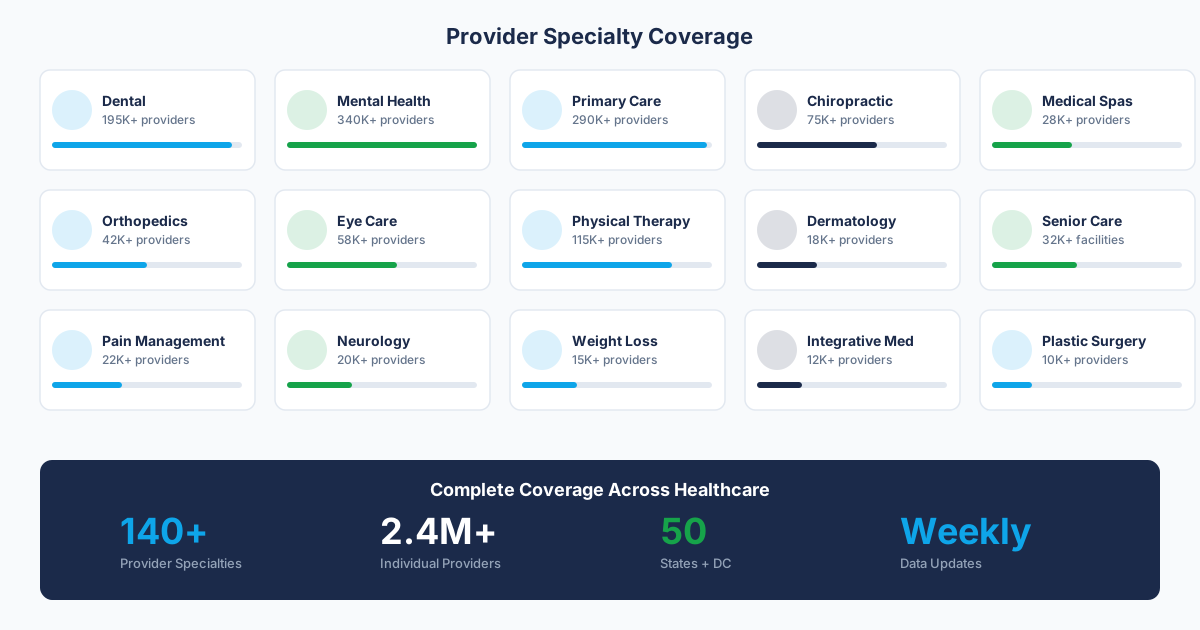
Instead of one event page that tries to speak to everyone, build specialty-specific landing pages. A chiropractor sees a page about adding a new procedure revenue stream with pelvic floor rehabilitation. A dermatologist sees a page about non-invasive skin tightening that competes with injectables. Same event, different entry points.
This approach changes the math on relevance. The physician doesn't have to figure out whether the event matters to her practice. The page tells her immediately.
The data supports this. Event platforms that allow audience segmentation consistently report higher conversion rates than one-size-fits-all pages. In our own registration campaigns, specialty-specific pages convert at roughly 2x the rate of generic event pages.
How Specialty Targeting Works in Practice
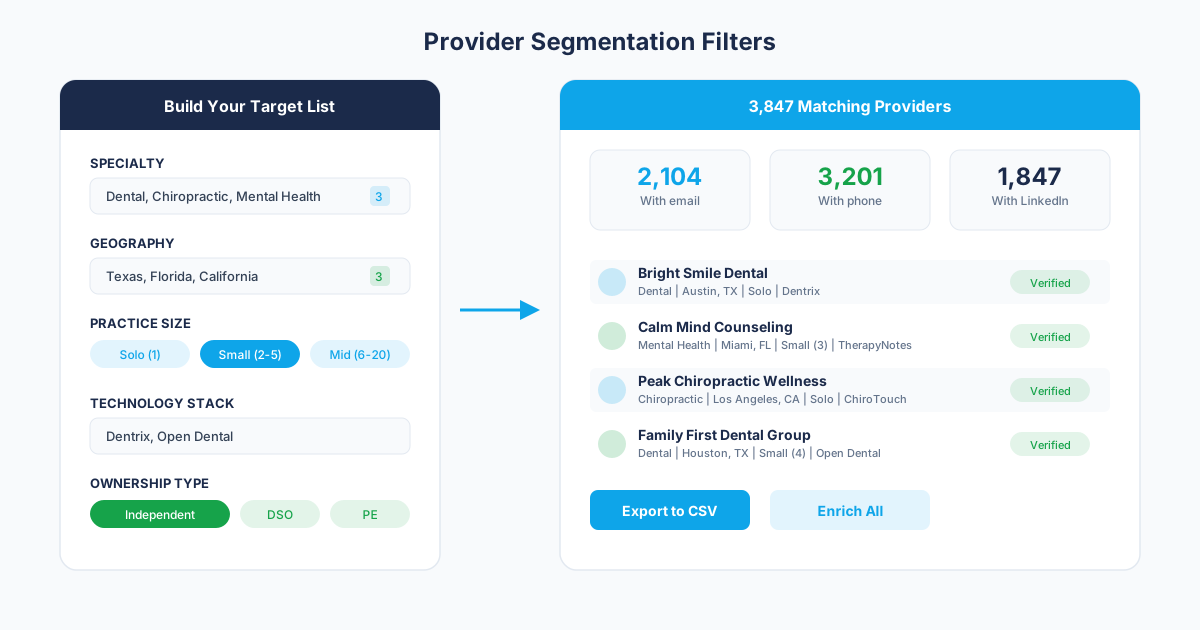
Start with your provider contact list. Segment it by specialty or practice type. For each segment, build a landing page that leads with:
- A headline that speaks to that specialty's primary motivation (revenue growth, clinical outcomes, competitive advantage)
- Products or procedures relevant to that specific practice type
- A testimonial from a physician in the same specialty, ideally in the same metro
- Clinical data or financial projections specific to that specialty
A medical device company targeting 8 different specialties for a regional event would build 8 landing pages. Each one reads like an event designed specifically for that provider type. The chiropractor never sees the dermatology messaging. The dermatologist never sees the chiropractic pitch.
If you're starting from scratch with your provider contact list, our guide on building a healthcare provider contact list covers sourcing, verification, and segmentation.
What Actually Works: Pre-Filled Registration
Specialty targeting gets the physician to the page. Pre-filled registration gets them past the form.
If you already have the provider's contact information in your CRM or provider database, why ask them to type it again? Generate a personalized registration link for each provider with their name, email, and practice pre-populated in the URL parameters. When they click the link, the form is already filled out. Registration becomes a single confirmation click.
This matters because form friction is the second-biggest attendance killer. Pre-filled registration eliminates it entirely for providers in your database. A physician on a mobile phone between patients can register in under 10 seconds.
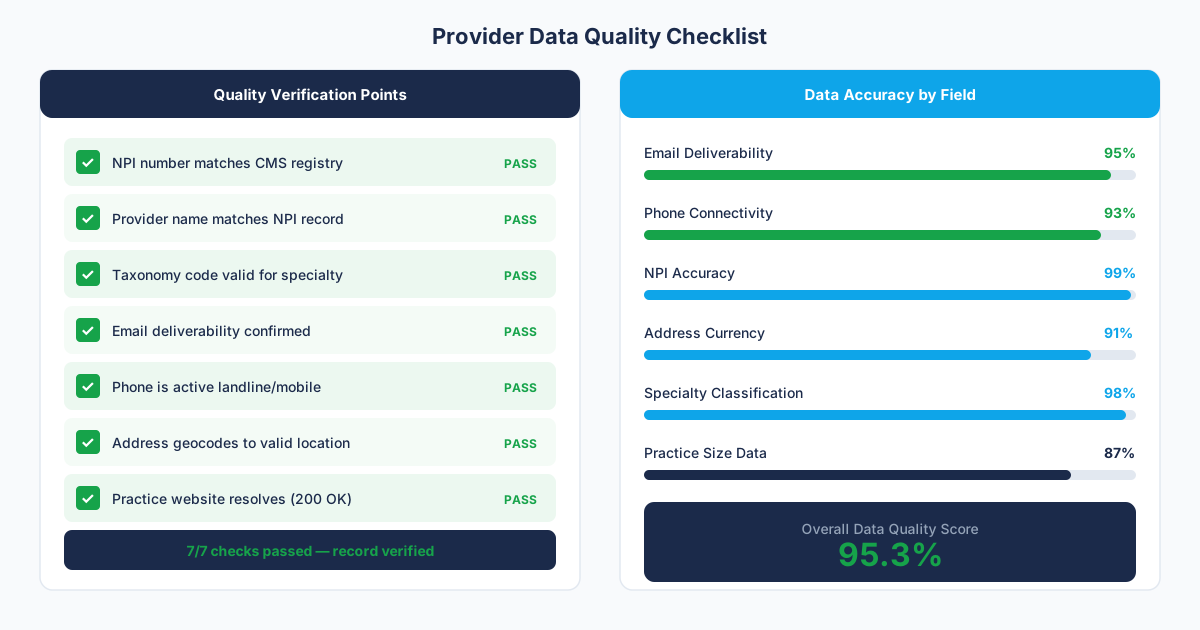
The approach requires two things: a verified provider contact database and an event registration system that supports URL parameter pre-fill. Generic platforms like Eventbrite don't offer this. You need either a custom build or a platform specifically designed for healthcare event registration.
The Channel Mix That Fills Rooms
Specialty targeting and pre-filled registration solve the relevance and friction problems. But you still need the invitation to reach physicians through the right channels.
Email (Still the Workhorse)
Email remains the primary channel for physician event invitations. But the execution matters. Segment your email sends by specialty. Each specialty gets an email with a subject line and preview text specific to their practice type. The CTA links to their specialty-specific landing page with pre-filled registration parameters.
Send timing also matters for physicians. Tuesday through Thursday, early morning (6-7 AM local) or late afternoon (4-6 PM), consistently outperforms other windows. Avoid Mondays (clinic catch-up) and Fridays (winding down for the weekend).
Sales Rep Referrals
For medical device and pharma events, field sales reps are an underutilized channel. Give each rep a set of pre-filled registration links for the providers in their territory. They can text, email, or hand the link to a physician during an office visit. The physician clicks, sees a pre-filled form, and registers in seconds.
Rep-referred registrations consistently show higher attendance rates because there's a personal relationship behind the invitation. Make it easy for reps by giving them links that work on any device with zero setup.
Referral Sharing from Registrants
Every registered physician knows other physicians in the same specialty. Build a referral sharing mechanism into your confirmation page. After registering, show a "Share with a colleague" button that generates a shareable link (without the pre-fill parameters, since the colleague isn't in your database yet). Peer referrals carry more weight than corporate invitations.
After the Event: What to Measure
If you're tracking "registrations" as your primary metric, you're missing the point. The metrics that matter for physician events:
- Registration rate by specialty:: Which specialties respond best to your events? This informs targeting for the next city.
- Registration rate by channel:: Did email, rep referral, or peer sharing drive the most signups? This tells you where to invest next time.
- Attendance rate (registration to show):: A 90%+ attendance rate is achievable with pre-filled registration and calendar integration. If you're below 70%, the friction isn't gone yet.
- Per-specialty cost per attendee:: Some specialties are cheaper to fill a room with. Know which ones.
For a deeper framework on measuring event ROI in healthcare, see our guide on healthcare event marketing ROI.
Putting It All Together
Getting physicians to attend events comes down to three structural fixes:
- Make it relevant.: Specialty-specific landing pages so every physician sees an event built for their practice.
- Remove the friction.: Pre-filled registration links from your provider database so registration is one click.
- Use the right channels.: Segmented email, rep referrals with personalized links, and peer sharing from registrants.
None of this requires blasting a bigger list or sending more follow-up emails. It requires better data, better targeting, and a registration system built for how physicians behave.
If you're running physician events and want to see how specialty-targeted registration works, explore our event marketing service. We build the registration site. You focus on the event.
Frequently Asked Questions
Why don't physicians attend events they're invited to?
The three main reasons are irrelevant invitations (generic messaging that doesn't speak to their specialty), registration friction (long forms on mobile devices), and poor follow-up (reminder emails that repeat the same generic pitch). Fixing relevance through specialty targeting and reducing friction through pre-filled registration addresses the two biggest killers.
What's a good registration rate for a physician event?
Industry benchmarks for healthcare event registration rates range from 1-3% for generic invitation blasts. Specialty-targeted campaigns with pre-filled registration consistently see 2x or higher conversion rates. The key variable is relevance: physicians who see a page built for their specialty convert at significantly higher rates than those who see a generic event page.
How do pre-filled registration links work for physician events?
Each provider in your contact database gets a unique URL with their name, email, and practice name encoded as URL parameters. When they click the link, the registration form is already populated with their information. Registration becomes a single confirmation click instead of a multi-field form. This requires a verified provider contact database and an event platform that supports URL parameter pre-fill.
Sources and References
Related Resources
Get the Provider Data You Need
Tell us what you're looking for. We'll build a custom list matched to your target market.
Trusted by healthcare sales teams, medical device companies, and health IT vendors across the US.