
Physical Therapy Practice Data for Device Sales Teams
PT practices buy equipment differently depending on whether they treat athletes, post-surgical patients, or pediatric cases. Here is how to find the right decision makers and segment your territory.
2026-04-02
Physical Therapy Practices Are Massive Equipment Buyers
Physical therapy is one of the fastest-growing healthcare specialties in the country. The Bureau of Labor Statistics projects 14% growth for physical therapists through 2032, significantly faster than the average for all occupations. That growth translates directly into equipment demand. More clinics, more treatment rooms, more rehab devices, more capital spending.
But PT practices are not a monolith. A sports rehab clinic catering to college athletes has different equipment needs than an outpatient post-surgical rehab center. A pediatric PT office buys specialized tables, balance boards, and sensory tools that a geriatric-focused clinic would never stock. If your sales team treats all PT practices the same, you're wasting reps' time on prospects who will never buy your specific product.
The solution is data that lets you segment PT practices by what they do, who owns them, and who makes purchasing decisions. This guide covers how to build that dataset and turn it into a territory plan that works.
The PT Market by the Numbers
- Over 40,000 PT practice locations: operate across the United States, according to the NPI registry and commercial databases.
- Nearly 260,000 licensed physical therapists: are in the workforce, per BLS data, with roughly 15,000 new graduates entering each year.
- The US physical therapy market: is valued at approximately $48 billion annually and growing at 5-7% per year.
- 60-65% of PT practices: are outpatient settings, making them the primary target for most device and equipment companies.
- Private equity consolidation: is reshaping the landscape. Groups like ATI Physical Therapy, US Physical Therapy Inc., and Athletico operate hundreds of locations each.
For device sales teams, these numbers mean a large addressable market with significant segmentation opportunity. But reaching the right person at the right practice requires more than an NPI dump filtered by specialty classifications.
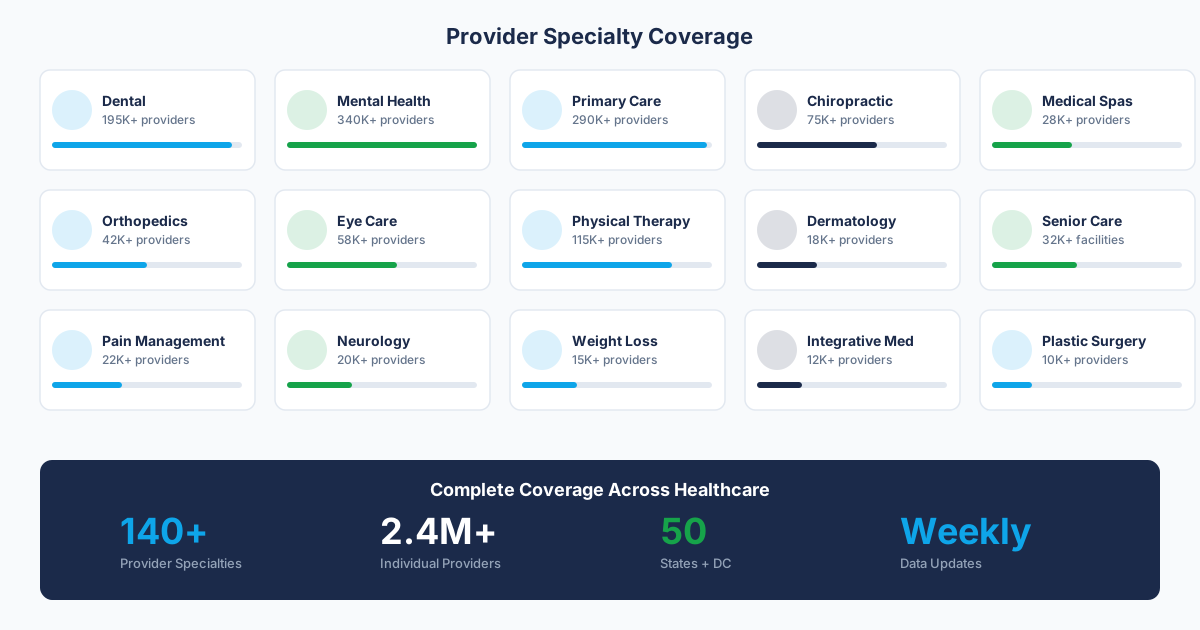
Why NPI Data Alone Falls Short for PT Sales
The NPI registry classifies physical therapists under specialty classifications 225100000X, with sub-codes for specialties like pediatrics (2251P0200X), sports (2251S0007X), geriatrics (2251G0304X), and hand therapy (2251H1300X). Useful starting point, but three major gaps for device sales teams:
Gap 1: Individual vs. Practice Data
NPI Type 1 records tell you where individual PTs are registered. They don't tell you about the practice as a business entity. A clinic with 8 PTs will have 8 individual NPI records, but the purchasing decision sits with one person, usually the clinic director or practice owner. Calling all 8 therapists wastes time and creates a bad impression.
You need practice-level data (NPI Type 2) cross-referenced with individual provider records to identify which location is the business and who within it controls equipment purchases.
Gap 2: Sub-Specialty Focus vs. Provider Training
A PT's NPI classification reflects their credentialing, not necessarily their current practice focus. A therapist trained in sports rehab might now run a general outpatient clinic. A pediatric-certified PT might practice in a mixed-age setting where pediatric patients represent only 20% of the caseload.
To segment accurately, you need practice-level signals: website service descriptions, patient population indicators, and facility characteristics. These come from enrichment, not from the NPI registry.
Gap 3: No Contact Depth
NPI records give you the PT's name and the practice phone number (usually the front desk). They don't give you email addresses, direct lines, or the names and roles of non-clinical staff. For device sales, you often need to reach the clinic manager, operations director, or regional VP in addition to the clinical lead.
Provyx builds physical therapy practice datasets that solve all three gaps: practice-level records with decision-maker contacts, sub-specialty indicators, and ownership intelligence.
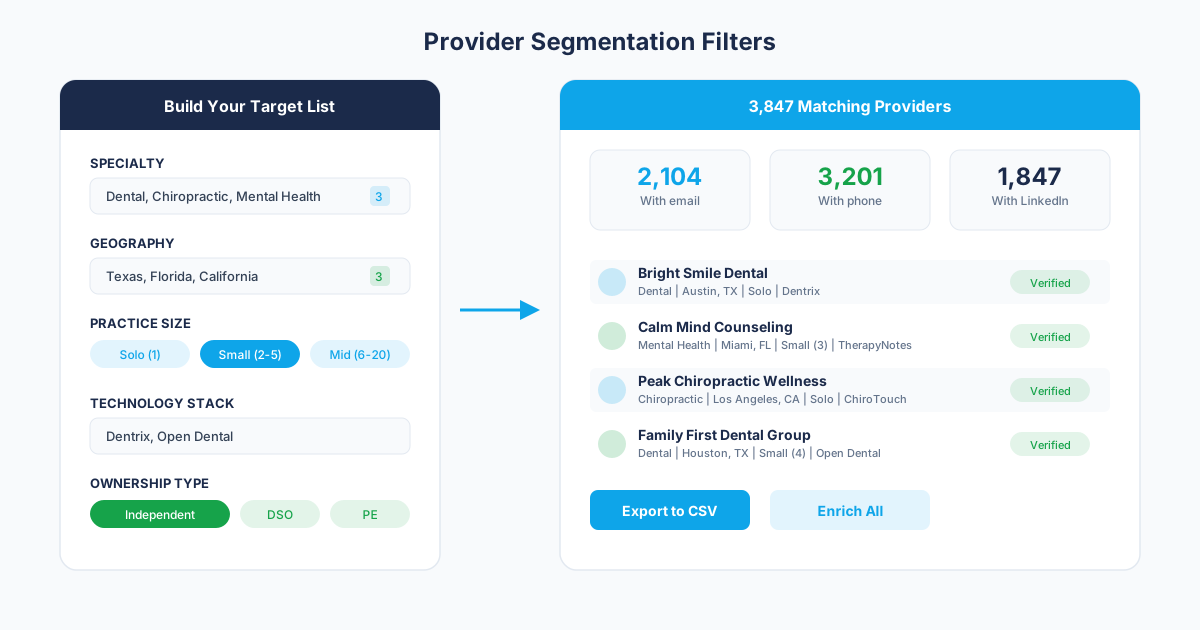
Segmenting PT Practices by Type
Outpatient Rehabilitation Clinics
The largest segment at 60-65% of all PT locations. Outpatient rehab clinics treat a broad range of musculoskeletal conditions. They buy treatment tables, ultrasound therapy units, electrical stimulation devices, exercise equipment, and increasingly, technology-enabled rehab tools like biofeedback systems and virtual reality platforms.
Decision-maker: Typically the clinic owner, clinic director, or managing PT. In multi-location groups, a regional operations director or VP of clinical services may control purchasing across sites. Equipment cycle: Most outpatient clinics replace major equipment every 5-8 years.
Sports Rehabilitation and Performance Centers
Sports rehab clinics serve athletes and active individuals recovering from sports injuries. They invest heavily in specialized equipment: isokinetic testing devices, anti-gravity treadmills, blood flow restriction training systems, and performance analysis technology.
Smaller segment (roughly 8-12% of PT locations) but higher value per practice. Average equipment spend is 30-50% higher than general outpatient clinics. According to the American Physical Therapy Association, sports-certified specialists (SCS credential holders) number approximately 4,500 nationwide.
Pediatric Physical Therapy Practices
Pediatric PT offices specialize in developmental delays, congenital conditions, and childhood injuries. Equipment needs are distinct: pediatric-sized treatment tables, sensory integration equipment, adaptive toys, specialized standers and walkers, and assessment tools calibrated for children.
Niche segment (roughly 5-8% of PT locations) with high specialization. Practices tend to be smaller (1-4 therapists) and independently owned at higher rates than general outpatient clinics.
Hospital-Based Outpatient PT Departments
Hospitals and health systems operate outpatient PT departments either within the hospital campus or in satellite locations. Roughly 15-20% of PT service locations. Purchasing decisions go through hospital procurement departments with annual budgets and committee approval.
Decision-maker: The PT department director manages clinical operations, but procurement controls purchasing. You need both contacts: the clinical champion who will advocate for your device AND the procurement contact who will approve the purchase order.
Home Health and Specialized Rehab Facilities
Home health PT is growing rapidly, driven by Medicare reimbursement policies favoring home-based care. These providers use portable equipment. Inpatient rehab facilities, skilled nursing facilities with PT departments, and long-term acute care hospitals buy larger systems (pool therapy, ceiling-mounted tracks, robotic gait training). Both segments require enterprise-level sales approaches with longer cycles.
Segmenting by Ownership Structure
Independent Owner-Operated Practices
Roughly 40-45% of outpatient PT clinics are independently owned by one or more physical therapists. These are your fastest sales cycles. The owner uses the equipment, understands the clinical value, and controls the budget. A single conversation can lead to a purchase.
Private Equity-Backed Groups
PE consolidation in physical therapy has accelerated since 2018. Large platforms like ATI Physical Therapy (900+ clinics), US Physical Therapy (700+ clinics), and Athletico (500+ clinics) operate under a centralized procurement model. Selling to one location means nothing. You need to sell to corporate.
Learn more about selling into consolidated groups in our territory mapping guide.
Hospital System-Owned and Franchise Clinics
Health systems increasingly operate their own outpatient PT departments, branded under the system name and funneled through the system's procurement process. Some PT practices operate under franchise models (like FYZICAL Therapy and Balance Centers). Provyx tracks hospital system affiliations for device sales teams so you can map individual locations to their parent organizations.
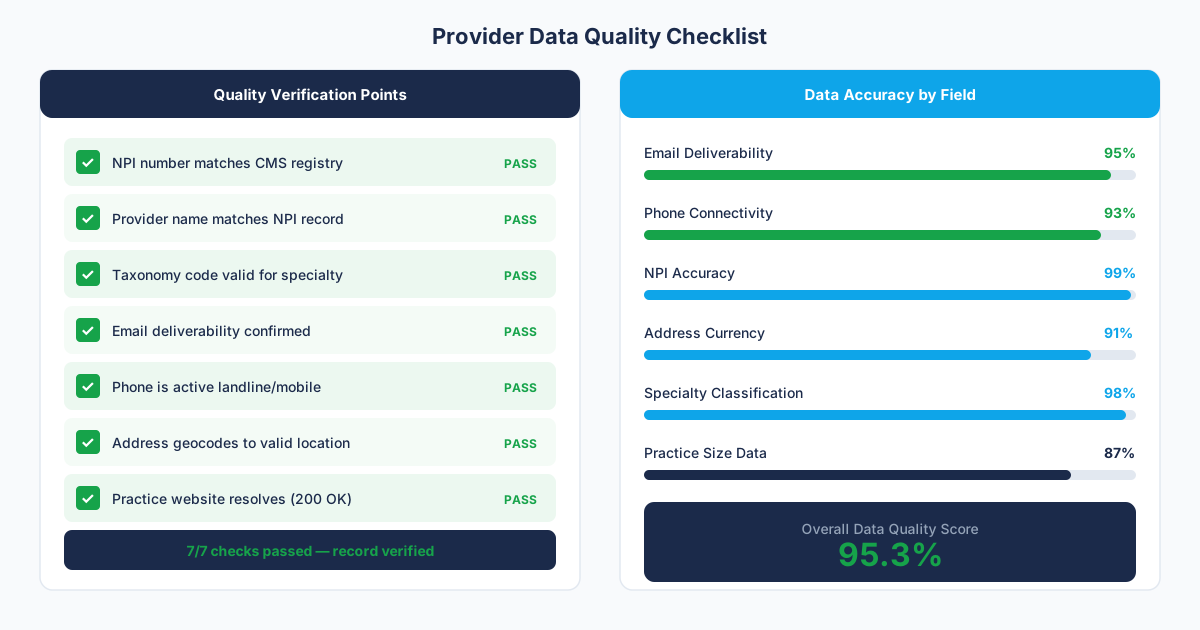
Building Your Territory Plan with PT Data
- Map Your Total Addressable Market.: Start with all PT practice locations in your geographic coverage area.
- Apply Product-Market Fit Filters.: Remove practices that don't match your product. This step typically reduces your list by 50-80%, which is the point.
- Segment by Ownership and Buying Process.: Tier 1: Independent owners (fastest cycle). Tier 2: Small groups, 2-10 locations (medium cycle). Tier 3: PE-backed and hospital-system (longest cycle, highest deal size).
- Assign to Reps by Geography and Tier.: Inside sales handles Tier 1 outreach. Field reps focus on Tier 2 and 3 accounts.
- Identify Cluster Opportunities.: A metro area with 50+ independent PT clinics within a 30-mile radius is a prime territory for concentrated field visits.
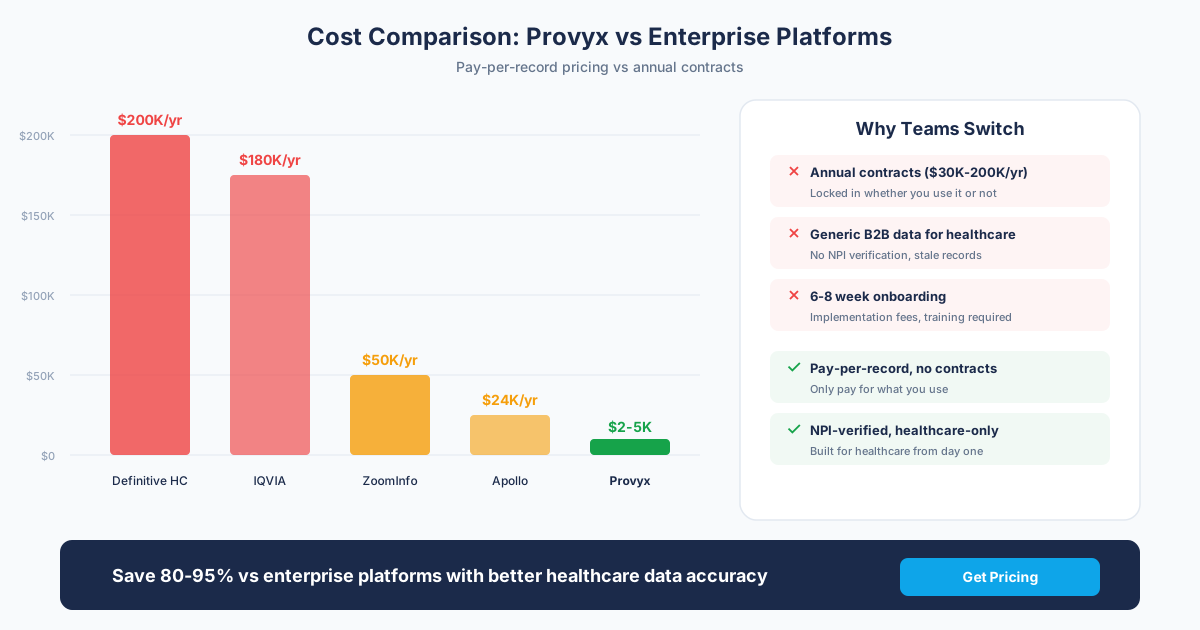
Common Mistakes Device Reps Make with PT Data
Treating All PTs as One Segment
A blast email to 40,000 PT offices about your new ultrasound device will get a 1-2% open rate and near-zero responses. Segment first, then tailor the message. A sports rehab clinic cares about athlete return-to-play timelines. A geriatric-focused clinic cares about fall prevention outcomes. Same product, different pitch.
Ignoring the PE Factor
Calling individual ATI or Athletico locations about equipment is pointless. Their procurement is centralized. Your data should flag PE-backed locations so reps skip them in local outreach and route them to an enterprise sales track instead.
Using Billing Addresses for Territory Planning
NPI mailing addresses are often billing company addresses or PO boxes. A rep who plans a route based on billing addresses will find that 10-15% of their stops are at the wrong location. Use verified practice location addresses only.
Missing Multi-Location Group Intelligence
A 12-location PT group is one deal, not twelve. If your data doesn't connect individual locations to their parent organization, three different reps might pitch three different locations of the same group. That looks disorganized and kills credibility with the corporate decision-maker.
How to Get Started
If you're building a PT territory plan from scratch, start with a targeted dataset. Define your practice type focus, your geographic coverage area, and your ownership tier priorities. Then build or source a dataset that matches those parameters.
Provyx delivers physical therapy practice data with the segmentation fields and decision-maker contacts described in this guide. Every record includes ownership indicators, verified addresses, and contact information for the people who control equipment budgets.
For territory mapping specifically, our medical device territory planning guide walks through the full process from data sourcing through rep assignment.
Frequently Asked Questions
How many physical therapy practices are there in the US?
There are over 40,000 physical therapy practice locations in the United States, based on NPI registry data and commercial databases. Roughly 60-65% are outpatient settings, with the remainder split among hospital-based departments, home health agencies, and specialized rehab facilities.
Who is the decision-maker for equipment purchases at a PT practice?
It depends on ownership structure. At independent practices, the owner-PT or clinic director controls equipment budgets. At PE-backed groups like ATI or Athletico, purchasing is centralized at the corporate level through a VP of operations or procurement department. At hospital-owned PT departments, the department director champions purchases but hospital procurement has final approval.
What is the difference between outpatient PT and sports rehab PT for sales targeting?
Outpatient PT clinics treat a broad range of musculoskeletal conditions and buy general rehab equipment like treatment tables, ultrasound units, and electrical stimulation devices. Sports rehab clinics focus on athletic injuries and performance, investing 30-50% more per practice in specialized equipment like anti-gravity treadmills and isokinetic testing devices.
How does private equity consolidation affect selling to PT practices?
PE-backed PT groups centralize purchasing decisions at the corporate level. Selling to an individual location in a PE portfolio is ineffective because the clinic manager cannot authorize equipment purchases above small thresholds. Your data needs to flag PE-backed locations and provide corporate-level contacts for enterprise sales approaches.
Can I use NPI data alone to build a PT device sales list?
NPI data provides a foundation (provider names, specialty classifications, practice addresses) but lacks email addresses, direct phone numbers, decision-maker identification, ownership structure, and practice type indicators. For device sales, you need enrichment layers that add these fields.
Sources and References
Related Resources
Get the Provider Data You Need
Tell us what you're looking for. We'll build a custom list matched to your target market.
Trusted by healthcare sales teams, medical device companies, and health IT vendors across the US.