
Map Device Sales Territories with Provider Data
Territory planning built on zip code estimates is guesswork. Territory planning built on actual provider locations is strategy. Here is how to do the second one.
2026-03-29
The Territory Planning Problem in Medical Device Sales
Most medical device companies carve territories using one of two approaches: historical sales data (where did we sell last year?) or crude geographic splits (you get the Northeast, I get the Southeast). Both approaches have the same flaw: they do not account for where the actual target providers are located right now.
Historical data tells you where you already have relationships. It does not tell you where the untapped opportunity is. Geographic splits assume providers are evenly distributed, which they are not. According to the Bureau of Labor Statistics, physician density varies by 3-5x between major metro areas and rural regions. A territory that covers two rural states might have fewer target surgeons than a single urban county.
The fix is straightforward: build your territory model on actual provider data. Map every target specialist in your addressable market, cluster them by geography and density, and carve territories that balance opportunity across your sales team. This guide walks through the process.
Step 1: Build Your Provider Universe
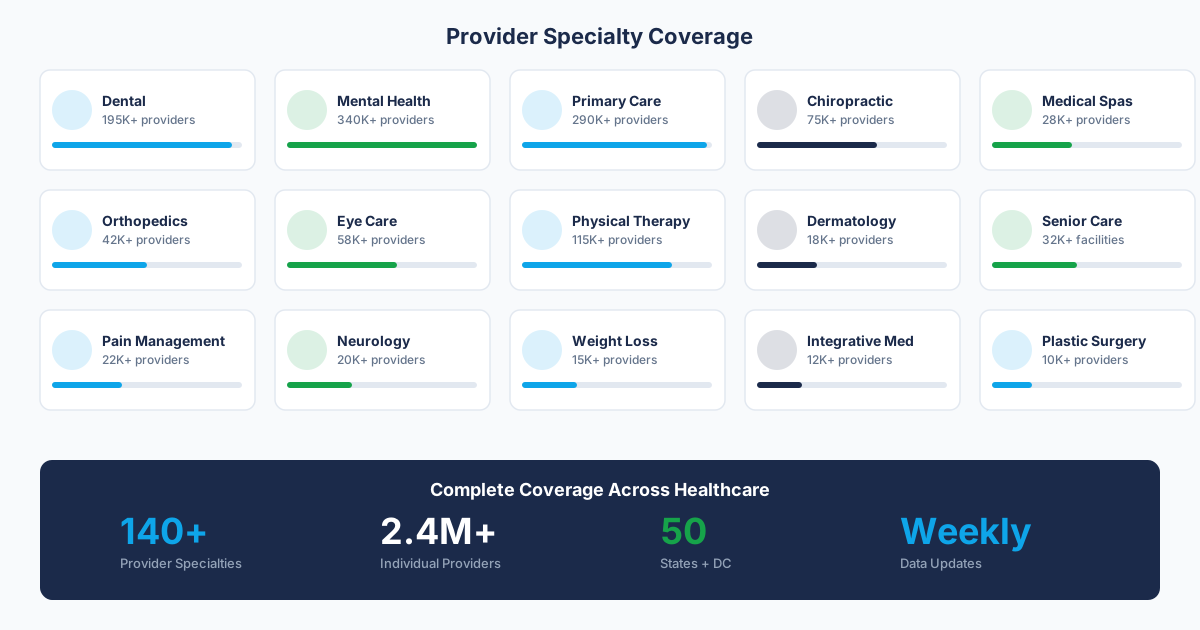
Start by defining which providers are relevant to your device. This is more specific than "orthopedic surgeons" or "dermatologists." Consider:
- Specialty and sub-specialty:: If your device is used in spine surgery, you need spine surgeons and neurosurgeons, not general orthopedists. Use specialty classifications for precision.
- Practice setting:: Does your device require a hospital OR, an ASC, or can it be used in an office setting? This determines which providers can actually use it.
- Procedure fit:: Not every surgeon in a sub-specialty performs the procedures your device targets. If possible, incorporate procedure-level indicators to narrow the universe further.
Pull all matching providers from the CMS NPI Registry with their practice addresses. For a national territory model, this typically produces 2,000 to 50,000 target providers depending on how niche your device category is.
Step 2: Geocode and Plot Provider Locations
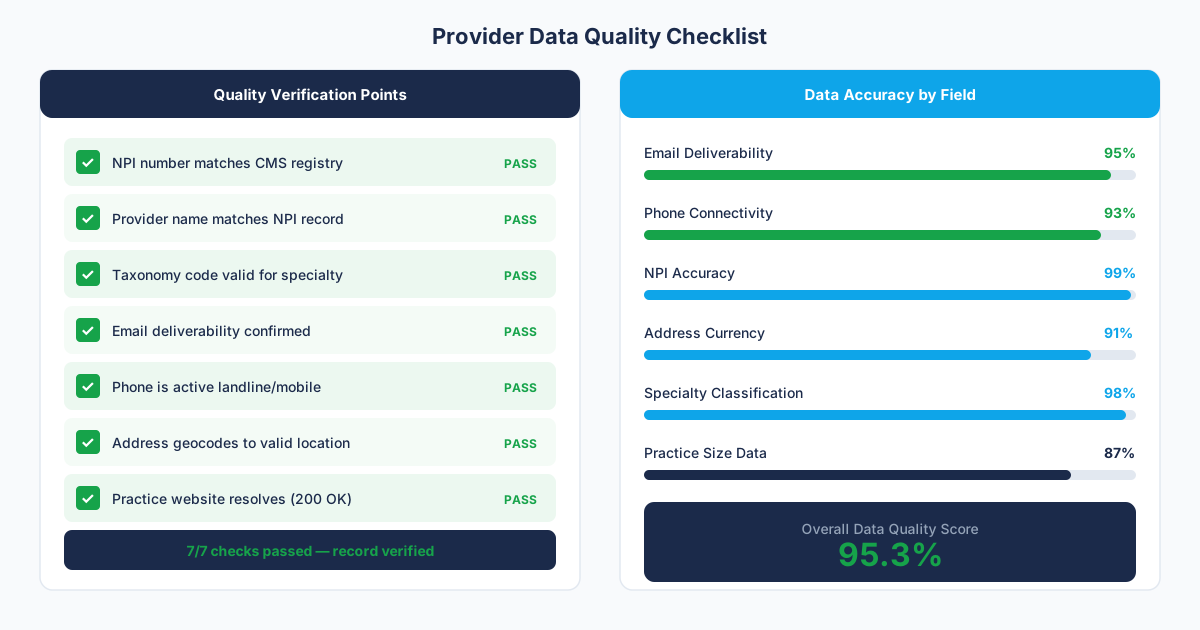
NPI addresses give you street addresses. For territory mapping, you need latitude and longitude coordinates. Run each unique practice address through a geocoding service (Google Geocoding API, Census Geocoder, or similar) to get coordinates.
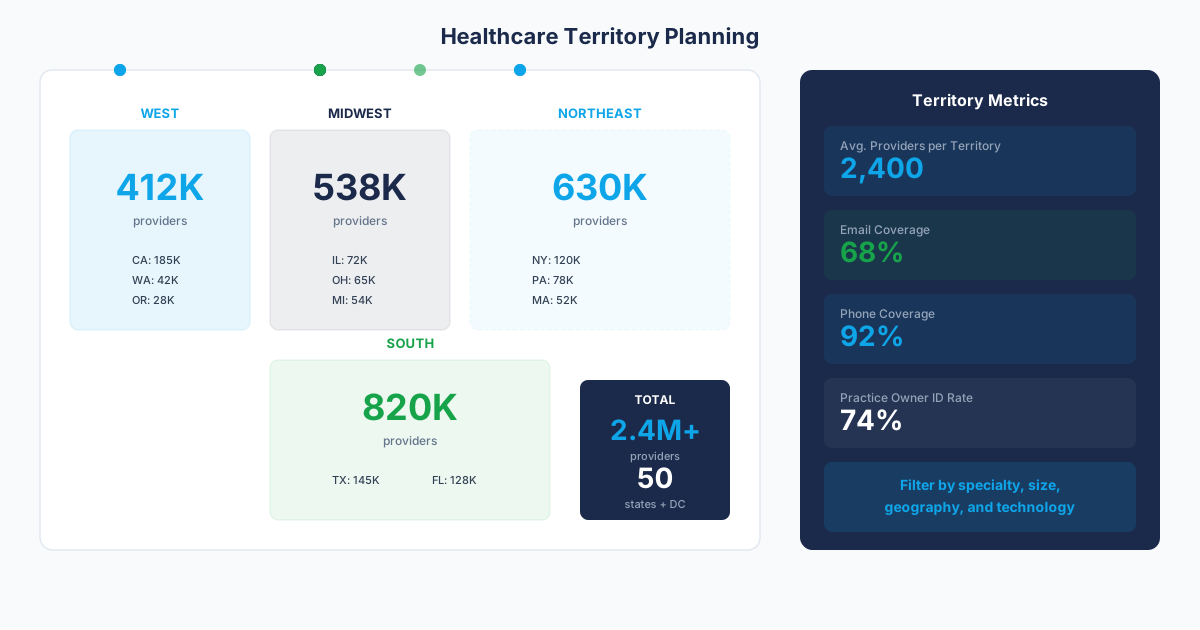
Plot the coordinates on a map. Even before any analysis, the visual distribution reveals patterns that raw address lists cannot. You will see dense clusters in major metro areas, scattered providers in suburban regions, and empty zones in rural areas. These patterns are the foundation of your territory model.
Handling Address Quality Issues
Expect 5-10% of addresses to fail geocoding or return low-confidence results. Common issues:
- PO Box addresses (cannot be geocoded to a specific location)
- Suite numbers that confuse the geocoder
- Outdated addresses for providers who have moved
- Billing addresses that are in a different city than the practice
For failed geocodes, try geocoding at the city + state level to place the provider in the correct general area. This is accurate enough for territory planning even if you cannot pinpoint the exact building.
Step 3: Identify Provider Clusters
Medical device sales are fundamentally local. A rep based in Phoenix can cover Tucson (2 hours), but covering Albuquerque (6 hours) is a different territory. Identifying natural provider clusters helps you draw territory boundaries that make geographic sense.
Clustering Methods
Metropolitan Statistical Area (MSA) grouping: The US Census defines MSAs around population centers. Grouping providers by MSA gives you a city-level view of provider density. This works well as a first pass for national territory models. The Census Bureau publishes current MSA definitions.
Drive-time analysis: For field sales teams that visit provider offices, drive time matters more than straight-line distance. Use routing APIs to calculate drive time from a proposed rep location to each provider in the territory. Group providers into clusters where all members are within a target drive time (typically 2-3 hours) of a central point.
Density-based clustering: Algorithms like DBSCAN identify clusters of providers that are geographically close to each other, regardless of administrative boundaries like zip codes or MSAs. This is useful for identifying natural clusters that cross city or county lines.
Step 4: Score Each Cluster by Opportunity
Provider count alone does not tell you the full story. A cluster of 50 surgeons at academic medical centers where your device already has high penetration is different from a cluster of 50 surgeons at independent ASCs where you have no presence.
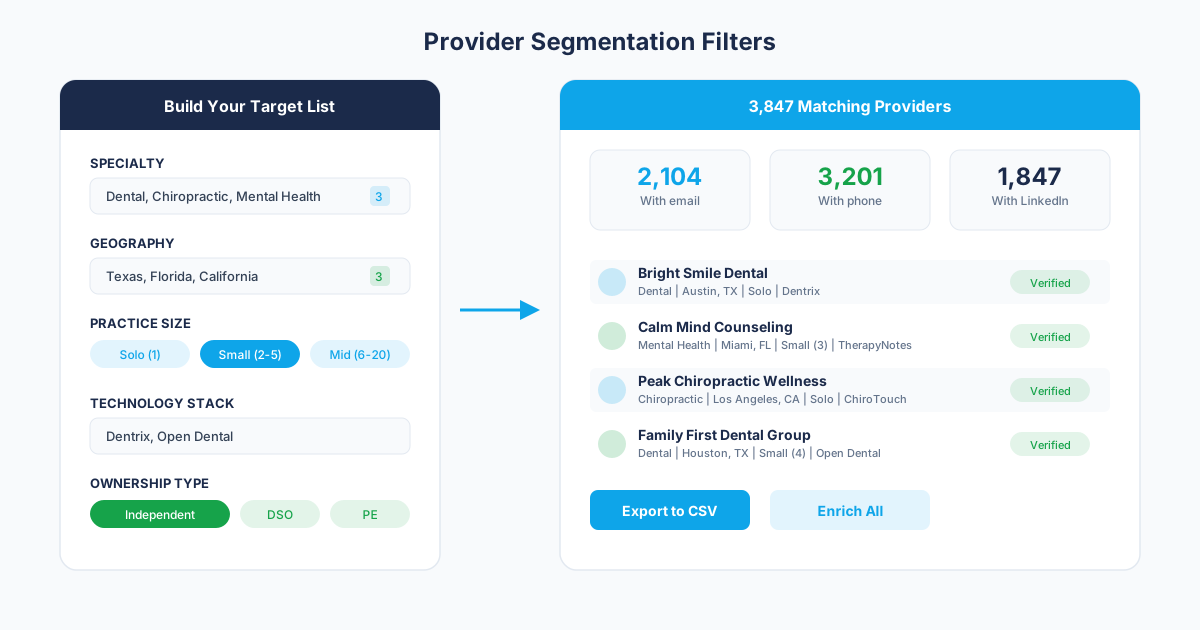
Score clusters using weighted factors:
- Provider count:: Base measure of cluster size.
- Practice type mix:: Independent practices and ASCs are typically easier to sell to than hospital-employed physicians. Weight clusters higher if they have a favorable practice type mix.
- Existing penetration:: Overlay your current customer data. Clusters with low existing penetration and high provider counts represent the biggest growth opportunity.
- Competitive presence:: If you have competitive intelligence, factor in where competitors are strong or weak.
- Payer mix:: Some regions have better reimbursement for your device's procedures than others. Where reimbursement is favorable, providers are more likely to adopt new devices.
Step 5: Balance Territories Across Your Sales Team
The goal of territory balancing is to give each rep a roughly equal opportunity to hit their number. Equal does not mean the same number of providers in each territory. It means equalizing weighted opportunity based on the cluster scores from Step 4.
Balancing Approach
- Total your weighted opportunity score: across all clusters.
- Divide by the number of reps: to get the target score per territory.
- Assign clusters to territories: starting with the largest clusters, grouping geographically adjacent clusters until each territory approaches the target score.
- Adjust for geographic feasibility.: A territory that technically has the right score but requires a rep to cover two non-adjacent metro areas separated by 500 miles is not workable. Consolidate or split as needed.
- Account for existing relationships.: If a rep has strong relationships in a cluster, weigh the cost of reassigning those relationships against the benefit of a more balanced map.
Common Balancing Mistakes
- Splitting MSAs between reps:: Having two reps call on providers in the same city creates confusion, competitive internal friction, and a worse customer experience. Keep metro areas whole within a single territory whenever possible.
- Ignoring travel burden:: A territory with 200 providers spread across 4 states is not the same as 200 providers in a single metro. Factor travel time into workload calculations.
- Optimizing for today only:: Build some flexibility into territories. If a market is growing (new ASCs opening, new providers entering practice), the territory should have room to absorb that growth without immediate realignment.
Step 6: Maintain the Map Over Time
Provider data changes. New practices open. Surgeons relocate. Practices get acquired by health systems. A territory map built on static data degrades the same way any provider list does.
Schedule quarterly refreshes of your provider universe. Re-geocode new providers, recalculate cluster scores, and flag territories where the opportunity balance has shifted significantly. Most companies do a full territory realignment annually, but quarterly data refreshes let you make micro-adjustments (like reassigning a newly opened ASC to the nearest rep) without waiting for the annual cycle.
For the underlying provider data that powers territory mapping, Provyx delivers verified provider locations with practice addresses differentiated from billing addresses, geocoded coordinates, and NPI-level specialty data. We refresh the data on your schedule so your territory model stays current.
Frequently Asked Questions
What data do I need to build a provider-based territory map?
At minimum, you need target provider names, NPI numbers, practice addresses (not billing addresses), and specialty classifications. For weighted territory balancing, you also benefit from practice type (independent vs. System-employed), practice size indicators, and your existing customer data overlaid on the provider map. Geocoded coordinates make the mapping process faster.
How often should medical device territories be rebalanced?
Most companies do a full territory realignment annually during their planning cycle. However, refreshing the underlying provider data quarterly allows for micro-adjustments throughout the year. If a major market change occurs (large practice acquisition, new ASC opening, rep turnover), update the affected territories immediately rather than waiting for the annual cycle.
Should territories be balanced by provider count or weighted opportunity?
Weighted opportunity. Raw provider count ignores critical factors like practice type, existing penetration, and competitive dynamics. A territory with 100 surgeons at hospital systems where you have 40% market share has less growth opportunity than a territory with 80 surgeons at independent ASCs where you have 5% share. Weight clusters by the factors that drive your specific sales motion.
How do you handle providers who practice at multiple locations?
Count the provider once, in the territory where they spend the majority of their clinical time (their primary practice location). If a surgeon operates at both an ASC and a hospital, map them to whichever location is their primary address. Avoid double-counting, which inflates opportunity estimates and leads to territory imbalances.
Sources and References
- CMS NPI Registry
- BLS Physicians and Surgeons Outlook
- Census Bureau Metropolitan Statistical Areas
- industry-standard Healthcare Provider classification
Related Resources
Get the Provider Data You Need
Tell us what you're looking for. We'll build a custom list matched to your target market.
Trusted by healthcare sales teams, medical device companies, and health IT vendors across the US.