
Ophthalmology Practice Data for Surgical Device Reps
Eye care is one of the most PE-consolidated specialties in medicine. Selling surgical devices into this market requires data that separates surgical practices from general optometry and maps the ownership web behind them.
2026-04-02
Eye Care Is a $45+ Billion Market Being Reshaped by Private Equity
Ophthalmology sits at the intersection of two massive forces: an aging population driving demand for cataract surgery, LASIK, and retinal care, and private equity firms consolidating practices at a pace matched only by dermatology and dental.
The numbers tell the story. The American Academy of Ophthalmology reports roughly 19,000 practicing ophthalmologists in the United States, along with approximately 46,000 optometrists. The Bureau of Labor Statistics projects 9% growth for optometrists and 4% growth for ophthalmologists through 2032. Cataract surgery alone accounts for over 4 million procedures per year in the US, making it one of the most commonly performed surgeries in medicine.
For surgical device reps selling into this market (IOL lenses, phaco machines, femtosecond lasers, retinal imaging systems, OCT devices, LASIK platforms), the opportunity is enormous. But the buying landscape has become significantly more complex as PE consolidation reshapes who controls purchasing decisions.
The PE Consolidation Wave in Eye Care
Private equity's interest in ophthalmology started in the mid-2010s and has accelerated every year since. By 2025, PE-backed platforms own or manage an estimated 15-20% of ophthalmology practices nationally, with much higher penetration in certain markets.
The major platforms include:
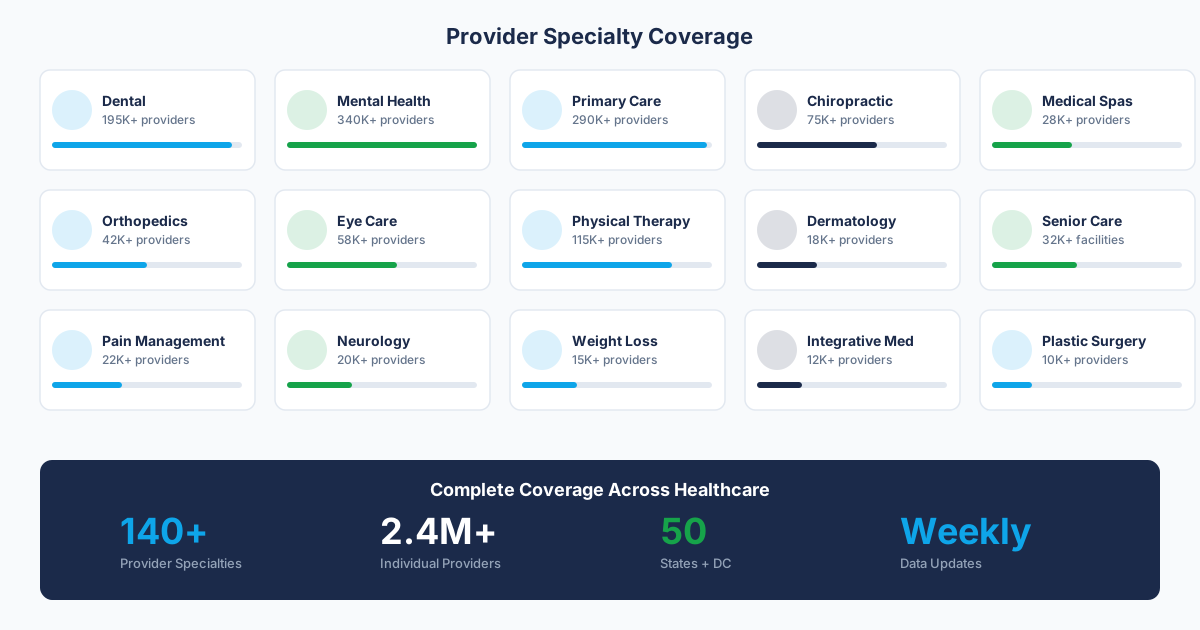
- EyeCare Partners:: One of the largest PE-backed eye care platforms, operating 600+ locations across 20+ states. Backed by Partners Group.
- VSP Vision (Vsp Ventures):: The vision insurance giant also operates retail optical and eye care practices, creating a vertically integrated model that includes insurance, retail, and clinical services.
- US Eye:: 70+ locations across the Southeast, focused on ophthalmology and optometry.
- Unifeye Vision Partners:: 60+ locations, multi-state, focused on comprehensive eye care.
- Eye Health America:: Growing rapidly through acquisitions in the mid-Atlantic and Southeast.
- Spectrum Vision Partners:: 40+ locations, primarily in the Northeast.
Several dozen additional regional platforms operate with PE backing, each aggregating 5-30 practices. The pace of acquisitions shows no signs of slowing. For device reps, this consolidation fundamentally changes the sales motion.
What PE Consolidation Means for Device Sales
When EyeCare Partners acquires an independent ophthalmology practice, the surgeon who previously made equipment decisions now reports to a corporate structure. Capital equipment purchases above a certain threshold (typically $25,000-$100,000) require corporate approval. Vendor contracts are negotiated centrally. A surgeon who loved your IOL lens at their independent practice may no longer be able to choose your product after their practice joins a PE platform.
This creates three distinct sales challenges:
- Finding the right level:: The surgeon is your clinical champion. The corporate VP of Procurement is your buyer. You need relationships with both.
- Tracking ownership changes:: An independent practice you sold to last year may now be PE-owned. Your contact strategy needs to adapt.
- Competing for platform-wide contracts:: A PE platform deal might cover 50+ surgical locations. The stakes are higher, the competition is stiffer, and the sales cycle is longer.
Segmenting Ophthalmology Practices for Device Sales
Not all eye care practices are relevant for surgical device reps. The most important segmentation separates practices by their surgical vs. Non-surgical focus.
Surgical Ophthalmology Practices
These are your core prospects. They perform cataract surgery, LASIK/PRK, glaucoma procedures, retinal surgery, oculoplastics, and other surgical interventions. They buy the high-value capital equipment: phacoemulsification machines, femtosecond lasers, excimer lasers, surgical microscopes, and IOL inventories.
Key characteristics:
- One or more board-certified ophthalmologists with surgical privileges
- Affiliation with an ambulatory surgery center (ASC) or in-office surgical suite
- Sub-specialties like cataract/refractive surgery, retina, glaucoma, cornea, or oculoplastics
- Higher revenue per provider compared to non-surgical practices
- Equipment replacement cycles of 5-10 years for major capital items
For surgical device reps, ASC affiliation is a critical data point. Ophthalmologists who operate at ambulatory surgery centers are confirmed surgical practitioners with active procedure volumes. Our ASC decision-maker guide covers how to identify and reach buyers at surgery centers.
General Ophthalmology Practices
General ophthalmologists focus on medical (non-surgical) eye care: comprehensive eye exams, medical management of glaucoma, diabetic eye disease monitoring, dry eye treatment. They may refer surgical cases to subspecialists rather than performing surgery themselves.
Equipment needs: diagnostic equipment (OCT, visual field analyzers, retinal cameras, slit lamps, autorefractors) rather than surgical equipment. These are still valuable prospects for diagnostic device companies, but not for surgical equipment reps.
Optometry Practices
Optometrists (ODs) provide primary eye care, prescribe corrective lenses, and manage certain eye conditions medically. They do not perform surgery (with limited exceptions in some states). Optometry practices buy diagnostic equipment, optical dispensing equipment, and contact lens fitting tools.
For surgical device companies, optometry practices are referral sources, not buyers. However, optometrists co-manage surgical patients (pre-op and post-op care for cataract surgery, for example), so they influence which surgeons and surgery centers receive referrals. Some surgical device companies market to optometrists to influence referral patterns.
Retina Subspecialty Practices
Retina specialists are a high-value niche within ophthalmology. They treat macular degeneration, diabetic retinopathy, retinal detachment, and other posterior segment diseases. They use specialized equipment: wide-field retinal cameras, OCT-angiography systems, intravitreal injection supplies, vitrectomy machines, and retinal laser systems.
The retina subspecialty has seen significant consolidation through groups like Retina Associates and regional retina practices merging into larger entities. Equipment decisions at these groups are often made by a managing partner or practice board rather than individual physicians.
LASIK and Refractive Surgery Centers
LASIK centers are distinct from complete ophthalmology practices. They focus almost exclusively on elective refractive surgery (LASIK, PRK, SMILE, ICL). Many operate as high-volume, marketing-heavy businesses with consumer-facing brands.
Equipment needs: excimer lasers, femtosecond lasers, wavefront aberrometers, corneal topographers. These are large capital purchases ($300,000-$1,000,000+ per laser platform) with long replacement cycles.
Decision-maker: The medical director (surgeon) and the business owner, who may be the same person at independent centers or a PE platform executive at chain operations like TLC Vision or LasikPlus.
Data Fields That Drive Ophthalmology Device Sales
When building your ophthalmology prospect list, these data fields separate productive outreach from wasted effort:
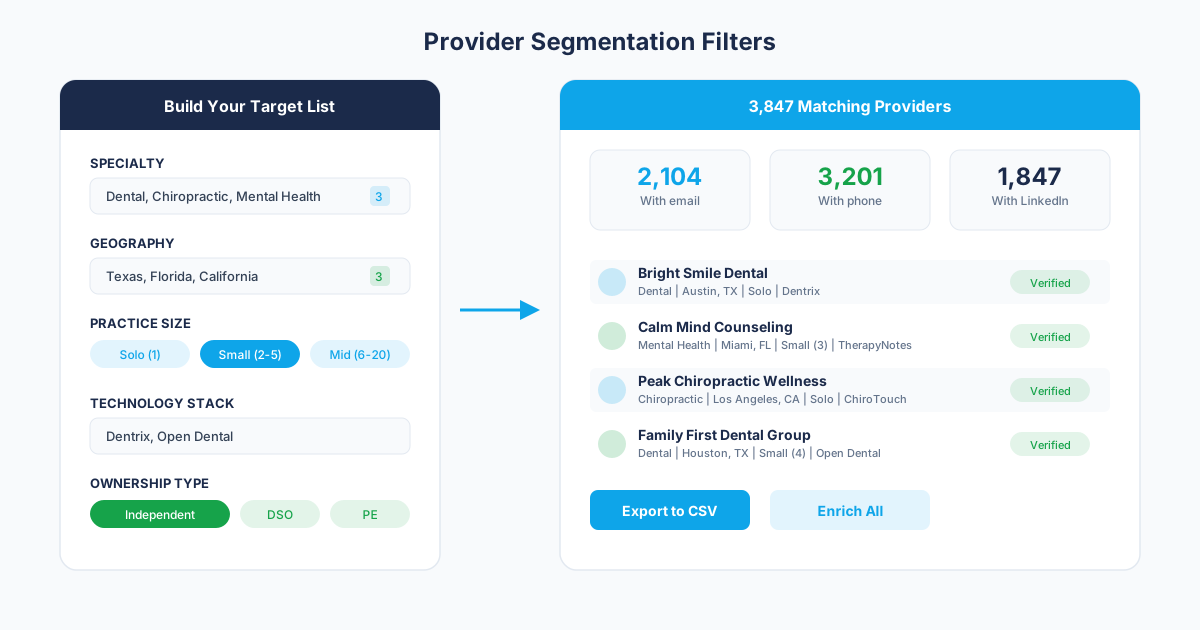
- Sub-specialty classification:: Cataract/refractive, retina, glaucoma, cornea, oculoplastics, general/complete, neuro-ophthalmology. NPI specialty classifications distinguish ophthalmology from optometry but do not reliably distinguish sub-specialties within ophthalmology. Enrichment from practice websites, hospital privileges, and fellowship training is required.
- Surgical status:: Does this provider actively perform surgery? Not all ophthalmologists do. Some have transitioned to medical-only practice. ASC affiliation and surgical privileges data confirm active surgical status.
- ASC affiliation:: Which ambulatory surgery center(s) does the ophthalmologist operate at? This is critical for surgical equipment sales. The ASC is often the purchasing entity for shared surgical equipment, not the individual practice.
- Ownership structure:: Independent practice, PE-backed platform, hospital-employed, or academic. This determines the decision-making path and sales cycle.
- PE platform identification:: If PE-backed, which platform? EyeCare Partners locations buy differently than US Eye locations. Platform-level contacts are essential.
- Practice size (provider count):: A 6-surgeon cataract practice has very different volume and equipment needs than a solo complete ophthalmologist.
- Decision-maker contacts:: Managing partner, practice administrator, surgical coordinator, ASC director. Multiple contacts enable multi-threaded selling.
- Procedure volume indicators:: High cataract volume practices (1,000+ cases/year) are premium prospects for IOL and phaco equipment companies.
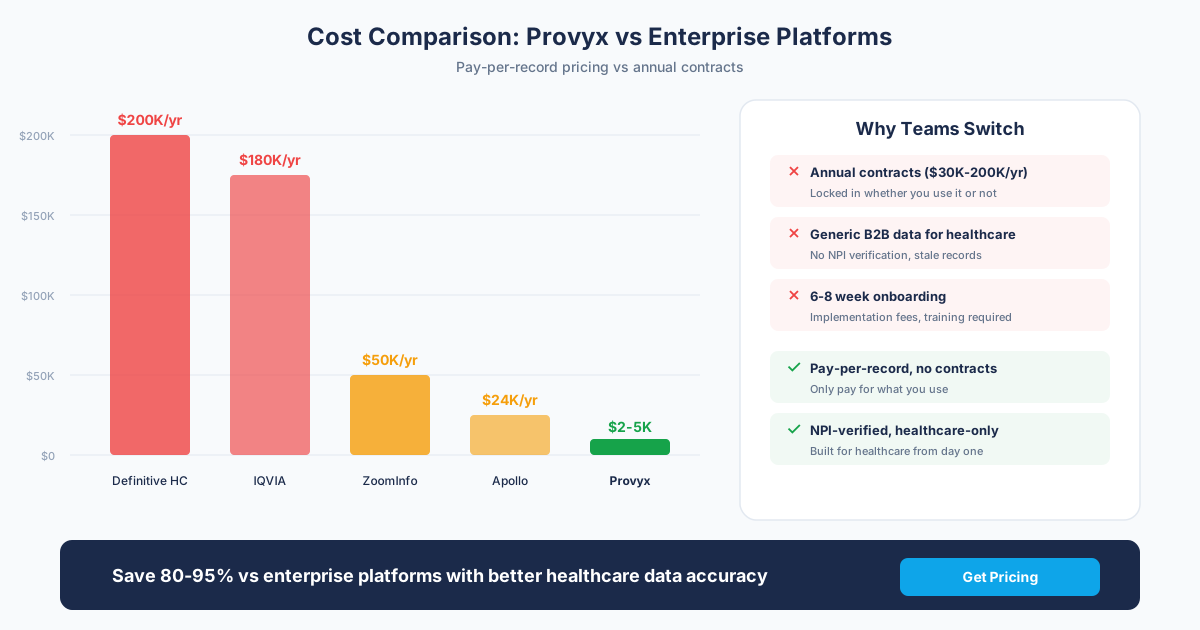
Provyx builds eye care practice datasets with sub-specialty classification, ASC affiliation, ownership intelligence, and decision-maker contacts for device sales teams.
The ASC Connection: Where Ophthalmology Equipment Gets Bought
A significant portion of ophthalmic surgical equipment lives in ambulatory surgery centers, not in the ophthalmologist's office. Cataract surgery, the highest-volume ophthalmic procedure, is performed almost entirely in ASCs and hospital outpatient departments. LASIK is performed either in dedicated refractive surgery suites or in ASCs.
This means your prospect list needs to include ASC data alongside practice data. The ophthalmologist decides which IOL to implant. But the ASC purchases the phaco machine, stocks the IOL inventory, and buys the surgical microscope.
Two scenarios:
Surgeon-owned ASC: The ophthalmologist(s) own the surgery center, often alongside an ASC management company. The same surgeon who is your clinical champion also controls the ASC's capital budget. One relationship covers both the clinical preference and the purchasing authority.
Independent or hospital-owned ASC: The ASC is a separate entity. The ophthalmologist has privileges there but doesn't own it. You need relationships with both the surgeon (for clinical preference) and the ASC administrator or medical director (for purchasing). Multi-specialty ASCs add complexity because ophthalmic equipment competes with other surgical specialties for capital budget allocation.
Your data should map ophthalmologists to their ASC affiliations so you can identify surgeon-owned ASCs (simpler sales) vs. Independent ASCs (dual-relationship required). See our ASC decision-maker guide for detailed contact strategies at surgery centers.
Building Territory Plans for Ophthalmic Device Sales
Step 1: Define Your Product-Market Segment
Which eye care providers need your product?
- IOL manufacturers:: High-volume cataract surgeons, primarily at ASCs. Target surgeons performing 500+ cases per year.
- Phaco/femto laser companies:: ASCs and large ophthalmology practices with surgical suites. Focus on facilities with equipment older than 7 years for replacement cycle targeting.
- Diagnostic equipment (OCT, visual fields):: All ophthalmology and optometry practices. Broader market, lower price point, shorter sales cycle.
- Retinal imaging and treatment:: Retina subspecialty practices and multi-specialty groups with retina divisions. Narrower market, higher price point.
- LASIK platforms:: Refractive surgery centers. Very narrow market (roughly 700-1,000 active LASIK centers), very high deal value.
Step 2: Segment by Ownership and Buying Process
Divide your prospects into three tiers:
- Tier 1: Independent surgical practices and surgeon-owned ASCs.: Fastest sales cycle, direct relationship with the surgeon-buyer. These should be your highest-activity outreach segment.
- Tier 2: Small PE platforms and regional groups (5-30 locations).: Semi-centralized purchasing. You may need both the local surgeon champion and a regional or corporate operations contact.
- Tier 3: Large PE platforms (EyeCare Partners, etc.) and health systems.: Fully centralized purchasing. Enterprise sales motion. Corporate-level contacts required. Higher deal value but 6-12 month cycles.
Step 3: Map ASC Relationships
For surgical equipment specifically, overlay ASC data onto your practice data. Identify which surgeons operate at which ASCs, and whether those ASCs are surgeon-owned or independently operated. This determines whether you need one relationship (surgeon-owner) or two (surgeon plus ASC administrator).
Step 4: Prioritize by Procedure Volume and Equipment Age
If your data includes procedure volume indicators (from claims data or practice size proxies) and equipment age estimates (from practice tenure or known installation dates), you can prioritize the highest-volume practices with the oldest equipment. These are your best prospects for capital equipment replacement.
Step 5: Assign Territories with Account Complexity Weighting
Don't assign territories by location count alone. A territory with 30 independent practices is a lighter workload than a territory with 5 PE-backed groups covering 100 locations. Weight territories by the complexity and value of the accounts, not just the count.
Ophthalmology vs. Optometry: Getting the Segmentation Right
One of the most common data quality issues in eye care datasets is the blurring of ophthalmology and optometry. These are fundamentally different provider types with different scopes of practice, different equipment needs, and different purchasing behaviors.
- Ophthalmologists (MDs/DOs):: Medical doctors with surgical training. Perform eye surgery. 4 years of medical school plus 4 years of ophthalmology residency, often plus 1-2 years of fellowship. Roughly 19,000 practicing in the US.
- Optometrists (ODs):: Doctors of optometry. Provide comprehensive eye exams, prescribe lenses, manage certain medical conditions. Do not perform surgery (with limited exceptions expanding in some states). 4 years of optometry school after undergraduate. Roughly 46,000 practicing in the US.
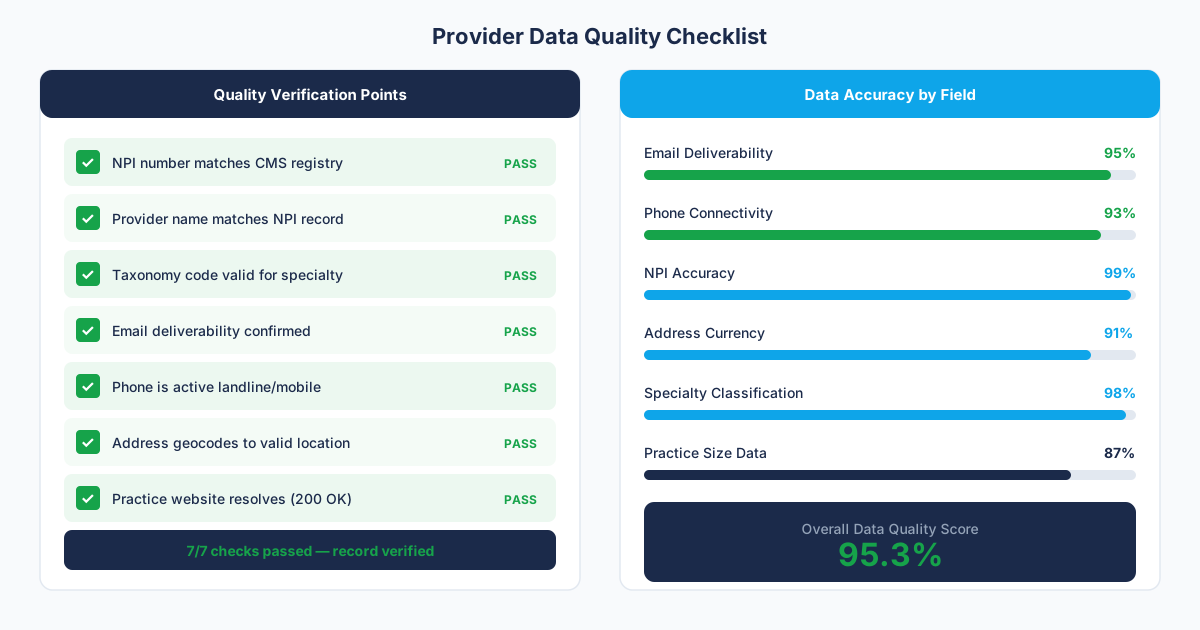
NPI specialty classifications reliably separate ophthalmologists (207W00000X and sub-codes) from optometrists (152W00000X). But many practice-level datasets lump "eye care" together without this distinction. If you sell surgical equipment and your prospect list includes 46,000 optometrists alongside 19,000 ophthalmologists, two-thirds of your list is irrelevant.
For diagnostic equipment companies, both segments matter, but the selling points differ. An ophthalmologist evaluating OCT devices cares about surgical planning capabilities. An optometrist cares about screening efficiency and referral documentation. Same device category, different pitch.
Your data should clearly separate ophthalmologists from optometrists and, within ophthalmology, distinguish sub-specialties by surgical focus.
PE Platform Intelligence: What Your Data Should Include
Given the scale of PE consolidation in eye care, your ophthalmology dataset needs platform-level intelligence that goes beyond flagging "PE-backed." Useful data points include:
- Platform name:: Which PE-backed group owns or manages this practice?
- Platform size:: Total location count, geographic footprint, provider count.
- PE sponsor:: Which PE firm backs the platform? Knowing the financial sponsor helps your enterprise team understand the platform's growth trajectory and capital allocation priorities.
- Acquisition recency:: Was this practice acquired recently (still integrating) or years ago (fully integrated into corporate procurement)? Recently acquired practices may still have some local purchasing autonomy during the transition period.
- Corporate contacts:: VP of Operations, VP of Procurement, Chief Medical Officer, CFO at the platform level. These are your enterprise sale contacts.
Understanding PE dynamics in healthcare is critical for any device sales organization. Our PE healthcare data guide covers how consolidation affects sales strategies across multiple specialties.
Common Mistakes Selling Ophthalmic Devices
Mistake 1: Pitching Optometrists on Surgical Equipment
It happens more often than you'd think. A rep gets a list of "eye care providers," doesn't filter by provider type, and emails optometrists about cataract surgery IOLs. This wastes time and damages credibility. Always separate ophthalmologists from optometrists in your data.
Mistake 2: Approaching PE Platform Locations Individually
Three reps calling three EyeCare Partners locations in the same metro area, making three different pitches, looks unprofessional to the corporate team. Your data should flag PE-backed locations so they get routed to your enterprise sales track.
Mistake 3: Ignoring the ASC as a Separate Buyer
The surgeon wants your IOL. But the ASC administrator controls the formulary. If you convince the surgeon without engaging the ASC, your product sits unapproved while a competitor's IOL stays in stock. Map ASC relationships and engage both parties.
Mistake 4: Using Stale Ownership Data
Eye care acquisitions happen monthly. A practice that was independent in January may be PE-owned by March. If your data is refreshed annually, you're approaching newly consolidated practices with the wrong sales motion for months before your records catch up.
Mistake 5: Treating All Cataract Surgeons the Same
A high-volume cataract surgeon doing 2,000 cases per year is a fundamentally different prospect than one doing 200 cases. Volume affects IOL preferences (premium vs. Standard), equipment use rates (ROI calculations change), and purchasing influence (high-volume surgeons have more leverage at ASCs). Segment by procedure volume when possible.
Getting Started with Ophthalmology Practice Data
If you're building or rebuilding your ophthalmology territory plan, start with these steps:
- Define your product-market segment.: Surgical equipment? Diagnostic devices? Specific sub-specialty focus?
- Source ophthalmology-specific data: with sub-specialty classification, ASC affiliation, and ownership intelligence. Generic healthcare databases that lump all eye care together won't give you the segmentation you need.
- Map PE platform relationships: and build separate contact strategies for independent practices vs. Corporate-level engagement.
- Overlay ASC data: to identify where surgical equipment decisions are actually made.
- Establish a quarterly refresh cadence: to capture the ongoing acquisition activity in eye care.
Provyx delivers eye care provider data with the depth needed for surgical device sales: sub-specialty segmentation, ASC mapping, PE platform identification, and verified decision-maker contacts at both the practice and corporate level.
Frequently Asked Questions
How many ophthalmologists are there in the US?
There are approximately 19,000 practicing ophthalmologists in the United States, according to the American Academy of Ophthalmology. In addition, roughly 46,000 optometrists provide primary eye care. For surgical device reps, the relevant market is the 19,000 ophthalmologists, particularly those actively performing surgery (estimated at 12,000-14,000 based on ASC and surgical privilege data).
How much has private equity consolidated ophthalmology?
PE-backed platforms own or manage an estimated 15-20% of ophthalmology practices nationally, with higher concentration in certain metro areas. Major platforms include EyeCare Partners (600+ locations), US Eye (70+ locations), Unifeye Vision Partners (60+ locations), and dozens of smaller regional platforms. Consolidation is accelerating, with new acquisitions announced monthly.
What is the difference between ophthalmologists and optometrists for device sales?
Ophthalmologists (MDs/DOs) are medical doctors who perform eye surgery and buy surgical equipment like phaco machines, IOL lenses, and femtosecond lasers. Optometrists (ODs) provide comprehensive eye exams and prescribe corrective lenses but do not perform surgery. Both buy diagnostic equipment (OCT, visual field analyzers), but only ophthalmologists buy surgical equipment. NPI specialty classifications reliably distinguish the two.
Why does ASC affiliation matter for ophthalmology device sales?
Most ophthalmic surgery occurs at ambulatory surgery centers, not in the ophthalmologist's office. The ASC often purchases the surgical equipment (phaco machines, microscopes) and stocks the IOL inventory. If the ASC is surgeon-owned, one relationship covers both the clinical preference and purchasing authority. If the ASC is independently owned, you need relationships with both the surgeon and the ASC administrator.
How do I identify which ophthalmology practices are PE-backed?
NPI data does not include ownership information. You need commercial data with PE platform identification. Look for data that includes the platform name (EyeCare Partners, US Eye, etc.), corporate parent contacts, acquisition recency, and whether local purchasing autonomy still exists. Practices acquired within the past 6-12 months may retain some local purchasing authority during the integration period.
How often should ophthalmology practice data be refreshed?
Quarterly at minimum, given the pace of PE acquisitions in eye care. Monthly is better if your territory includes markets with heavy consolidation activity. Ownership changes affect your entire sales approach for a practice. A 6-month-old record showing independent ownership may be incorrect if the practice was acquired since your last data refresh.
Sources and References
Related Resources
Get the Provider Data You Need
Tell us what you're looking for. We'll build a custom list matched to your target market.
Trusted by healthcare sales teams, medical device companies, and health IT vendors across the US.