
The Medical Practice Data Quality Checklist: 15 Points to Audit Before Your Next Campaign
A practical, no-nonsense checklist for auditing your provider data. Run through this before you launch anything.
2026-02-15
Why You Need a Data Quality Checklist
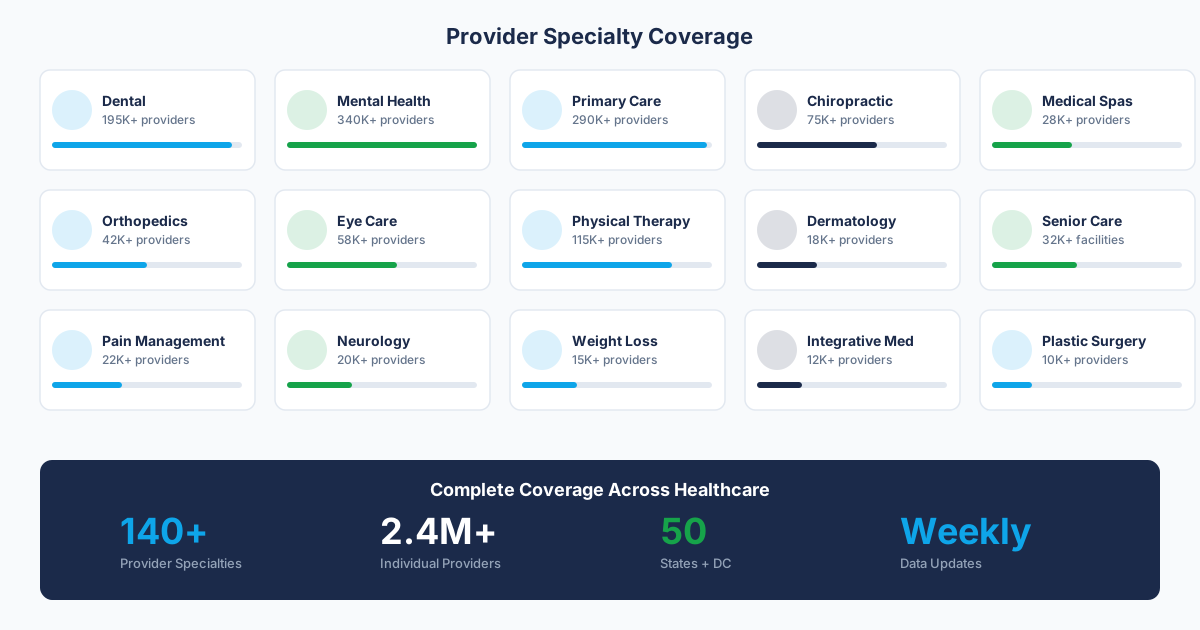
Every healthcare sales campaign starts with data. If the data is clean, your team spends its time selling. If it's not, they spend their time dealing with bounced emails, wrong numbers, outdated contacts, and the slow erosion of confidence that comes from working bad lists.
We've audited provider databases for dozens of healthcare B2B companies. The problems we find are remarkably consistent. Not because these teams are careless, but because medical practice data has unique quirks that catch people off guard. Providers who practice at multiple locations. Billing addresses that are 200 miles from the practice. specialty classifications that haven't been updated in years. Ownership structures that changed last month.
This checklist covers the 15 most important quality checks you should run before any outreach campaign. It's organized into four sections: Record Completeness, Contact Accuracy, Data Freshness, and Segmentation Readiness. Score yourself honestly. The gaps you find will tell you exactly where to invest before your next campaign.
Section 1: Record Completeness
Before worrying about whether data is accurate, check whether it's there at all. Missing fields are often a bigger problem than wrong fields because they're harder to catch in aggregate reporting.
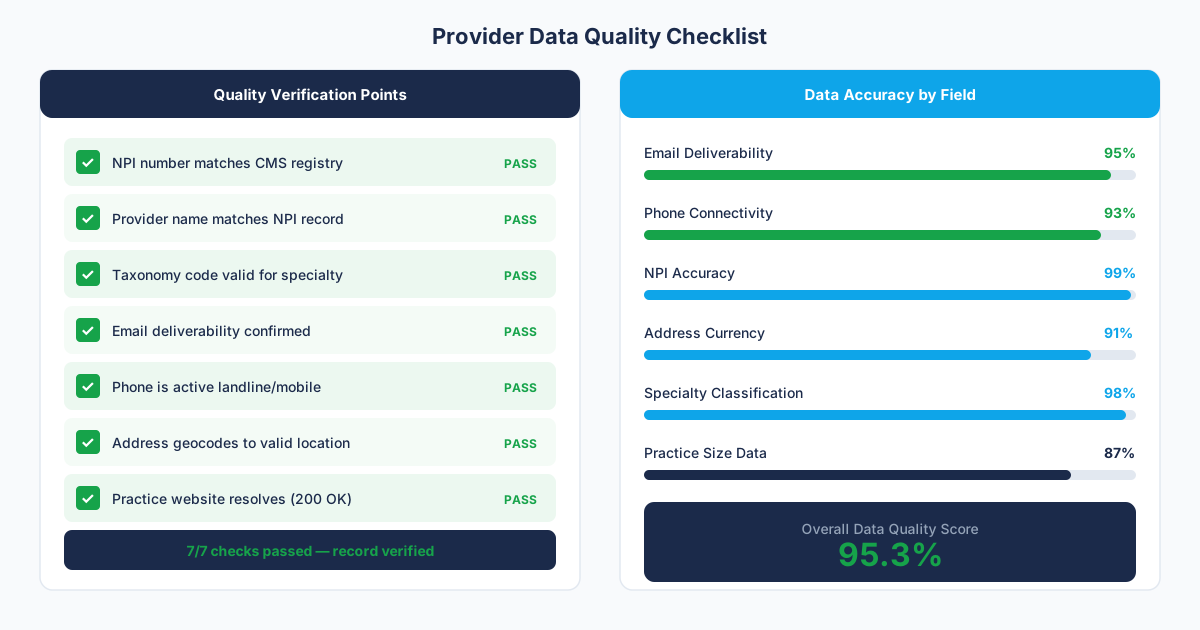
1. What Percentage of Records Have a Verified Email Address?
Target: 70%+
Not just any email. A verified, deliverable email address. Generic addresses like info@, contact@, and frontdesk@ count, but should be flagged separately from individual addresses. If less than 50% of your records have any email at all, your outbound email channel is crippled before you start.
Run your emails through a verification service. The percentage that comes back as "valid" is your true coverage rate. Anything listed as "catch-all" should be treated as unverified because catch-all domains accept all incoming mail, so you can't confirm the specific address exists.
2. What Percentage of Records Have a Direct Phone Number?
Target: 40%+
By direct phone number, we mean a number that reaches a specific person, not the main office line. This includes direct extensions, direct dials, and cell phones. If your entire phone dataset is main office numbers, your reps are fighting through front desks on every single call.
40% might sound low, but direct phone coverage in healthcare is harder to achieve than in most B2B verticals. Providers are protective of their direct lines. Getting to 40% with verified numbers is a strong position.
3. Do Records Include a Named Decision-Maker?
Target: 80%+
Every practice record should include at least one named individual identified as a decision-maker or influencer for purchasing. This is the person your rep is trying to reach. "Dr. Smith" from the NPI registry isn't enough if Dr. Smith is an employed physician with no purchasing authority.
For practices where you don't have a named decision-maker, flag them for enrichment before including them in outreach. Sending email to info@ with "Dear Decision-Maker" is a waste of everyone's time.
4. Is Practice Size Data Available?
Target: 60%+
Do you know how many providers practice at each location? Provider count is the most commonly available size metric and it's essential for segmentation. A solo practice and a 20-provider group need completely different sales approaches, pricing conversations, and implementation plans.
If you don't have provider count data, you can approximate it by counting unique Type 1 NPIs associated with a practice address, but this is imprecise and misses non-NPI staff.
Bonus: Ownership Type Coverage
Target: 50%+
This is a stretch goal for most teams, but it's increasingly important. Do you know whether each practice is independently owned, hospital-affiliated, PE-backed, or part of a larger management group? Ownership type is the strongest predictor of buying behavior in healthcare B2B. Independent practices make fast, autonomous decisions. PE groups and hospital systems have centralized procurement. If you can't segment on ownership, you're sending the same pitch to buyers with fundamentally different processes.
Even partial coverage is valuable. If you can identify ownership type for your top 50% of target accounts, that's enough to create meaningful segmentation in your outreach. Start with the largest practices in your list. Ownership information is easier to find for bigger organizations because they tend to have more public-facing presence.
Section 2: Contact Accuracy
Having data is one thing. Having correct data is another. These checks measure whether the information in your database reflects reality.
5. What's Your Email Bounce Rate from the Last Campaign?
Target: Below 3%
Hard bounces above 3% indicate a freshness problem. Above 5% is dangerous territory because email service providers start flagging your domain. Above 10% and you're actively damaging your sender reputation, which will affect deliverability across all your campaigns.
If you haven't sent a campaign recently, run your email list through a verification tool like ZeroBounce or NeverBounce. The percentage flagged as "invalid" is your estimated bounce rate.
6. What's Your Phone Connect Rate?
Target: 15%+ on direct dials, 3%+ on main lines
Connect rate means reaching a live human who is or can connect you to your target contact. If your connect rate on "direct" numbers is below 10%, those numbers are probably not direct, or they're out of date. If main line connect rates are below 2%, you likely have a high percentage of disconnected or wrong numbers.
7. How Many Records Have Addresses That Fail USPS Standardization?
Target: Below 3% failure rate
Run your addresses through a USPS standardization tool (SmartyStreets, Melissa, or similar). Records that can't be standardized or return as "undeliverable" have bad addresses. This affects direct mail, territory assignment, and geographic analysis.
Pay special attention to practice vs. Mailing addresses. Many NPI-sourced records have a billing company or PO box as the mailing address. Your reps need the physical practice location, not where the bills go.
8. Are Providers Still Active at the Listed Practice?
Target: 90%+ confirmed active
Providers move between practices, retire, relocate, or switch to telemedicine-only models. The NPI registry is slow to reflect these changes because updates are self-reported. Spot check a random sample of 50-100 records by searching for the provider on the practice's website or state licensing board. If more than 10% can't be confirmed at the listed location, your data has a staleness problem.
Section 3: Data Freshness
Even accurate data becomes inaccurate over time. These checks assess whether your data is current enough for outreach.
9. When Was Each Record Last Verified?
Target: Within the last 90 days
Not "when was the file last updated." When was each individual record last confirmed accurate? There's a critical difference. A vendor might "update" their file monthly but only re-verify a fraction of records each cycle.
If your data doesn't include per-record verification timestamps, you have no way to assess freshness at the record level. Ask your vendor for this. If they can't provide it, that tells you something about their verification process.
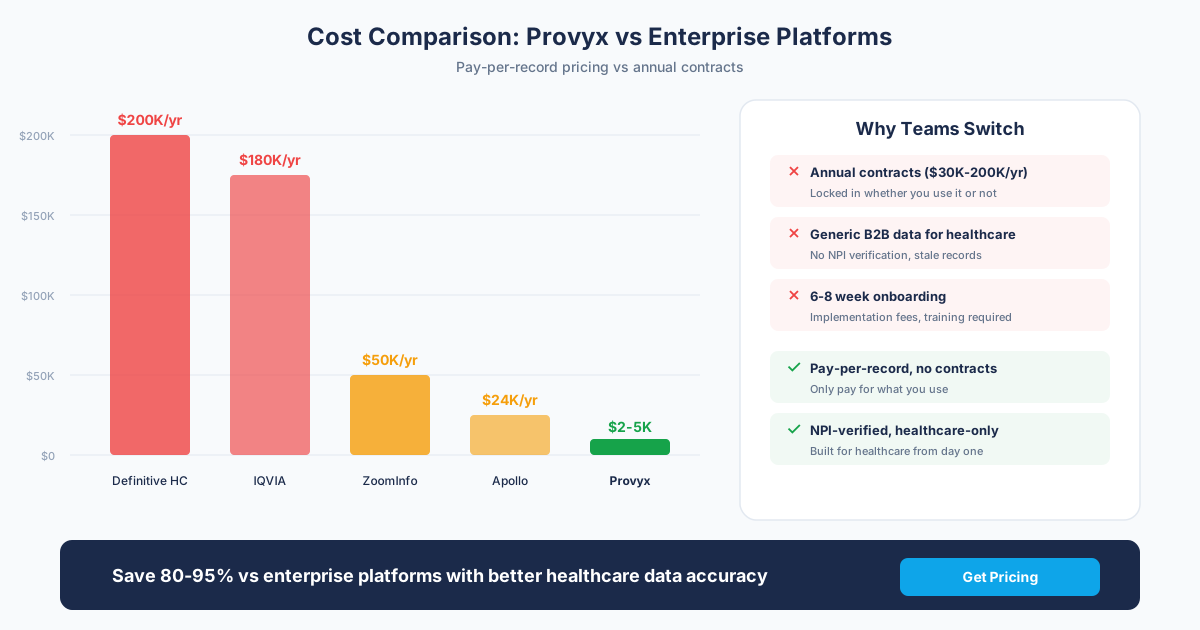
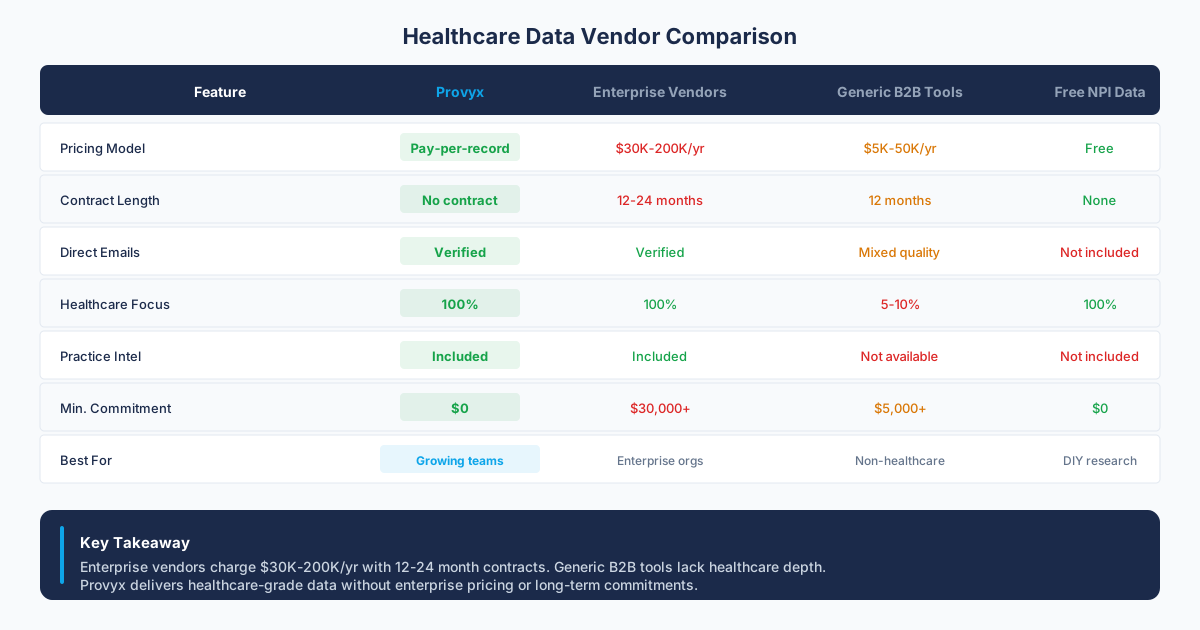
Provyx includes record-level verification timestamps on every deliverable. It's the only way to hold data quality accountable.
10. Are Deactivated NPIs Flagged and Excluded?
Target: 100% of deactivated NPIs identified
Cross-reference your provider list against the latest NPPES deactivation file. Deactivated NPIs represent providers who are no longer practicing, have died, or have had their billing privileges revoked. Reaching out to these records is not just wasteful; it can be embarrassing.
CMS publishes deactivation data monthly. This check should be part of your monthly maintenance routine.
11. Are Newly Registered Providers Being Added?
Target: Monthly additions from NPPES
New NPIs are issued every month as providers start practices, join new organizations, or enter the workforce. According to BLS projections, healthcare is one of the fastest-growing employment sectors. If you're not adding new providers to your database regularly, you're missing a growing portion of your addressable market.
This is especially important in specialties with high turnover or rapid growth. Urgent care, telemedicine, and mental health practices have exploded in the last three years.
12. Have Recent Practice Closures and Mergers Been Captured?
Target: Quarterly review of practice status
Practices close. Practices merge. Practices get acquired. If your database still shows "Smile Dental" as an independent practice when it was acquired by a DSO six months ago, your rep is going in with the wrong pitch to the wrong person.
Monitoring this requires more than NPI data. You need to watch for business registration changes, website updates, news mentions, and ownership filings. This is one of the hardest aspects of data maintenance to do manually, and one of the strongest arguments for using a commercial data provider that actively monitors these signals.
Section 4: Segmentation Readiness
Clean, accurate, fresh data is necessary but not sufficient. Your data also needs to support the segmentation that makes targeted outreach possible.
13. Can You Segment by Practice Ownership Type?
Target: Ownership type identified for 70%+ of records
Independent, hospital-owned, PE-backed, DSO, FQHC, academic. The ownership type fundamentally changes your sales approach. If you can't segment on ownership, you're running generic outreach to an audience that requires personalized messaging.
The AMA's latest data shows the physician-owned share of practices continuing to shrink. If your data doesn't reflect current ownership realities, your segmentation is out of date even if the contact information is current.
14. Is Specialty Data Granular Enough for Your Targeting?
Target: Sub-specialty or procedure-level classification
NPI specialty classifications are a starting point, but they're often too broad for precise targeting. "General Dentistry" doesn't distinguish between a family dentist and a cosmetic-focused practice. "Internal Medicine" covers hospitalists, geriatricians, and primary care physicians.
Evaluate whether your specialty classifications align with your actual target market definition. If your ICP is "cosmetic dermatologists" and your data just says "dermatology," you're going to waste significant effort reaching medical dermatologists, Mohs surgeons, and dermatopathologists who aren't your buyers.
The best approach is to map your ICP to specific procedure types or practice characteristics that go beyond classification. A dental practice that lists "Invisalign" and "veneers" on their website is a cosmetic dental prospect. One that only lists "cleanings and fillings" probably isn't. Your data should capture these distinctions.
15. Does Your Data Support Multi-Channel Outreach?
Target: 3+ contact channels per record
Modern outbound requires multiple channels: email, phone, LinkedIn, and sometimes direct mail. For each record in your database, count how many of these channels you can activate:
- Verified email address
- Direct phone number (not main office line)
- LinkedIn profile URL
- Verified mailing address
If most of your records only support one or two channels, your outreach is limited. Research consistently shows that multi-channel sequences outperform single-channel by 2-3x on response rates. But you can't run multi-channel if the data isn't there to support it.
Scoring Your Audit
Go through each of the 15 checks and rate your data honestly:
- Meets target:: 2 points
- Close but not there:: 1 point
- Significantly below target:: 0 points
Score interpretation:
- 25-30 points:: Your data infrastructure is strong. Focus on maintaining quality and optimizing segmentation.
- 18-24 points:: You have a solid foundation with meaningful gaps. Prioritize the lowest-scoring areas for immediate improvement.
- 10-17 points:: Significant data quality issues are likely impacting your pipeline. Consider a complete data refresh before your next campaign.
- Below 10:: Your data needs a complete overhaul. Stop outreach on the current list and invest in rebuilding from verified sources. Sending more volume on bad data will only make things worse.
What to Do with Your Results
Don't try to fix everything at once. Prioritize based on impact:
- Contact accuracy (Section 2) first.: Wrong data actively harms your results and your reputation. Fix bounces, disconnects, and wrong contacts before anything else.
- Data freshness (Section 3) second.: Establish a maintenance cadence so your data stops degrading.
- Record completeness (Section 1) third.: Fill in missing fields, especially email addresses and decision-maker names.
- Segmentation readiness (Section 4) last.: Once the foundation is solid, invest in the enrichment that enables targeted outreach.
If your scores are low across multiple sections, it's often more efficient to start fresh with a verified dataset than to patch what you have. We've seen teams spend months trying to clean up a fundamentally flawed database when they could have replaced it in weeks.
Provyx delivers data that scores 25+ on this checklist out of the box. Every record is verified before delivery, with the completeness and segmentation data you need to run targeted campaigns from day one.
Ready to see how your data scores? Send us a sample of your current list and we'll run the audit for you. No cost, no commitment. Just a clear picture of where you stand and what it would take to get to campaign-ready.
Appendix: Tools for Running This Audit
You don't need expensive software to run most of these checks. Here are the tools that work:
For Email Verification
- ZeroBounce: Pay-per-verification model. Good for one-time audits. Provides deliverability scoring and catch-all detection.
- NeverBounce: Similar pricing model. Strong on accuracy. Integrates with most CRMs and email platforms.
- Kickbox: Developer-friendly API if you want to build verification into your data pipeline.
For Address Standardization
- SmartyStreets: USPS-certified address validation. Free tier for small volumes. Catches formatting errors and undeliverable addresses.
- Melissa Data: More complete suite that includes name parsing and phone validation alongside address standardization.
For Phone Validation
- Twilio Lookup API: Checks if a number is in service, identifies carrier, and classifies as mobile/landline/VoIP. Very affordable at per-lookup pricing.
- Numverify: Simpler phone validation. Good for batch checking number validity and line type.
For NPI Cross-Referencing
- NPPES downloadable files: Free from CMS. Updated monthly. The full file is large (7+ GB) but manageable with basic database tools.
- NPI Registry API: Free real-time lookups for individual records. Rate-limited but works well for spot checking.
Running this full audit manually using these tools takes about 2-4 hours for a list of 10,000 records. That investment of time will save your team weeks of wasted outreach on bad data. It's one of the highest-ROI activities a sales operations leader can do.
Frequently Asked Questions
How often should I audit my medical practice data?
Run a full audit quarterly and spot-check critical metrics (bounce rate, connect rate, wrong-contact rate) monthly. Data quality degrades 4-6% per month in healthcare, so waiting longer than a quarter between audits allows too much degradation to accumulate.
What's the most important data quality metric for healthcare sales?
Email bounce rate is the single most actionable metric because it's easy to measure, directly impacts campaign performance, and high bounce rates damage your sender reputation. If your bounce rate is above 5%, fix that before optimizing anything else.
How do I check if a provider is still at a listed practice?
Cross-reference against the practice's website (check the About or Our Team page), state licensing board records, and the latest NPI deactivation file from CMS. For large-scale verification, commercial data vendors like Provyx automate this process using multiple data signals.
What's a good data quality score for launching an outreach campaign?
Using the 15-point checklist in this guide, aim for a score of 18+ before launching any campaign. Below 18 means you have gaps that will meaningfully impact results. Below 10 means you should pause outreach and invest in data quality before spending more on outreach tools or rep time.
Sources and References
Related Resources
Get the Provider Data You Need
Tell us what you're looking for. We'll build a custom list matched to your target market.
Trusted by healthcare sales teams, medical device companies, and health IT vendors across the US.