
Medical Device Lunch and Learn: The Field Marketing Playbook
The lunch and learn is still the highest-converting event format in medical device sales. Here's the step-by-step playbook from territory selection to post-event pipeline.
2026-03-10
Why the Lunch and Learn Still Works
Medical device companies spend billions on conferences, trade shows, and digital marketing every year. But the lunch and learn remains the workhorse of field marketing for one simple reason: it puts the device in the physician's hands during a protected hour in their day.
Physicians don't buy devices from slide decks. They buy after they've held the device, asked questions, and seen a peer use it. A lunch and learn creates that environment in a controlled setting with 15-40 providers who match your target specialty.
The problem is that most device companies run lunch and learns the same way they did in 2015. A rep picks a restaurant, sends some emails, and hopes people show up. The conversion from invitation to registration to attendance to pipeline is low because every step leaks.
This playbook covers the entire process: picking the right territory, sizing your invite list, choosing a venue, building specialty-specific landing pages, filling the room, and converting attendees into pipeline. We'll reference real numbers from events we've supported, including a BTL Michigan campaign that generated 17,000+ personalized registration links across 8 specialties in 5 days.
Step 1: Territory Selection
Not every metro deserves a lunch and learn. You're investing $5,000-15,000 per event (venue, catering, speaker, registration infrastructure), and your field team's time is your scarcest resource. Pick territories where the math works.
Provider Density by Specialty
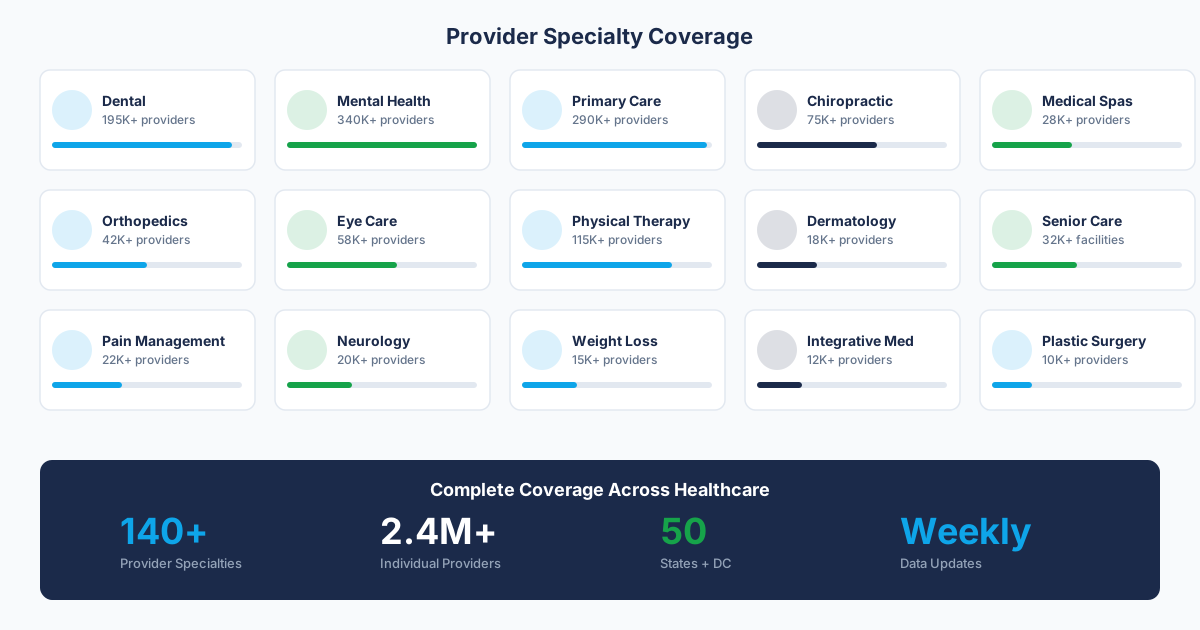
Start with raw provider counts. The Bureau of Labor Statistics healthcare occupation data gives you national and state-level counts by specialty. But state-level data isn't granular enough. You need metro-level counts for the specific specialties your device serves.
A territory with 200 target-specialty providers within a 30-minute drive radius is a strong candidate. Under 100, you're going to struggle to fill a room of 25+. Over 500, you might want to run multiple events in different parts of the metro rather than one large one.
Pull NPI data filtered by specialty classifications and geography. Count active providers within your target radius. If you're targeting multiple specialties (common for devices with cross-specialty applications), count each specialty separately. A territory might have 300 dermatologists but only 40 pain management specialists. That changes your event format.
Competitive Landscape
How saturated is the territory? If three competitors ran lunch and learns in Dallas last quarter, provider fatigue is real. You'll need a stronger draw (better speaker, more relevant clinical content, a newer device) or you should pick a less contested metro.
Your reps usually know this intuitively, but gut feel isn't a territory strategy. Track where competitors are active and identify metros where your device hasn't been demonstrated recently.
Rep Presence and Relationships
A lunch and learn works best when the hosting rep already has relationships in the territory. The invitation carries more weight coming from someone the physician's office has interacted with. If you're launching into a brand-new territory with zero existing relationships, the lunch and learn shouldn't be your first move. Start with 1:1 office visits, then invite those contacts to a group event once you have a base of warm relationships.
Step 2: Size Your Invite List
Here's where most device teams get the math wrong. They want 30 physicians in the room and send 30 invitations. That produces 5-8 registrations and 3-5 attendees.
The conversion funnel for physician events typically looks like this:
- Invitations sent:: 100%
- Email opened:: 25-35% (physician email open rates are lower than most B2B benchmarks)
- Registration page visited:: 8-15% of opens
- Registered:: 30-50% of page visitors (highly dependent on registration friction)
- Attended:: 70-85% of registrations (with proper reminder sequences)
Working backward from 30 attendees: you need 35-43 registrations, which means 70-143 page visitors, which means 200-570 email opens, which means 570-2,280 invitations sent. The range is wide because each conversion rate varies by specialty, geography, and how well-targeted your list is.
For a realistic planning target: send 8-10x your desired attendance count. Want 30 in the room? Build an invite list of 240-300 providers. That gives you enough volume to absorb the natural funnel drop-off while keeping the list targeted enough that recipients are relevant to the event.
If you can't find 240 target-specialty providers within a reasonable drive radius of your venue, either lower your attendance target or broaden to adjacent specialties. For help building targeted invite lists by specialty and geography, see our custom list building service.
Step 3: Choose the Right Venue
The venue decision affects attendance more than most teams realize. Three factors matter:
Location Relative to Target Practices
Physicians won't drive 45 minutes for a lunch and learn. The venue needs to be within 15-20 minutes of the highest concentration of target practices. Map your invite list, find the geographic center, and look for venues in that area. A restaurant near a medical complex or hospital campus is ideal because providers are already nearby.
Parking and Access
If the physician has to circle a parking garage for 10 minutes or walk three blocks from street parking, you'll get cancellations the morning of. Dedicated parking, ideally a lot rather than a structure, with clear signage. Valet is a nice touch for higher-end KOL dinners but unnecessary for a lunch and learn.
Room Setup for Demos
You need a private or semi-private room where you can set up device stations. Open restaurant floor plans don't work. The room should accommodate your expected attendance plus demo equipment without feeling cramped. Ask the venue about AV capabilities if your speaker uses slides, power outlet access for devices, and whether they allow you to rearrange furniture.
For mid-size events (30-60 attendees), hotel meeting rooms and dedicated event spaces at upscale restaurants work well. For smaller events (15-25), a private dining room at a quality restaurant keeps the atmosphere comfortable and the catering simple.
Step 4: Build Specialty-Specific Landing Pages
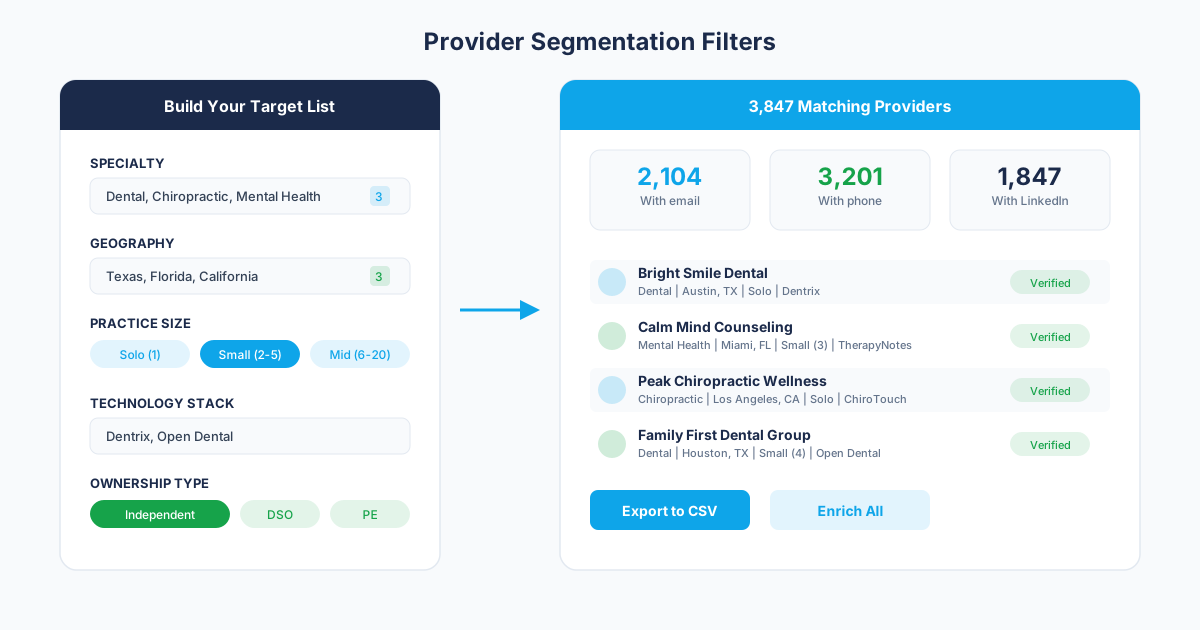
This is the step that separates high-converting events from average ones. If your device serves multiple specialties, every specialty should have its own registration page with messaging tailored to their clinical context.
A chiropractor and a dermatologist attend the same lunch and learn for completely different reasons. The chiropractor cares about pelvic floor rehabilitation applications. The dermatologist cares about skin rejuvenation. If both land on a generic page that lists every possible application, neither sees the specific value proposition that's relevant to their practice.
What Goes on Each Specialty Page
- Specialty-specific headline:: "New [Procedure] Technology for [Specialty] Practices", not a generic "Join Our Lunch and Learn"
- Clinical applications relevant to that specialty:: 2-3 specific use cases the provider will see demonstrated
- Speaker credentials relevant to that specialty:: If your speaker is a board-certified dermatologist, lead with that on the derm page
- Event details:: Date, time, venue, parking, what's included (lunch, CME credits if applicable)
- Pre-filled registration form:: Name, email, and practice pre-populated from your provider database so the physician confirms with one click
In the BTL Michigan campaign, we built separate landing pages for 8 specialties. Each page spoke directly to that specialty's clinical needs. The result: 17,000+ personalized registration links generated and deployed across all 8 specialties in 5 days. That's the scale you can achieve when your registration infrastructure is built for reuse rather than rebuilt from scratch each time.
For more on how specialty-targeted registration pages improve conversion rates, see our guide on getting doctors to attend events.
Step 5: The Invitation Sequence
A single email invitation produces a 2-4% registration rate. A structured sequence produces 8-15%. Here's the cadence that works:
3-4 Weeks Before the Event
Email 1: The announcement. Specialty-specific subject line, 3-4 sentences about the clinical content, speaker name, date and location, and a link to the specialty landing page. Keep it short. The goal is a click, not a complete event description.
2 Weeks Before
Email 2: The clinical angle. Lead with a specific clinical outcome or case study. "Dr. [Name] treated 47 patients with [procedure] in Q4 and saw [result]." Link to the registration page. This email works because it's educational, not promotional.
1 Week Before
Email 3: Social proof + urgency. "[X] of your colleagues have registered. [Y] seats remaining." If you have testimonials from past events, use them here. The deadline creates action.
2-3 Days Before
Email 4: Final reminder. Only to non-registrants. Short, direct: "Last chance to join [Speaker Name] this [Day]. [Link]." Also send a confirmation reminder to registrants with venue details and parking instructions.
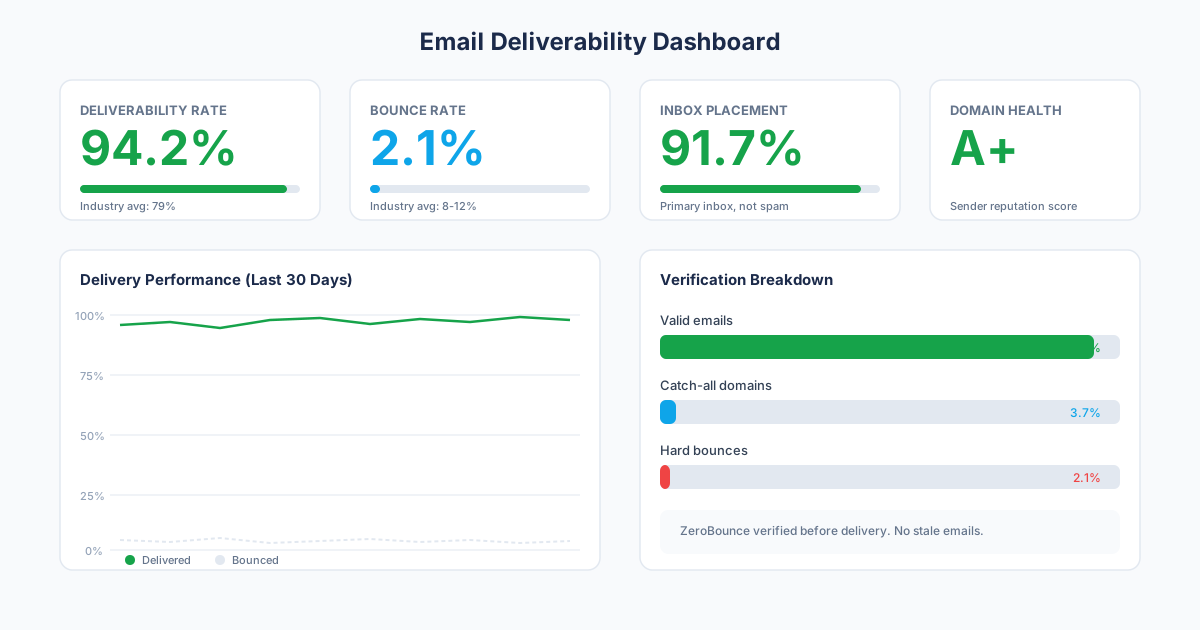
Every email in this sequence should use a personalized link that pre-fills the registration form. When the physician finally decides to register (often on that third or fourth touch), the process should be one click. No form filling. No friction at the moment of decision.
Step 6: Day-of Execution
The event itself matters, obviously. But field reps already know how to run a lunch and learn. The pieces that get missed are usually logistical:
- Check-in process:: Have a tablet at the door with the attendee list pre-loaded. When a physician arrives, check them in with a tap. This gives you accurate attendance data and eliminates the paper sign-in sheet that never gets transcribed.
- Name badges:: Pre-printed with name, practice, and specialty. This helps the speaker address providers by name and helps attendees network with each other.
- Device stations:: Set up before attendees arrive, tested and ready. Nothing kills momentum like troubleshooting equipment while 30 physicians eat lunch.
- Content timing:: 15 minutes of eating and settling in, 20-25 minutes of presentation, 15-20 minutes of hands-on demo time. Don't pack 45 minutes of slides into a lunch hour. Physicians came to see the device, not watch a PowerPoint.
Step 7: Post-Event Follow-Up
The lunch and learn generates interest. The follow-up converts interest into pipeline. Most device teams wait too long and follow up too generically.
Within 24 Hours
Send a personalized email to every attendee. Thank them by name, reference the specific procedures they saw demonstrated (you know their specialty from the registration data), and include a clear next step: "Would you like to schedule a hands-on trial in your office next week?"
Within 48 Hours
The rep calls every attendee who expressed interest during the event. Not a generic "thanks for coming" call. A specific conversation: "You mentioned you're seeing 10-15 [condition] patients per week. Based on what you saw at the event, here's how [device] fits into that workflow."
Within 1 Week
Send clinical resources relevant to each specialty. The derm attendees get derm case studies. The chiro attendees get chiro case studies. This is where your specialty segmentation from the registration data pays off, you already know each attendee's specialty and can automate the right content to the right provider.
Non-Attendees
Don't forget the providers who registered but didn't attend, or who opened the invitation but never registered. They showed intent. Send a follow-up offering a 1:1 office visit or an invitation to the next event in the territory. The registration data tells you exactly who these people are and what specialty they practice.
Compliance Considerations
Medical device lunch and learns operate under industry codes that govern meals, gifts, and interactions with healthcare professionals. The AdvaMed Code of Ethics sets guidelines for device company interactions with HCPs, including meal limits, venue appropriateness, and educational content requirements.
Key compliance points for lunch and learns:
- Meals must be modest and conducive to education.: A $25-35 per person lunch at a restaurant near the practice is appropriate. A $200 dinner at a five-star restaurant is not, unless there's a legitimate educational purpose and it meets your company's compliance thresholds.
- Venue should be conducive to informational exchange.: A conference room or private dining room works. Entertainment venues, sporting events, and resorts don't qualify.
- Attendees should have a legitimate professional interest.: Your invite list should be providers who would reasonably use the device, not a general "anyone who wants free lunch" list. Specialty targeting ensures compliance here.
- Track everything.: Meals provided, attendee names, business purposes. Your check-in system should capture this automatically. If it doesn't, you're creating compliance risk and extra work for your team.
Scaling Across Territories
The real payoff from this playbook comes when you run it across multiple cities. The first event requires the most setup: building specialty landing pages, creating the invitation sequence, establishing the check-in and follow-up processes. After that, each subsequent city reuses the same infrastructure with updated provider lists and venue details.
A device company running 4 events per quarter across different territories can reuse the same specialty pages, email templates, and follow-up sequences. The variable cost drops with each additional city because you're only updating the provider list, venue, and date. The registration infrastructure, content, and processes carry over.
For help building the registration infrastructure and provider lists that make this scalable, explore our event marketing service. For territory-level event planning across multiple metros, see our guide on territory event planning for medical device sales teams.
Frequently Asked Questions
How many invitations should I send for a medical device lunch and learn?
Plan for 8-10x your desired attendance count. If you want 30 physicians in the room, build an invite list of 240-300 target-specialty providers. The typical conversion funnel runs: 25-35% email open rate, 8-15% click-through to registration page, 30-50% registration rate from page visitors, and 70-85% attendance from registrations. Each step compounds, so you need volume at the top to get the numbers you want in the room.
What are the compliance rules for medical device lunch and learns?
The AdvaMed Code of Ethics governs device company interactions with healthcare professionals. Meals must be modest ($25-35 per person is typical) and conducive to education. Venues should support informational exchange, not entertainment. Attendees should have a legitimate professional interest in the device. Track all meals provided, attendee names, and business purposes. Your check-in and registration system should capture compliance data automatically.
Should I build separate landing pages for each specialty at a multi-specialty event?
Yes. Specialty-specific landing pages consistently outperform generic event pages because each provider sees clinical applications relevant to their practice. A chiropractor and a dermatologist attend the same lunch and learn for different reasons. Separate pages let you speak to each specialty's use cases, reference relevant clinical data, and pre-fill registration from specialty-filtered provider lists. In a BTL Michigan campaign, we deployed 17,000+ personalized links across 8 specialty-specific pages in 5 days.
Sources and References
Related Resources
Get the Provider Data You Need
Tell us what you're looking for. We'll build a custom list matched to your target market.
Trusted by healthcare sales teams, medical device companies, and health IT vendors across the US.