
Territory Event Planning for Medical Device Sales Teams
Running one event is logistics. Running a territory-wide event calendar is strategy. Here's how to plan events across metros, specialties, and quarters without burning out your field team.
2026-03-10
The Territory Event Problem
Most medical device field teams plan events one at a time. A rep in Dallas wants to run a lunch and learn. They pick a restaurant, pull some contacts, send invitations, and execute. Three weeks later, a rep in Houston does the same thing from scratch. Different venue research, different registration page, different invitation copy, different follow-up process.
Each event is a standalone project. The work doesn't compound. The learnings don't transfer. And the cost per event stays flat because nothing is reused.
Territory event planning is a different approach. You plan the full calendar upfront: which metros, which specialties, which quarters. You build the registration infrastructure once and deploy it across every city. The first event costs the most. Each subsequent event costs less and converts better because you're iterating on what works.
Picking Your Metros
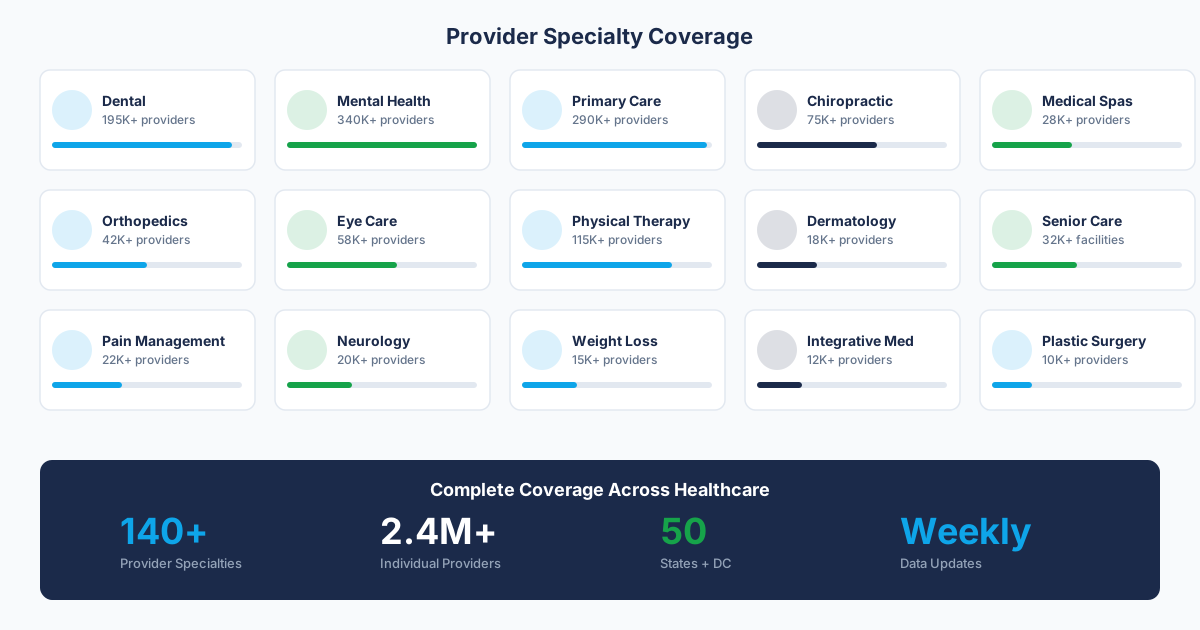
You can't run events everywhere. A national device company might have 50+ viable metros, but budget and field team capacity limit you to 8-12 per quarter. The question is which 8-12.
Provider Density Scoring
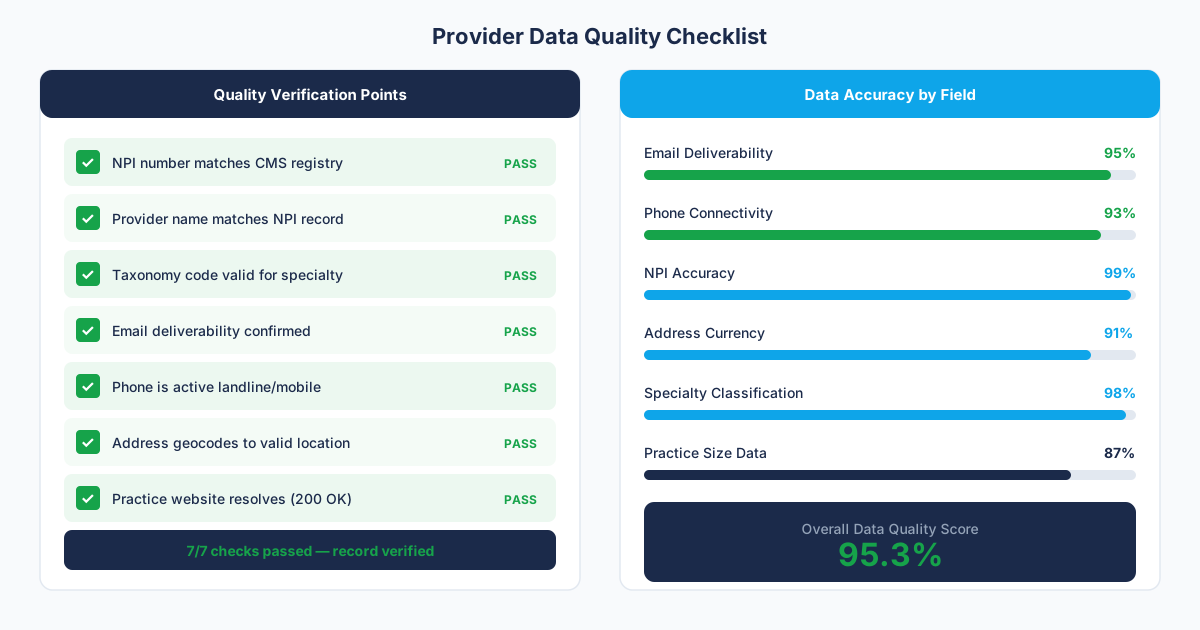
Start with provider counts by metro and specialty. The BLS Occupational Employment and Wage Statistics gives you healthcare employment by metropolitan statistical area. Cross-reference with NPI registry data filtered by your target specialty classifications to get provider-level counts.
Build a simple scoring model:
- Target-specialty providers within 30 minutes of metro center:: This is your total addressable audience. Metros with fewer than 150 target providers are hard to fill for a 30-person event (you need 8-10x your attendance target in invitations).
- Provider density per square mile:: A metro with 300 providers spread across a 100-mile radius is worse than one with 200 providers in a 20-mile radius. Density means shorter drive times and higher attendance rates.
- Multi-specialty potential:: If your device serves 4+ specialties, metros where multiple target specialties are well-represented let you run one multi-specialty event instead of four single-specialty ones.
Market Opportunity
Provider counts tell you who's there. Market opportunity tells you who's buying. Layer in:
- Existing customer density:: Metros where you already have customers are easier to event-market because you have case studies, references, and reps with relationships.
- Competitive presence:: Where are your competitors running events? If they're saturating a metro, you either need a stronger draw or should pick a less contested market.
- Rep capacity:: Does your field team cover this metro? An event without a local rep for follow-up is a wasted event. If you're entering a new territory, hire or assign the rep before you plan the event.
The Census Bureau metro area definitions are useful here for standardizing how you define "Dallas" vs. "Dallas-Fort Worth-Arlington" vs. Just "Fort Worth."
Building a Quarterly Event Calendar
Once you've ranked your metros, map them to a quarterly calendar. Here's a sample structure for a device company targeting 4 specialties across 8 metros:
Q1 Example Calendar
- January Week 3:: Dallas, TX (Multi-specialty: Derm + Med Spa), 250 invitations, target 30 attendees
- February Week 1:: Phoenix, AZ (Orthopedics focus), 200 invitations, target 25 attendees
- February Week 3:: Atlanta, GA (Multi-specialty: Chiro + Pain Mgmt), 300 invitations, target 35 attendees
- March Week 1:: Chicago, IL (Dermatology focus), 275 invitations, target 30 attendees
- March Week 3:: Miami, FL (Multi-specialty: Derm + Aesthetics), 225 invitations, target 25 attendees
Notice the spacing: 2-3 weeks between events. This gives your team time to execute the invitation sequence (which starts 3-4 weeks before each event), handle registrations, and run post-event follow-up from the previous city before launching the next one.
Seasonal Considerations
Physician event attendance varies by season. Avoid scheduling events during:
- Late December through early January:: Holiday schedules, PTO, reduced patient volumes
- Late June through August:: Vacation season, especially in specialties with discretionary procedures (derm, plastics, aesthetics)
- Major specialty conference weeks:: If your target dermatologists attend the AAD Annual Meeting in March, don't compete with it. Schedule before or after.
The sweet spots are mid-January through May and September through mid-December. Twelve months, roughly 8 viable event months after you remove holidays and summer. With 2-3 weeks between events, that's 12-16 events per year for a single field marketing coordinator.
Sizing Invite Lists by Metro and Specialty
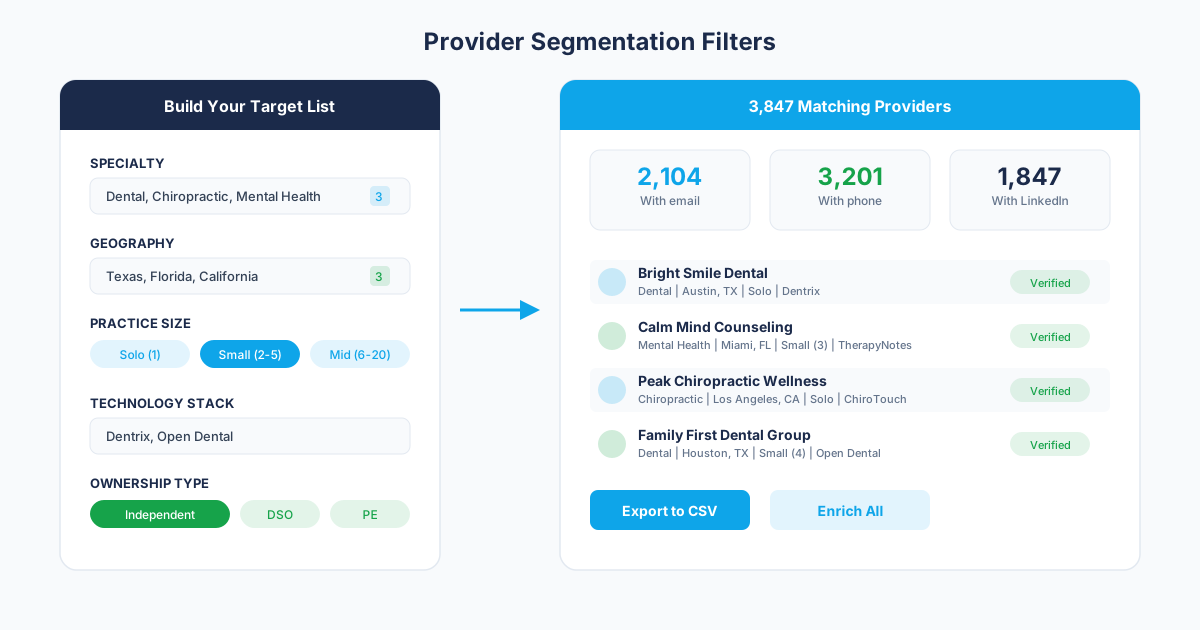
Each metro gets a custom invite list based on its provider composition. This isn't a one-size-fits-all national list sliced by zip code. It's a purpose-built list for each event.
The 8-10x Rule
As covered in our lunch and learn playbook, you need 8-10x your desired attendance in invitations. For a 30-person event, that's 240-300 invitations. But the ratio changes based on how warm the list is:
- Cold list (no prior relationship):: 12-15x attendance target. You'll see lower open rates and lower registration rates.
- Warm list (rep has visited, prior event attendee, existing customer):: 5-7x attendance target. Prior touchpoints mean higher engagement at every funnel stage.
- Blended list (mix of cold and warm):: 8-10x, which is why that's the default planning number.
Specialty Segmentation
For multi-specialty events, size each specialty segment separately. If you want 15 dermatologists and 15 chiropractors at a combined event, you need 120-150 derm invitations AND 120-150 chiro invitations. Don't pool them into one 240-count list and hope the specialty mix works out.
Segment the list, build specialty-specific landing pages, and send specialty-specific invitations. The dermatologist gets a derm-focused email linking to the derm landing page. The chiropractor gets a chiro-focused email linking to the chiro landing page. Same event, different entry points.
For building these specialty-segmented lists with verified contact data, see our custom list building service.
Reusing Event Sites Across Cities
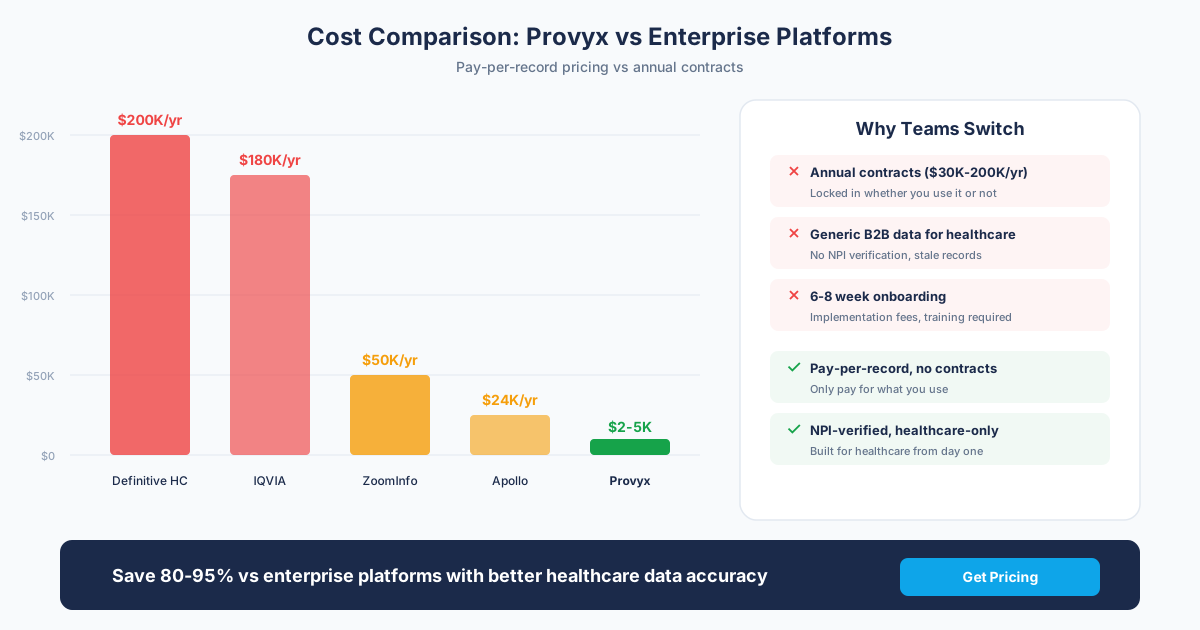
This is where territory planning saves real money. If you build a new registration site for every event, you're paying $3,500-5,000 per city for custom builds, or $10,000-15,000+ per city through an agency. Multiply that by 12 events per year and the registration infrastructure alone costs $42,000-180,000.
The alternative: build a reusable event template system. The first build creates the specialty pages, registration flow, confirmation emails, and reminder sequences. Each subsequent city gets a clone with updated details: new venue, new date, new provider list for pre-fill. The incremental cost per city drops to $1,500-2,500.
What Gets Reused
- Specialty landing page templates:: The clinical messaging for dermatology doesn't change between Dallas and Chicago. The device applications, clinical data, and specialty-specific value proposition stay the same. You update the event date, venue, and speaker.
- Registration flow:: The pre-fill system, form fields, confirmation page, and calendar integration work identically across cities. No rebuild needed.
- Email sequences:: The 4-email invitation cadence (announcement, clinical angle, social proof, final reminder) has the same structure. You update the merge fields for city, venue, and date.
- Follow-up templates:: Post-event emails, attendee surveys, and rep notification workflows carry over.
What Changes Per City
- Provider invite list:: New metro, new providers, new pre-fill links. This is the main variable cost.
- Venue details:: Address, parking, room layout, catering menu.
- Date and time:: Updated on landing pages, emails, and calendar files.
- Speaker (sometimes):: If you're using a national KOL, they travel. If you're using regional speakers, you update speaker info per city.
The Cost Comparison
Here's the math for 8 events across 4 quarters:
- Agency approach (new build each time):: 8 events x $15,000-25,000 = $120,000-200,000 in registration/marketing costs alone
- Reusable template approach:: $5,000 first build + 7 x $2,000 per city = $19,000
The difference is $101,000-181,000 per year. That's not a rounding error. It's the difference between running 8 events and running 20. For more on event cost breakdowns, see our healthcare event marketing ROI guide.
Tracking Results Across Territories
When you're running events across multiple metros, you need consistent metrics to compare performance and identify what's working.
Metrics That Matter
- Invitation-to-registration rate:: Track by metro AND by specialty. If your derm page converts at 12% in Dallas but 4% in Chicago, dig into why. Is it the list quality? The competitive landscape? The venue choice?
- Registration-to-attendance rate:: This tells you about your reminder sequence and venue convenience. Rates below 70% suggest logistics friction (bad parking, inconvenient location, insufficient reminders).
- Attendee-to-pipeline rate:: What percentage of attendees enter your sales pipeline within 30 days? This is the metric that connects events to revenue.
- Cost per qualified lead:: Total event cost divided by qualified leads generated. Compare across metros to find your most efficient territories.
- Reuse savings:: Track what you would have spent rebuilding from scratch vs. What you actually spent. This justifies the upfront investment in reusable infrastructure.
Building a Territory Scorecard
After 2-3 quarters of events, you'll have enough data to rank territories by ROI. Some metros will consistently outperform. Those become your "always-on" event cities where you run 3-4 events per year. Others will underperform, and you replace them with new metros from your ranked list.
This iterative approach turns event marketing from a series of isolated bets into a compounding strategy. Each quarter's data improves next quarter's targeting.
Coordinating with Your Field Team
Territory event planning only works if the field team is aligned. Common coordination failures:
- Reps not following up within 48 hours.: Post-event follow-up is where pipeline happens. If the rep treats the event as the finish line instead of the starting gun, ROI suffers. Build follow-up into the event brief as a mandatory deliverable, not an optional task.
- Reps choosing venues without data.: Venue selection should be driven by provider density mapping, not "I know a great steakhouse." The steakhouse might be 30 minutes from your target practices.
- No centralized calendar.: If each rep plans independently, you get scheduling conflicts, overlapping territories, and inconsistent messaging. A centralized territory calendar prevents this.
The field marketing coordinator should own the calendar, the registration infrastructure, and the invitation lists. The rep owns venue selection (with data support), day-of execution, and post-event follow-up. Clear ownership prevents gaps.
For the complete event execution process from venue to follow-up, see our lunch and learn playbook. For the registration infrastructure that makes multi-city events affordable, explore our event marketing service.
Frequently Asked Questions
How many events per quarter should a medical device field team run?
Most field marketing coordinators can manage 3-5 events per quarter with 2-3 weeks between each event. That spacing allows for the 3-4 week invitation sequence, event execution, and post-event follow-up before launching the next city. Over 12 months with viable event windows (excluding holidays and summer), that's 12-16 events per year. More than that requires additional coordination resources or a simpler event format.
How do you decide which metros to run medical device events in?
Rank metros by three factors: target-specialty provider density (at least 150 providers within a 30-minute drive for a 30-person event), market opportunity (existing customer base, competitive saturation, sales pipeline potential), and rep coverage (a local rep must be available for post-event follow-up). Use BLS healthcare employment data and NPI registry counts by specialty classifications to quantify provider density at the metro level.
How much does it cost to run medical device events across multiple cities?
With an agency building new registration sites each time, 8 events per year costs $120,000-200,000 in registration and marketing costs alone. With a reusable template approach, the first city costs about $5,000 to build and each subsequent city costs $1,500-2,500 for updated provider lists and venue details. That brings 8 events down to roughly $19,000, a savings of $101,000-181,000 per year. The venue, catering, and speaker costs are separate and typically run $2,500-5,000 per event.
Sources and References
Related Resources
Get the Provider Data You Need
Tell us what you're looking for. We'll build a custom list matched to your target market.
Trusted by healthcare sales teams, medical device companies, and health IT vendors across the US.