
Healthcare Data for Medical Staffing Agencies: A Guide
The staffing agencies filling positions fastest aren't working harder. They're working from better data.
2026-04-02
Medical Staffing Is a $20B+ Industry Running on Incomplete Information
The healthcare staffing market hit $22.3 billion in 2024, according to the American Staffing Association. It's projected to grow another 7-8% annually through 2028. Travel nursing alone accounts for more than $10 billion of that figure. Locum tenens adds several billion more. And behind every placement sits a data problem that most agencies haven't solved.
The problem: staffing agencies need two types of intelligence that don't come bundled together. They need to know which facilities are hiring (demand data), and they need to know who at those facilities controls the staffing contracts (decision-maker data). Most agencies have one or the other. Few have both. The ones that do close contracts faster and fill positions more efficiently than their competitors.
This guide covers how medical staffing agencies, locum tenens firms, and travel nursing companies can use healthcare provider data to identify staffing gaps, reach the right decision makers, and build a pipeline that doesn't depend on job board scraping or cold outreach to main office lines.
Finding Facilities with Staffing Gaps
Not every hospital or clinic is a staffing prospect. The facilities worth targeting share specific characteristics that you can identify with the right data. Here's what to look for.
Rural and Underserved Facilities
Rural hospitals and clinics have the most persistent staffing shortages. The Health Resources and Services Administration (HRSA) maintains a database of Health Professional Shortage Areas (HPSAs). As of early 2026, there are more than 8,100 primary care HPSAs across the country. These aren't random gaps. They're structural shortages driven by geography, reimbursement rates, and physician lifestyle preferences.
For staffing agencies, HPSA data is a targeting goldmine. Facilities in these areas are more likely to need locum tenens coverage, more likely to have open positions they can't fill through normal recruiting channels, and more likely to pay premium rates for temporary staffing. A rural critical access hospital in Montana with 25 beds doesn't have the same recruiting pull as a 500-bed system in Denver. That's your opportunity.
Cross-reference HPSA designations with facility data from the NPI registry to build a targeted list of underserved facilities in your placement specialties. Filter by specialty classifications (hospital, community health center, rural health clinic) and geography. You'll have a list of facilities with structural demand for staffing services.
Community Health Centers and FQHCs
Federally Qualified Health Centers serve 30+ million patients annually. They operate in medically underserved areas by definition, and they have chronic difficulty recruiting permanent staff. HRSA reports that FQHCs have a physician vacancy rate of approximately 14%, which is more than double the national average.
FQHCs also have a specific advantage for staffing agencies: federal funding cycles. When a new grant year starts (typically in January or July), FQHCs receive fresh funding that often includes staffing line items. Timing your outreach to align with these cycles can dramatically improve your response rates.
There are roughly 1,400 FQHC organizations operating about 14,000 service delivery sites nationwide. That's a finite, identifiable target market. With the right provider data, you can build a complete map of every FQHC, its locations, specialties, and the decision makers who control staffing.
Facilities with High Provider Turnover
Provider turnover is a leading indicator of staffing demand. When a facility loses a physician or nurse practitioner, it takes an average of 6-9 months to hire a permanent replacement. During that gap, the facility either reduces patient volume (and revenue) or brings in temporary staff.
You can identify turnover signals using NPI data. When a provider's practice address changes in the NPI registry, that's a signal that their previous facility may have a gap. Track NPI address changes monthly. Filter for your target specialties and geographies. You'll see which facilities are losing providers before those facilities even post a job listing.
This approach gives you a 2-4 week head start on competitors who wait for job postings to appear on Indeed or PracticeLink. In staffing, speed matters. The agency that calls first with a qualified candidate usually wins the placement.
Identifying Decision Makers for Staffing Contracts
Knowing which facilities need staff is half the equation. The other half is knowing who to call. Staffing contracts aren't approved by receptionists or billing clerks. They're approved by specific people with specific titles, and those titles vary by facility type and size.
Decision Makers by Facility Type
Small practices (1-5 providers): The physician owner or managing partner controls staffing decisions. In a 3-provider family medicine practice, the lead physician decides whether to bring in a locum. There's no HR department. There's no staffing committee. One person, one decision.
Mid-size groups (6-30 providers): Practice administrators or office managers usually handle staffing logistics, but the medical director or managing partner approves the budget. You need both contacts. The administrator is your operational point of contact. The medical director is your budget authority.
Hospitals and health systems: This is where it gets layered. Hospital staffing decisions typically involve:
- Medical Staff Office/Credentialing Director: handles the paperwork for temporary providers
- Department Chiefs or Medical Directors: identify the clinical need and request coverage
- HR Director or VP of Human Resources: manages the staffing agency relationship and contract terms
- Chief Medical Officer (CMO): approves large or long-term staffing commitments
- Chief Nursing Officer (CNO): controls nursing staffing decisions
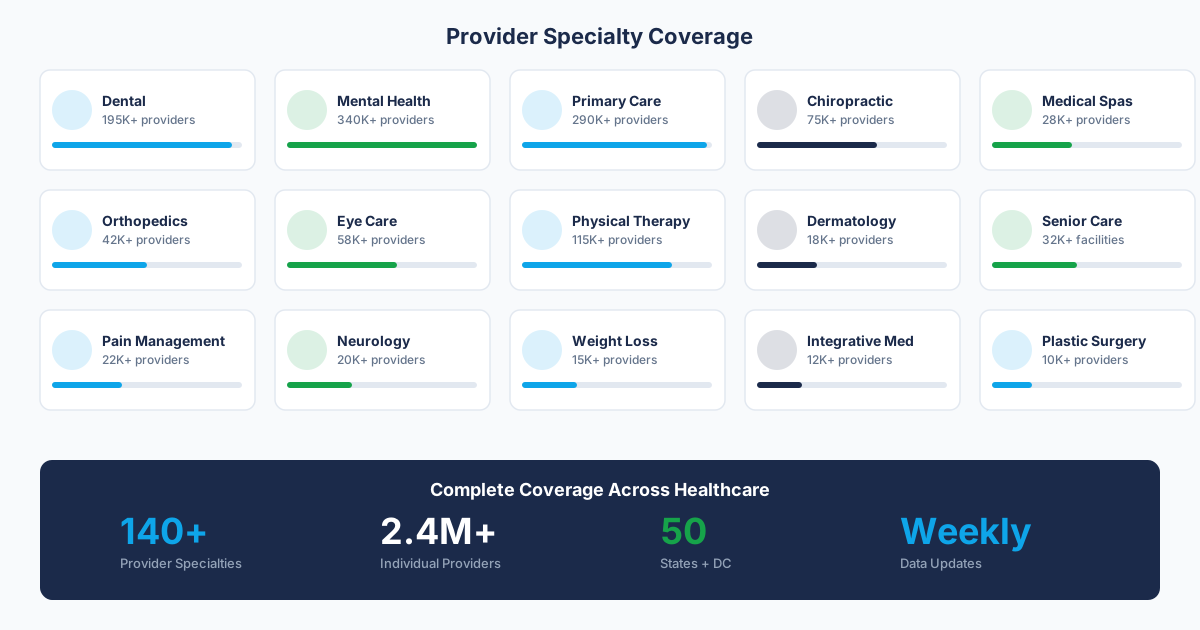
For hospital staffing sales, you need multi-contact data. A single name won't cut it. You need the clinical champion who feels the pain of understaffing AND the administrative buyer who signs the contract. Provyx delivers multi-stakeholder contact data for each facility, which is exactly this kind of layered intelligence.
Building a Decision-Maker Database
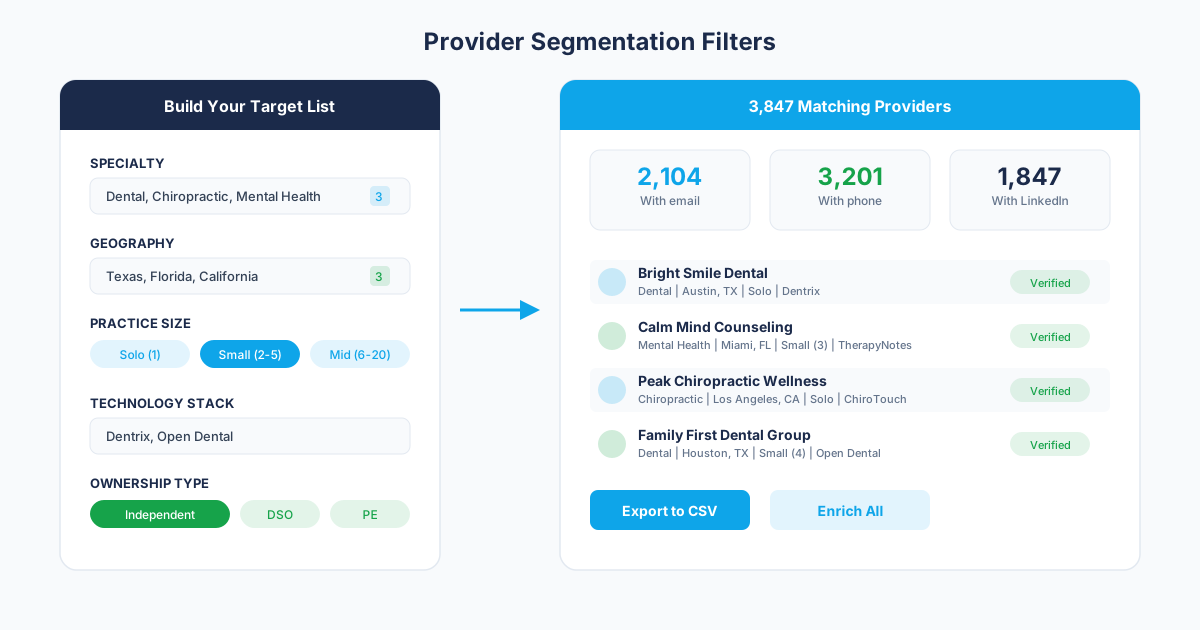
Start with facility-level data from the NPI registry. Every hospital, clinic, and group practice has a Type 2 (organizational) NPI. That gives you the facility name, address, phone, and classification. Then enrich with decision-maker contacts.
The enrichment layers you need:
- Named contacts with titles.: "Jennifer Walsh, VP of Human Resources" rather than "HR Department." Titles tell you budget authority and decision-making scope.
- Direct contact information.: Direct dial phone numbers and professional email addresses. The main hospital switchboard is a dead end for sales outreach. You'll get transferred three times and end up in voicemail.
- LinkedIn profiles.: For mid-level and senior contacts, LinkedIn is often the fastest path to a response. A personalized connection request from a staffing agency rep referencing the facility's specific needs gets accepted far more often than a cold call to a switchboard.
For a deeper look at reaching decision makers in healthcare organizations, see our guide on how to sell to healthcare systems.
Seasonal Demand Patterns in Healthcare Staffing
Healthcare staffing demand isn't constant. It follows predictable seasonal patterns that savvy agencies use to time their outreach and pre-position candidates.
Winter Surge (November through February)
Flu season drives a 15-25% increase in emergency department and urgent care staffing needs. Hospitals in northern states see even higher spikes. Rural facilities with thin staffing margins feel it first and hardest. Start outreach to ED directors and urgent care administrators in September and October. By November, they already know they need help. If you're calling in January, you're late.
Summer Coverage (June through August)
Physician vacation schedules create predictable coverage gaps. In a 5-provider group, if two physicians take two-week vacations in July, that practice needs locum coverage or it reduces patient volume by 40%. Solo practitioners and small groups are the most affected because they have no internal coverage options.
Start lining up summer locum placements in March and April. Practice administrators are planning vacation schedules in Q1. That's when they're thinking about coverage needs.
Academic Calendar Transitions (July and January)
Teaching hospitals experience staffing disruption every July when residents transition. The "July Effect" is well-documented in medical literature. New residents start, graduating residents leave, and attending physicians pick up extra coverage during the transition. Locum agencies that specialize in teaching hospital coverage can build recurring revenue around these calendar-driven gaps.
January brings mid-year fellowship transitions and the start of new academic rotations. Similar dynamics, smaller scale.
Budget Cycle Alignment
Most hospitals operate on fiscal years starting July 1 or October 1. New budget years bring fresh staffing allocations. Staffing agencies that align their contract proposals with fiscal year planning (submitting proposals 60-90 days before fiscal year start) get incorporated into budgets rather than competing for discretionary spend.
FQHCs and government-funded facilities often follow the federal fiscal year (October 1). Time your FQHC outreach to June through August, when administrators are building their new-year budgets.
Travel Nursing vs. Permanent Placement: Different Data Needs
Travel nursing agencies and permanent placement firms sell to the same facilities but need different data to do it effectively.
Travel Nursing Data Requirements
Travel nursing is a volume business. You need to identify hundreds of facilities with current or recurring needs, match them with available nurses, and fill positions fast. Typical contract length is 13 weeks. The data you need:
- Facility census and bed count.: Larger facilities have more consistent travel nursing needs. A 300-bed hospital runs 3-5 travel nurses at any given time. A 50-bed facility might use 1-2 per year.
- Specialty unit identification.: ICU, OR, ER, L&D, and med-surg units have the highest travel nurse demand. Knowing which specialty units a hospital operates tells you which nurse specialties to pitch.
- CNO and nurse manager contacts.: The Chief Nursing Officer approves staffing agency relationships. Unit nurse managers identify specific position needs. You need both.
- Historical staffing patterns.: Facilities that used travel nurses last winter will likely need them again this winter. Track your placements and build a repeat-business database.
Permanent Placement Data Requirements
Permanent placement is a higher-margin, lower-volume business. Placement fees are typically 15-25% of first-year salary. For a physician placement at $300,000 salary, that's $45,000-$75,000 per placement. The data requirements are different:
- Practice ownership and growth signals.: Independently owned practices that are growing (adding locations, expanding services) are your best prospects. They need to hire providers but don't have internal recruiting capabilities.
- Provider age and retirement signals.: When a senior physician in a small practice approaches retirement age, that practice needs a succession hire. If you can identify these situations 12-18 months in advance, you'll be the first agency they talk to.
- Competitive positioning.: Know what other agencies are working with a facility. If a hospital already has exclusive agreements with two agencies, breaking in requires a different approach than pitching a facility with no agency relationships.
- Location desirability data.: Candidate supply matters as much as facility demand. Practices in desirable locations (warm weather, low cost of living, good schools) fill faster. Practices in less desirable locations need more agency support and are willing to pay higher fees.
Using Provider Data to Build a Staffing Pipeline
Here's the workflow that the most effective staffing agencies use to turn provider data into placements.
Step 1: Define Your Facility ICP
Not all facilities are equal prospects. Define your ideal facility profile based on:
- Facility type (hospital, clinic, FQHC, private practice, surgery center)
- Size (bed count, provider count, patient volume indicators)
- Geography (your active markets, licensing requirements for your candidate pool)
- Specialty alignment (match to the specialties your candidates practice)
- Payer mix (facilities with higher commercial insurance ratios can pay better staffing rates)
Step 2: Build the Facility Database
Start with NPI Type 2 (organizational) records filtered to your ICP. Enrich with HPSA designation, bed count (from CMS Provider of Services data), and ownership classification. Cross-reference with state licensing data for additional facility details.
For primary care facilities, the NPI registry plus CMS data gives you a solid foundation. For hospitals and health systems, add AHA (American Hospital Association) data or CMS Hospital Compare for quality metrics and operational details.
Step 3: Layer in Decision-Maker Contacts
For each target facility, you need 2-4 named contacts. At minimum:
- The clinical leader who identifies staffing needs (medical director, department chief, CNO)
- The administrative buyer who approves contracts (HR director, VP of operations, practice administrator)
For larger facilities, add the credentialing contact (medical staff office) and the finance contact (CFO or VP of finance) who approves rates.
Step 4: Score and Prioritize
Not every facility on your list is equally likely to convert. Score facilities based on:
- HPSA designation (high signal):: Structural shortage area. Persistent need.
- Recent provider turnover (high signal):: NPI address changes indicating departures.
- Rural location (moderate signal):: Harder to recruit permanently, more likely to use staffing agencies.
- No existing agency relationship (moderate signal):: Open opportunity vs. Displacement sale.
- Seasonal timing (variable signal):: Align with budget cycles and demand patterns described above.
Step 5: Execute Targeted Outreach
With scored facilities and named contacts, build segmented outreach sequences:
- High-priority facilities with immediate signals:: Phone-first outreach to the clinical leader. Reference the specific gap you've identified. "I noticed your facility recently lost a family medicine provider. We have three candidates licensed in your state who could start within 30 days."
- Medium-priority facilities in seasonal windows:: Email sequence to the HR director and practice administrator. Offer a capability overview and rate card. Follow up by phone if no response within a week.
- Low-priority facilities for long-term pipeline:: Quarterly email newsletter with market data (average locum rates, staffing trends in their specialty/geography). Stay top of mind for when a need arises.
Data Quality Issues Specific to Staffing
Staffing agencies face data quality challenges that are different from other healthcare B2B verticals. Here's what to watch for.
Credential Verification Complexity
Every state has its own medical licensing requirements. A locum physician licensed in Texas can't work in California without a California license. Your facility database needs to be cross-referenced with your candidate pool's licensing states. This sounds obvious, but we've seen agencies waste outreach on facilities in states where none of their candidates are licensed.
Facility Consolidation and Name Changes
Hospital mergers and acquisitions create data chaos. St. Mary's Hospital becomes "Regional Health System at St. Mary's" becomes "Ascension St. Mary's." The NPI might still show the old name. The website has the new name. CMS data has a third variation. Your CRM has all three as separate records.
Deduplication is critical. Run your facility database through address-based deduplication (not name-based) to catch these consolidations. A facility at 123 Main Street is the same facility regardless of what it's called this year.
Contact Title Inflation
Healthcare organizations love titles. A "Director of Provider Relations" at one hospital might be a senior executive who approves million-dollar staffing contracts. At another hospital, the same title might be an entry-level coordinator who schedules interviews. Don't assume title equals authority. Validate through LinkedIn tenure, reporting structure, and organizational size.
Measuring ROI on Staffing Data
How do you know if your provider data investment is paying off? Track these metrics:
- Contact-to-conversation rate.: What percentage of your outreach to named contacts results in a meaningful conversation? With good data, this should be 8-12% for phone and 3-5% for email. If you're below these benchmarks, your contact data needs improvement.
- Time to first placement.: How long from first contact to first filled position? Good data reduces this by cutting out the weeks spent finding the right person and getting past gatekeepers.
- Facility reactivation rate.: What percentage of facilities that placed with you in the past 12 months place again? High reactivation rates mean you're choosing the right facilities to begin with.
- Cost per placement.: Total data and outreach cost divided by placements. If you're spending $5,000 on data and generating 10 placements at $15,000 average margin each, that's a 30:1 ROI. If you're generating 2 placements, something's broken in either the data quality or the sales process.
Getting Started with Staffing-Specific Provider Data
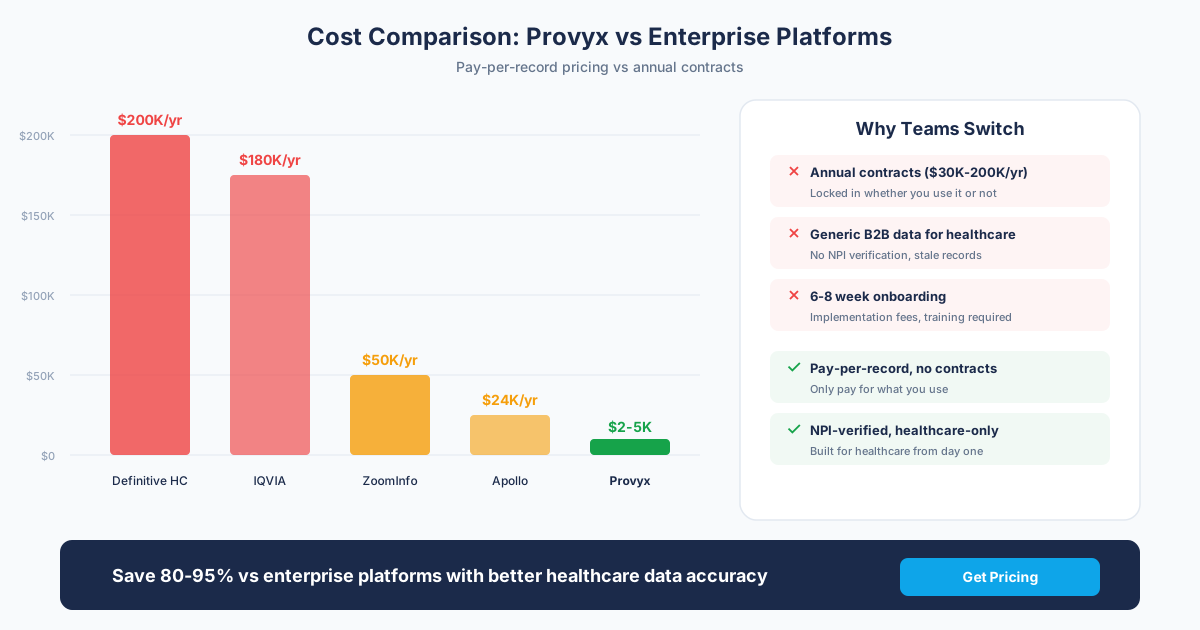
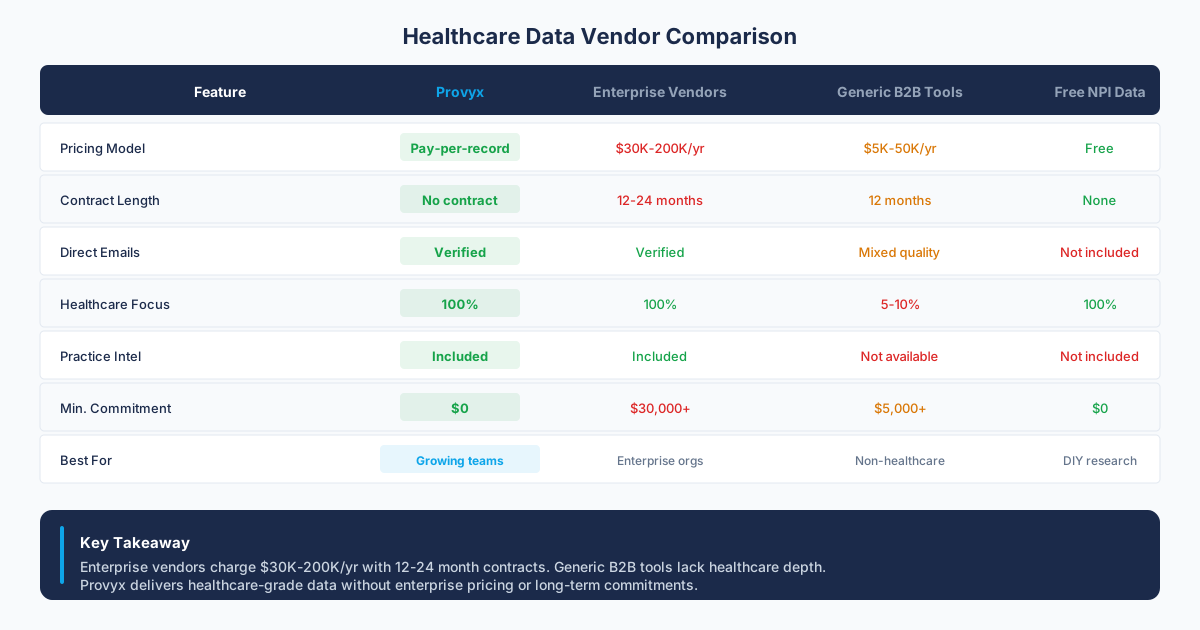
Most healthcare data vendors sell generic provider lists that aren't optimized for staffing use cases. They give you physician names and practice addresses. That's useful for pharma sales or medical device reps, but staffing agencies need facility-level intelligence with decision-maker contacts layered on top.
What to look for in a data vendor for staffing:
- Facility-level records (not just individual provider records)
- Multiple contacts per facility with verified titles
- HPSA and shortage area designations included
- Bed count and facility size indicators
- Monthly or better data refresh frequency
- Custom filtering by geography, specialty, and facility type
Provyx builds custom provider datasets for healthcare staffing agencies. We deliver facility-level records enriched with named decision-maker contacts, direct dials, professional emails, and operational intelligence. Talk to our team about your specific staffing market and we'll scope a dataset for your territory.
Frequently Asked Questions
What is the best data source for finding facilities with staffing shortages?
HRSA's Health Professional Shortage Area (HPSA) database is the most reliable public source for identifying facilities with structural staffing needs. Cross-reference HPSA designations with NPI organizational records filtered by facility type and specialty. For real-time demand signals, track NPI address changes monthly to identify facilities that recently lost providers.
Who are the decision makers for hospital staffing contracts?
It varies by facility size. In small practices (1-5 providers), the physician owner decides. In mid-size groups, the practice administrator and medical director share the decision. In hospitals, you typically need the HR Director or VP of HR (contract authority), the department chief or medical director (clinical need identifier), and sometimes the CMO or CNO for large commitments. Multi-contact data is essential for hospital staffing sales.
When is the best time to reach out to facilities about staffing services?
Align outreach with seasonal demand and budget cycles. For winter surge coverage (flu season), start outreach in September-October. For summer locum coverage, reach out in March-April. For budget-cycle alignment, submit proposals 60-90 days before the facility's fiscal year start (July 1 or October 1 for most hospitals). FQHCs often follow the federal fiscal year starting October 1.
How is travel nursing data different from permanent placement data?
Travel nursing requires high-volume facility identification with bed count, specialty unit data, and CNO/nurse manager contacts. Contracts are short (13 weeks) and recurring, so historical placement tracking matters. Permanent placement needs practice ownership data, provider retirement signals, and growth indicators. The margin per placement is much higher ($45,000-$75,000 for physician placement), so deeper research per opportunity is justified.
How can staffing agencies use NPI data to predict staffing demand?
Track NPI address changes on a monthly basis. When a provider's practice address changes, their former facility likely has a gap to fill. This gives you a 2-4 week head start on competitors who wait for job postings. Filter changes by your target specialties and geographies for a focused demand signal. Combine with HPSA data and seasonal patterns for a complete demand model.
What contact-to-conversation rate should staffing agencies expect with good data?
With verified named contacts and direct dial numbers, staffing agencies should see 8-12% contact-to-conversation rates on phone outreach and 3-5% on email. If you're significantly below these benchmarks, the issue is likely data quality: wrong contacts, outdated phone numbers, or generic email addresses instead of direct professional addresses.
Sources and References
Related Resources
Get the Provider Data You Need
Tell us what you're looking for. We'll build a custom list matched to your target market.
Trusted by healthcare sales teams, medical device companies, and health IT vendors across the US.