
How to Plan a Dental Practice Event
Dental is consolidating fast. The person who decides to buy your product at an independent practice and at a DSO-owned practice may look completely different. Here's how to plan events that reach both.
2026-03-10
The DSO Factor Changes Everything
If you're planning dental events the way you did five years ago, you're missing the biggest shift in the industry. Dental service organizations (DSOs) now account for a significant and growing share of U.S. Dental practices. According to the ADA Health Policy Institute, the percentage of dentists affiliated with DSOs has been climbing steadily, with younger dentists particularly likely to work in DSO-affiliated practices.
This matters for event planning because the buyer at a DSO practice is often not the dentist. The practicing dentist may influence the decision, but the purchase order goes through a regional clinical director, a VP of operations, or a procurement team at the DSO's corporate office. Your beautifully planned dinner event for 20 local dentists might fill every seat, generate genuine interest, and still produce zero sales because none of those dentists have purchasing authority.
Independent practices are the opposite. The owner-dentist makes the call. They see your device at a demo dinner, run the numbers on the drive home, and call your rep on Monday. The event format, messaging, and follow-up process need to be different for each audience.
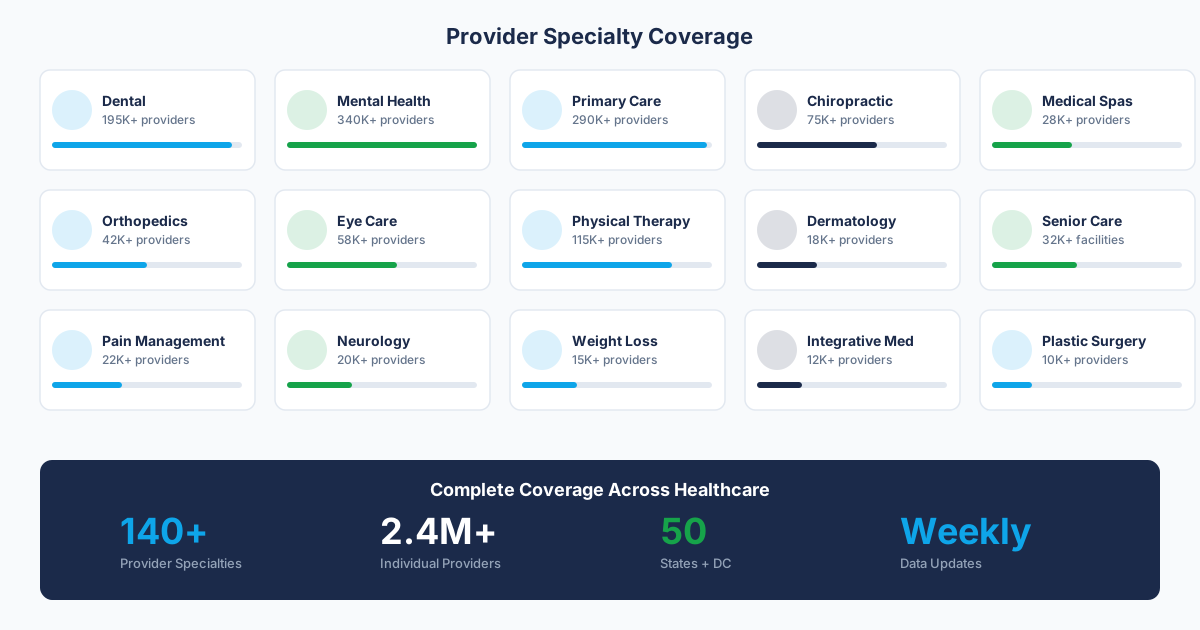
Targeting DSO Practices vs. Independent Practices
Independent Practice Events
For independent practices, your event playbook is straightforward. The dentist who attends is the decision-maker. Your invitation goes directly to them. Your presentation should combine clinical evidence with practice economics: how does this device affect revenue per patient, chair time, patient satisfaction, and competitive positioning against the DSO-owned practice down the street?
Independent dentists are also motivated by what other independent dentists in their market are doing. If you can get a local dentist who already uses your device to speak at the event, their peer endorsement carries significant weight. "I added digital impressions 18 months ago and reduced my crown remake rate by 40%" is more persuasive than any vendor presentation.
Target your invite list using dental provider data filtered by practice ownership type. You want owner-operators of independent practices within a 20-30 minute drive of your venue.
DSO Practice Events
Reaching DSO-affiliated dentists requires a different approach. The clinical dentist at a DSO location may attend your event and love the device, but they can't authorize a purchase. You need to identify and engage the clinical decision-makers at the DSO level.
For smaller DSOs (5-20 locations), the decision-maker is often the founder-dentist or a clinical director. They're reachable through direct outreach and will attend local events. For larger DSOs (50+ locations), purchasing decisions go through formal procurement processes, and your event strategy should target DSO corporate contacts rather than individual practice locations.
A format that works for DSO engagement: invite DSO clinical directors to a smaller, more exclusive event. Position it as a peer roundtable or advisory dinner rather than a product demo. Clinical directors at mid-size DSOs are evaluating technology for dozens of locations simultaneously. The conversation they want to have is about multi-location deployment, standardized training, and volume pricing. A dinner for 8-10 DSO clinical leaders produces more pipeline than a demo event for 30 individual DSO-employed dentists who can't buy.
ADA Continuing Education Requirements
Most states require dentists to complete continuing education hours for license renewal, and the ADA's CERP (Continuing Education Recognition Program) is the primary accreditation standard. If your event offers ADA CERP-recognized CE credits, attendance goes up. Dentists need the hours, and earning them at a local dinner event is more appealing than sitting through an online course.
Getting ADA CERP recognition for your event requires working with an ADA CERP-recognized provider. Similar to chiropractic CE, you'll need a qualified presenter (a DDS or DMD with clinical expertise), a structured educational program with defined learning objectives, and an attendance verification process. The educational content has to provide genuine clinical value. A pure product demo doesn't qualify.
Some states also accept CE credits from other approved providers (state dental associations, dental specialty academies). Check the requirements for your target states and pursue the accreditation path that's fastest and most widely accepted.
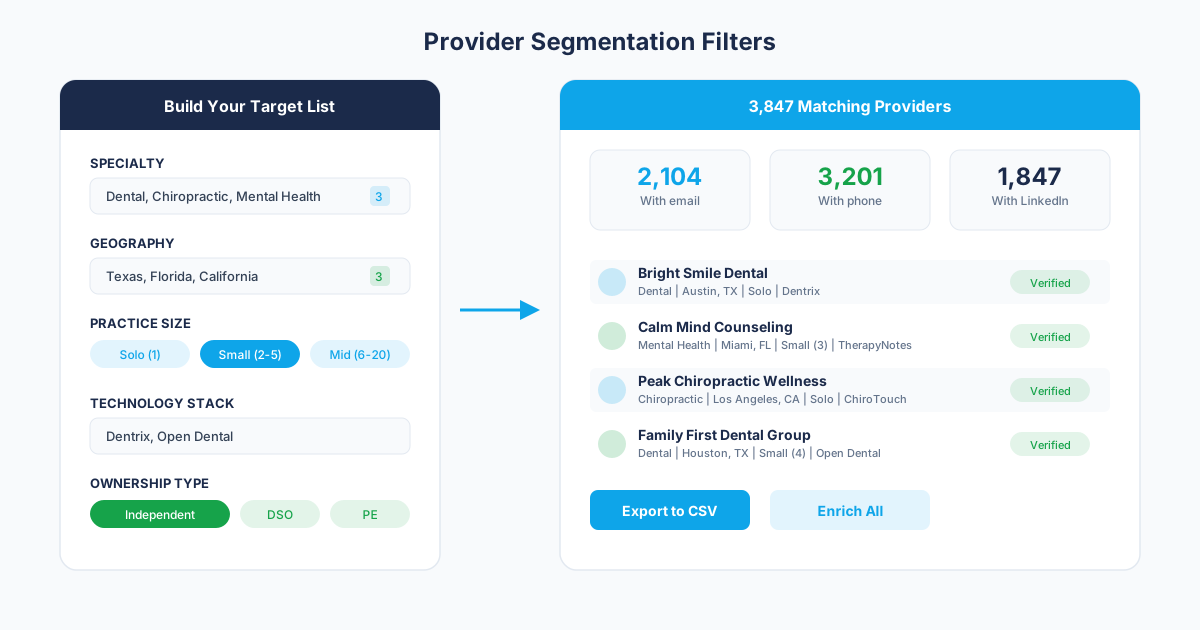
Dental-Specific Device Categories
The device category you're showcasing affects your event format. Here's what works for the major categories:
Digital Impressions and CAD/CAM
These systems require hands-on experience. A dentist won't commit to a $30,000+ digital impression scanner based on a slide deck. Set up the scanner at the event and let attendees take a digital impression (on a model, on each other, or on a willing staff member). The tactile experience of holding the wand, seeing the 3D image build in real time, and comparing it to a traditional impression is what sells this technology.
Hands-on time means small groups. Limit to 10-15 attendees per event so everyone gets 5-10 minutes with the device. A half-day Saturday workshop works better than an evening event for this category because the hands-on portion takes time.
Implant Systems
Implant events draw both general dentists considering adding implant services and periodontists or oral surgeons evaluating a new system. The audience mix matters. General dentists want to see simplified workflows and mentorship programs. Specialists want to see the system's handling of complex cases and compare it to the system they're already using.
Consider running separate events for each audience, or structuring a single event with breakout sessions: one track for general dentists new to implants, one for experienced implant providers evaluating your system.
Practice Management Software
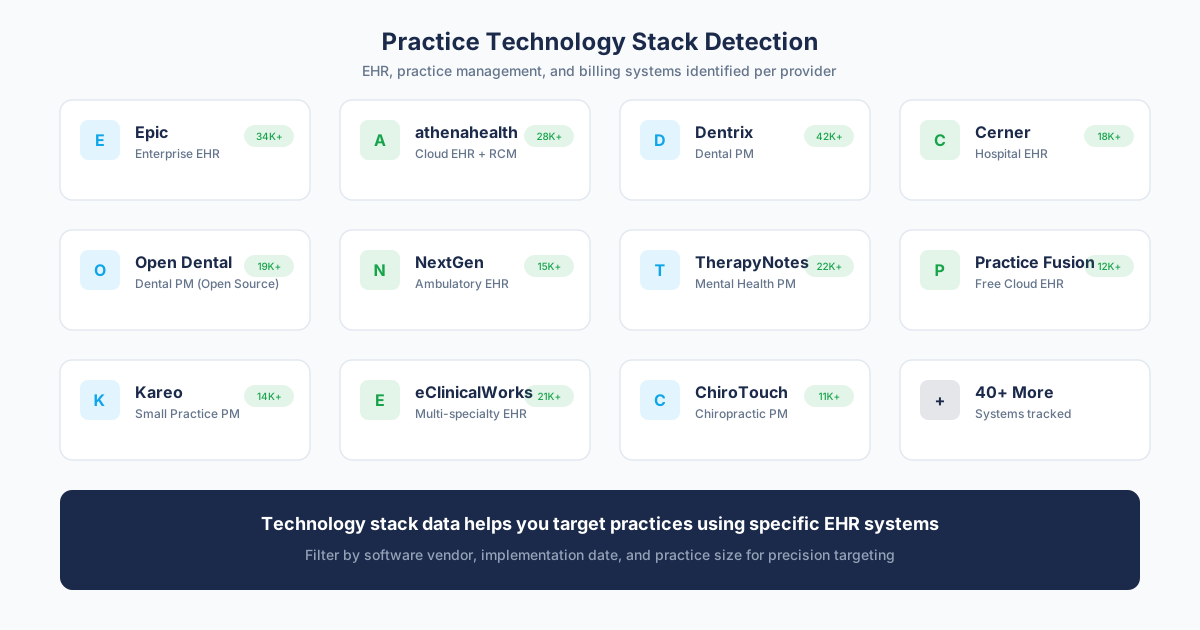
Software events are different from device events. There's no physical product to demonstrate on a patient. Instead, set up workstations where attendees can navigate the software, see their specific workflows simulated, and compare it to their current system. For DSO-affiliated practices, the conversation shifts to multi-location reporting, centralized scheduling, and data standardization across locations.
Event Format and Scheduling
Dentists keep predictable schedules. Most practices close by 5:00-5:30 PM on weekdays, and many close early on Fridays or don't see patients on Fridays at all. The best event windows:
- Weeknight dinner events:: Tuesday through Thursday, 6:30 PM start. Allows time for the dentist to finish with patients, clean up, and drive to the venue. Mondays are typically the busiest clinical day. Fridays, many dentists are off or mentally checked out for the weekend.
- Saturday morning workshops:: 8:30 AM to noon. Dentists who are motivated enough to give up a Saturday morning are serious prospects. Offer CE credits and breakfast to justify the time investment. These work especially well for hands-on device training.
- Lunch and learns at the practice:: 12:00-1:30 PM. Bring lunch to the practice and present to the dentist and their clinical team together. This format is ideal for follow-up after initial interest because it includes the hygienists, assistants, and office manager who will use the product daily. See our guide on getting doctors to attend events for invitation strategies.
Multi-Location Outreach for DSO Groups
If you're targeting a DSO with 30 locations in a metro area, you don't send 30 individual invitations to 30 practicing dentists. You identify the clinical decision-maker at the DSO level and build a relationship with them first. Then, if the DSO is interested, you coordinate a pilot at 2-3 locations and use the pilot results to build the case for a system-wide rollout.
Your event strategy for DSOs should reflect this sales cycle:
- Phase 1: Executive dinner.: An intimate dinner with the DSO's clinical director and 1-2 other decision-makers. Present the clinical and business case. Get agreement to a pilot.
- Phase 2: Pilot training event.: On-site training at the 2-3 pilot locations. This is an event for the dentists and clinical staff at those locations, focused on technique and workflow integration.
- Phase 3: Results presentation.: After the pilot period, present results back to the DSO leadership team. If the pilot data is strong, this meeting becomes the rollout discussion.
This approach takes longer than a single demo dinner, but one DSO deal can be worth 20-50 individual practice sales. The time investment pays for itself if the DSO target is well-chosen.
For territory-level event planning across multiple markets, see our medical device territory event planning guide.
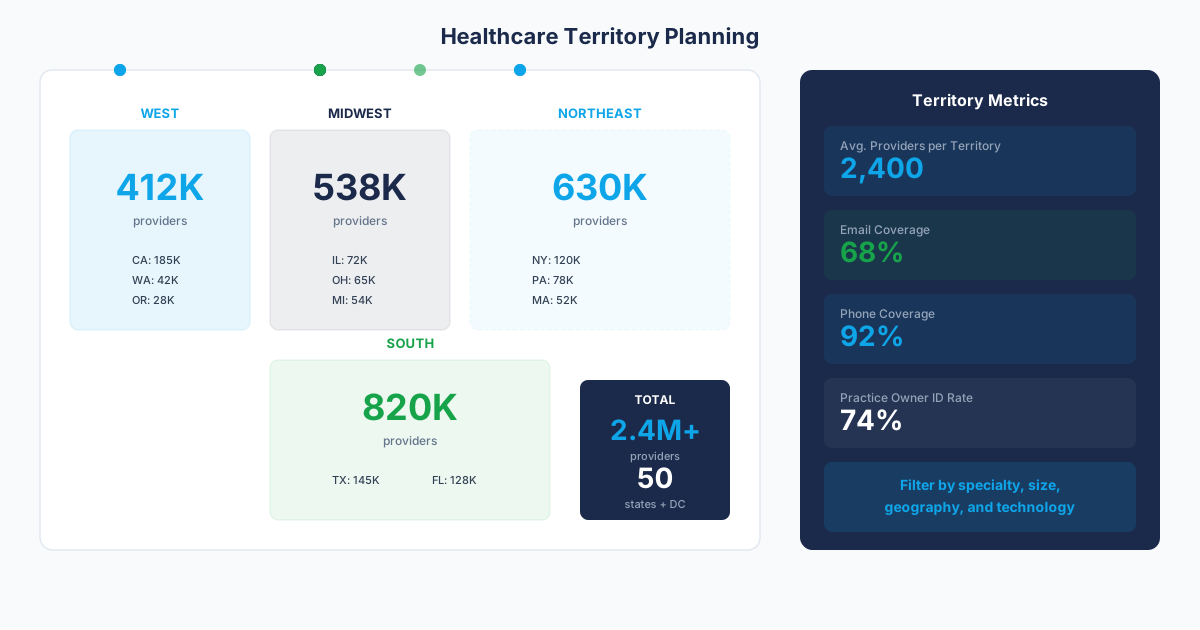
Building Your Dental Event Invite List
The foundation of a successful dental event is reaching the right people. You need provider data that distinguishes between independent owner-dentists and DSO-employed dentists, includes practice-level details like location count and specialty mix, and covers the specific geographic radius around your venue.
Browse our dental provider database to see the segmentation available for your event targeting. If you need help building targeted invite lists, designing registration pages, or managing event logistics, our event marketing service handles the data and operations so you can focus on the clinical program and sales conversations.
Frequently Asked Questions
How do I reach the decision-maker at a DSO for a dental device event?
At small to mid-size DSOs (5-20 locations), the decision-maker is typically the founder-dentist or a clinical director who is reachable through direct outreach. For larger DSOs, purchasing decisions go through procurement teams at the corporate level. Rather than inviting individual DSO-employed dentists to a demo dinner, host a smaller executive dinner or advisory roundtable targeting the DSO's clinical leadership. One DSO decision-maker can unlock 20-50 location purchases.
Should I offer ADA CE credits at my dental event?
Yes, if possible. CE credits increase attendance because dentists need them for license renewal. You'll need to work with an ADA CERP-recognized provider, have a qualified presenter (DDS or DMD), and structure the educational content to meet CERP standards. The educational portion must provide genuine clinical value beyond a product demonstration. Plan ahead because CE accreditation typically requires advance approval weeks before the event.
What event format works best for dental technology demos?
It depends on the technology. Digital impression scanners and CAD/CAM systems require hands-on experience, so a Saturday morning workshop with 10-15 attendees where everyone gets 5-10 minutes with the device is most effective. Implant systems benefit from live case presentations or breakout sessions tailored to experience level. Software demos work best with individual workstations where attendees can navigate the interface themselves. For all formats, keeping the group small enough for meaningful interaction produces better results than large-audience presentations.
Sources and References
Related Resources
Get the Provider Data You Need
Tell us what you're looking for. We'll build a custom list matched to your target market.
Trusted by healthcare sales teams, medical device companies, and health IT vendors across the US.