
What is Provider Contact Data?
Provider contact data refers to the verified contact information for healthcare providers and practice decision-makers, including email addresses, direct phone numbers, mailing addresses, and fax numbers, sourced from public records and commercial databases.
Updated September 2026
Provider Contact Data Explained
Provider contact data is the core product in healthcare B2B data. It starts with NPI-verified identity information and adds the communication channels that sales and marketing teams need: verified email addresses (personal and practice), direct phone numbers, office phone numbers, fax numbers, and mailing addresses confirmed as current. This is business contact information about providers as professionals, and it contains no patient records or protected health information.
What fields make up a provider contact record?
A complete record layers three kinds of fields on the NPI backbone:
| Field | Where it comes from | What to check |
|---|---|---|
| NPI number and provider name | NPPES public registry | Active status, no deactivation date |
| Specialty classification | NPPES specialty codes | Granular code rather than a broad bucket |
| Practice name and address | NPPES plus business listings | Location address rather than a billing address |
| Practice phone | Business listings, practice websites | Rings at the practice rather than a call center |
| Email address | Commercial enrichment, verification services | Named person at the practice domain, SMTP-verified |
| Owner or decision-maker name | State filings, practice websites, licensing records | Tied to that specific practice and role |
| Website and technology signals | Web detection | Current site, live tech stack |
Where does provider contact data come from?
Every legitimate file is an assembly job across three source layers. Public records come first: the NPPES registry supplies identity, specialty, and a self-reported address for more than 8 million records, and state licensing boards confirm active licensure. Business listings and practice websites come second, adding the operational layer: current locations, phone numbers, hours, service lines, and often the owner's name. Commercial enrichment comes third, contributing verified email addresses, LinkedIn matches, technology detection, and staff-size estimates.
No single layer is sufficient. NPPES does not include email addresses. Business listings do not verify credentials. Commercial databases classify providers by generic industry codes that blur specialties together. The assembly and cross-checking across layers is the product.
How fast does provider contact data decay?
Faster than almost any other B2B category. Providers change practices, practices relocate and rebrand, groups merge, and owner-operated offices close, and each event silently breaks the email, the phone, or the address on file. The self-reported NPPES address is a known weak point, since providers update it on their own schedule, and a record can sit stale for years while the NPI itself remains active.
That decay is why delivery model matters as much as source quality. A static database export reflects whatever the vendor's last sync captured. A list built at order time, checked against the current registry and re-verified before delivery, reflects the market as it exists that week. For owner-operated specialties like chiropractic and med spas, where turnover runs highest, the gap between the two approaches shows up directly in bounce rates.
How do you evaluate a provider contact data vendor?
Use a written sample scorecard. Check whether the sampled record carries a current NPI match, when each contact channel was observed, how the sampled fields are reported, and whether the practice decision-maker is supported by a source. Keep rejected and unresolved results in the comparison.
Pricing models split into two camps. Platform subscriptions run $5,000 to $100,000+ per year and make sense when many users need continuous database access. Project pricing, the model Provyx uses, scopes a build to your specialty and geography, starts at $2,500, and carries no annual contract. For teams that buy lists a few times a year, the project model usually costs a fraction of a subscription. Source: current Provyx scope and pricing.
Why Provider Contact Data Matters for Healthcare Data
Real-World Example
Frequently Asked Questions
What is included in provider contact data?
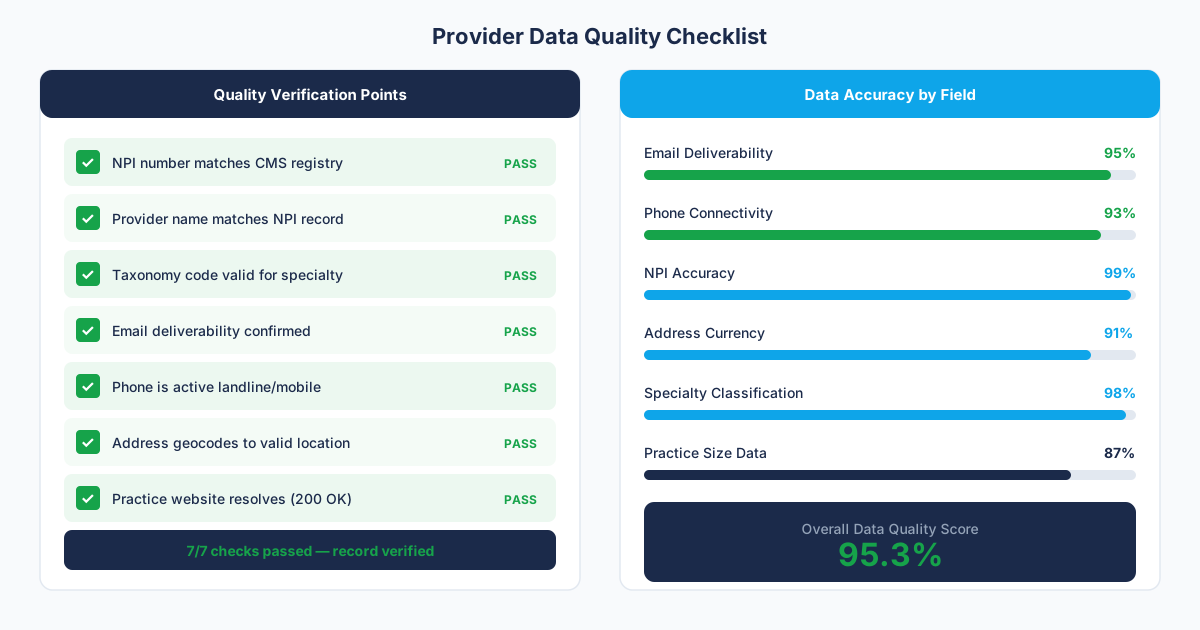
A complete provider contact record includes: NPI number, full name, credentials, specialty/specialty classifications, practice name, practice address, email address (verified), phone number (direct and/or office), fax number, and the date each field was last verified.
How do you verify provider contact data?
Verification happens at multiple levels. NPI numbers are checked against NPPES. Email addresses are verified through SMTP validation and deliverability testing. Phone numbers are checked against carrier databases. Addresses are validated against USPS records and NPPES.
Is provider contact data the same as patient data?
No. Provider contact data is business contact information about healthcare professionals and their practices: names, NPIs, practice addresses, phones, and emails. It contains no patient records and no protected health information, so HIPAA rules governing patient data do not apply to it. Source: HHS Privacy Rule guidance. Source: https://www.hhs.gov/hipaa/for-professionals/privacy/laws-regulations/index.html.
How often should provider contact data be refreshed?
Before each major campaign, and at minimum during quarterly reviews for active segments. Providers change practices and practices relocate continuously, so a list that sat in a CRM for a year will carry a meaningful share of broken emails and dead phone numbers. Lists built at order time sidestep the problem by starting from current sources.
Do generic B2B databases include provider contact data?
Partially. Platforms like ZoomInfo and Apollo carry some healthcare records; however, they classify companies by generic industry codes rather than NPI specialty codes, so specialties blur together and credential verification is absent. Healthcare-specific vendors anchor every record to an NPI, which is what makes specialty targeting and verification possible. Source: https://www.hhs.gov/hipaa/for-professionals/privacy/laws-regulations/index.html.
Sources and References
Related Resources
Get the Provider Data You Need
Tell us what you're looking for. We'll build a custom list matched to your target market.
Trusted by healthcare sales teams, medical device companies, and health IT vendors across the US.
How should the glossary provider contact data workflow be documented?
Define the fields the campaign needs and an acceptance rule for each one: provider identity, current practice, decision-maker role, email, phone, and location. Record the source and observation date beside each accepted value. Rejected and unresolved candidates should remain available to reviewers without entering the outreach file.
Separate identity from enrichment
Confirm the person or organization before attaching practice, role, location, or contact details in the glossary provider contact data process. A correct email attached to the wrong entity still creates a bad record. Store each relationship explicitly and preserve conflicting observations in an exception queue rather than forcing a completed value.
Review a representative sample
Draw the glossary provider contact data sample from the same segments the operating team will use. Apply the field definitions consistently, record accepted, rejected, and unresolved outcomes, and review recurring failure patterns before the full file moves forward. Save the sample and decision notes as the baseline for the next refresh.