
What is Pay-Per-Record Pricing?
Project-based pricing ties cost to delivered healthcare provider records, not annual subscriptions. Minimum orders may cover setup and verification.
Updated April 2026
Pay-Per-Record Pricing Explained
Pay-per-record is the alternative to the enterprise subscription model used by large data platforms like ZoomInfo and Definitive Healthcare. Instead of carrying a $15,000-100,000+ annual platform license whether you use it or not, you purchase a scoped dataset for the project in front of you.
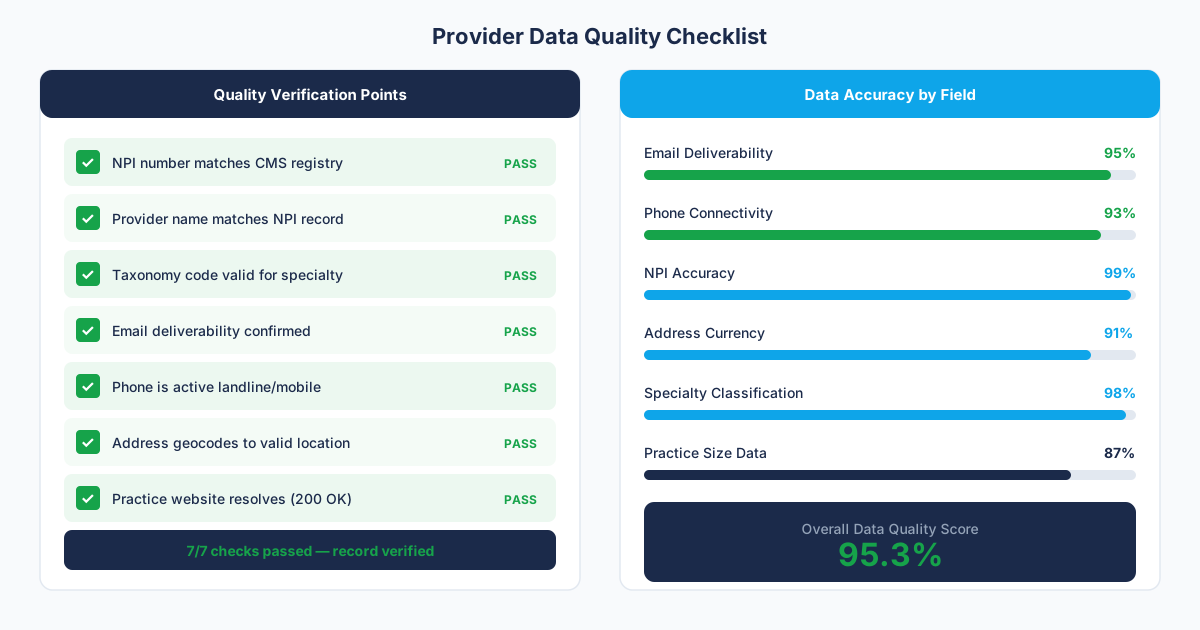
The price is only meaningful when the record standard is clear. A basic registry row is not comparable to a record built after project approval with current-role confirmation, source evidence, and delivery-time verification. Email, mobile phone, firmographic, and technology fields may be priced separately because each requires a different sourcing and validation process.
Provyx publishes two volume packages for built-to-order provider data: $2,500 for up to 2,500 contacts and $5,000 for up to 10,000. Both packages use the same base record and verified-at-delivery standard. Custom pricing applies above 10,000 contacts or for recurring delivery, API access, and deeper research.
Why Pay-Per-Record Pricing Matters for Healthcare Data
Project-based pricing eliminates the biggest barrier to healthcare data: annual contracts with five-figure minimums. Small and mid-size sales teams can access the same quality of data without committing to enterprise subscriptions they can't justify or afford.
Real-World Example
A medical device sales team needs 10,000 orthopedic surgeon records for a national campaign. With Provyx Growth pricing, the order is $5,000. The list is built after project approval and verified before handoff, so the team gets its target market in an import-ready file without buying annual platform access.
Frequently Asked Questions
How much does pay-per-record healthcare data cost?
Pricing depends on volume, included fields, research depth, and the verification standard. Provyx publishes two rates: a custom data project is $6 per practice that meets your requirements plus $2 per contact with a validated email, and a contact list is $2,500 for 1,500 contacts or $5,000 for 5,000 contacts, each with a validated email. Mobile numbers are optional at $0.50 per number. Every order has a $2,500 minimum and is invoiced after you approve the delivery. See current pricing.
When is pay-per-record better than a subscription?
Pay-per-record is better when you need fewer than 50,000 records, need data for a one-time campaign or project, have a small team that can't justify enterprise pricing, or want to test a vendor's data quality before committing to a subscription.
What are the downsides of pay-per-record?
You don't get continuous access to updated data. If you need the same records refreshed quarterly, you'll need to re-purchase or negotiate a refresh schedule. For teams that need ongoing access to large databases with regular updates, a subscription model may be more cost-effective.
Sources and References
Related Resources
Get the Provider Data You Need
Tell us what you're looking for. We'll build a custom list matched to your target market.
Trusted by healthcare sales teams, medical device companies, and health IT vendors across the US.