
Weight Loss Clinic Data for Pharma and Device Reps
The GLP-1 boom created thousands of new clinics overnight. Here's how to find the prescribers and practice owners who matter.
2026-04-02
The Weight Loss Clinic Explosion: What Sales Teams Need to Know
The obesity medicine market changed permanently in 2023 when semaglutide (Ozempic, Wegovy) and tirzepatide (Mounjaro, Zepbound) went mainstream. What followed was one of the fastest practice formation waves in recent healthcare history. Thousands of new weight loss clinics opened across the country. Established practices added obesity medicine services. Telehealth companies built entire businesses around GLP-1 prescriptions.
For pharmaceutical reps, medical device sales teams, and body contouring companies, this creates both a massive opportunity and a data problem. The clinics you need to reach didn't exist 18 months ago. They're not in your CRM. They're not in the datasets your company bought in 2024. And many of them don't show up in traditional provider databases because they registered under specialty classifications that don't scream "weight loss clinic."
This guide covers how to find and target weight loss clinics, obesity medicine practices, and GLP-1 prescribers using accurate, current data.
Understanding the Weight Loss Clinic Landscape in 2026
The weight loss market isn't monolithic. Different clinic types serve different patient populations, use different treatment modalities, and buy different products. Your targeting strategy needs to reflect these differences.
Medical Weight Loss Clinics
These are physician-led practices focused on supervised weight management. They prescribe GLP-1 medications, offer nutritional counseling, and monitor metabolic health markers. The Obesity Medicine Association (OMA) certifies physicians through its American Board of Obesity Medicine (ABOM) diplomate program. As of 2025, there are roughly 6,500 ABOM-certified physicians in the US. But the total number of physicians prescribing GLP-1s for weight management is estimated at 40,000+, because board certification is not required to prescribe these medications.
Medical weight loss clinics range from solo practitioner offices to multi-location practices with 10+ providers. The most common ownership structures are independent physician-owned practices and PE-backed multi-site groups. PE activity in this space accelerated dramatically in 2024 and 2025, with at least 15 platform acquisitions focused on weight management practices.
Med Spas and Aesthetic Practices Offering Weight Loss
The line between medical weight loss and aesthetic medicine blurred considerably when GLP-1 medications became popular. Med spas that traditionally offered Botox, fillers, and laser treatments have added weight loss programs because their existing patient base is requesting them. An estimated 30-40% of med spas now offer some form of medical weight management, typically GLP-1 prescriptions paired with body contouring services.
For device companies selling body contouring equipment (CoolSculpting, Emsculpt, truSculpt), these hybrid practices are high-value targets. A patient who loses 40 pounds on semaglutide often has loose skin and localized fat deposits that body contouring addresses. The cross-sell is natural, and med spa owners know it.
Telehealth Weight Loss Companies
This is the fastest-growing segment and the hardest to track with traditional data. Companies like Calibrate, Found, Ro, and dozens of smaller telehealth startups are prescribing GLP-1s through virtual visits. Some have physical locations. Many don't. They employ or contract with hundreds of prescribers who work remotely.
Telehealth weight loss companies matter for pharmaceutical reps because their prescribing volume per entity is enormous. A single telehealth company might write more GLP-1 prescriptions than 200 individual practices combined. But they don't show up in facility databases the same way brick-and-mortar clinics do.
Bariatric Surgery Centers
Bariatric surgery practices are the established incumbents in the weight loss space. There are roughly 1,800 bariatric surgery programs in the US. These practices are interesting for sales teams because they're expanding into non-surgical weight management. Many bariatric surgeons now offer GLP-1 programs as a complement to surgical options, either as a pre-surgery weight loss tool or as a standalone treatment for patients who don't qualify for surgery.
Bariatric practices also have higher average deal sizes for device companies. They buy surgical instruments, patient monitoring equipment, and increasingly, body composition analysis devices.
Endocrinology and Internal Medicine Practices
Don't overlook the specialists who treated obesity before it was trendy. Endocrinologists have been managing metabolic conditions including obesity for decades. There are approximately 8,000 practicing endocrinologists in the US, and a significant percentage now prescribe GLP-1 medications for weight management in addition to diabetes. Internal medicine physicians with a focus on metabolic health are another key segment.
Identifying GLP-1 Prescribers: The Data Challenge
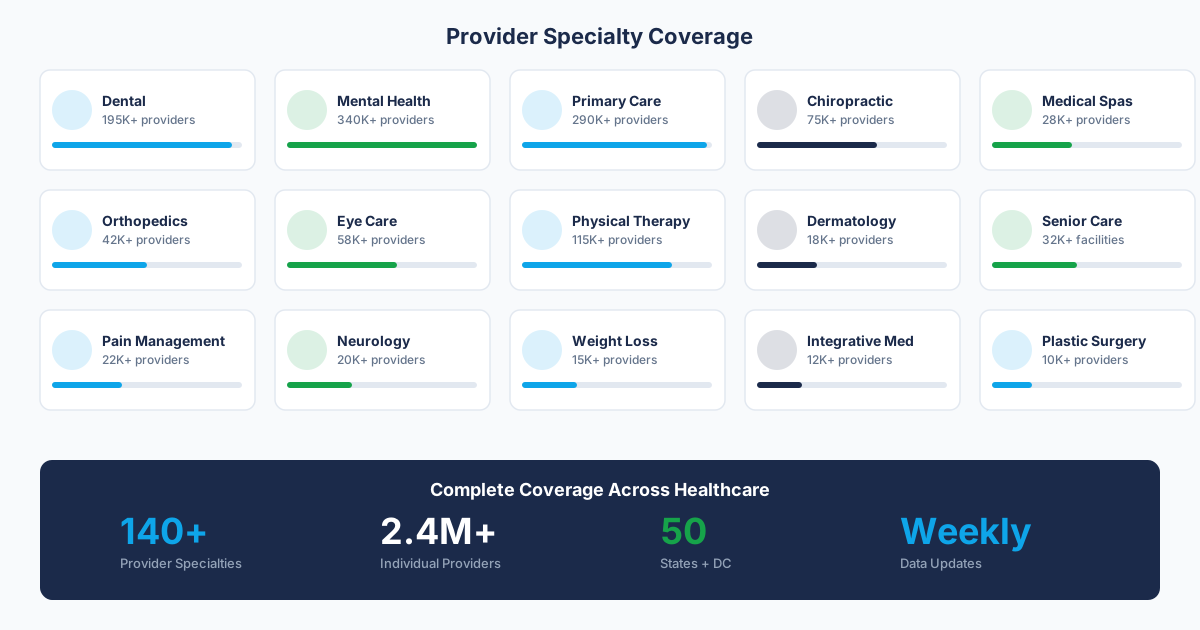
Here's the core problem. There is no NPI specialty classifications for "weight loss clinic" or "GLP-1 prescriber." A physician prescribing Wegovy might be classified under Internal Medicine, Family Medicine, Endocrinology, or even Preventive Medicine. Their practice might be listed as a medical spa, a family practice, or a wellness center. Traditional provider databases that rely on NPI specialty classifications alone will miss a large portion of the market.
Method 1: Medicare Part D Prescriber Data
CMS publishes Medicare Part D prescriber data that shows which providers prescribed which medications and in what quantities. This data runs about 18 months behind, so the most recent available data as of early 2026 covers 2024. It's useful for identifying established prescribers but won't capture the wave of new clinics that opened in late 2024 and 2025.
Limitations: Part D data only covers Medicare beneficiaries. A large percentage of GLP-1 prescriptions for weight loss go to commercially insured patients under 65. The Part D data significantly underestimates total prescribing volume at clinics that skew younger.
Method 2: Practice Name and Website Analysis
Many weight loss clinics include keywords in their practice name or website that identify them: "weight loss," "weight management," "obesity medicine," "body contouring," "medical weight management," or specific medication names. Parsing practice names from NPI registry data and analyzing practice websites can surface clinics that specialty classifications miss.
This approach works well for dedicated weight loss practices but misses the internist who added GLP-1 prescribing to an existing general practice without changing the practice name or website.
Method 3: ABOM Certification Database
The Obesity Medicine Association maintains a directory of ABOM-certified physicians. This is a high-quality signal. A physician who invested time and money in obesity medicine board certification is serious about weight management and likely to be a high-volume prescriber. But with only 6,500 diplomates, this captures a fraction of the total market.
Method 4: Multi-Signal Classification
The most effective approach combines multiple signals: NPI classification, practice name keywords, website content analysis, ABOM certification, prescription data, and service listings. No single signal catches everything. But layering 4-5 signals together produces a complete view of the weight loss clinic landscape.
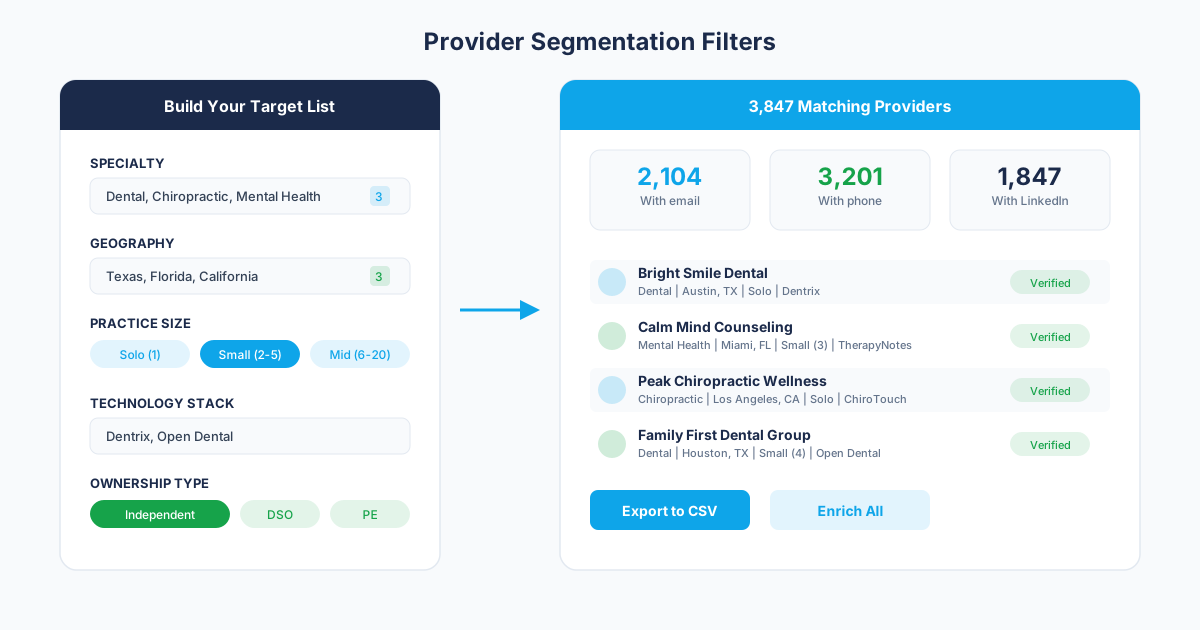
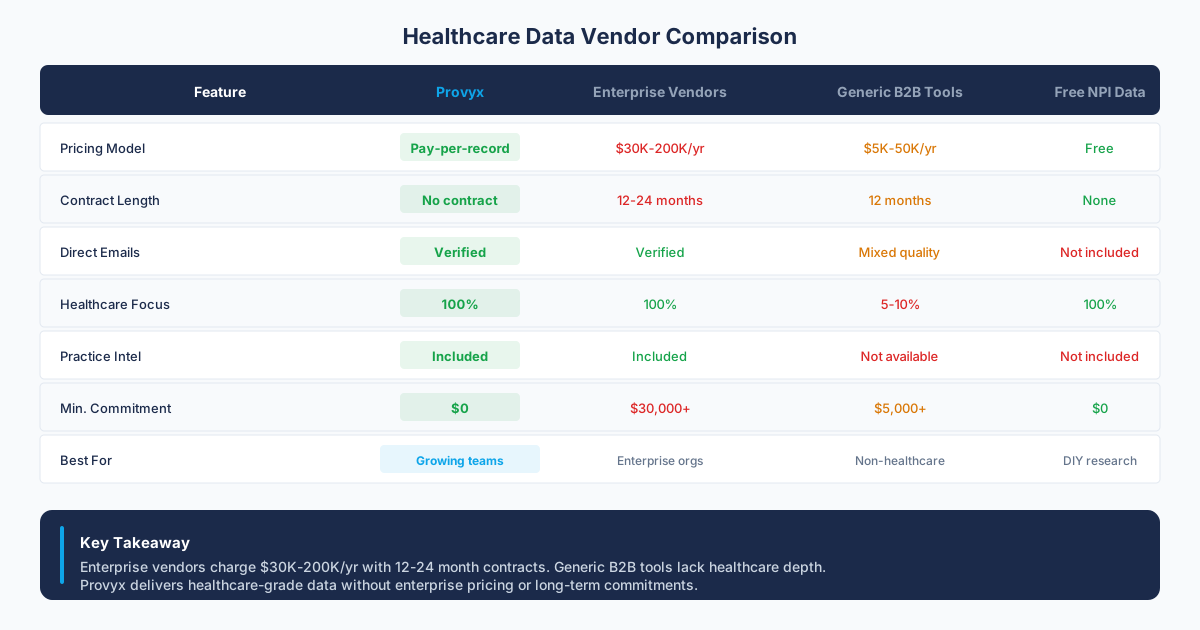
This is what Provyx does for weight loss practice data. We combine public registry data, web intelligence, certification databases, and proprietary enrichment to identify weight loss clinics that single-source databases miss.
What Pharma Reps Need From Weight Loss Clinic Data
Pharmaceutical sales teams targeting weight loss clinics have specific data requirements beyond basic practice contact information.
Prescriber-Level Data
Pharma reps need to know which specific providers at a multi-provider practice are writing GLP-1 prescriptions. A five-physician practice might have two doctors actively prescribing semaglutide and three who refer patients elsewhere. Targeting the practice generically wastes time on providers who aren't relevant.
Key fields for pharma targeting:
- NPI number: Required for compliance and CRM matching
- Prescribing specialty: The actual clinical focus, not just the specialty classifications
- Practice affiliation: Which practice(s) the provider works at, with addresses for each
- ABOM certification status: Indicates a dedicated obesity medicine practitioner
- DEA registration: Confirms active prescribing authority
- Estimated prescribing volume: Derived from available claims data or proxy indicators
Practice-Level Data
Beyond individual prescribers, pharma teams need practice-level intelligence:
- Services offered: GLP-1 prescribing, body composition analysis, nutritional counseling, bariatric surgery referrals
- Patient volume indicators: Practice size, number of providers, location count
- Insurance acceptance: Practices that accept insurance for weight loss vs. Cash-pay only have very different patient profiles and prescribing patterns
- Ownership structure: Independent physician-owned vs. PE-backed vs. Telehealth platform
What Device Companies Need From Weight Loss Clinic Data
Body contouring and aesthetic device companies selling into the weight loss market need different data than pharma reps.
Equipment Purchase Indicators
The key question for device reps is: does this practice have the patient volume, physical space, and financial capacity to support a $100,000-$400,000 device purchase? Data points that indicate device readiness:
- Practice revenue indicators: Multi-provider practices, multiple locations, and high web traffic suggest sufficient patient volume
- Existing device inventory: Practices already using one body contouring device are strong candidates for complementary devices. A practice with CoolSculpting is a warm lead for Emsculpt.
- Aesthetic services mix: Practices offering Botox, fillers, and laser treatments alongside weight loss have established aesthetic revenue and are more likely to invest in body contouring technology
- Practice age and stability: A practice that's been operating for 3+ years with consistent provider staffing is a better capital equipment prospect than a clinic that opened 6 months ago
Decision Maker Identification
At weight loss clinics, the device purchasing decision maker varies by practice structure:
- Solo practices: The physician owner makes the decision, often with input from a practice manager
- Multi-provider groups: The managing partner or medical director controls capital equipment decisions
- Med spas: Often the business owner (who may not be a physician) makes equipment purchasing decisions, with clinical input from the medical director
- PE-backed groups: Regional or national operations leadership controls equipment standardization and purchasing
The Telehealth Data Gap
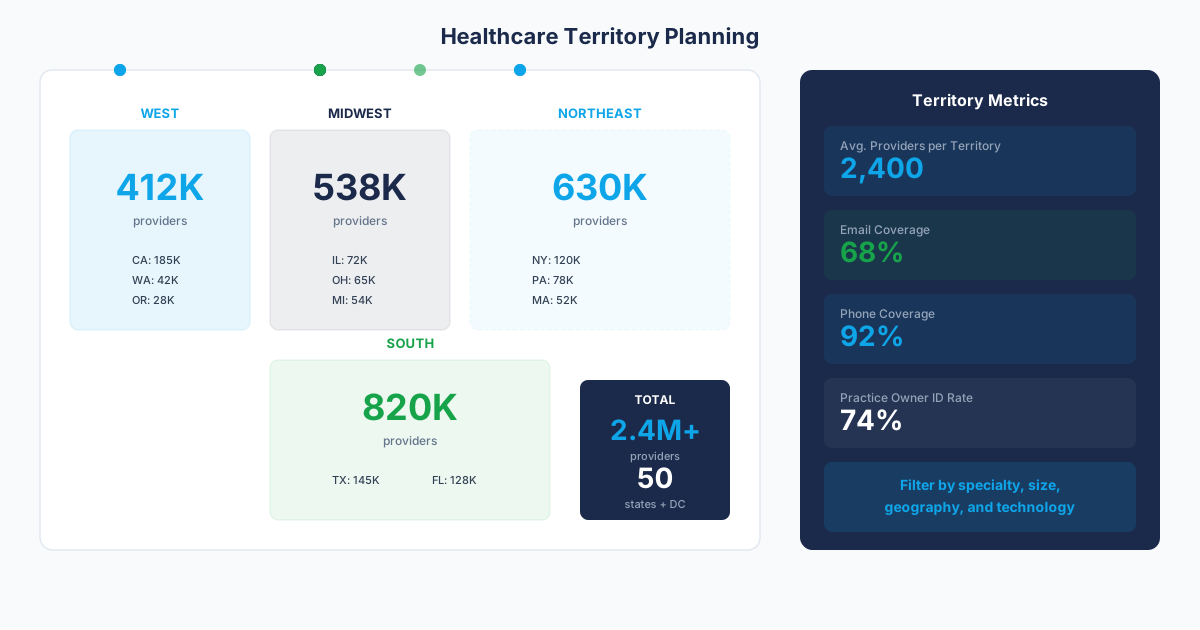
Telehealth weight loss companies represent a growing share of the market, but they create significant data challenges. A telehealth prescriber might be licensed in 15 states, work from home, and list a corporate headquarters address on their NPI registration that has nothing to do with where their patients are.
For pharma reps, telehealth companies require a different approach. Instead of targeting individual prescribers, you need to identify the medical director, chief medical officer, or formulary committee at the telehealth company itself. One relationship at the corporate level can influence thousands of prescriptions.
For device companies, telehealth clinics are generally not targets (no physical location for treatments). But watch for the trend of telehealth companies opening physical "finishing" locations where patients on GLP-1s can access body contouring, skin tightening, and other post-weight-loss aesthetic treatments.
Market Sizing: How Big Is the Opportunity?
According to the Bureau of Labor Statistics and industry analyses, the addressable market for weight loss clinic sales includes:
- Dedicated weight loss clinics: Estimated 8,000-12,000 nationwide (this number has roughly doubled since 2023)
- Med spas with weight loss services: Approximately 10,000-14,000 of the estimated 35,000 med spas in the US now offer some form of weight management
- Bariatric surgery programs: Approximately 1,800 accredited programs
- Endocrinology practices: Roughly 8,000 practices with weight management components
- Telehealth weight loss companies: At least 50 companies with meaningful patient volume, employing thousands of prescribers collectively
In total, there are 30,000-45,000 practice locations in the US where weight loss is a primary or significant service line. That number is still growing as GLP-1 medications maintain their trajectory.
Trends to Watch in 2026 and Beyond
Insurance Coverage Expansion
Medicare's potential coverage of GLP-1 medications for weight loss (currently under legislative consideration) would dramatically expand the patient base at weight loss clinics. Practices that have been cash-pay only would start accepting Medicare, changing their patient demographics and purchasing patterns.
Post-GLP-1 Service Demand
Patients who lose significant weight on GLP-1 medications often seek additional services: body contouring, skin removal surgery, nutritional counseling, and fitness programming. This "post-loss" service category is creating new revenue streams for clinics and new sales opportunities for device and supply companies.
Compounding Pharmacy Disruption
Compounding pharmacies producing semaglutide and tirzepatide at lower price points are a factor in the market. These pharmacies are a target for raw ingredient suppliers and a competitive concern for brand pharmaceutical reps. The regulatory landscape around compounding for weight loss is shifting, so tracking which clinics source from compounding pharmacies vs. Brand is increasingly relevant.
For the latest on how provider data is shifting across specialties including weight loss, see our 2026 provider data trends analysis. And if you're a device company, our page on provider data for medical device companies covers the broader device sales data playbook.
Frequently Asked Questions
How many weight loss clinics are there in the United States?
There are an estimated 8,000-12,000 dedicated weight loss clinics in the US as of 2026, roughly double the number from 2023. When you include med spas with weight loss services, bariatric surgery programs, and endocrinology practices offering weight management, the total addressable market reaches 30,000-45,000 practice locations.
How do I identify GLP-1 prescribers if there's no specific NPI specialty classifications?
Use a multi-signal approach: combine NPI classification data with practice name keyword analysis, ABOM certification databases, Medicare Part D prescriber data, website content analysis, and service listing indicators. No single data source captures all GLP-1 prescribers, but layering multiple signals produces complete coverage.
What's the difference between a medical weight loss clinic and a med spa offering weight loss?
Medical weight loss clinics are physician-led practices focused primarily on supervised weight management through medication, nutrition, and metabolic monitoring. Med spas that offer weight loss typically add GLP-1 prescribing as a complement to their core aesthetic services like Botox, fillers, and laser treatments. Med spas are often stronger targets for body contouring device sales because they already have aesthetic revenue streams.
How do I sell to telehealth weight loss companies?
Telehealth weight loss companies require an enterprise sales approach. Instead of targeting individual prescribers, identify the medical director, chief medical officer, or formulary committee at the corporate level. One corporate relationship can influence prescribing across thousands of patient encounters. Traditional facility-level data won't help here. You need corporate contact intelligence.
What data fields matter most for device sales into weight loss clinics?
Practice revenue indicators (provider count, location count, web traffic), existing device inventory, aesthetic services mix (practices already doing Botox and fillers are more likely to buy body contouring devices), practice age and stability, and the correct decision maker by practice structure (physician owner at solo practices, managing partner at groups, business owner at med spas, operations leadership at PE-backed chains).
Sources and References
Related Resources
Get the Provider Data You Need
Tell us what you're looking for. We'll build a custom list matched to your target market.
Trusted by healthcare sales teams, medical device companies, and health IT vendors across the US.