
5 Healthcare Provider Data Trends Reshaping Sales in 2026
The provider data landscape is shifting under everyone's feet. Here's what the smartest sales teams are doing differently this year.
2026-02-15
Provider Data Isn't What It Was Two Years Ago
If you're selling into healthcare and still treating provider data as a static commodity, you're already behind. The market has changed. CMS updates its NPI registry differently now. Practice ownership is consolidating at a pace we haven't seen before. And the old playbook of buying a list, loading it into your CRM, and hoping for the best? It's producing worse results every quarter.
We track provider data quality across thousands of medical practices every month. What we're seeing in 2026 is a fundamental shift in how the best sales organizations think about their data infrastructure. Not incremental improvements. Structural changes.
Here are five trends driving that shift, plus a bonus trend that's still emerging but worth watching.
1. Real-Time Verification Is Replacing Batch Updates
For years, the standard was quarterly data refreshes. Buy a list in January, use it through March, buy another one. The problem is that CMS data shows roughly 4-6% of provider records change every month. Addresses, phone numbers, practice affiliations, NPI deactivations. Over a quarter, that means 12-18% of your list has degraded before you even finish calling through it.
The teams winning right now aren't waiting for quarterly refreshes. They're running continuous verification loops. When a rep pulls up a contact, the data behind it has been checked within days, not months.
This matters more than most people realize. A 15% error rate in your provider database doesn't just mean 15% of your calls are wasted. It means reps lose trust in the data, start doing their own research, and your entire sales motion slows down. We've seen teams spend 30-40% of their selling time just validating contact information.
What This Means for Your Stack
If your data vendor can't tell you when each record was last verified, that's a red flag. Ask for verification timestamps at the record level, not just a "last updated" date on the whole file. There's a big difference between "we refreshed 2 million records last Tuesday" and "this specific contact was confirmed active on February 3rd."
Provyx validates every record before delivery, with timestamps you can audit. That's the standard you should hold any vendor to.
One more point on verification. The cost of wrong data goes beyond the wasted call. It compounds in rep behavior. When reps encounter 3-4 bad records in a row, they mentally check out of the list. They start cherry-picking records that "look right" and skipping anything they're not sure about. Your coverage of the TAM drops. Your call volume drops. Your pipeline suffers from both lower activity and lower data quality at the same time. Real-time verification prevents this spiral before it starts.
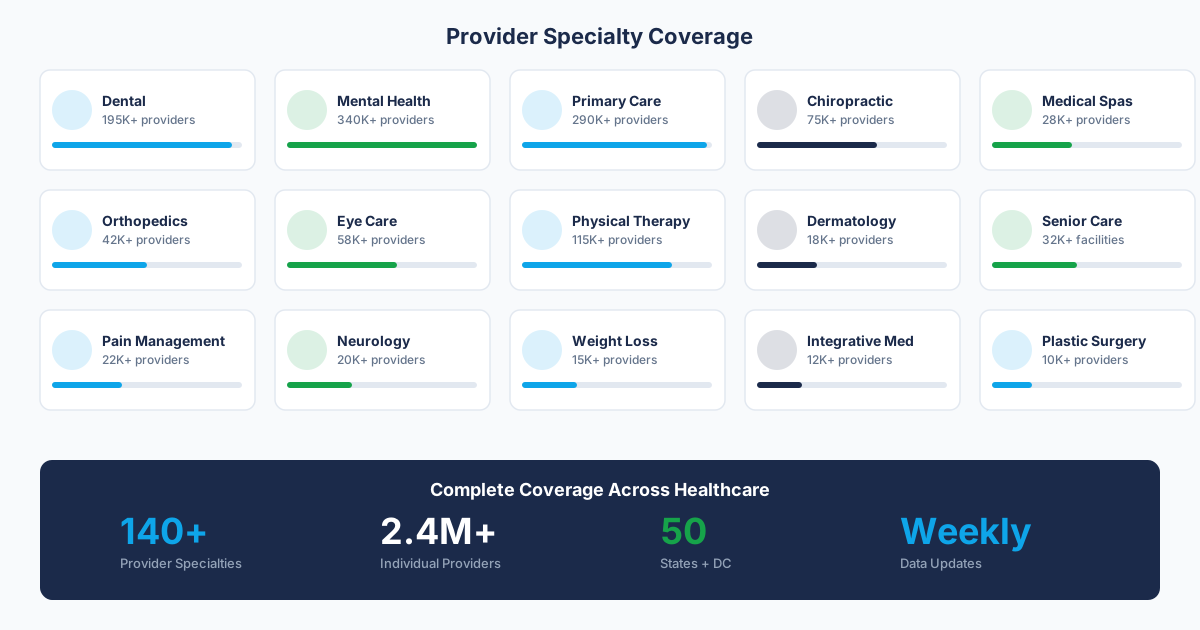
2. Practice Ownership Data Is Now a Competitive Advantage
Here's a number that should get your attention: according to the AMA's 2025 Practice Benchmark Survey, less than 47% of physicians now work in physician-owned practices. That's down from 53% just five years ago. Private equity acquisitions, hospital system consolidation, and DSO rollups in dental are reshaping who owns what.
Why does ownership matter for sales? Because the decision-maker at a PE-backed dermatology group is completely different from the decision-maker at a solo derm practice. The buying process is different. The budget authority is different. The pain points are different.
If your provider data doesn't include ownership intelligence, you're flying blind on roughly half your TAM. Your reps are pitching office managers who can't authorize a purchase, or they're missing the regional operations director who controls buying for 30 locations.
The Consolidation Map
Specialties being hit hardest by consolidation right now:
- Dermatology: PE firms have been aggressive here since 2019, and the pace hasn't slowed
- Ophthalmology: Similar PE playbook, focused on LASIK and cataract surgery centers
- Dental: DSOs now account for roughly 30% of dental practice revenue nationally
- Orthopedics: Hospital system acquisitions dominating this space
- Primary care: Amazon, CVS/Oak Street, and others are changing the landscape entirely
If you're selling into any of these specialties without ownership data, you're leaving deals on the table. Full stop.
3. Specialty and Sub-Specialty Targeting Is Getting Granular
The NPI registry gives you specialty classifications. That's a start. But specialty classifications are broad. "Internal Medicine" covers hospitalists, geriatricians, and primary care doctors who happen to have an IM board certification. If you're selling a product specifically for outpatient geriatric practices, the NPI classification alone won't get you there.
The trend we're seeing is a move toward multi-signal specialty classification. Teams are combining NPI classification with claims data indicators, website analysis, and practice name parsing to build much more precise segments.
One Provyx customer selling to cosmetic dentists cut their outreach volume by 60% and increased their meeting rate by 3x simply by filtering out general dentists who don't offer cosmetic procedures. The NPI database classified all of them the same way. The difference was in the enrichment layer.
Where to Start
Look at your current segmentation. If you're targeting by NPI classification alone, you're probably casting too wide a net. Consider:
- What procedures or services define your ideal customer?
- Can your data vendor identify those at the practice level?
- Are you distinguishing between a provider's training and their current practice focus?
A cardiologist who now runs a wellness clinic isn't your customer if you're selling cardiac imaging equipment. Your data needs to reflect what providers are doing today, not what their residency trained them for. Check out our healthcare sales prospecting guide for more on building precise target lists.
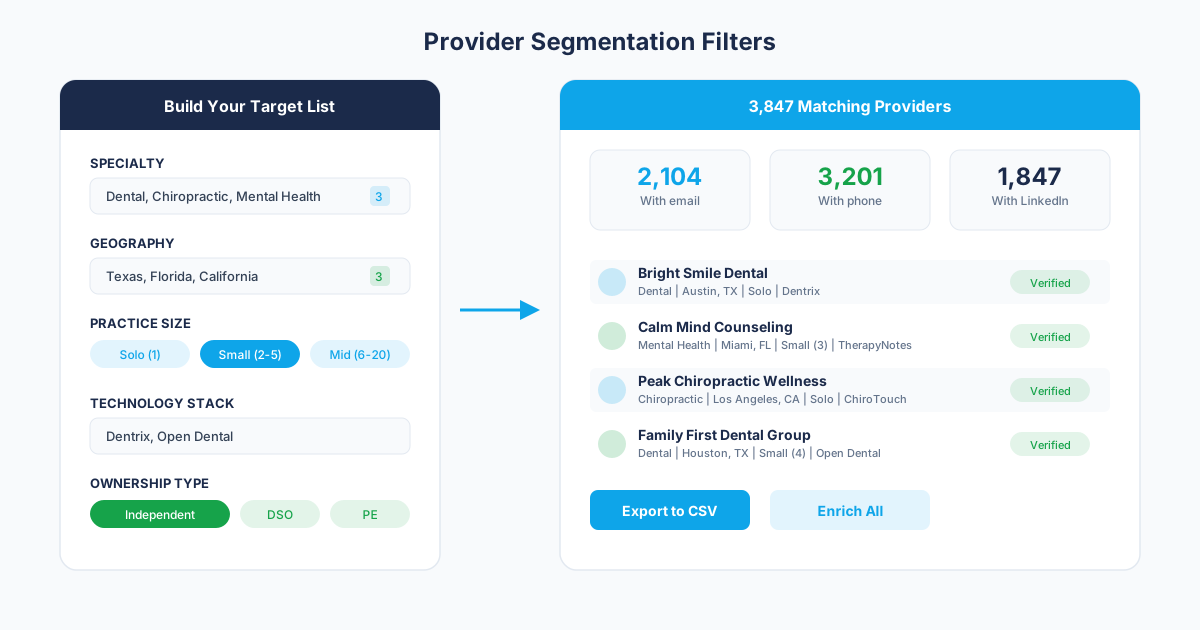
4. Contact-Level Data Is Overtaking Practice-Level Data
This one's been building for a while, but 2026 is the year it's becoming obvious. Practice-level data (name, address, phone, fax, specialty mix) used to be enough. You'd call the front desk, ask for the office manager, and work your way in.
That doesn't work anymore. Front desks are overwhelmed. Voicemail systems are more aggressive. And in consolidated practices, the front desk staff often has zero visibility into purchasing decisions.
The shift is toward named contacts with direct lines, email addresses, and LinkedIn profiles. "Dr. Smith is the managing partner, here's her direct number, here's the office manager who handles vendor relationships, and here's the regional VP who approves purchases over $10K."
The Bureau of Labor Statistics projects healthcare employment growing 13% through 2031. More providers means more noise. Named contacts with verified direct channels are the only way to cut through it.
The Multi-Contact Imperative
B2B healthcare deals almost never close through a single contact. You need the clinical champion, the financial decision-maker, and often an operations or IT stakeholder. If your data gives you one name per practice, you're starting every deal with an incomplete picture.
We've found that practices with 3+ verified contacts in a sales database convert at roughly 2.5x the rate of single-contact records. That's not surprising when you think about it. More contacts means more paths into the organization, more chances to find the person who cares about your solution.
Provyx delivers multi-stakeholder contact data for each practice, not just the NPI-registered provider.
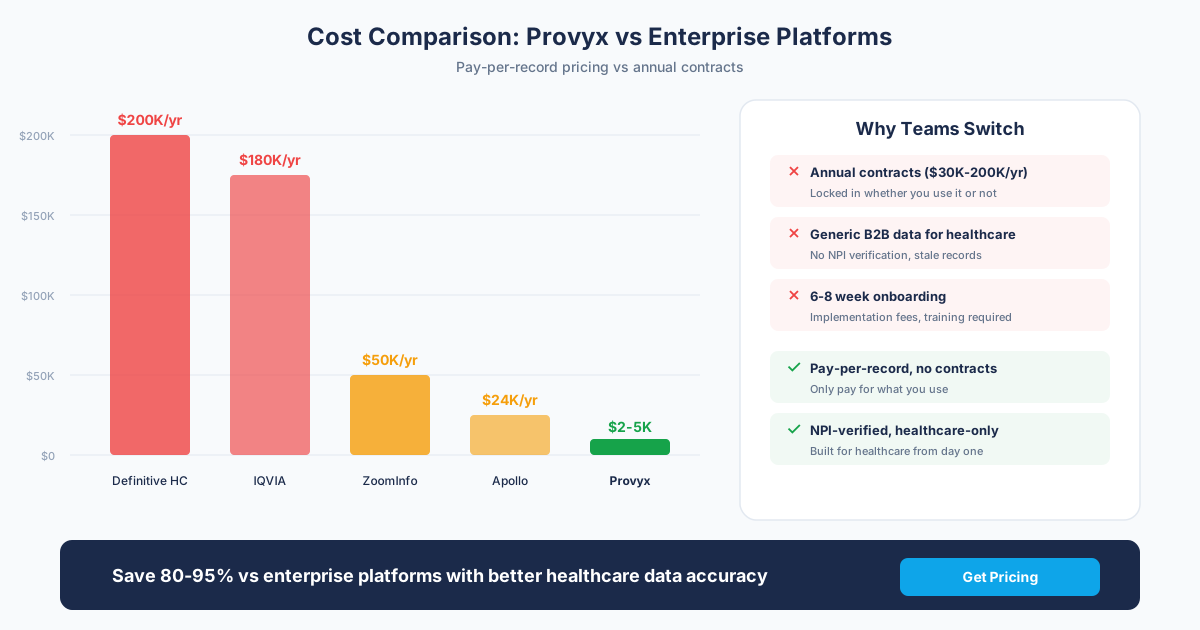
5. Compliance Requirements Are Tightening Around Data Sourcing
This is the trend nobody wants to talk about, but it's coming. Healthcare data privacy regulations are expanding beyond patient data. Several states have introduced or passed legislation governing how provider contact information can be collected, stored, and used for commercial purposes.
California's CCPA amendments, Virginia's CDPA, and Colorado's privacy act all have provisions that can touch B2B provider data, especially when that data includes personal contact information like cell phones or personal email addresses.
The practical impact: your legal team is going to start asking questions about where your provider data comes from. "We bought it from a vendor" isn't a sufficient answer anymore. You need to know the sourcing methodology, the consent framework (if applicable), and the data retention policies.
Protecting Yourself
Three things to do right now:
- Audit your current data sources.: Can each vendor explain exactly how they collect provider contact information?
- Check your data processing agreements.: Do they cover the new state privacy laws, or are they still written for a pre-CCPA world?
- Document your sourcing chain.: If a regulator asks where you got Dr. Johnson's cell phone number, you should be able to trace it back to a legitimate source.
This isn't about being paranoid. It's about building a data infrastructure that won't create liability as regulations evolve. Companies that get ahead of this now will have a significant advantage over those scrambling to comply later.
The Vendor Compliance Checklist
When evaluating any provider data vendor in 2026, ask these questions:
- Where does the contact data originate? Public records, web scraping, data partnerships, or purchased lists?
- Is there a documented data processing agreement that covers state privacy laws?
- How does the vendor handle opt-out requests?
- Are personal contact details (cell phones, personal emails) sourced from consent-based channels?
- What's the data retention policy? How long are records kept after a customer stops using the service?
If a vendor can't answer these questions clearly, that's a risk you're absorbing on their behalf. And in 2026, that risk is growing, not shrinking.
Bonus Trend: AI-Powered Data Enrichment Is Maturing
We'd be ignoring the elephant in the room if we didn't mention AI. Large language models and AI-powered web scraping tools are changing how provider data gets enriched. What used to require a team of researchers manually checking websites and LinkedIn profiles can now be partially automated.
But "partially" is the key word. AI enrichment works well for structured tasks like extracting provider names from practice websites or parsing address formats. It's less reliable for nuanced judgment calls like determining whether a provider listed on a website is an owner, an employee, or a contractor. Or distinguishing between a practice's current staff page and a cached version from 2023.
The teams getting the most value from AI enrichment are using it as a first pass, then layering human verification on top. AI does the heavy lifting of web research at scale. Humans verify the results and handle the edge cases. This hybrid approach is producing enrichment speeds 3-5x faster than pure manual research while maintaining accuracy rates above 90%.
What does this mean for buyers? The cost of high-quality enrichment is coming down. Vendors who've invested in AI-assisted pipelines can deliver more complete data at lower price points than vendors still running pure manual operations. Ask your vendor about their enrichment methodology. If they're not using AI-assisted workflows in 2026, they're either charging too much or cutting corners on coverage.
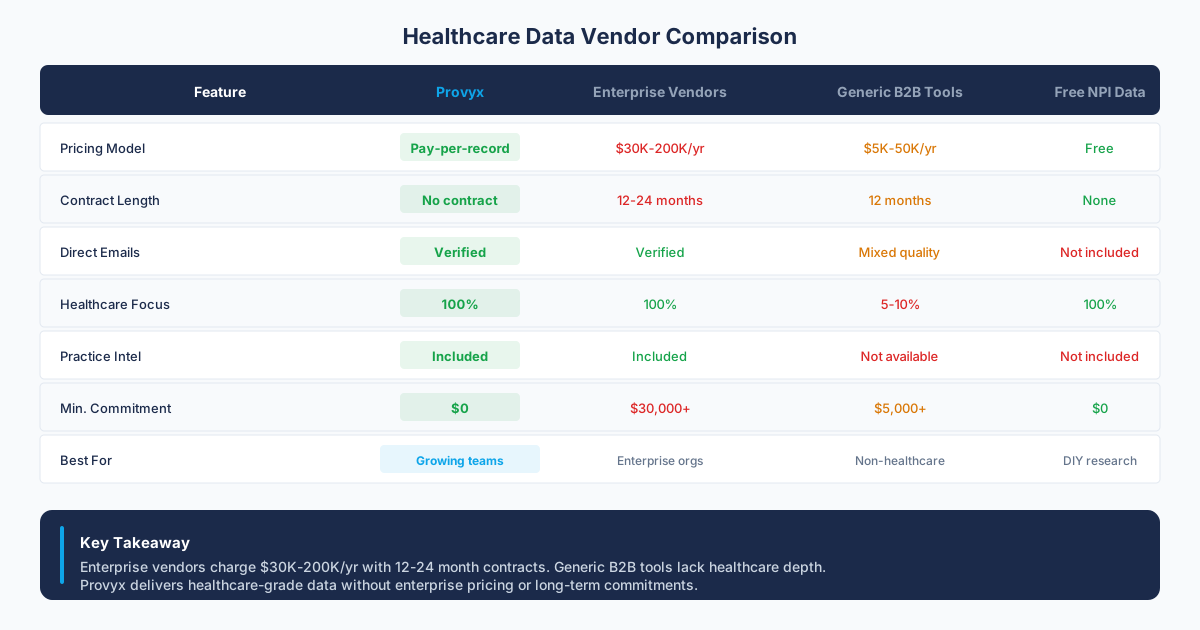
Where This All Points
The common thread across all five trends is the same: static, one-dimensional provider data is dying. The market is moving toward dynamic, multi-layered, compliance-aware data that gives sales teams a complete picture of every practice and every decision-maker within it.
If your current data infrastructure was built for 2020, it's not going to serve you in 2026. The good news is that upgrading doesn't have to mean ripping everything out. Start with verification frequency and contact depth. Those two changes alone can transform your pipeline efficiency.
Want to see where your current provider data stands? Talk to our team about running a data quality audit on your existing records. Most teams are surprised by what they find.
Quick Reference: 2026 Provider Data Trends
For the time-pressed among you, here's the summary:
- Real-time verification: is replacing quarterly batch refreshes. Ask for per-record verification timestamps.
- Ownership intelligence: is now essential, not optional. Less than half of physicians own their practices.
- Sub-specialty targeting: requires data beyond NPI specialty classifications. Combine multiple signals for precise segments.
- Contact-level data: with named decision-makers and direct channels is the new table stakes.
- Compliance and sourcing transparency: are becoming requirements, not nice-to-haves.
- AI-assisted enrichment: is driving down costs and improving coverage, but human verification still matters.
The teams that adapt to these trends will build durable competitive advantages in their healthcare sales motions. The ones that don't will keep wondering why their pipeline numbers are getting worse despite doing more activity. The data underneath your sales process is the foundation for everything else. Make sure it's solid.
Frequently Asked Questions
How often should healthcare provider data be refreshed?
At minimum, monthly. CMS data shows 4-6% of provider records change every month, meaning quarterly refreshes leave you with 12-18% degradation. The best-performing sales teams use continuous verification, where records are checked within days of being accessed.
Why does practice ownership data matter for healthcare sales?
With less than 47% of physicians now in physician-owned practices, the decision-maker varies dramatically based on ownership structure. PE-backed groups, hospital systems, and DSOs all have different buying processes. Without ownership data, reps often pitch the wrong person entirely.
What's the difference between NPI specialty classifications and sub-specialty targeting?
NPI specialty classifications are broad classifications assigned during registration. Sub-specialty targeting uses additional signals like claims data, website analysis, and procedure offerings to identify what a provider or practice is focused on today. A cardiologist running a wellness clinic looks the same as a practicing interventional cardiologist in the NPI database, but they're very different customers.
Are there compliance risks with using healthcare provider contact data for sales?
Increasingly, yes. State privacy laws like CCPA, Virginia's CDPA, and Colorado's CPA have provisions that can apply to B2B provider contact data, especially personal contact information. Sales teams should audit their data sourcing, update data processing agreements, and document their sourcing chain.
Related Resources
Get the Provider Data You Need
Tell us what you're looking for. We'll build a custom list matched to your target market.
Trusted by healthcare sales teams, medical device companies, and health IT vendors across the US.