
Pain Management Practice Data for Device Sales Teams
Pain management is a high-value, high-complexity specialty for device sales. Here's how to build the right target list.
2026-04-02
Why Pain Management Is a Priority Vertical for Device Companies
Pain management physicians are among the highest-value targets in medical device sales. A single interventional pain practice performing spinal cord stimulator implants can generate $500,000+ in device revenue per year. Multiply that across 8,000-10,000 pain management practices in the United States, and you're looking at one of the most lucrative specialty verticals in healthcare.
But pain management is also one of the most complicated specialties to sell into. The regulatory environment is tighter than most specialties due to the opioid crisis legacy. The clinical landscape spans everything from conservative physical medicine to complex neurostimulation procedures. And the decision-making structure varies dramatically based on practice type and affiliation.
This guide breaks down how to build a pain management prospect list that works for device and pharmaceutical sales teams.
The Pain Management Practice Landscape
Pain management practices fall into several distinct categories, and each one has different device purchasing patterns, budgets, and decision-making structures.
Interventional Pain Management
Interventional pain practices focus on procedures: epidural steroid injections, nerve blocks, radiofrequency ablation, spinal cord stimulator trials and implants, intrathecal drug delivery, and vertebral augmentation. The American Society of Interventional Pain Physicians (ASIPP) estimates there are roughly 5,000-6,000 physicians practicing interventional pain medicine in the US.
These are the practices that device companies care about most. They buy spinal cord stimulators ($15,000-$30,000 per unit), radiofrequency ablation systems ($50,000-$150,000), fluoroscopy equipment ($100,000-$300,000), and a steady stream of procedure-specific disposables. An interventional pain practice with 3 physicians performing 15-20 procedures per week each is a significant device customer.
Comprehensive Pain Management
Complete or multimodal pain practices combine interventional procedures with medication management, physical therapy, psychological support, and sometimes complementary therapies like acupuncture. These practices tend to be larger operations with more diverse provider types: physicians, nurse practitioners, psychologists, physical therapists, and acupuncturists under one roof.
For device sales, complete practices are still valuable but their purchasing patterns differ. They buy a broader range of lower-cost devices (TENS units, topical analgesic delivery systems, biofeedback equipment) in addition to some interventional equipment. Their per-device spend may be lower than a pure interventional practice, but their total device budget across categories can be substantial.
Physical Medicine and Rehabilitation (PM&R) Practices
Physiatrists (PM&R-trained physicians) frequently practice pain management, especially musculoskeletal pain. There are approximately 10,000 board-certified physiatrists in the US, and a significant percentage focus on pain as their primary clinical area. PM&R practices are more likely to emphasize non-surgical approaches: physical therapy, injection therapies, and rehabilitation programs.
Device opportunities in PM&R practices include musculoskeletal ultrasound systems (for guided injections), regenerative medicine products (PRP kits, amniotic tissue grafts), and durable medical equipment. PM&R practices are also a growing market for regenerative medicine products as these treatments gain clinical evidence.
Anesthesiology-Based Pain Practices
Many pain management physicians started their careers as anesthesiologists and completed pain medicine fellowships. Anesthesiology-based pain practices tend to be more procedure-heavy and more likely to be affiliated with ambulatory surgery centers (ASCs). The NPI classification system classifies these providers under "Anesthesiology - Pain Medicine" (specialty classifications 207LP3000X), which makes them relatively easy to identify in registry data.
The anesthesiology training background matters for device sales because these physicians are comfortable with complex procedures and high-value implantable devices. They're your primary targets for spinal cord stimulators, dorsal root ganglion stimulators, and intrathecal drug delivery systems.
Hospital-Based Pain Clinics
Academic medical centers and large hospital systems often operate dedicated pain clinics or pain management departments. These clinics employ multiple pain physicians, have access to hospital-based operating rooms for implant procedures, and purchase devices through the hospital's supply chain.
Selling to hospital-based pain clinics means navigating the hospital procurement process. The pain physician champions the device, but the value analysis committee (VAC), supply chain management, and sometimes the CFO's office must approve it. Your data needs to include both the pain physician contacts and the hospital procurement contacts.
Key Decision Makers in Pain Management
Understanding who controls purchasing decisions at a pain management practice is essential for efficient targeting.
At Independent Pain Practices
- Medical Director / Practice Owner: The physician who owns or leads the practice. At single-physician practices, this person makes all purchasing decisions. At multi-physician groups, they set the clinical direction and approve major capital equipment purchases.
- Office Manager / Practice Administrator: Handles vendor relationships, schedules product demonstrations, and often controls the supply ordering process. Device reps who ignore the office manager do so at their own expense.
- Procedure Coordinator / Clinical Lead: For practices with dedicated procedure suites, a clinical lead (often an RN or PA) coordinates equipment needs and disposable supply ordering. They're a practical influencer in device purchasing.
At ASC-Affiliated Pain Practices
Pain management physicians who perform procedures at ambulatory surgery centers introduce an additional layer of decision making. The ASC has its own purchasing structure, materials manager, and potentially its own contracts with device manufacturers. For a deeper breakdown of ASC decision-making and contact data, see our guide on ambulatory surgery center decision makers.
- ASC Administrator: Controls facility-level vendor relationships and supply chain
- ASC Medical Director: Approves new devices and procedures at the facility
- Materials Manager: Manages inventory, pricing, and GPO relationships
When a pain physician uses an ASC for implant procedures, you need contacts at both the practice and the ASC. The physician chooses the device. The ASC processes the purchase.
At Hospital-Affiliated Pain Clinics
- Department Chief / Pain Service Director: The physician leader of the pain program. Champions new devices and technologies within the hospital system.
- Value Analysis Committee (VAC): A hospital committee that evaluates new products for clinical efficacy, safety, and cost-effectiveness before approving them for use.
- Supply Chain / Procurement Director: Negotiates pricing and manages vendor contracts at the system level.
Sourcing Pain Management Practice Data
NPI Registry Data
The NPI registry is the starting point for pain management practice identification. Relevant specialty classifications include:
- 208VP0014X: Pain Medicine (general)
- 207LP3000X: Anesthesiology, Pain Medicine
- 208VP0000X: Pain Medicine (Physical Medicine & Rehabilitation)
- 2084P0800X: Psychiatry, Pain Medicine (rare but exists)
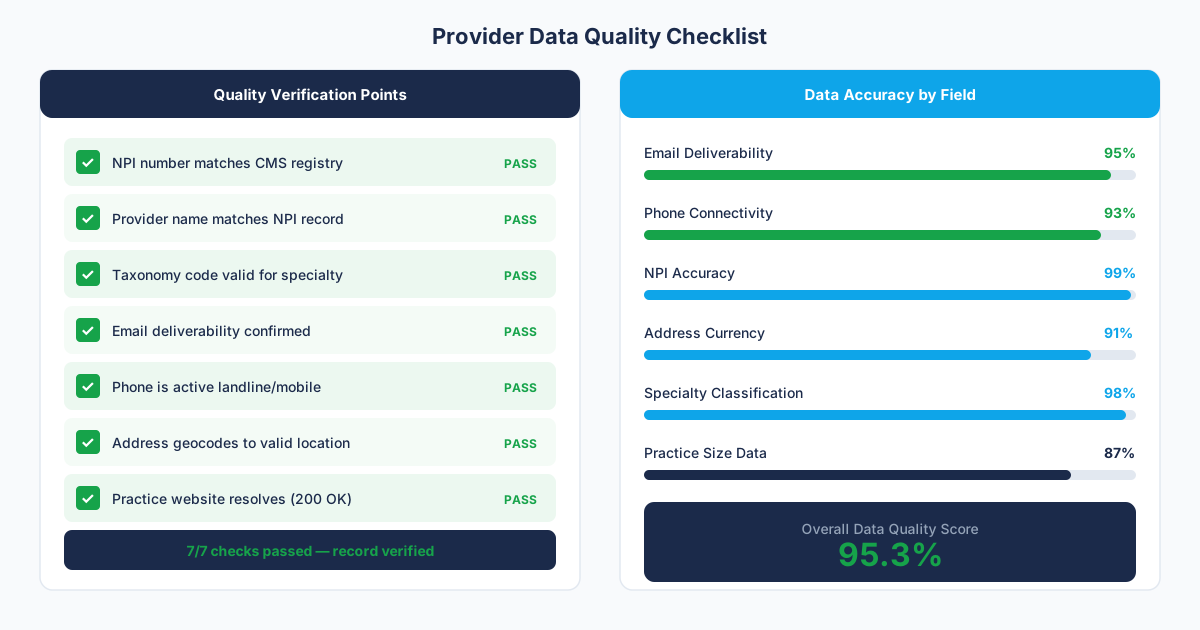
NPI data gives you provider names, practice addresses, and specialty classifications. It doesn't give you email addresses, direct phone numbers, procedure volumes, or ASC affiliations. Those require enrichment.
DEA Registration Data
Pain management physicians require DEA registration to prescribe controlled substances. DEA data can be used to verify active prescribers and, in some cases, identify practice locations that NPI data misses (physicians sometimes register DEA numbers at locations not listed on their NPI record). DEA data is public for verification purposes.
For pharmaceutical companies selling non-opioid analgesics or adjuvant pain medications, DEA registration data is also relevant because it confirms prescribing authority for controlled substance alternatives.
CMS Procedure Data
CMS publishes Medicare physician use data that shows which providers performed which procedures and in what volumes. For device companies, this is gold. You can identify which pain physicians performed the most spinal cord stimulator trials (CPT 63650), the most epidural steroid injections (CPT 62322/62323), or the most radiofrequency ablations (CPT 64633-64636).
This data runs approximately 18 months behind, but procedure patterns are relatively stable year over year. A physician performing 200 SCS trials per year in the 2024 data is almost certainly still a high-volume implanter in 2026.
ASC Affiliation Data
Identifying which pain physicians are affiliated with ASCs is critical for device sales targeting. CMS publishes ASC facility data, and cross-referencing pain physician NPIs with ASC claims data reveals the practice-ASC relationships that matter for your sales process.
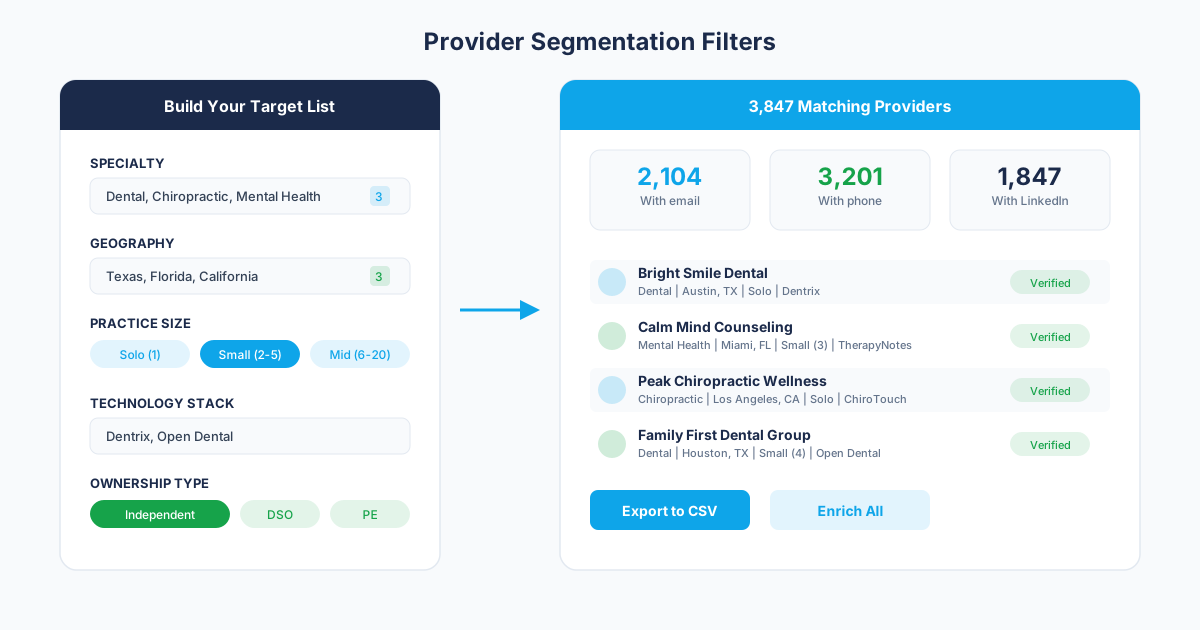
Provyx's pain management practice data includes ASC affiliation flags for interventional pain physicians, saving your team the work of building these connections manually.
The Non-Opioid Opportunity: Why Pharma Reps Need Pain Practice Data
The opioid crisis transformed pain management prescribing patterns. Pain physicians face intense scrutiny on controlled substance prescriptions. State prescription drug monitoring programs (PDMPs), DEA audits, and payer prior authorization requirements have all increased the friction of prescribing opioids.
This created a large and growing market for non-opioid analgesics, neuromodulation therapies, and interventional alternatives. Pharmaceutical companies selling in this space need to identify pain physicians who are:
- High-volume prescribers: Physicians managing large patient panels need alternatives to opioids and are receptive to new pharmaceutical options
- Actively reducing opioid prescribing: Providers who've already shifted their practice away from opioids are early adopters of non-opioid alternatives
- Multi-modal practitioners: Comprehensive pain practices that combine medication with interventional procedures are more likely to adopt new pharmaceutical products as part of their treatment algorithms
Regenerative Medicine and Pain: A Growing Device Category
Regenerative medicine products are gaining traction in pain management. PRP (platelet-rich plasma) injections, amniotic tissue products, and stem cell therapies are being used for joint pain, tendon injuries, and degenerative conditions. While regulatory and reimbursement questions remain for some of these products, the market is growing rapidly.
Pain management practices offering regenerative medicine tend to be:
- PM&R-based rather than anesthesiology-based
- More likely to operate in cash-pay or hybrid insurance/cash-pay models
- Located in higher-income markets where patients can afford out-of-pocket costs
- Active in marketing directly to consumers (websites, social media, patient education events)
For companies selling regenerative medicine products (PRP centrifuge systems, tissue grafts, injection guidance systems), identifying these practices requires looking beyond NPI specialty classifications. Website content analysis and service listing data are the most effective signals for identifying regenerative medicine practitioners.
Territory Planning for Pain Management Device Sales
Pain management practices are not evenly distributed geographically. Concentration is highest in urban and suburban areas with large elderly populations and strong surgical referral networks. States with the highest pain management practice density per capita include Florida, Texas, California, New York, and Pennsylvania.
Key Territory Planning Data Points
- Practice location with geocoding: Enables distance-based territory assignment and mapping
- Procedure volume estimates: Concentrate rep time on high-volume practices. A physician performing 300 spinal cord stimulator trials per year deserves more attention than one performing 20.
- ASC proximity: Interventional pain physicians near ASCs are more likely to be high-procedure-volume because ASC access enables faster patient throughput than hospital-based scheduling
- Competitive device presence: Knowing which practices already use your competitors' devices helps prioritize conversion targets vs. New device adoption targets
- Practice growth indicators: Practices adding providers, opening new locations, or recently acquiring new equipment are in growth mode and more receptive to new device relationships
Data Quality Issues Specific to Pain Management
Pain management data has several specialty-specific quality challenges that trip up sales teams.
specialty classifications Misclassification
Not all pain management physicians register under pain-specific specialty classifications. A fellowship-trained pain physician who also maintains a general anesthesiology practice might list only the anesthesiology classification. Relying exclusively on pain-specific specialty classifications will miss 15-20% of interventional pain physicians.
Multi-Location Practice Patterns
Pain management physicians frequently practice at multiple locations: their primary office, one or more ASCs, a hospital pain clinic, and sometimes satellite offices. NPI data often lists only the primary practice address. A physician who performs SCS implants at an ASC 20 miles from their listed office won't show up in a geographic search around that ASC. Multi-location data with facility-level detail solves this problem.
Distinguishing Interventional from Non-Interventional
For device sales, the distinction between interventional pain physicians (who perform procedures and implant devices) and non-interventional pain physicians (who primarily manage medications) is critical. Both may have the same specialty classifications. Procedure data from CMS or commercial claims is the most reliable way to distinguish them.
Fellowship Training vs. Self-Designated
Some physicians who practice pain medicine completed accredited pain management fellowships. Others are self-designated, meaning they chose pain medicine as a practice focus without fellowship training. Fellowship-trained physicians are more likely to perform complex interventional procedures like SCS implants. For high-value device sales, fellowship training is a quality signal worth tracking.
Building Your Pain Management Target List
- Start with NPI specialty filtering.: Pull all providers registered under pain medicine specialty classifications (208VP0014X, 207LP3000X, 208VP0000X). This is your foundation.
- Expand with cross-reference data.: Add anesthesiologists and physiatrists who practice pain medicine but aren't registered under pain-specific specialty classifications. Use CMS procedure data to identify them by their clinical activity.
- Segment by practice type.: Interventional vs. Complete vs. PM&R-based. Your messaging and product positioning should differ by segment.
- Flag ASC affiliations.: Identify which physicians perform procedures at ASCs and include ASC contact information in your dataset.
- Enrich with contact data.: Add direct phone numbers, email addresses, and office manager contacts for each practice. Verify against multiple sources.
- Layer procedure volume estimates.: Use CMS use data to prioritize high-volume practices. Your top 20% of targets by procedure volume likely represent 60-70% of your addressable device revenue.
- Map competitive device presence.: Where possible, identify which devices each practice currently uses. This informs your competitive positioning and replacement strategy.
Provyx provides pre-built pain management datasets with these fields included. We handle the multi-source identification, enrichment, and verification. For device companies specifically, our medical device data page covers how we support territory planning, competitive intelligence, and sales prioritization across all specialty verticals.
Frequently Asked Questions
How many pain management practices are there in the United States?
There are approximately 8,000-10,000 pain management practices in the US. ASIPP estimates 5,000-6,000 interventional pain physicians, with additional practices focused on comprehensive pain management, physical medicine and rehabilitation, and medication management. The total number of physicians practicing some form of pain medicine exceeds 15,000.
What NPI specialty classifications cover pain management?
The primary specialty classifications are 208VP0014X (Pain Medicine), 207LP3000X (Anesthesiology - Pain Medicine), and 208VP0000X (Pain Medicine, PM&R). However, 15-20% of pain management physicians register under their base specialty classification (Anesthesiology or PM&R) rather than a pain-specific code. CMS procedure data helps identify these physicians by their clinical activity.
What is the difference between interventional and comprehensive pain management for device sales?
Interventional pain practices focus on procedures like spinal cord stimulator implants, nerve blocks, and radiofrequency ablation. They buy high-value devices and generate significant per-practice device revenue. Comprehensive pain practices combine procedures with medication management, physical therapy, and behavioral health. They buy a broader mix of lower-cost devices across more categories.
Why does ASC affiliation matter for pain management device sales?
Pain physicians who perform procedures at ambulatory surgery centers often have higher procedure volumes because ASC scheduling is more flexible than hospital-based scheduling. ASC-affiliated physicians are also typically independent practitioners with more direct purchasing authority. However, the ASC itself has its own procurement process, so device reps need contacts at both the practice and the ASC.
How do I identify high-volume spinal cord stimulator implanters?
CMS Medicare physician use data shows procedure volumes by provider NPI. Look for CPT code 63650 (spinal cord stimulator trial) and CPT 63685 (permanent SCS implant). Physicians performing 100+ trials per year are high-volume implanters. This data runs about 18 months behind, but implant volumes are relatively stable year over year for established practices.
What data quality issues should I watch for in pain management provider lists?
Four main issues: specialty classifications misclassification (15-20% of pain physicians register under base specialty codes rather than pain-specific codes), multi-location practice patterns (physicians work at offices and ASCs not listed on their NPI record), the interventional vs. Non-interventional distinction (both may share specialty classifications), and fellowship training verification (self-designated pain practitioners may not perform the complex procedures device companies care about).
Sources and References
Related Resources
Get the Provider Data You Need
Tell us what you're looking for. We'll build a custom list matched to your target market.
Trusted by healthcare sales teams, medical device companies, and health IT vendors across the US.