
Orthopedic Surgeon Data for Implant Sales
Implant sales is one of the most competitive segments in medical devices. Reaching the right surgeons with the right data is the difference between making quota and missing it.
2026-03-29
The Orthopedic Implant Sales Landscape
Orthopedic implant sales is a relationship-driven business where data quality directly impacts rep productivity. The US orthopedic implant market generates over $20 billion annually, according to industry estimates, but the market is concentrated. A relatively small number of high-volume surgeons drive the majority of implant purchasing. According to the American Academy of Orthopaedic Surgeons, there are roughly 20,000 actively practicing orthopedic surgeons in the US. Your target within that number depends on your implant's clinical application.
The challenge for implant sales teams is that not all 20,000 orthopedic surgeons are relevant to every implant product. A spine implant company targets a completely different surgeon population than a total joint replacement company. Sub-specialty targeting, case volume estimation, and facility type identification are essential for building a productive call plan.
Sub-Specialty Targeting for Implant Products
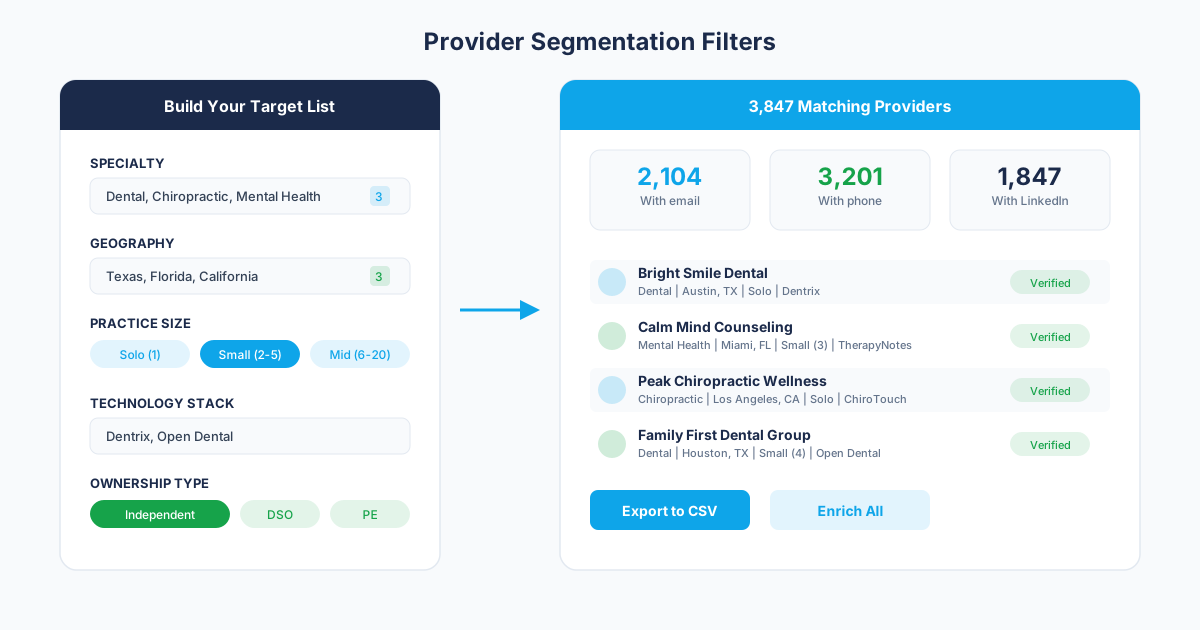
Orthopedic surgery has well-defined sub-specialties, each with different implant needs:
- Total Joint Replacement:: Hip, knee, and shoulder arthroplasty. specialty classifications 207XS0106X (orthopedic surgery of the spine) is separate; joint replacement falls under general orthopedic surgery (207X00000X) but is identifiable through procedure focus.
- Spine Surgery:: Orthopedic spine surgeons and neurosurgeons both perform spine implant procedures. Target both for spine implant products.
- Sports Medicine:: ACL reconstruction, rotator cuff repair, and arthroscopic procedures. specialty classifications 207XS0114X.
- Trauma:: Fracture fixation hardware, intramedullary nails, and plates/screws. Often performed by general orthopedic surgeons and trauma-fellowship-trained surgeons.
- Hand and Upper Extremity:: Specialized implants for wrist, hand, and elbow procedures. specialty classifications 207XS0117X.
- Foot and Ankle:: Podiatric surgeons and orthopedic foot/ankle specialists. specialty classifications 207XX0005X.
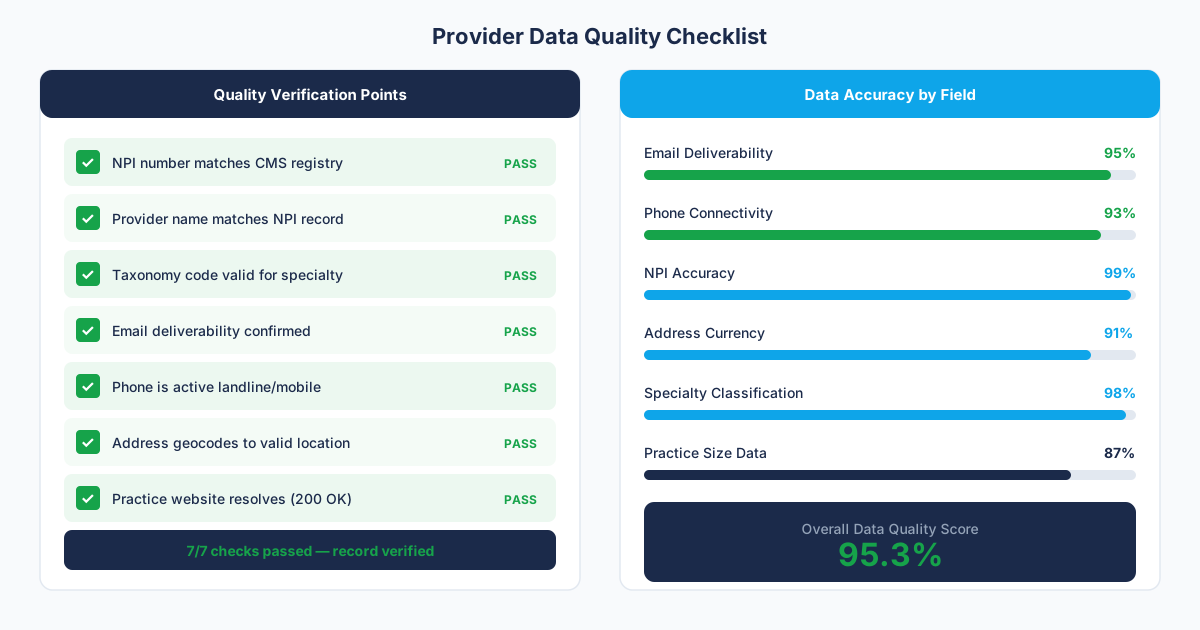
NPI specialty classifications get you part of the way to sub-specialty identification, but they are not granular enough for implant targeting. A surgeon classified as general orthopedic surgery (207X00000X) might do 80% total joints or 80% trauma. You need additional signals.
Case Volume and Facility Indicators
Implant sales correlate with surgical volume. A surgeon performing 200+ total joint replacements per year is a more valuable target than one performing 30. While exact case volumes are not publicly available at the individual surgeon level, several proxies help you estimate:
- CMS procedure data:: Medicare Physician and Other Practitioners data shows procedure counts by provider and CPT code for Medicare patients. Joint replacement CPT codes (27447 for total knee, 27130 for total hip) let you identify high-volume surgeons.
- Facility type:: Surgeons operating at ambulatory surgery centers (ASCs) in addition to or instead of hospitals tend to be higher volume and more receptive to new implant products. ASC-based surgeons often have more influence over implant selection than hospital-employed surgeons who may be locked into system-wide contracts.
- Practice structure:: Surgeons in physician-owned specialty practices tend to have more purchasing autonomy than those employed by hospital systems. In hospital settings, value analysis committees (VACs) control implant selection, making the individual surgeon less of a direct decision-maker.
Building Your Orthopedic Surgeon Target List
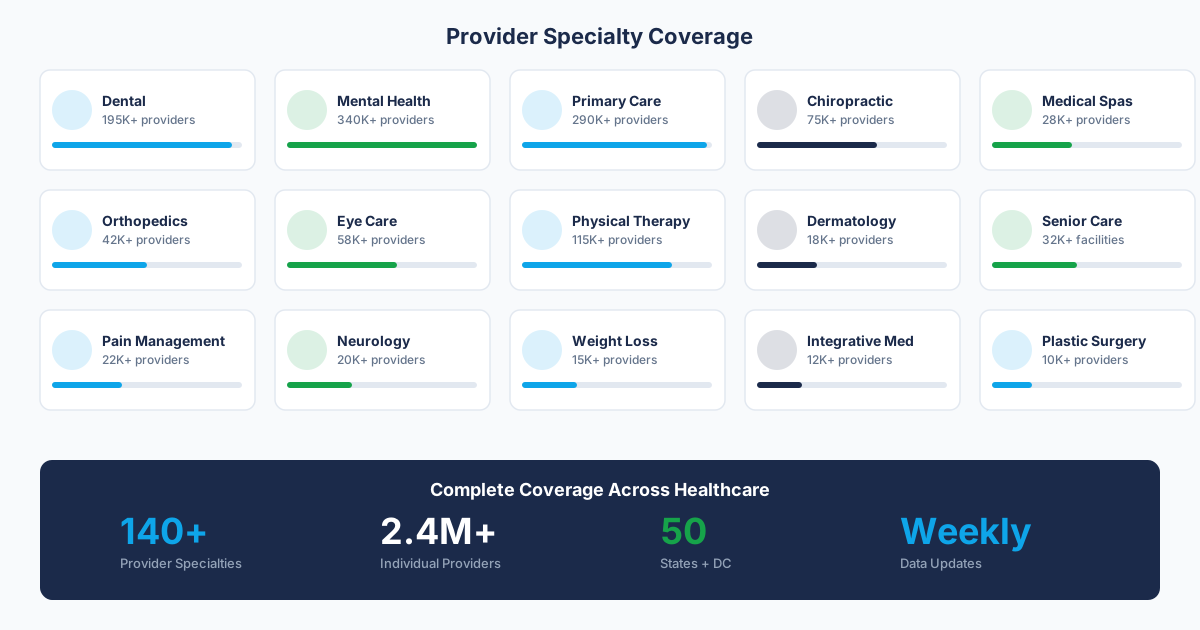
Start with orthopedic provider data from the NPI registry, filtered by relevant specialty classifications. Then layer in:
- Sub-specialty classification: from website analysis, fellowship training data, and procedure focus indicators
- Facility affiliation: distinguishing ASC-based vs hospital-only surgeons
- Ownership and employment status: to identify who has purchasing authority vs who is bound by system contracts
- Medicare procedure volume: as a proxy for overall surgical volume
- Geographic location: matched to your territory structure
Segmentation for Implant Sales Outreach
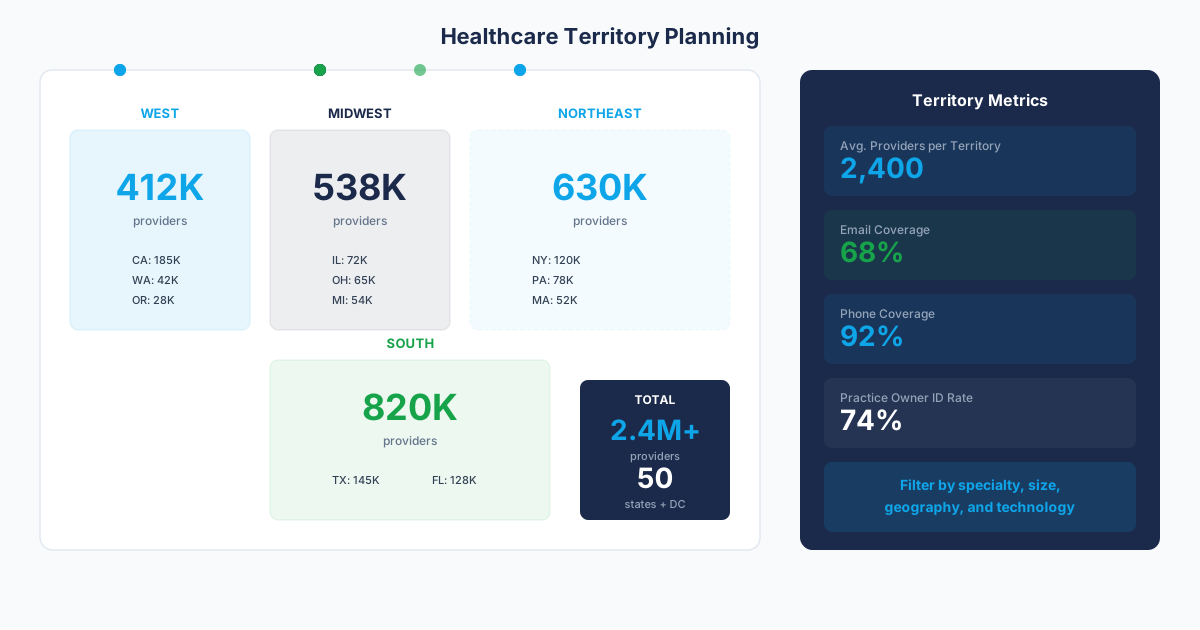
Structure your outreach tiers based on opportunity value:
- Tier 1:: High-volume surgeons in independent/physician-owned practices or ASCs with procedures matching your implant's clinical application. These surgeons have both the volume and the authority to switch implant vendors.
- Tier 2:: High-volume surgeons in hospital systems where you are on the approved vendor list. They can increase your share within an existing contract.
- Tier 3:: Moderate-volume surgeons in favorable practice settings. Growth potential but lower immediate revenue impact.
- Deprioritize:: Low-volume surgeons, those in health systems with exclusive competitor contracts, and surgeons whose sub-specialty does not match your product.
For verified orthopedic surgeon contact data with sub-specialty classification and practice details, Provyx delivers lists built for implant sales targeting. We include NPI verification, ownership indicators, and practice type data so your reps focus on the surgeons most likely to convert.
Frequently Asked Questions
How many orthopedic surgeons are in the US?
Roughly 20,000 actively practicing orthopedic surgeons hold active NPIs, according to AAOS estimates. The number varies depending on how you count physicians in fellowship training, semi-retired surgeons, and those in administrative roles. For implant sales targeting, the actively operating surgeon count is the relevant number.
How can I identify high-volume orthopedic surgeons?
CMS publishes Medicare Physician and Other Practitioners data that includes procedure counts by provider and CPT code. Filtering by relevant CPT codes (total knee, total hip, spine fusion, etc.) gives you a proxy for surgical volume. This covers only Medicare patients, so actual volumes are higher, but relative rankings are a useful guide for prioritization.
Why does ASC vs hospital setting matter for implant sales?
Surgeons operating at ASCs typically have more direct influence over implant selection than hospital-employed surgeons. In hospital settings, value analysis committees control implant vendor decisions, and individual surgeons may be contractually limited. ASC-based surgeons often make purchasing decisions at the practice level, creating a shorter and more direct sales cycle.
Sources and References
Related Resources
Get the Provider Data You Need
Tell us what you're looking for. We'll build a custom list matched to your target market.
Trusted by healthcare sales teams, medical device companies, and health IT vendors across the US.