
How to Plan a Dermatology Practice Event
Dermatology events involve live device demos, laser safety requirements, and a specialty that splits sharply between medical and cosmetic practices. Here's how to plan around all of it.
2026-03-10
Why Dermatology Events Are Different
Dermatology is one of the few specialties where live device demonstrations are persuasive enough to justify the cost. A dermatologist considering a $150,000 laser system wants to see it work on real skin, in real time. They want to watch the handpiece move, see the tissue response, and ask questions mid-procedure. No amount of slide decks or brochure photography replaces that experience.
That makes dermatology events high-impact but also high-complexity. You're dealing with live demonstrations on patients or models, laser safety protocols, specialized room configurations, and an audience that splits into two distinct camps: medical dermatologists focused on conditions like psoriasis and skin cancer, and cosmetic dermatologists focused on aesthetics, rejuvenation, and body contouring. The event that works for one group may completely miss the other.
According to the Bureau of Labor Statistics, there are roughly 13,200 practicing dermatologists in the U.S. That's a small, concentrated specialty. Getting the right 20-40 into a room matters more than filling 200 seats with the wrong audience. Your targeting has to be precise.
Know Your Audience: Medical vs. Cosmetic Derm
The single biggest mistake in dermatology event planning is treating all dermatologists the same. A board-certified dermatologist running a Mohs surgery practice cares about different devices, different clinical data, and different business models than a cosmetic dermatologist running a cash-pay aesthetics clinic.
Medical dermatologists evaluate devices through a clinical efficacy lens. They want peer-reviewed studies, FDA clearance details, and integration with existing treatment protocols. Their purchasing decisions often involve hospital or practice group committees. Events for this segment should emphasize clinical outcomes, published data, and insurance reimbursement pathways.
Cosmetic dermatologists evaluate devices through a revenue lens. They want to know the per-treatment revenue, patient demand in their market, competitive differentiation from other aesthetic practices nearby, and the learning curve for their staff. Events for this segment should lead with the business case and patient demand data, then back it up with clinical safety and efficacy.
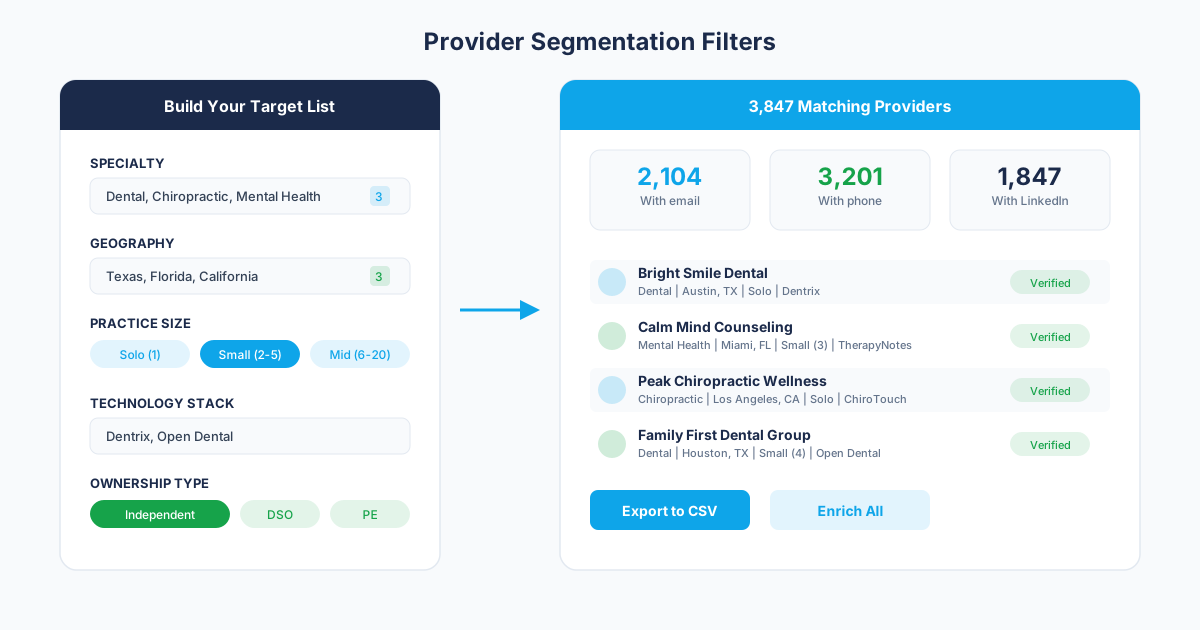
Your invitation list should reflect this split. If your device is a cosmetic laser, don't waste seats on dermatopathologists or pediatric dermatologists. If it's a phototherapy system for psoriasis, don't invite the cosmetic derm who does nothing but injectables. Use dermatology provider data segmented by subspecialty and procedure mix to build a targeted list.
Live Demo Logistics
Live demonstrations are the centerpiece of most dermatology events, and they require planning that other specialties don't. Here's what you need to get right.
Laser Safety Requirements
Any event involving laser devices must comply with your state's laser safety regulations and the American Academy of Dermatology's laser safety guidelines. At minimum, this means:
- Laser safety officer (LSO) on site.: Someone with documented LSO training must be present and responsible for safety protocols during any live laser demonstration.
- Protective eyewear for everyone.: Every person in the demo room needs wavelength-appropriate laser safety glasses. Have extras. Attendees forget theirs, and you can't let anyone watch without eye protection.
- Controlled access.: The demo room needs a closed door with a warning sign posted outside. No one walks in mid-demonstration without protective eyewear.
- Window coverings.: Any windows in the demo room need to be covered to prevent laser energy from exiting the space.
Hotel ballrooms and conference rooms don't come set up for laser demos. You'll need to scout the venue specifically for this. The demo room needs adequate power outlets (some laser systems draw significant current), a layout that keeps the audience at a safe distance from the treatment area, and enough space for the device, the treatment bed, and the demonstration physician to work comfortably.
Patient or Model Coordination
Live demos need someone to demonstrate on. That means coordinating with a patient or model who has signed appropriate consent forms, has the right skin type or condition for the demonstration, and is comfortable being observed by a room full of physicians.
Schedule the model's arrival 30-45 minutes before the demo for prep. Have a private area for them before and after the demonstration. And have a backup plan. Models cancel, patients get nervous, skin conditions flare or resolve before the event date. A second model on standby, or a recorded demonstration as backup, keeps your event on track.
Before-and-After Photo Stations
Set up a dedicated photo station where attendees can review before-and-after results from the device. This isn't a poster board with printouts. Use a large monitor or display showing high-resolution clinical photographs in standardized lighting conditions. Dermatologists are trained to evaluate skin, and they'll dismiss photos that look manipulated by lighting or angle differences.
Include case details with each set of photos: patient skin type, number of treatments, treatment parameters, time between photos. The more clinical rigor in the photo presentation, the more credible it is to a physician audience.
Venue Requirements
For a dermatology event with live demos, you need at minimum two distinct spaces: a presentation and dining area for the educational component and a demo room for live device demonstrations. Trying to do both in one room creates problems. The demo room needs to be darkened and access-controlled during laser use. The dining and presentation area needs standard lighting and a comfortable seating arrangement.
Hotels with conference suites that include multiple adjoining rooms work well. Medical office buildings with a large enough conference room and an adjacent treatment room work even better because the clinical environment adds credibility. For more venue considerations, see our healthcare event venue selection guide.
Power is a detail that trips up event planners. Some laser and energy-based devices need dedicated 20-amp or 30-amp circuits. Confirm the venue's electrical capacity and have the device rep verify that the available outlets support the equipment. Running a high-draw laser on the same circuit as the audiovisual setup is a good way to trip a breaker during a demonstration.
Event Format That Works for Dermatologists
The most effective format for dermatology device events is a 2-3 hour window with three segments:
- Clinical presentation (30-40 min).: A physician speaker (ideally a respected dermatologist who uses the device) presents clinical data, published studies, and their own practice experience. This establishes clinical credibility before anyone sees the device in action.
- Live demonstration (30-45 min).: The demo happens in the designated demo room. Attendees rotate in groups if the room can't hold everyone at once. The demonstrating physician narrates while treating, explaining technique, settings, and patient selection criteria.
- Networking and Q&A over dinner or drinks (45-60 min).: This is where the real conversations happen. Physicians ask the questions they won't ask in front of a group: pricing, competitive positioning, patient financing, how long it took the speaker to get comfortable with the device.
For a deeper breakdown of demo day structure, see our medical device demo day planning guide.
Getting Dermatologists to Show Up
Dermatologists are in high demand and overbooked. Your invitation strategy needs to cut through the noise. A few things that work:
Peer invitations outperform vendor invitations. If a respected local dermatologist is speaking or hosting, their personal invitation to colleagues carries more weight than a branded email from a device company. Ask your physician speaker to send personal invitations to 10-15 colleagues they know.
Specificity in the invitation matters. "Join us for a dermatology event" gets ignored. "See the [Device Name] treat a Fitzpatrick Type IV patient live, with before-and-after results from 40+ cases" gets opened. Dermatologists respond to clinical specificity.
Timing around conferences helps. Schedule your event in a market right before or after a major dermatology conference (AAD Annual Meeting, Cosmetic Surgery Forum, ODAC). Physicians in "learning mode" around conferences are more receptive to events that build on conference topics.
For more attendance strategies, see our guide on getting doctors to attend events.
Targeting the Right Dermatologists
Building your invite list requires more than pulling every dermatologist in a metro area. You need to segment by:
- Practice type:: Solo practice, group practice, academic, hospital-employed. Solo and small group practices make faster purchasing decisions. Academic and hospital-employed dermatologists often need committee approval.
- Procedure focus:: Does the practice offer aesthetic procedures, or is it purely medical? A dermatologist who already does laser procedures is a warmer target for a new laser system than one who's never offered energy-based treatments.
- Geography:: For a hands-on demo event, your practical radius is about 30-45 minutes of drive time. Dermatologists won't drive an hour for a dinner event unless the speaker or device is unusually compelling.
Accurate, segmented provider data is the foundation of this targeting. Browse our dermatology provider database to see the practice-level detail available for your event targeting.
If you're planning a dermatology device event and need help with provider targeting, registration pages, or event logistics, our event marketing service handles the data and operational work so you can focus on the clinical program.
Frequently Asked Questions
Do I need a laser safety officer for a dermatology device demo event?
Yes. Any event where a laser device is operated requires a designated laser safety officer (LSO) on site who is responsible for ensuring protective eyewear is worn by all attendees, the demo room has controlled access and window coverings, and all state laser safety regulations are followed. This applies even if the demonstration is on a model rather than a patient.
How do I target cosmetic dermatologists vs. Medical dermatologists for an event?
Segment your invite list by procedure focus and practice type. Cosmetic dermatologists typically offer aesthetic services like laser resurfacing, body contouring, and injectables. Medical dermatologists focus on conditions like psoriasis, skin cancer, and eczema. Provider databases that include procedure and subspecialty data let you filter by these categories so your invitation list matches your device's clinical use case.
What's the best venue for a dermatology event with live laser demos?
You need at least two rooms: a presentation and dining area with standard lighting, and a separate demo room that can be darkened, access-controlled, and equipped with adequate electrical outlets for the laser device. Hotels with adjoining conference suites work, but medical office buildings with treatment rooms add clinical credibility. Always confirm the venue's electrical capacity can handle your device's power requirements.
Sources and References
Related Resources
Get the Provider Data You Need
Tell us what you're looking for. We'll build a custom list matched to your target market.
Trusted by healthcare sales teams, medical device companies, and health IT vendors across the US.