
Physiatrist Email List
Physiatrists are the most misclassified specialty in provider databases. If your data vendor confuses physiatry with psychiatry or physical therapy, your email list is reaching the wrong people before the first message goes out.
Updated April 2026
The Misclassification Problem in Physiatrist Data
Physical medicine and rehabilitation (PM&R) physicians, commonly called physiatrists, occupy an unusual position in the provider data landscape. The name sounds like "psychiatrist" and the specialty overlaps with physical therapy, which means they get misclassified in both directions. Data vendors that rely on fuzzy name matching or broad category filters routinely contaminate physiatrist lists with psychiatrists and physical therapists.
There are approximately 10,000 practicing physiatrists in the United States, according to the American Academy of Physical Medicine and Rehabilitation (AAPM&R). The CMS NPI Registry has a specific specialty classifications for PM&R (208100000X), and additional codes for subspecialties like pain medicine, spinal cord injury medicine, and sports medicine. Precise specialty filtering is the only reliable way to separate physiatrists from the specialties they're confused with.
Practice settings add another layer. Physiatrists work across inpatient rehabilitation hospitals, outpatient PM&R clinics, pain management centers, and sports medicine facilities. Some are employed by health systems and don't have their own practice entities. Others run independent PM&R groups with multiple clinic locations. The contact path varies significantly depending on the practice model.
For medical device companies selling rehabilitation equipment, pain management devices, orthopedic products, or neurostimulation technology, physiatrists are a primary prescriber audience. Getting the list right matters because the specialty is small enough that contamination from psychiatry or physical therapy records can easily outnumber the actual physiatrists.
Data Fields for Effective Physiatrist Outreach
Physiatrists treat a broad range of conditions (musculoskeletal pain, stroke rehabilitation, spinal cord injury, brain injury, sports injuries), and your product likely maps to a subset of that clinical scope. The data fields on your list determine whether you can segment effectively.
Subspecialty classification. PM&R has recognized subspecialties including pain medicine, sports medicine, spinal cord injury medicine, brain injury medicine, and pediatric rehabilitation medicine. A physiatrist who focuses on sports medicine has different product needs than one who runs an inpatient brain injury rehabilitation program. specialty classifications capture some of this, but fellowship training and practice focus provide additional signal.
Practice setting and employment type. Health system-employed physiatrists rarely hold direct purchasing authority, yet they influence equipment and technology decisions within their department. Independent PM&R group practices are more likely to have a physician-owner who makes vendor selection decisions. Your outreach approach should vary based on whether you're reaching an independent decision-maker or an influencer within a larger organization.
Facility type. Inpatient rehabilitation facilities (IRFs) have different procurement processes than outpatient PM&R clinics. IRFs often have formal purchasing committees and longer sales cycles. Outpatient clinics may have a single physician-owner who can make a purchasing decision in one meeting.
Verified contact details. Physiatrists in health system settings are often reachable only through institutional email addresses and main office phone numbers. Those in private practice are more likely to have direct lines and practice-specific emails. A good list identifies the best contact channel for each provider based on their practice model.
Why Generic Provider Lists Fail for PM&R
The physiatrist/psychiatrist confusion is a data quality failure that undermines entire campaigns. There are approximately 10,000 physiatrists in the US and over 45,000 psychiatrists. If a vendor's classification mapping is even slightly imprecise, psychiatry records outnumber PM&R records four to one, and your list becomes a psychiatry file with some physiatrists mixed in.
The same problem occurs with physical therapists (PTs), of whom there are over 300,000 in the US. A database that links "physical medicine" to physical therapy instead of physiatry will flood your list with non-physician contacts who don't prescribe, don't make device purchasing decisions, and don't belong in a physician-targeted campaign.
Even within correctly classified physiatrist records, generic databases often lack the practice context that makes outreach relevant. A physiatrist who specializes in electrodiagnostic medicine needs different products than one running a chronic pain management program. Without subspecialty data, your reps are guessing at relevance during every call.
Address accuracy is particularly important for PM&R. Physiatrists frequently work across multiple facilities (hospital, outpatient clinic, rehabilitation center) and their NPI address may not reflect where they spend most of their clinical time. A list that sends your field rep to a billing address instead of the clinic where the physiatrist actually sees patients wastes a sales call.
How Provyx Builds Physiatrist Contact Lists
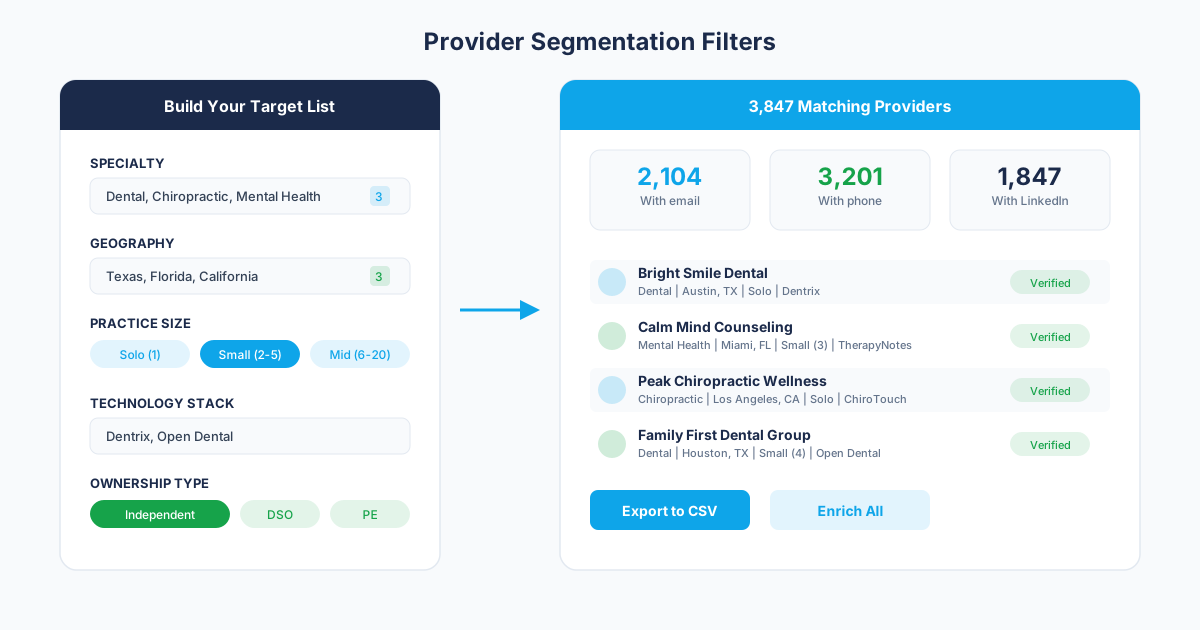
Provyx uses strict specialty classifications filtering to isolate PM&R physicians from the specialties they're commonly confused with. We filter on the specific 208100000X code and its subspecialty variants, then cross-reference against credential data (MD/DO with PM&R board certification) to catch physiatrists who may have registered under a broader specialty classifications.
Every record is enriched with verified business email, direct phone number, practice address, and practice details. We differentiate between practice locations and billing addresses, which is especially important for physiatrists who work across multiple facilities.
For device companies targeting specific PM&R subspecialties, we include available subspecialty indicators based on specialty classifications, fellowship training, and practice focus data. This lets you segment your list beyond "physiatrist" into the clinical areas where your product has the strongest fit.
LinkedIn profiles are included where available, and they're particularly useful for PM&R physicians in health system settings where direct email outreach may be filtered through institutional systems. The data arrives in a flat file ready for CRM import, with no platform commitment or annual contract.
Physiatrist Segments and What They Buy
PM&R is not one audience. A spinal cord injury specialist at an inpatient rehab hospital and a sports-medicine physiatrist running a cash-pay clinic share a board certification and almost nothing else in their purchasing. Segmenting the list by subspecialty before you write a single email decides whether your message lands or gets deleted.
The table below maps the main PM&R subspecialties to their NPI specialty classifications, typical practice setting, and the vendor categories that sell into each. Use it to filter a raw physiatrist list down to the segment your product actually fits.
| Subspecialty | NPI classification | Typical Setting | Common Vendor Fit |
|---|---|---|---|
| General PM&R | 208100000X | Outpatient clinic, hospital department | Rehab equipment, EMR, billing |
| Pain Medicine | 2081P2900X | Interventional pain center | Neurostimulation, injectables, imaging |
| Sports Medicine | 2081S0010X | Cash-pay clinic, team practice | Regenerative therapies, bracing, ultrasound |
| Spinal Cord Injury Medicine | 2081P0010X | Inpatient rehab facility (IRF) | Mobility devices, wound care, neuromodulation |
| Brain Injury Medicine | 2081P0004X | IRF, long-term care | Cognitive rehab tech, monitoring |
| Pediatric Rehabilitation | 2081P0301X | Children's hospital, clinic | Pediatric orthotics, assistive tech |
Electrodiagnostic medicine deserves its own callout. Many physiatrists perform EMG and nerve conduction studies, which makes them buyers of diagnostic equipment, electrodes, and reporting software that a general PM&R filter would never surface as a distinct segment. If you sell electrodiagnostic products, ask your data vendor whether they can flag the physiatrists who actually run an EMG lab, because the specialty classifications alone won't tell you that. Our provider contact data service documents which signals we use to infer practice focus beyond the base classification.
How to Vet a Physiatrist Email List Before You Buy
Before you pay for any physiatrist list, run it through a few checks that separate a clean PM&R file from a psychiatry-and-PT mix dressed up as physiatry. These take an hour and save a campaign.
- Ask for the classification filter logic.: The vendor should be able to tell you they filtered on 208100000X and its subspecialty variants. If the answer is "we matched on specialty name," expect contamination.
- Spot-check 20 records against the NPI Registry.: Pull 20 names from the sample and look them up in the free CMS NPI Registry. If more than one or two come back as psychiatrists or physical therapists, the whole list is suspect.
- Check the address type.: NPI primary practice addresses are sometimes billing or administrative locations. For physiatrists who split time across a hospital and a clinic, confirm the list flags which address is the clinical one.
- Confirm the email is a business address, not a guess.: Pattern-generated emails ([email protected]) bounce at high rates. Ask what percentage of the file carries verified versus inferred email.
- Size it against reality.: There are about 10,000 physiatrists in the US. A vendor offering 40,000 "physiatrist" contacts has either counted PTs and psychiatrists or padded the count. Compare the vendor's number to the AAPM&R figure.
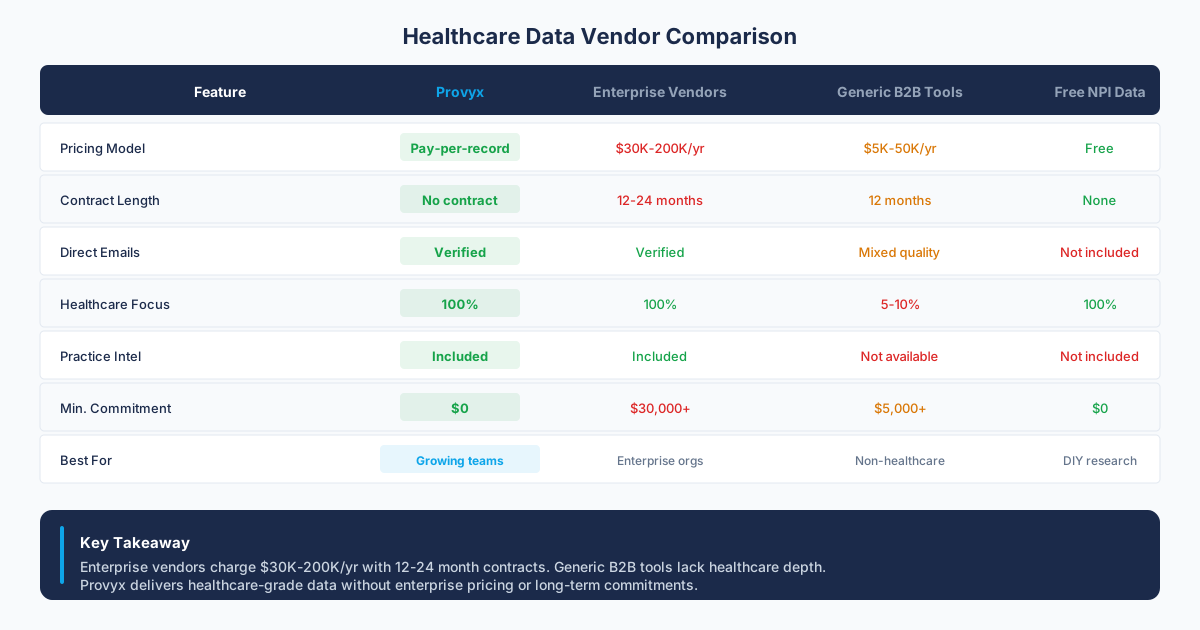
This is the same discipline we cover in our healthcare data vendor comparison, which walks through how to evaluate any provider data source on accuracy rather than headline record counts.
Frequently Asked Questions
What's the difference between a physiatrist and a psychiatrist?
Physiatrists (PM&R physicians) treat musculoskeletal and neurological conditions through non-surgical physical rehabilitation. Psychiatrists treat mental health conditions. They have different NPI specialty classifications, different clinical settings, and buy completely different products. The name similarity causes frequent misclassification in provider databases.
How many physiatrists are there in the United States?
There are approximately 10,000 practicing physiatrists in the US. This includes subspecialties like pain medicine, sports medicine, spinal cord injury medicine, and brain injury medicine. The number is significantly smaller than related specialties like orthopedic surgery (28,000+) or physical therapy (300,000+).
Can I filter physiatrist lists by subspecialty?
Yes. Provyx supports filtering by PM&R subspecialties including pain medicine, sports medicine, spinal cord injury medicine, brain injury medicine, and pediatric rehabilitation medicine. Subspecialty identification is based on specialty classifications and available training and certification data.
Do you include physiatrists employed by health systems?
Yes. Health system-employed physiatrists are included with their institutional affiliation, practice location, and available contact details. We note the practice setting so you can distinguish between independent practices and health system employment in your outreach strategy.
How do I avoid buying a physiatrist list contaminated with psychiatrists?
Ask the vendor which NPI specialty classifications they filtered on. A clean PM&R list filters on 208100000X plus its subspecialty variants, not on a specialty name string. Then pull 20 sample records and look them up in the free CMS NPI Registry. If more than one or two return as psychiatrists or physical therapists, the file was built on name matching and you should pass.
Can you identify physiatrists who run an EMG or electrodiagnostic lab?
The base PM&R specialty classifications does not flag electrodiagnostic practice on its own. We infer EMG and nerve conduction focus from practice signals and available subspecialty data, which matters if you sell diagnostic equipment, electrodes, or reporting software to the physiatrists who actually operate an EMG lab rather than the broader PM&R population.
Sources and References
Related Resources
Get the Provider Data You Need
Tell us what you're looking for. We'll build a custom list matched to your target market.
Trusted by healthcare sales teams, medical device companies, and health IT vendors across the US.