
Healthcare Software ABM Strategy with Provider Data
Selling healthcare software to medical practices requires account-level intelligence that generic ABM platforms don't have. Practice size, specialty mix, existing technology, and decision-maker contacts are the foundation of an effective healthcare software ABM campaign.
Updated April 2026
Why Standard ABM Tools Fail for Healthcare Software
Account-based marketing platforms like Demandbase, 6sense, and Terminus work well for targeting enterprise companies with public employee counts, revenue data, and clear org charts. Healthcare practices don't fit that model. A five-physician orthopedic group generating $8 million in annual revenue doesn't show up in enterprise databases the same way a 500-person software company does.
The fundamental unit of healthcare ABM is the practice, not the company. And practice data lives in the CMS NPI Registry, state licensing boards, and specialty-specific databases rather than the commercial business databases that ABM platforms pull from. If your target market is ambulatory medical practices with 3-20 providers, you won't find accurate account lists in Clearbit or ZoomInfo. The healthcare provider data ecosystem is separate from the general B2B data ecosystem.
Contact depth is another gap. Healthcare software sales often require reaching multiple stakeholders: the physician-owner who approves the budget, the office manager who evaluates workflow impact, and the IT contact who assesses integration requirements. ABM platforms that find one LinkedIn profile per company won't give you the multi-threaded outreach capability that healthcare software deals require.
Technology intelligence is critical but hard to source. If you're selling an EHR, you need to know what EHR the practice currently uses. If you're selling a patient engagement platform, you need to know whether the practice already has one. Generic ABM tools don't track healthcare-specific technology stacks. They know what CRM a company uses, but not what EHR a medical practice runs.
The Healthcare Software Buying Committee
The reason single-contact ABM tools stall on healthcare deals is that a practice rarely buys software on one person's say-so. Even a mid-size group runs the decision through three or four roles, and each cares about something different. The table below maps the typical committee for a 5-to-20-provider practice, what each role evaluates, and where you find them in provider data.
| Role | What They Decide | What They Care About | Where the Data Lives |
|---|---|---|---|
| Physician-owner / managing partner | Budget approval | Clinical value, ROI, peer adoption | NPI registry, practice ownership |
| Practice administrator / office manager | Workflow and rollout | Implementation, staff training, cost | Practice firmographics, contacts |
| IT contact / director | Integration sign-off | EHR compatibility, data security | Technology detection, larger groups |
| Lead clinician / nursing lead | Day-to-day usability | Workflow disruption, ease of use | Provider roster by practice |
An account list that names only one of these four leaves your campaign single-threaded, and single-threaded healthcare deals stall the moment that one contact goes quiet or leaves. The whole point of building the list from practice-level provider data is that you can attach the physician-owner, the administrator, and the IT contact to the same account and run real multi-threaded outreach.
Building a Healthcare Software ABM Account List
An effective healthcare software ABM campaign starts with an account list built from healthcare-specific data sources rather than general B2B databases.
Practice identification from NPI data. The NPI Registry provides organizational NPIs for medical practices, which serves as your account identifier. Filter by specialty classifications to target the practice types your software serves. A telehealth platform might target primary care and mental health practices. A dental practice management system targets dental practices specifically. The specialty classifications filter is your first segmentation lever.
Practice size estimation. Count the individual provider NPIs associated with each organizational NPI or practice address. A practice with 8 linked provider NPIs is a different tier than a solo practitioner. Practice size correlates with software budget, implementation complexity, and decision-making process.
Technology detection. Where available, technology stack data identifies what EHR, practice management system, and ancillary software a practice currently uses. This enables competitive displacement campaigns (targeting practices on an EHR you can replace) and integration marketing (targeting practices using complementary tools).
Decision-maker contacts. The physician-owner, practice administrator, and IT contact are the typical buying committee for healthcare software. A good account list identifies these roles with verified email and phone so your ABM campaign can reach multiple stakeholders per account.
Geographic and market segmentation. Practice location, surrounding market density, and state regulatory environment all influence software purchasing. Practices in states with active telehealth parity laws may be more receptive to telehealth platform pitches, for example.
Running Healthcare ABM with Provider Data
Once your account list is built from provider data, the ABM execution follows a healthcare-adapted version of standard ABM playbooks.
Tier your accounts. Not every practice is worth personalized outreach. Tier 1 accounts (high fit, high value) get one-to-one campaigns: personalized emails, direct mail, and sales rep engagement. Tier 2 accounts get one-to-few campaigns: specialty-specific messaging and targeted ad campaigns. Tier 3 accounts get scaled campaigns: broad content and nurture sequences. Practice size, specialty fit, and technology match determine the tier assignment.
Map the buying committee. For Tier 1 accounts, identify every stakeholder who influences the software decision. In a 10-provider medical group, that might include the managing partner, the practice manager, the head of nursing, and an IT director. Your campaigns should address each stakeholder's concerns: clinical workflow for the physician, efficiency for the practice manager, usability for the nursing staff, and integration for IT.
Write specialty-specific messaging. A practice management platform pitch to a dermatology practice should reference dermatology-specific workflows, not generic practice management benefits. When your account data includes specialty classification, you can create specialty-specific ad creative, email templates, and landing pages that speak directly to each segment's workflow.
Track engagement across channels. Healthcare practices are slower to respond to digital marketing than technology companies. A physician-owner doesn't spend their day on LinkedIn or browsing display ads. Email, direct mail, and event-based touchpoints often outperform purely digital ABM channels. Track engagement across all channels and let the data tell you which combination works for each account tier.
Measuring a Healthcare Software ABM Program
Healthcare ABM measurement looks different from enterprise SaaS ABM, mostly because the accounts are smaller and the sales cycle runs on clinical time rather than quarterly pipeline pressure. A few metrics actually predict whether the program is working.
Account coverage, not lead volume. The right question is what share of your target practices you have reached on at least two of the three committee roles. A program that touched 200 physician-owners but zero administrators is single-threaded and will convert poorly. Multi-role coverage per account is the leading indicator.
Engagement weighted by practice fit. A demo request from a 12-provider practice that already runs the EHR you replace is worth far more than ten clicks from solo practitioners outside your ICP. Score engagement against practice size and technology match so the pipeline reflects real opportunity, not raw activity.
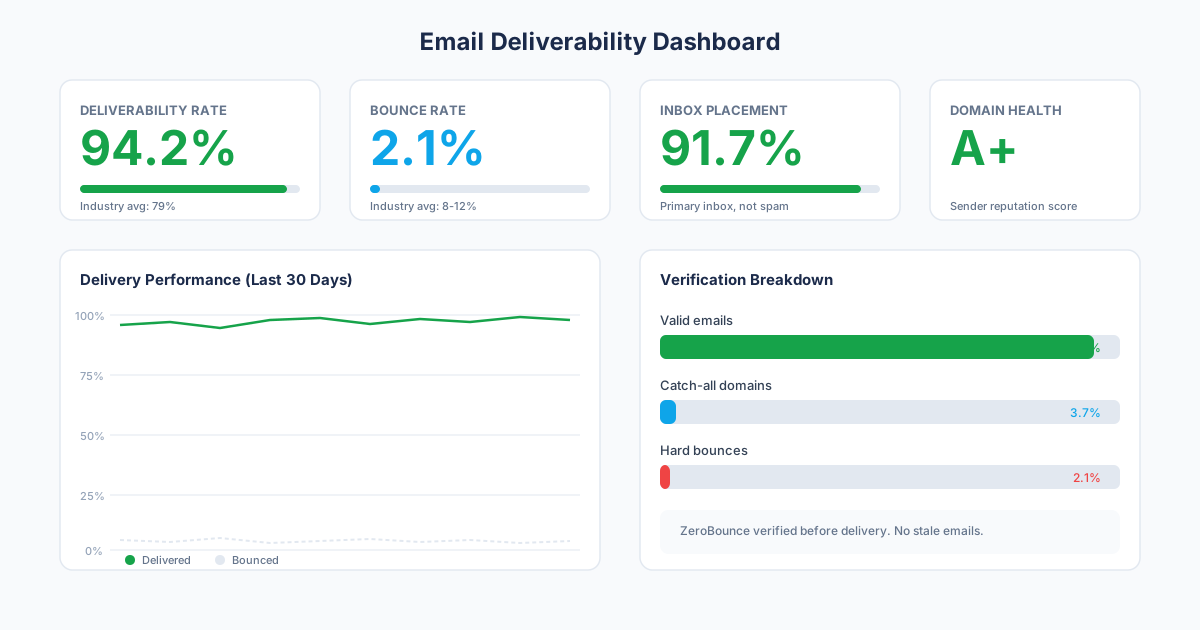
Data decay as a tracked metric. Provider contact data goes stale as physicians move and practices consolidate. If 15-20% of your account list is wrong, your coverage and engagement numbers are inflated by exactly that much. Re-verifying the list on a set cadence keeps the denominator honest. Our provider contact data service is built around that build-at-order-time approach so the account list reflects current practices rather than a year-old snapshot.
How Provyx Powers Healthcare Software ABM
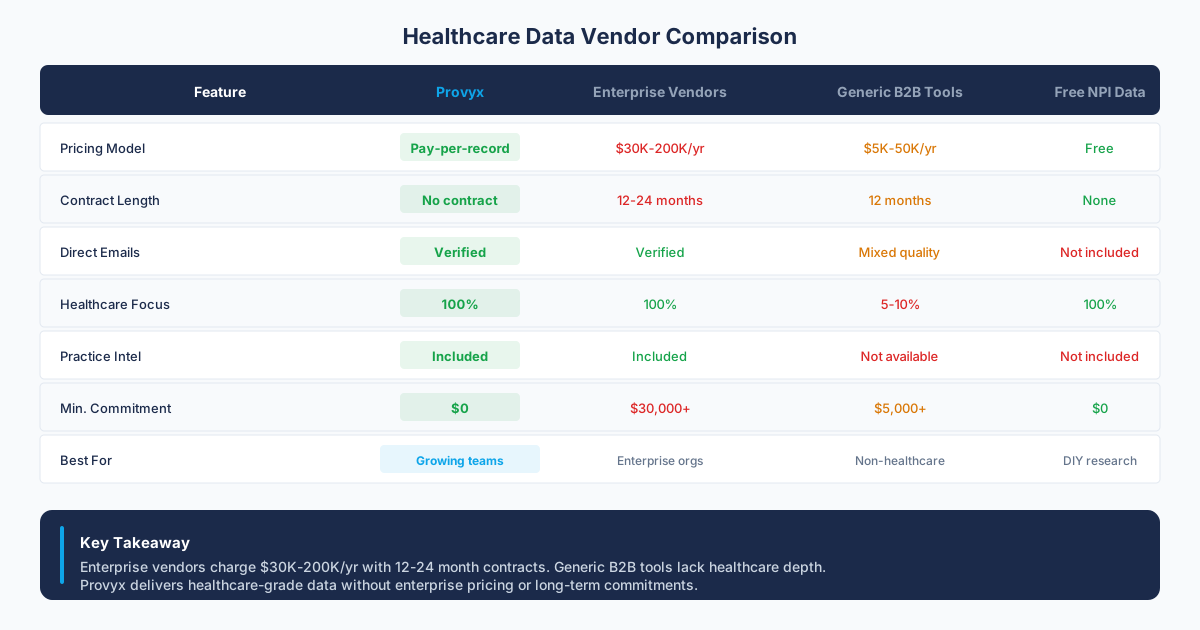
Provyx provides the practice-level data that healthcare software ABM campaigns require. Instead of starting with an ABM platform's limited healthcare coverage, you start with a verified account list built from healthcare-specific data sources.
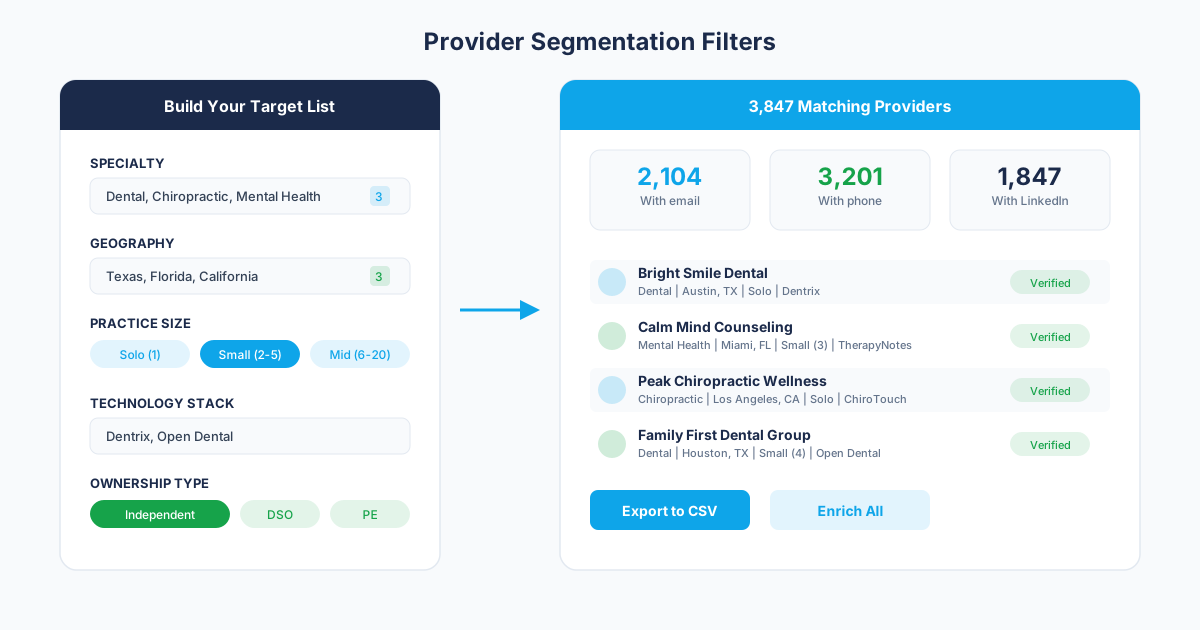
Every account record includes the practice name, organizational NPI, specialty classification, provider count, practice address, and decision-maker contacts with verified email and phone. Where available, we include technology stack indicators for EHR, practice management, and patient engagement platforms.
You can filter accounts by specialty, geography, practice size, and technology profile to build tiered account lists that match your software's ideal customer profile. The data imports directly into your ABM platform, CRM, or marketing automation system.
For healthcare software companies running their first ABM program, we can help define the account criteria based on your existing customer profile and build an initial target list that's ready for campaign execution. For companies with established ABM programs, we provide the healthcare-specific enrichment that fills the gaps in their existing account data.
Frequently Asked Questions
What healthcare software companies use ABM?
EHR vendors, practice management system providers, patient engagement platforms, telehealth companies, revenue cycle management tools, clinical trial software, and healthcare analytics companies all use ABM to target medical practices. Any healthcare software company that sells to specific practice types or sizes can benefit from account-based targeting.
Can I use Provyx data in Demandbase, 6sense, or Terminus?
Yes. We deliver data in CSV format that imports into any ABM platform. You can upload accounts and contacts into Demandbase, 6sense, Terminus, HubSpot, Salesforce, or other marketing platforms for campaign execution and engagement tracking.
Do you provide technology stack data for medical practices?
We include available technology detection data for EHR, practice management, and other healthcare software where our sources can identify the installed technology. Coverage varies by practice size and web presence, with larger practices and those with active websites having better technology coverage.
How is healthcare ABM different from regular B2B ABM?
Healthcare ABM requires practice-level data from healthcare-specific sources (NPI Registry, specialty classifications, specialty classifications) rather than general B2B databases. Buying committees are smaller and physician-dominated. Sales cycles involve clinical workflow evaluation alongside standard business criteria. And technology stacks are healthcare-specific (EHR, practice management) rather than general business tools.
How do you target medical practices by EHR for an ABM campaign?
Filter your account list by technology detection signals so you can run competitive-displacement plays against practices on an EHR you replace, or integration plays against practices using a complementary system. Coverage is strongest for larger practices and those with an active web presence. You combine that EHR signal with specialty and practice-size filters to build tiers that match where your software actually wins.
What practice size should a healthcare software ABM program target?
It depends on your product, but most healthcare software sellers focus on ambulatory practices with roughly 3 to 20 providers, which is large enough to have a budget and a buying committee yet small enough to decide without a health-system procurement process. You estimate size by counting the provider NPIs linked to each practice, then tier accounts so your one-to-one effort goes to the highest-fit, highest-value practices.
Sources and References
- CMS NPI Registry
- industry-standard Healthcare Provider classification
Related Resources
Get the Provider Data You Need
Tell us what you're looking for. We'll build a custom list matched to your target market.
Trusted by healthcare sales teams, medical device companies, and health IT vendors across the US.