
TMS Therapy CRM: Provider Data for Clinic Marketing
TMS clinics depend on psychiatrist and neurologist referrals. Your CRM and provider data strategy determine whether those referrals grow or stall.
2026-03-14
Why TMS Clinics Need CRM Workflows Built Around Referrals
Transcranial magnetic stimulation (TMS) has moved from experimental to mainstream. FDA clearances now cover treatment-resistant depression, obsessive-compulsive disorder, smoking cessation, and anxious depression. Insurance coverage has expanded. The Clinical TMS Society reports growing adoption across both standalone TMS clinics and psychiatry practices adding TMS as a service line.
But the growth has created a competitive problem. In most metro areas, multiple TMS providers are now competing for the same referral base. The clinics that grow are the ones that build systematic referral networks, not the ones that wait for patients to Google "TMS near me."
TMS therapy is almost entirely referral-dependent. A patient doesn't walk in off the street and ask for TMS. They come through a psychiatrist who has diagnosed treatment-resistant depression, tried multiple medications, and determined that TMS is the next appropriate step. For migraine and neurological indications, neurologists play the same gatekeeper role. Your growth rate is directly tied to how many referring providers know about your clinic, trust your outcomes, and remember to send patients your way.
That's a CRM problem. And solving it starts with having the right provider data.
How Provider Data Powers TMS Clinic Marketing
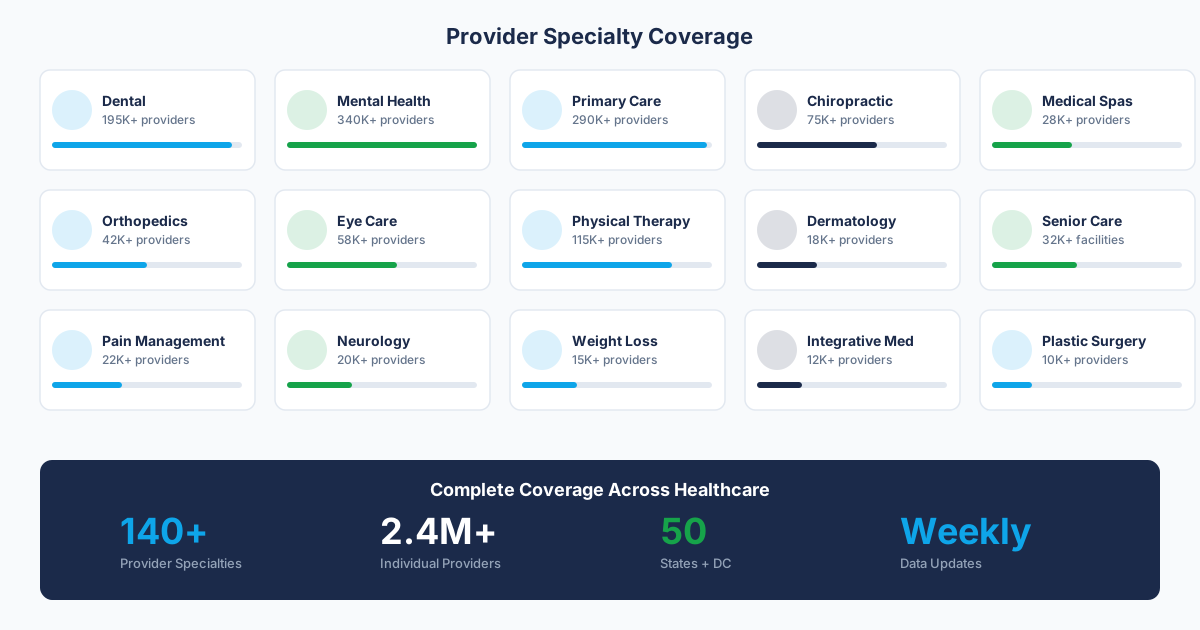
The referral universe for a TMS clinic is more focused than most healthcare marketing targets. You're primarily reaching two groups:
Psychiatrists are your core referral source. They diagnose treatment-resistant depression, they manage medication trials, and they make the clinical decision to refer for TMS. Every psychiatrist within your service area who treats depression is a potential referral partner. The question is whether they know your clinic exists and whether they've had a positive experience referring to you.
Neurologists are your secondary referral source, primarily for migraine patients. The FDA cleared TMS for migraine treatment, and neurologists managing chronic migraine patients who haven't responded to preventive medications are increasingly open to TMS referrals. This is a growing indication that many TMS clinics underserve in their marketing.
There's also a third group worth targeting: psychiatry practices that don't yet offer TMS. These practices see treatment-resistant depression patients regularly but refer them out for TMS. If they're not referring to you, they're referring to a competitor, or worse, not referring at all because they don't have a TMS provider they trust.
Building these lists manually is painful. The CMS NPI Registry can help you identify psychiatrists and neurologists by specialty classifications and state, but the raw data has well-documented accuracy gaps: outdated addresses, billing addresses instead of practice locations, no email addresses, and no way to distinguish a solo practitioner from a group practice. For TMS clinic marketing, where you need to reach specific decision-makers at specific practice locations, those gaps matter.
CRM Workflow: From Provider List to Referral Pipeline
A TMS clinic CRM should function as a referral pipeline manager. Here's the workflow that works:
Import and Segment Provider Data
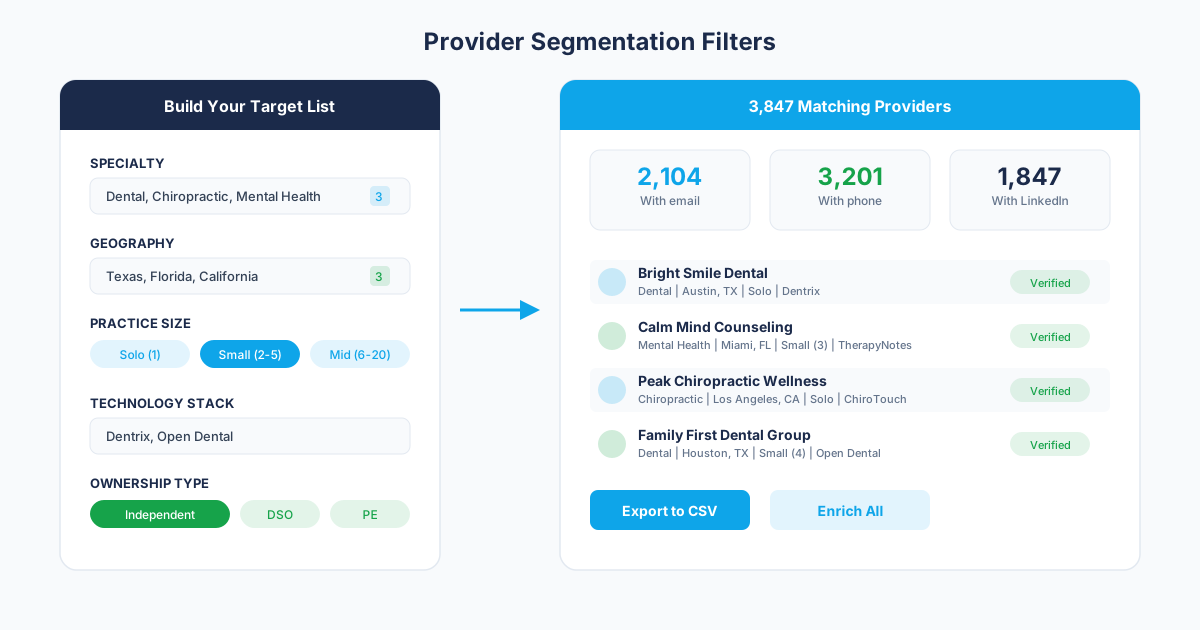
Start by importing verified provider contact lists into your CRM. Segment immediately by three dimensions: specialty (psychiatrist vs. Neurologist), geography (distance from your clinic), and practice type (solo, group, or health system). Each segment requires different messaging and different outreach frequency. A solo psychiatrist 5 miles from your clinic is a different prospect than a health system psychiatry department 30 miles away.
Build Specialty-Specific Outreach Campaigns
Psychiatrists care about depression outcomes. Lead with your response rates, remission data, and patient experience. Neurologists care about migraine reduction. Lead with the clinical evidence for TMS in chronic migraine and your protocol specifics. Generic "we offer TMS" messaging doesn't resonate with either group because it doesn't address their clinical decision framework.
Track Every Touchpoint and Referral
Your CRM needs custom fields for: referral count per provider, last referral date, last outreach date, preferred indication (depression, OCD, migraine), and relationship status (new contact, engaged, actively referring, lapsed). When a new patient arrives, the intake process should capture who referred them. That data flows back to the referring provider's CRM record, closing the feedback loop.
Identify and Fill Network Gaps
Once your CRM has six months of referral data, you can see patterns. Which ZIP codes send you patients? Which don't? Where are there psychiatrists you haven't reached yet? Provider data lets you identify the gaps. If there are 15 psychiatrists in a suburb 20 minutes from your clinic and none of them have referred a patient, that's a marketing gap, not a demand gap. Those psychiatrists have treatment-resistant depression patients. They're just sending them somewhere else.
How Provyx Provider Data Fits Into TMS Clinic Marketing
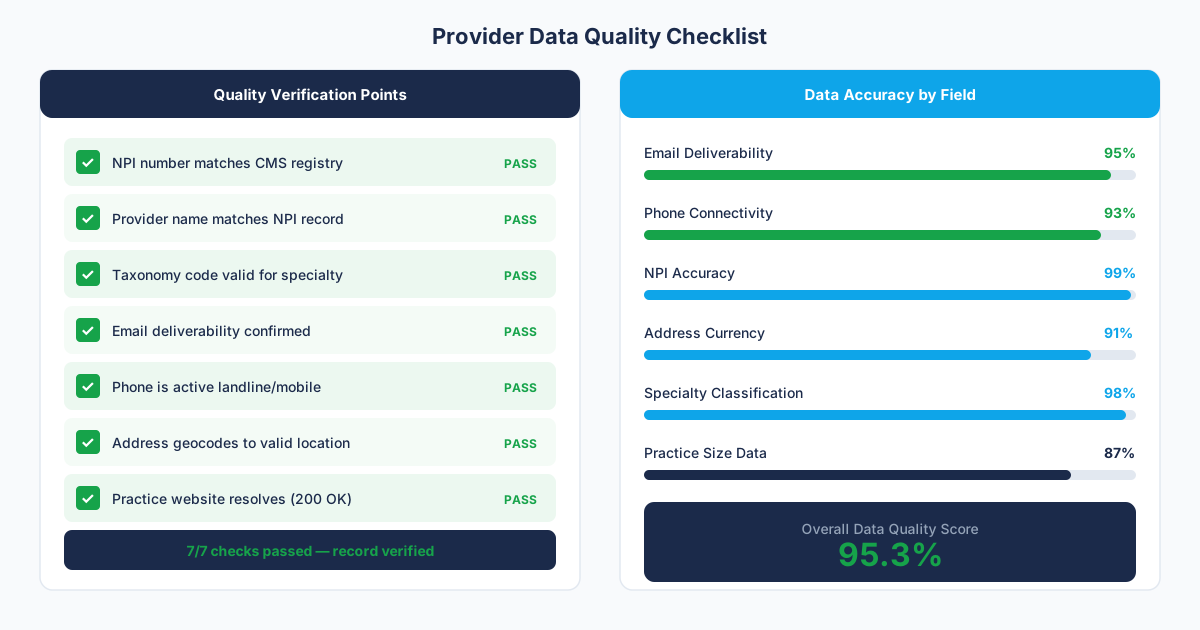
The foundation of this entire workflow is accurate provider data. If your psychiatrist contact list has stale addresses and missing emails, your outreach fails before the messaging even matters.
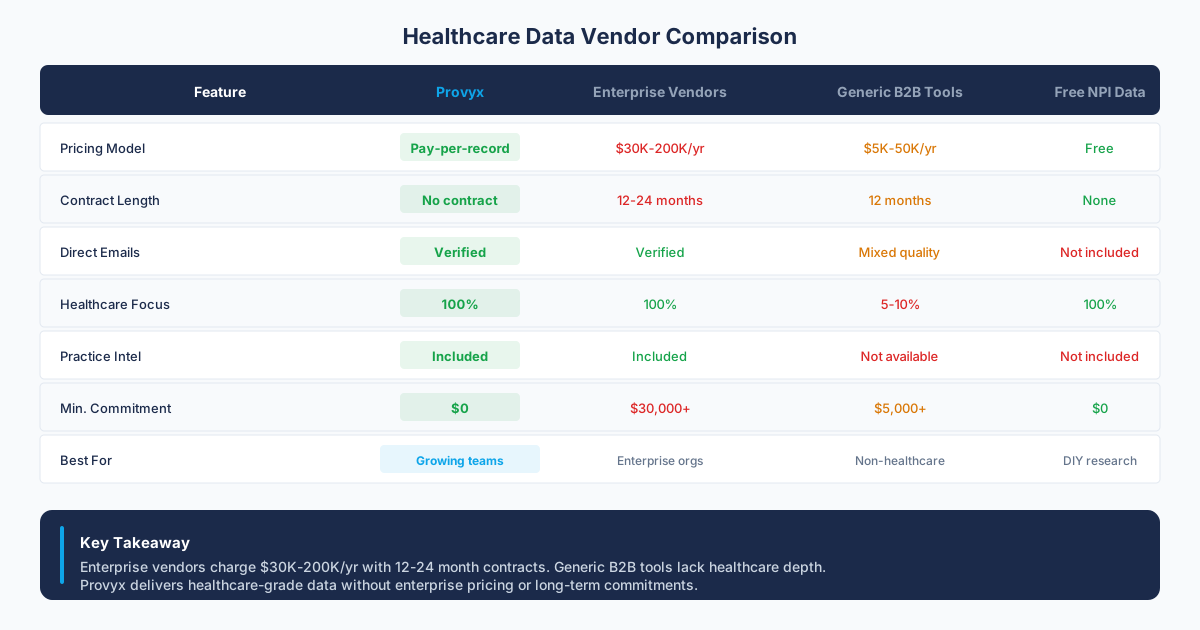
Provyx provider contact data gives TMS clinics verified psychiatrist and neurologist lists filtered by geography, practice type, and specialty. Every record includes a verified practice address, direct phone number, and practice email. Not a raw NPI dump. Data you can load into your CRM and start working immediately.
The typical TMS clinic workflow with Provyx data:
Step 1: Request psychiatrists and neurologists within your service radius (typically 30 miles for TMS, since patients need to come in 5 days a week for 4-6 weeks).
Step 2: Import into your CRM. Auto-tag by specialty, distance tier, and practice type.
Step 3: Launch segmented outreach sequences. Psychiatrists get depression-focused content. Neurologists get migraine-focused content. Practices without TMS get education about when to refer.
Step 4: Track referrals back to source providers. After 90 days, review which segments are converting and where the gaps remain. Refresh your provider list quarterly to catch new practices opening in your area.
For more context on how mental health provider data supports outreach campaigns, including specialty segmentation and verification, see our mental health provider data overview. And for the broader physician outreach workflow, including multi-channel campaign setup and CRM integration, see our physician outreach use case.
The Competitive Advantage of Systematic Referral Building
Most TMS clinics market reactively. They run Google Ads targeting patients directly, they attend a few local psychiatry events, and they hope word of mouth fills the schedule. That works when you're the only TMS provider in town. It stops working when two competitors open within a year.
The clinics that sustain growth build systematic referral networks through their CRM. They know every psychiatrist in their market by name. They track which ones refer, which ones don't, and why. They fill gaps proactively with targeted outreach. And they maintain relationships with automated-but-personal follow-up sequences that keep their clinic top of mind.
That systematic approach requires two things: a CRM configured for referral tracking, and provider data accurate enough to reach the right people. The CRM part is configuration work. The provider data part is where most clinics get stuck, because building and maintaining a verified provider database across psychiatry and neurology in your market is a full-time data operations job.
That's the job Provyx does. We maintain and verify the provider data so you can focus on building the relationships that fill your treatment chairs. If you're running a TMS clinic and want to see what verified provider data looks like for your market, explore our healthcare sales prospecting workflow and request a sample for your geography.
Frequently Asked Questions
How do TMS clinics get referrals from psychiatrists?
TMS clinics get psychiatrist referrals by building direct relationships with psychiatrists in their service area. This means identifying all psychiatrists within a reasonable radius, reaching out with clinical outcome data specific to treatment-resistant depression, and maintaining ongoing communication through your CRM. The most effective approach combines an initial outreach campaign with ongoing relationship nurturing, including post-referral outcome updates and invitations to clinical education events.
What provider data do I need for TMS clinic marketing?
At minimum, you need a verified list of psychiatrists and neurologists in your service area with practice addresses, direct phone numbers, and email addresses. Practice type matters too, since a solo psychiatrist and a large group practice require different outreach approaches. NPI numbers help you cross-reference against insurance panels. The key is that the data needs to be verified and current. A list with 10-15% bad addresses will waste your outreach budget and damage your credibility with the providers you do reach.
Can neurologists refer patients for TMS therapy?
Yes. Neurologists refer patients for TMS primarily for chronic migraine, which is an FDA-cleared indication. Neurologists managing patients with chronic migraine who haven't responded to preventive medications like CGRP inhibitors or botulinum toxin are candidates for TMS referral. Some neurologists also refer for other emerging neurological indications. TMS clinics that market only to psychiatrists miss the neurology referral channel entirely.
How often should I update my referring provider list?
Quarterly is the minimum for a TMS clinic. Provider data degrades at roughly 4-6% per month as providers change practice locations, retire, or join new groups. A quarterly refresh catches new psychiatrists and neurologists who have opened practices in your area, removes providers who have moved or retired, and updates contact information for existing records. Your CRM should flag providers whose data hasn't been refreshed in 90+ days.
Sources and References
Related Resources
Get the Provider Data You Need
Tell us what you're looking for. We'll build a custom list matched to your target market.
Trusted by healthcare sales teams, medical device companies, and health IT vendors across the US.