
Plastic Surgery Practice Data for Device and Pharma
Board-certified plastic surgeons, cosmetic surgeons, and med spa operators all buy different products for different reasons. Your data needs to reflect that.
2026-04-02
Why Plastic Surgery Data Is Harder Than It Looks
On the surface, plastic surgery seems like a straightforward specialty to target. There are roughly 11,000 board-certified plastic surgeons in the U.S., according to the American Society of Plastic Surgeons (ASPS). Pull a list, load it into your CRM, start dialing. Simple.
Except it's not. The plastic surgery market is one of the most fragmented and confusing specialties in healthcare data. The distinction between who performs cosmetic procedures and who performs reconstructive surgery is blurry. The line between a plastic surgeon and a cosmetic surgeon is a credentialing fight that's been going on for decades. And the med spa crossover means your target list probably includes a mix of physicians, nurse practitioners, and aestheticians operating under wildly different business models.
If you're selling implants, injectables, lasers, skin care products, or practice management software into this space, bad data costs you more than wasted calls. It costs you credibility. A device rep who doesn't know the difference between an ABPS-certified reconstructive surgeon and a cosmetic medicine provider running a Botox clinic is going to get shut down fast.
This guide breaks down the plastic surgery data landscape: who the providers are, how to segment them correctly, where the geographic concentration sits, and what data fields matter for different sales motions.
Board-Certified Plastic Surgeons vs. Cosmetic Surgeons: The Certification Split
This is the single most important distinction in plastic surgery data, and most databases get it wrong.
The American Board of Plastic Surgery (ABPS) is the only board recognized by the American Board of Medical Specialties (ABMS) for plastic surgery certification. ABPS-certified surgeons complete a minimum of 6 years of surgical training, including a dedicated plastic surgery residency. There are approximately 8,000 active ABPS diplomates.
Then there's the American Board of Cosmetic Surgery (ABCS). ABCS certification is not recognized by ABMS. Surgeons with this credential may come from various backgrounds: dermatology, ENT, oral surgery, OB/GYN, or general surgery. Their training in cosmetic procedures varies widely.
Why does this matter for your data? Because these two groups buy differently:
- ABPS surgeons: perform both reconstructive and aesthetic procedures. They're your buyers for breast implants, tissue expanders, microsurgery instruments, and reconstructive biologics. They operate in hospital settings and ambulatory surgery centers.
- ABCS/cosmetic-only providers: skew heavily toward aesthetic procedures. They're your buyers for injectables, body contouring devices, laser resurfacing equipment, and skin care product lines. They operate primarily in office-based surgical suites and med spas.
If you're selling a reconstructive tissue matrix, you don't want ABCS providers in your list. If you're selling a body contouring laser, you might want both. Your data needs to distinguish between these certifications at the provider level, not just the practice level.
The NPI Problem
NPI specialty classifications make this worse. The specialty classifications 208200000X covers "Plastic Surgery" broadly. There's no sub-classification for reconstructive vs. Aesthetic focus. A surgeon who does 90% breast reconstruction and 10% cosmetic breast augmentation gets the same code as someone who does 100% cosmetic rhinoplasties.
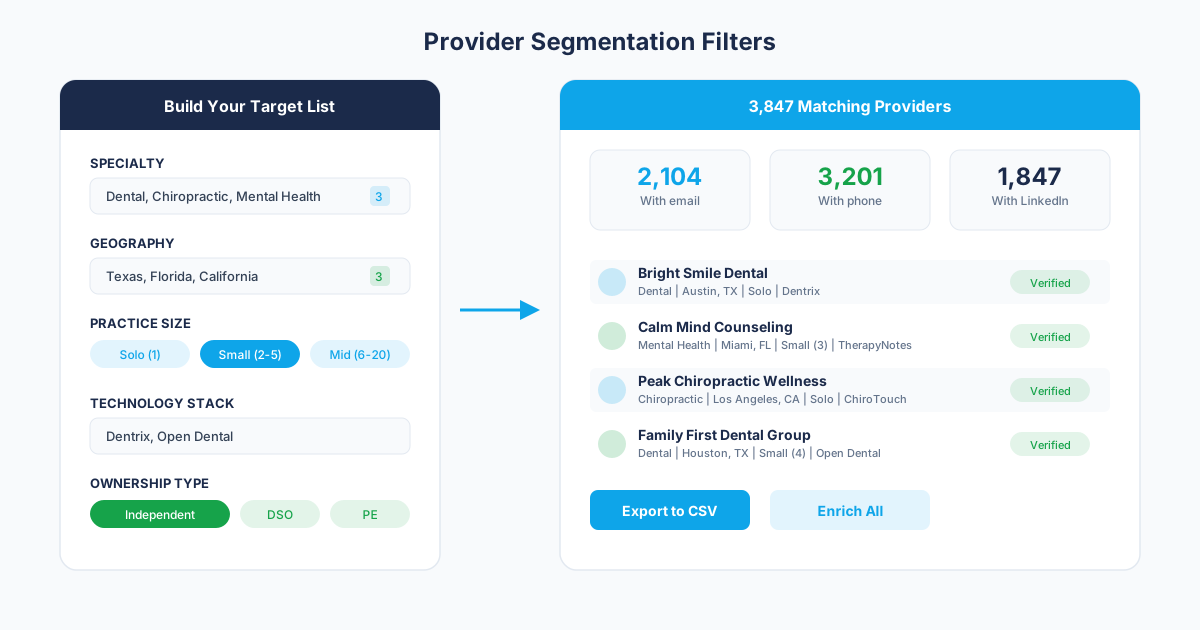
To build an accurate target list, you need to layer additional signals on top of NPI data: board certification source (ABPS vs. ABCS vs. Other), procedure mix from practice websites, hospital privilege records, and specialty-specific enrichment that classifies providers by what they do today.
Reconstructive vs. Aesthetic: Two Different Sales Motions
The plastic surgery market splits roughly 70/30 between cosmetic and reconstructive procedures by volume, according to ASPS 2024 statistics. But revenue concentration tells a different story. Cosmetic procedures dominate revenue because they're cash-pay. Reconstructive procedures are insurance-reimbursed, which means lower margins per case but higher volume at large centers.
Here's how these segments look from a data targeting perspective:
Reconstructive Surgery Targets
Reconstructive surgeons are typically hospital-affiliated or part of academic medical centers. They treat trauma, burns, congenital defects, and cancer reconstruction (especially post-mastectomy breast reconstruction). Your data needs for this segment include:
- Hospital affiliation and privileges
- Academic vs. Community practice setting
- Sub-specialization (hand surgery, craniofacial, microsurgery, burn)
- Relationship to oncology departments (for breast reconstruction referral patterns)
- Operating room decision-makers vs. The surgeons themselves
Products sold into this segment: tissue expanders, acellular dermal matrices, microsurgery instruments, wound care biologics, fixation systems. The decision-making process often involves hospital purchasing committees, not individual surgeons.
Aesthetic Surgery Targets
Aesthetic surgeons operate in private practice settings, often with their own surgical suites. They're direct decision-makers for most purchases. The top 5 cosmetic surgical procedures in 2024 were liposuction, breast augmentation, tummy tuck, eyelid surgery, and rhinoplasty.
Data needs for aesthetic targets:
- Practice ownership (solo vs. Group vs. PE-backed)
- Procedure mix from website analysis
- Office-based surgery suite (indicates higher device purchasing authority)
- Revenue indicators (high-volume practices vs. Boutique)
- Geographic market affluence scores
Products for this segment: breast implants, body contouring devices (CoolSculpting, Emsculpt, etc.), facial implants, laser and light-based devices, injectable products, and skin care lines.
The Med Spa Crossover Problem
Here's where plastic surgery data gets complicated fast. The medical spa industry has exploded. The American Med Spa Association estimates there are over 8,000 med spas operating in the U.S. Many of them offer procedures that overlap with what plastic surgeons do: injectables (Botox, fillers), laser treatments, chemical peels, microneedling, and non-invasive body contouring.
The providers at these facilities range from board-certified plastic surgeons who added a med spa revenue stream, to dermatologists, to family medicine doctors, to nurse practitioners and physician assistants operating under a medical director's license.
For data purposes, this creates three distinct problems:
- Duplicate records.: A plastic surgeon who owns both a surgical practice and a med spa often appears as two separate entities in databases. If you're not deduplicating across practice types, you'll double-contact them.
- Wrong buyer persona.: The injectable purchasing decision at a surgeon-owned med spa is made differently than at an NP-owned med spa. The surgeon evaluates clinical evidence. The NP-owner evaluates margins and ease of use. Same product, different pitch.
- Regulatory variation.: Medical spa regulations vary dramatically by state. In some states, NPs can own and operate med spas independently. In others, a physician must be the medical director and physically present. This affects who your actual buyer is.
Your data should flag the med spa crossover at the practice level. If a plastic surgeon also operates a med spa, both entities should be linked with a shared provider ID. And the med spa entity should include the supervising provider's credentials, not just the business name.
Device and Injectable Companies: What You Need in Your Data
Different product categories require different data enrichment. Here's the breakdown by product type.
Breast Implant Manufacturers
You're targeting ABPS-certified surgeons who perform breast augmentation and/or breast reconstruction. Your data needs: board certification confirmation, procedure volume estimates, surgery center affiliation (hospital vs. ASC vs. Office-based), and whether the surgeon participates in any manufacturer loyalty programs. There are roughly 300,000 breast augmentation procedures performed annually, concentrated among a relatively small number of high-volume surgeons.
Injectable and Filler Companies
This is the broadest target market. Injectables are administered by plastic surgeons, dermatologists, oculoplastic surgeons, ENTs, family medicine doctors, NPs, and PAs. Your data challenge isn't finding enough providers. It's filtering to the ones with meaningful volume. A family medicine doctor who does 5 Botox treatments a month is a very different customer than a cosmetic dermatologist doing 50 per week.
Key data fields: provider type and credentials, estimated injectable volume (derived from purchasing patterns or practice website analysis), number of injectors per practice, and whether they carry competing products.
Laser and Energy-Based Device Companies
Laser devices represent significant capital expenditure ($50K to $300K+ per device). Your target is practice owners or decision-makers with capital budget authority. Key data: practice ownership confirmation, number of locations (multi-site practices may buy multiple units), existing device inventory (from website or social media analysis), and practice revenue indicators.
The sales cycle for capital equipment is 6-12 months. Your data needs to support relationship-building, not just cold outreach. That means multiple contacts per practice: the surgeon/owner, the practice manager, and the aesthetician or technician who'll operate the device daily.
Skin Care Product Lines
Medical-grade skin care lines (SkinMedica, Obagi, ZO Skin Health, etc.) are sold through plastic surgery practices, dermatology offices, and med spas. This is a recurring revenue product, so your data needs to identify practices that retail products vs. Those that don't. Many plastic surgery practices have a retail skin care component. Some don't. A practice's website usually reveals this quickly.
Geographic Concentration: Where Plastic Surgeons Cluster
Plastic surgery practices are not evenly distributed. They concentrate in affluent metro areas where the cash-pay cosmetic market thrives. According to BLS data, the states with the highest concentration of surgeons (including plastic surgeons) relative to population are:
- California: (particularly Los Angeles, Beverly Hills, San Francisco, and Newport Beach)
- Florida: (Miami, Fort Lauderdale, Palm Beach, Tampa)
- New York: (Manhattan, Long Island, Westchester)
- Texas: (Dallas, Houston, Austin)
- Illinois: (Chicago metro)
These five states account for a disproportionate share of cosmetic surgery volume. If you're launching a new product and need to prioritize territories, starting in these markets gives you the densest target concentration.
But geographic targeting for reconstructive surgery looks different. Reconstructive procedures concentrate near major academic medical centers and Level I trauma centers, which are distributed more evenly across the country. Your territory strategy should account for which segment you're targeting.
Suburban Expansion
One trend worth noting: cosmetic practices are expanding into affluent suburbs. Surgeons who used to operate exclusively in urban medical districts are opening satellite offices in suburban markets. Your data needs to capture these secondary locations, not just the primary practice address. A surgeon with a Beverly Hills main office and a Calabasas satellite location is two coverage opportunities, not one.
Building Your Plastic Surgery Target List: Step by Step
Here's the practical workflow for building a usable plastic surgery database.
Step 1: Start with NPI, But Don't Stop There
Pull all providers with specialty classifications 208200000X (Plastic Surgery). This gives you your ABPS-certified baseline. But you'll miss cosmetic surgeons with other primary taxonomies (dermatology, general surgery, ENT) who perform significant cosmetic work. Cross-reference with ABCS certification records and state medical board data to capture the full cosmetic surgery universe.
Step 2: Classify by Practice Focus
Use practice website analysis and social media presence to classify each provider's actual focus: primarily reconstructive, primarily aesthetic, or mixed. This is where most databases fall short. They give you the NPI classification and nothing else. A 30-second website scan reveals whether a practice markets facelifts or cleft palate repair. Automated classification at scale is possible and dramatically improves targeting accuracy.
Step 3: Map the Med Spa Overlap
Identify which plastic surgeons also operate or are affiliated with med spas. Link these entities in your database. This prevents duplicate outreach and helps you tailor messaging. A surgeon who also runs a med spa is a stronger prospect for injectables and skin care lines than one who only operates in a hospital surgical suite.
Step 4: Enrich with Decision-Maker Contacts
For each practice, identify the key contacts beyond the surgeon: practice manager (handles vendor relationships and purchasing), aesthetician or lead injector (influences product selection), and office manager (handles scheduling and day-to-day operations). Our dermatologist data guide covers similar multi-contact enrichment strategies that apply to plastic surgery practices.
Step 5: Add Financial and Volume Indicators
Not all plastic surgery practices are equal prospects. A solo surgeon doing 3 procedures per week is a different opportunity than a 5-surgeon group with 2 locations. Look for indicators like: number of providers, number of locations, presence of an ASC (ambulatory surgery center) on-site, and whether they accept insurance (reconstructive) or are cash-pay only (likely higher cosmetic volume).
Common Data Mistakes in Plastic Surgery Targeting
After building plastic surgery datasets for multiple clients, here are the mistakes we see most often.
Mistake 1: Treating All Plastic Surgeons as Cosmetic
About 30% of plastic surgery procedures are reconstructive. If you're selling a cosmetic product and targeting all 11,000 ABPS surgeons, roughly 2,000-3,000 of them have minimal cosmetic volume. You're wasting outreach on providers who won't buy.
Mistake 2: Ignoring Non-Plastic-Surgeon Cosmetic Providers
Dermatologists, oculoplastic surgeons, facial plastic surgeons (ENT-trained), and oral/maxillofacial surgeons all perform cosmetic procedures. If your injectable or device sales team only targets NPI classification 208200000X, you're missing a large chunk of the market. Facial plastic surgeons alone number over 2,700 and perform significant cosmetic volume.
Mistake 3: Not Accounting for Practice Ownership Changes
Private equity has entered the aesthetic medicine space aggressively. Groups like Ares Management, Leonard Green, and others have been acquiring cosmetic dermatology and plastic surgery practices. When a practice gets acquired, the decision-making structure changes overnight. Your data needs to reflect current ownership, not last year's.
Mistake 4: Missing the Nurse Practitioner and PA Market
In many states, NPs and PAs with appropriate training and supervision can perform injectable treatments and operate certain devices. If you're selling injectables, these mid-level providers represent a growing customer base. Your data should include them, clearly flagged by credential type so your reps know who they're calling.
Plastic Surgery Data for Pharma Sales
Pharmaceutical companies selling into plastic surgery have a specific set of needs. The primary drug categories relevant to plastic surgery include:
- Neurotoxins: (Botox, Dysport, Xeomin, Jeuveau, Daxxify). The single largest product category by revenue in aesthetic medicine.
- Dermal fillers: (Juvederm family, Restylane family, RHA, Sculptra). Multiple products per brand, each with different indications.
- Topical anesthetics and post-procedure medications.
- Scar management products: (silicone sheets, topical treatments).
- Fat reduction injectables: (Kybella).
Pharma reps need to know not just who performs procedures, but who has prescribing authority, what competing products are currently in use, and the volume of relevant procedures at each practice. Claims-level data can approximate this, but practice-level enrichment from website and social media analysis provides a faster, more accessible alternative.
For injectable sales specifically, the key metric is injector count per practice. A practice with 1 surgeon and 3 NP injectors consumes 4x the product volume of a solo surgeon practice. Your data should capture every injector, not just the physician of record.
Territory Planning for Plastic Surgery Products
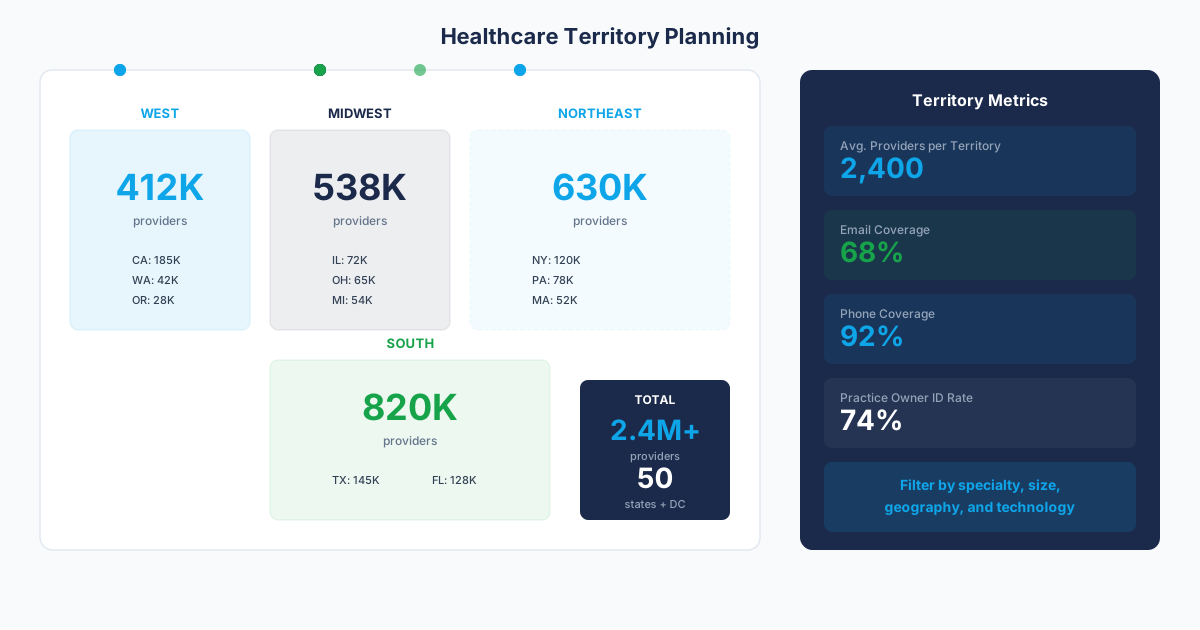
Because plastic surgery practices cluster geographically, territory design requires more nuance than simply dividing states evenly. A rep covering Los Angeles County might have more plastic surgery targets than a rep covering the entire state of Iowa.
Effective territory planning uses:
- Practice density mapping.: Identify where targets cluster and design territories around natural geographic concentrations.
- Revenue potential weighting.: A high-volume multi-surgeon practice in Miami is a bigger opportunity than 10 solo practices in rural markets. Weight territories by estimated revenue potential, not just practice count.
- Competitive landscape.: If your competitor has strong relationships in a market, you may need more rep capacity there, not less.
- Med spa vs. Surgical practice mix.: A territory heavy on med spas requires a different selling skill set than one heavy on surgical practices. Match rep strengths to territory composition.
What to Ask Your Data Vendor
If you're evaluating plastic surgery data providers, here are the questions that separate good vendors from mediocre ones:
- Do you distinguish between ABPS and ABCS certification?
- Can you classify practices by reconstructive vs. Aesthetic focus?
- Do you link plastic surgery practices to affiliated med spas?
- How do you capture non-plastic-surgeon cosmetic providers (dermatologists, facial plastic surgeons, etc.)?
- Do you provide injector counts per practice, including NPs and PAs?
- How current is your practice ownership data?
- Can you provide decision-maker contacts beyond the surgeon (practice managers, lead injectors)?
If a vendor can't answer most of these, their plastic surgery data probably isn't enriched beyond the basic NPI pull. That's not enough for competitive device, pharma, or injectable sales.
Ready to see what's possible? Reach out to Provyx to scope plastic surgery practice data with the enrichment fields that matter for your product category.
Frequently Asked Questions
What's the difference between ABPS and ABCS certification for plastic surgeons?
The American Board of Plastic Surgery (ABPS) is the only plastic surgery board recognized by the American Board of Medical Specialties. ABPS surgeons complete a dedicated plastic surgery residency. The American Board of Cosmetic Surgery (ABCS) is not ABMS-recognized, and its diplomates may come from various surgical backgrounds. This distinction affects procedure focus, purchasing behavior, and product relevance.
How many board-certified plastic surgeons are there in the U.S.?
There are approximately 11,000 board-certified plastic surgeons (ABPS) in the U.S. However, the total addressable market for cosmetic procedure products is much larger when you include cosmetic surgeons (ABCS), facial plastic surgeons (ENT-trained), oculoplastic surgeons, cosmetic dermatologists, and mid-level injectable providers (NPs and PAs).
How do I separate reconstructive from cosmetic plastic surgery practices in my data?
NPI specialty classifications don't distinguish between reconstructive and cosmetic focus. You need additional signals: practice website analysis (what procedures they market), hospital vs. Office-based surgery setting, insurance acceptance patterns, and whether the practice operates an affiliated med spa. Reconstructive practices are typically hospital-affiliated. Cosmetic practices are typically independent with cash-pay models.
Why does the med spa crossover matter for plastic surgery data?
Many plastic surgeons also own or operate medical spas, creating duplicate records in databases. A surgeon with both a surgical practice and a med spa is two entities but one buyer. Without linking these records, you risk double-contacting and missing the full picture of their purchasing behavior across both business lines.
Where are plastic surgery practices most concentrated geographically?
Cosmetic plastic surgery practices cluster heavily in affluent metro areas: Los Angeles, Miami, New York, Dallas, Houston, and Chicago. These markets have the highest density of cash-pay cosmetic patients. Reconstructive practices distribute more evenly, clustering near academic medical centers and Level I trauma centers nationwide.
What data fields matter most for selling injectables to plastic surgery practices?
Injector count per practice is the most important field. A practice with 1 surgeon and 3 NP/PA injectors uses 4x the product of a solo surgeon. Beyond that: current product lines carried (competitive intelligence), estimated injection volume, practice type (surgical practice vs. Med spa), and whether the practice retails skin care products (indicates revenue diversification mindset).
Sources and References
Related Resources
Get the Provider Data You Need
Tell us what you're looking for. We'll build a custom list matched to your target market.
Trusted by healthcare sales teams, medical device companies, and health IT vendors across the US.