
Oncology Practice Data for Pharma and Device Sales
Oncology has the highest drug spend per patient in medicine and the most fragmented buying process. Generic targeting fails here faster than anywhere else.
2026-04-09
The Three Sites of Care
Community Oncology
Community oncology practices treat the majority of US cancer patients. Many were independent groups for decades, but consolidation has accelerated. The Community Oncology Alliance tracks ongoing closures and acquisitions. The two largest networks today are The US Oncology Network (now part of McKesson) and OneOncology, with several regional players growing fast.
Community oncology buying is influenced by GPO contracts (most flow through ION/McKesson Specialty Health), 340B participation (where applicable), and the practice's economic exposure to buy-and-bill margin. Pharma decisions involve the medical director, the practice administrator, the pharmacist (if the practice has in-house dispensing), and the lead nursing staff for infusion operations.
Data you need: practice ownership (independent, OneOncology, US Oncology, regional PPM), GPO affiliation, in-house pharmacy capability, infusion chair count, 340B status, and the primary medical director.
Academic Comprehensive Cancer Centers
The 72 NCI-designated cancer centers, including 56 designated Comprehensive Cancer Centers, set treatment standards and run a disproportionate share of clinical trials. They're the highest-leverage targets for new product launches because they shape national prescribing patterns through publications, KOL relationships, and trial participation.
Buying at academic centers is institutional. The P&T (pharmacy and therapeutics) committee approves drugs for formulary. The value analysis committee approves devices. The IRB approves research protocols. Department chairs and division chiefs influence practice patterns. Individual oncologists prescribe within institutional guidelines. Your data needs all of these roles for each target center.
Data you need: NCI designation status, department chair, division chiefs by sub-specialty, P&T committee chair, clinical trial PI roster by therapeutic area, and KOL identification for the relevant tumor types.
Hospital-Employed Oncology Programs
Hospital cancer programs sit between community oncology and academic centers. Many hospitals run accredited cancer programs (Commission on Cancer accreditation through the ACS). They have multidisciplinary tumor boards, infusion centers, and radiation oncology services. The buying committee includes the cancer service line director, the medical director of medical oncology, the medical director of radiation oncology, the chief of cancer surgery, and hospital pharmacy and supply chain.
Data you need: Commission on Cancer accreditation level, NAPBC accreditation (breast), service line director, medical directors by sub-specialty, and infusion volume.
Pharma Sales Into Oncology: What Your Data Needs
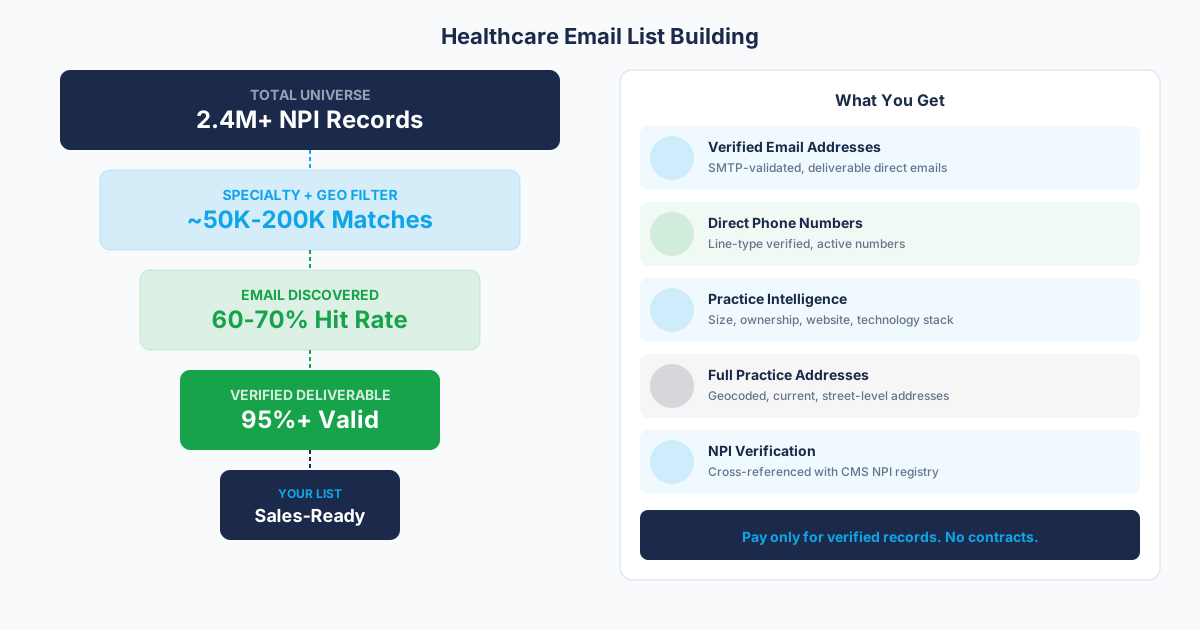
For each medical oncologist in your target list, build the following:
- Tumor-type focus - which cancers does this provider primarily treat (breast, lung, GI, GU, hematologic, etc.)
- Patient panel size - estimated annual new patient volume
- Site of care - community independent, community PPM-affiliated, hospital-employed, academic
- 340B participation - relevant for drug-pricing-sensitive products
- Clinical trial participation - publication record, ClinicalTrials.gov listings, NCCN guideline involvement
- KOL status - speaker bureau participation, advisory board history, publication volume
- Prescribing patterns - if available from claims-derived sources
- Formulary access - which institutional formularies they operate under
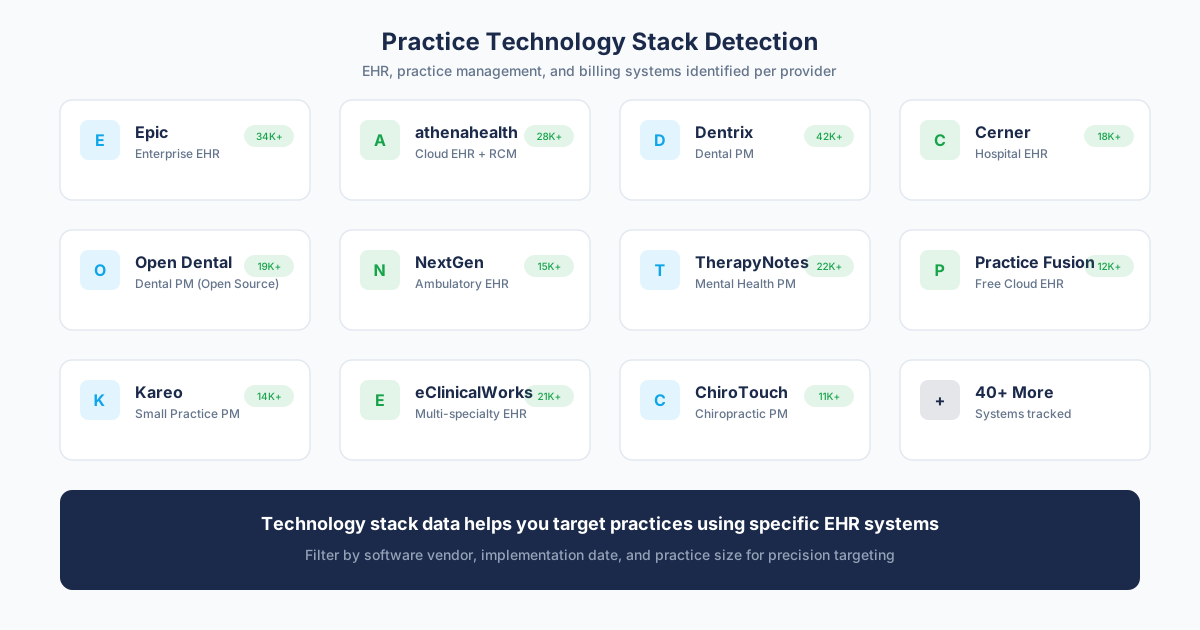
- Infusion capability - in-office infusion vs hospital infusion center vs independent infusion center
The infusion capability question matters more than most pharma reps realize. If your drug requires infusion administration and the prescribing oncologist doesn't have in-office infusion, the patient gets sent to a hospital infusion center where the drug formulary may be different. Your sales motion has to account for both the prescriber and the site of administration.
Building an Oncology Target List: Practical Steps
Step 1: Pull NPI With Oncology Taxonomies
Start with: 207RH0003X (Hematology and Oncology), 207RX0202X (Medical Oncology), 2085R0202X (Radiation Oncology), and the surgical oncology taxonomies. Pull all active NPIs in your geography.
Step 2: Layer Tumor-Type Focus
Use ABIM/ABMS subspecialty data, fellowship training records, practice website content analysis, publication topics, clinical trial PI assignments, and NCCN guideline panel participation. Tumor-type focus is rarely on a single source. You build it by layering signals.
Step 3: Map Site of Care
Identify: practice ownership (independent, OneOncology, US Oncology, regional PPM, hospital-employed, academic), parent health system, and infusion capability. Cross-reference public sources like the Community Oncology Alliance practice database and Commission on Cancer accreditation lists.
Step 4: Add Institutional Data
For hospital-employed and academic providers: NCI designation, Commission on Cancer accreditation level, NAPBC accreditation, P&T committee structure, value analysis committee structure, and clinical trial volume. This is what tells you how to navigate the institution.
Step 5: Build the Decision-Maker Map
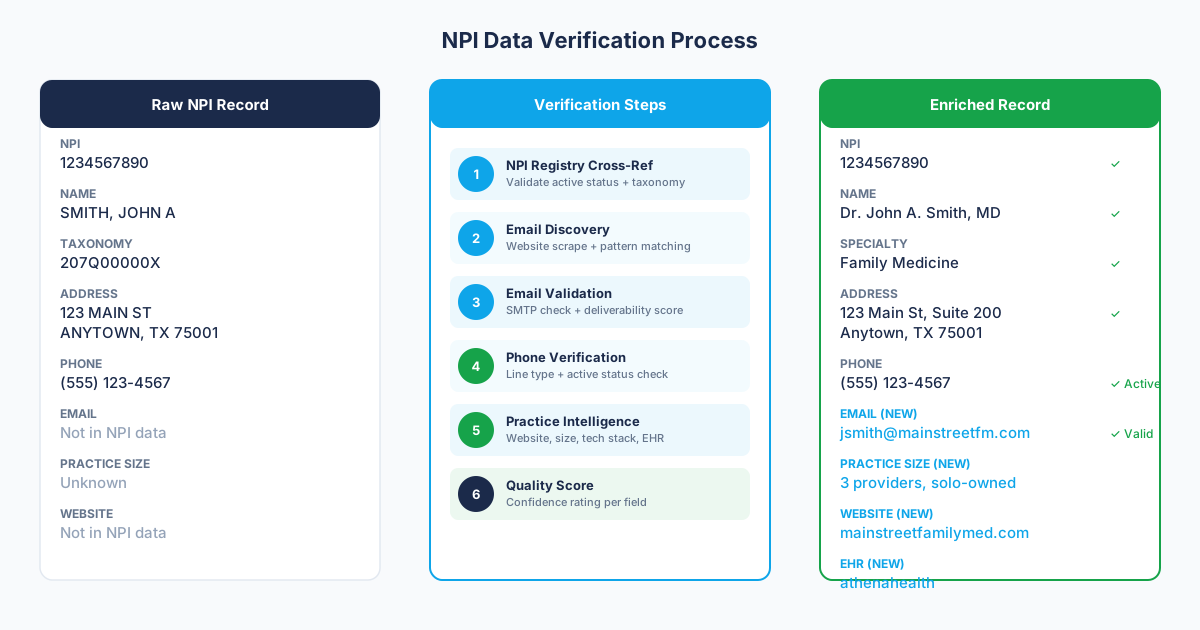
For each target practice or institution, build the contact roster for the relevant buying committee. Medical directors, service line directors, pharmacy leadership, infusion nursing leadership, supply chain, and the relevant clinical specialists. Direct contact information for each.
What Good Oncology Data Looks Like
For each oncology provider, your database should include:
- NPI and demographics - name, credentials, NPI, practice addresses
- Sub-specialty - medical oncology, hematology-oncology, radiation oncology, surgical oncology, pediatric oncology
- Tumor-type focus - breast, lung, GI, GU, GYN, hematologic, melanoma, head/neck, etc.
- Site of care - community independent, community PPM, hospital-employed, academic
- Institutional affiliation - parent health system, NCI designation, CoC accreditation
- Clinical trial activity - PI status, ClinicalTrials.gov listings, recent publications
- Decision-maker role - medical director, service line director, department chair, division chief, KOL
- Contact data - direct email, phone, LinkedIn
- Buying committee - other influencers at the same institution
If your oncology data only has NPI and a generic "oncologist" tag, you're operating at a small fraction of what's possible. Request a sample of Provyx oncology data with full sub-specialty, tumor-type, and decision-maker mapping.
Frequently Asked Questions
How many oncologists practice in the United States?
Approximately 13,000 medical oncologists, 5,000 radiation oncologists, and several thousand surgical oncologists practice in the US. The medical oncology population further fragments by tumor type focus (breast, lung, GI, GU, hematologic, etc.). Pediatric oncology is a separate sub-specialty concentrated at children's hospitals and academic centers.
What's the difference between community oncology and hospital oncology?
Community oncology practices are typically independent or PPM-affiliated (OneOncology, US Oncology, regional networks) and operate on buy-and-bill economics with GPO contracts. Hospital-employed oncology programs operate under institutional formularies, P&T committee review, and value analysis committees. Academic comprehensive cancer centers add clinical trial infrastructure, KOL networks, and NCCN guideline influence. Each requires a different sales motion.
Why does tumor-type focus matter in oncology sales?
Most modern oncology drugs are tumor-specific or biomarker-specific. A HER2-positive breast cancer drug only matters to providers who treat HER2-positive breast cancer patients. Targeting 'oncologists' broadly without tumor-type focus wastes 70-90% of outreach because most providers don't have the relevant patient population.
Who decides which oncology drugs are on a hospital formulary?
The Pharmacy and Therapeutics (P&T) committee reviews clinical evidence, cost-effectiveness, and clinical pharmacy recommendations to approve drugs for institutional formulary. Members typically include the chief medical officer, oncology pharmacy lead, medical oncology medical director, and rotating physician members. Sales motions targeting hospital-employed oncologists must account for the P&T review process.
What is 340B and why does it matter for oncology sales?
340B is a federal drug pricing program that gives qualifying hospitals and clinics access to discounted outpatient drugs. Many community oncology practices and hospital-based programs participate in 340B, which changes the economics of buy-and-bill drug administration. Sales motions for high-cost oncology drugs must understand 340B status because it affects acquisition cost, reimbursement, and contracting strategy.
What is an NCI Comprehensive Cancer Center?
The National Cancer Institute designates 72 cancer centers, including 56 with Comprehensive Cancer Center status. These institutions meet rigorous standards for laboratory, clinical, and population-based research, and they shape national treatment guidelines through clinical trials and publications. They are the highest-leverage targets for new oncology product launches because they influence prescribing patterns nationwide.
Sources and References
Related Resources
Get the Provider Data You Need
Tell us what you're looking for. We'll build a custom list matched to your target market.
Trusted by healthcare sales teams, medical device companies, and health IT vendors across the US.