
Mental Health Provider Data: A Sales Guide to the Fastest-Growing Segment
400K+ behavioral health providers and the hardest segment to build clean data for. Here's how to do it right.
2026-02-15
Mental Health Is the Fastest-Growing Provider Segment in Healthcare
The numbers tell a clear story. Between 2020 and 2026, the behavioral health workforce grew by over 30%. The U.S. Now has more than 400,000 behavioral health providers, including psychologists, licensed clinical social workers, marriage and family therapists, licensed professional counselors, psychiatrists, and psychiatric nurse practitioners.
That growth is being fueled by three forces:
- Post-pandemic demand:: Mental health visits surged 38% between 2019 and 2023, according to FAIR Health data, and haven't come back down.
- Telehealth expansion:: Roughly 40% of behavioral health visits now happen virtually. That's created a wave of new providers who practice exclusively online, with no physical office.
- Parity law enforcement:: The Mental Health Parity and Addiction Equity Act is being enforced more aggressively than ever. Insurers are expanding their behavioral health networks, which means more providers are entering or re-entering insurance panels.
For sales teams selling EHR software, billing platforms, credentialing services, telehealth tools, or any product that touches behavioral health, this is the largest addressable market expansion in a generation.
There's a catch. Mental health provider data is significantly harder to build, verify, and maintain than data for other specialties. This guide explains why and shows you how to build lists that work.
Why Mental Health Provider Data Is So Challenging
If you've ever tried to build a prospecting list of therapists and gotten frustrated by bad numbers, duplicate records, and missing information, you're not alone. Mental health provider data has structural challenges that don't exist for dentists, primary care physicians, or most other specialties.
Solo Practitioners Dominate
About 60% of behavioral health providers operate as solo practitioners or in very small group practices (2-3 providers). Compare that to primary care, where the majority of physicians now work in practices with 10+ providers, or dentistry, where group practice consolidation is accelerating fast.
Why does solo practice matter for data quality? Solo practitioners are harder to find, harder to verify, and more likely to change their contact information without leaving a trail. A solo therapist working out of a rented office suite might not have a website, might not appear on Google Maps, and might only be findable through their Psychology Today profile or state licensing board.
Group Practice Complexity
The group practices that do exist in behavioral health create a different data problem. A group practice with 15 therapists might operate under a single business name, single NPI (Type 2), and single phone number. But each therapist within that group has their own individual NPI, their own specializations, their own insurance panels, and potentially their own caseload preferences.
For a sales team, the question is: who do you contact? The practice owner? The office manager? Individual therapists? The answer depends on what you're selling, but the data needs to support all of these approaches.
Telehealth-Only Providers
This is the newest and fastest-growing challenge. An estimated 15-20% of behavioral health providers now practice exclusively via telehealth, with no physical office location. They might be licensed in multiple states but physically located anywhere.
Traditional provider databases are built around practice locations. A provider at a physical address with a phone number and a website. Telehealth-only providers break that model. Their NPI registration might list a home address (or a PO box). Their phone number might be a virtual number through their telehealth platform. Their "practice" might be a profile page on BetterHelp, Talkspace, or Alma.
Reaching these providers requires different data strategies than reaching office-based practitioners.
Insurance Panel vs. Cash-Pay Split
A significant percentage of behavioral health providers don't accept insurance at all. Estimates range from 30-50% depending on geography and licensure type. Psychologists and LMFTs are particularly likely to be cash-pay only.
This matters for data because insurance panel directories are a major data source for provider databases. If a provider isn't on any insurance panel, they're invisible to any vendor relying on payer data. They'll show up in the NPI Registry (if they bothered to register, which isn't required for cash-pay providers in all states) and on state licensing boards, but not much else.
If your product serves cash-pay practices specifically (billing tools, client management platforms, website builders), you need a vendor that goes beyond payer data to find these providers.
The Mental Health Provider Landscape by the Numbers
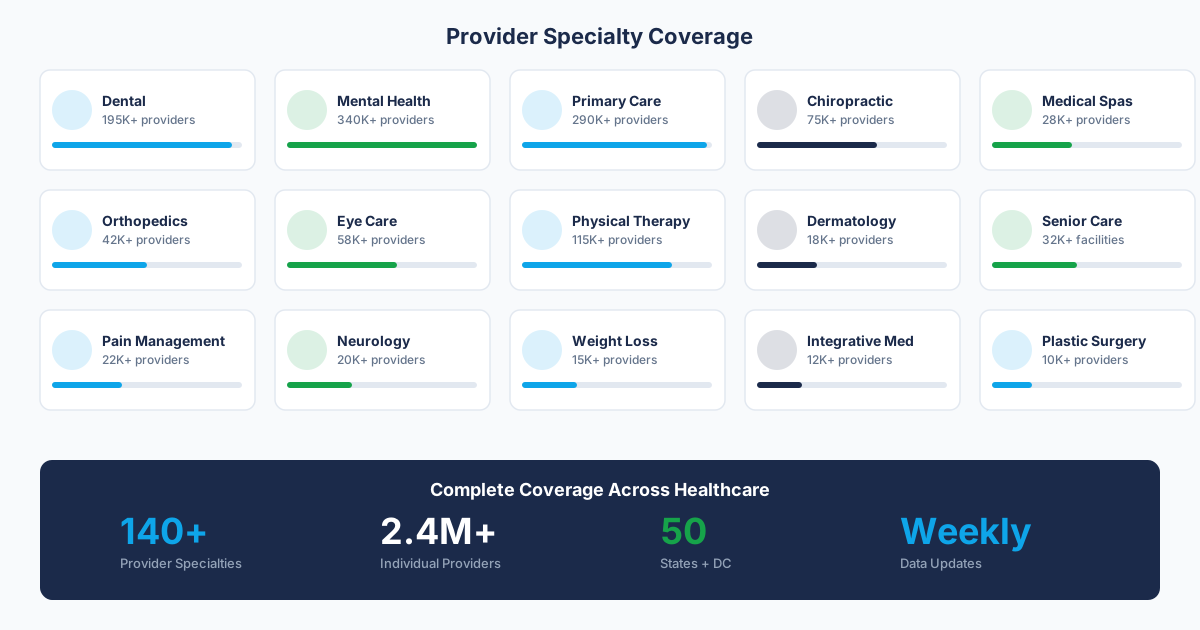
Understanding the composition of the behavioral health workforce helps you target your outreach more precisely.
Provider Types and Counts
- Licensed Clinical Social Workers (LCSWs):: ~130,000. The largest segment. They provide therapy in clinical settings, hospitals, community health centers, schools, and private practice.
- Licensed Professional Counselors (LPCs) / Licensed Mental Health Counselors (LMHCs):: ~100,000. Title and scope vary by state. This is the second-largest therapy provider group.
- Psychologists (PhDs/PsyDs):: ~85,000 in active clinical practice. Higher average billing rates, more likely to do psychological testing in addition to therapy.
- Marriage and Family Therapists (MFTs):: ~55,000. Concentrated heavily in California, which accounts for roughly 30% of all MFTs nationally.
- Psychiatrists:: ~38,000. Medical doctors who can prescribe medication. The highest-value targets for pharmaceutical and medical technology sales.
- Psychiatric Nurse Practitioners (PMHNPs):: ~25,000 and growing fast. Can prescribe in all 50 states. Many operate independently, especially in states with full practice authority.
- Substance Abuse Counselors:: ~50,000+. Often work in specialized treatment centers rather than traditional outpatient practices.
Geographic Concentration
Mental health providers cluster in predictable patterns. The top 5 states by provider density (providers per 100K population) are Massachusetts, Vermont, Colorado, Connecticut, and New York. The lowest-density states are Texas, Alabama, Mississippi, Georgia, and Nevada.
Urban areas have 3-5x more behavioral health providers per capita than rural areas. If you're selling a telehealth product aimed at expanding rural access, your buyers might be urban-based providers looking to extend their reach, not rural-based providers (because there aren't enough of them).
Key Data Points for Selling into Mental Health
The data points that matter for mental health sales differ from other specialties. Here's what your list needs to include for effective prospecting.
Must-Have Fields
- Licensure type and state(s):: This determines scope of practice, prescribing authority, and regulatory requirements. An LCSW in California has different needs than a psychologist in Texas.
- Practice setting:: Solo practice, group practice, community health center, hospital-based, telehealth platform, or hybrid. Your pitch changes completely based on this.
- Insurance participation:: Whether they accept insurance, and if so, which networks. This affects their revenue model and the tools they need.
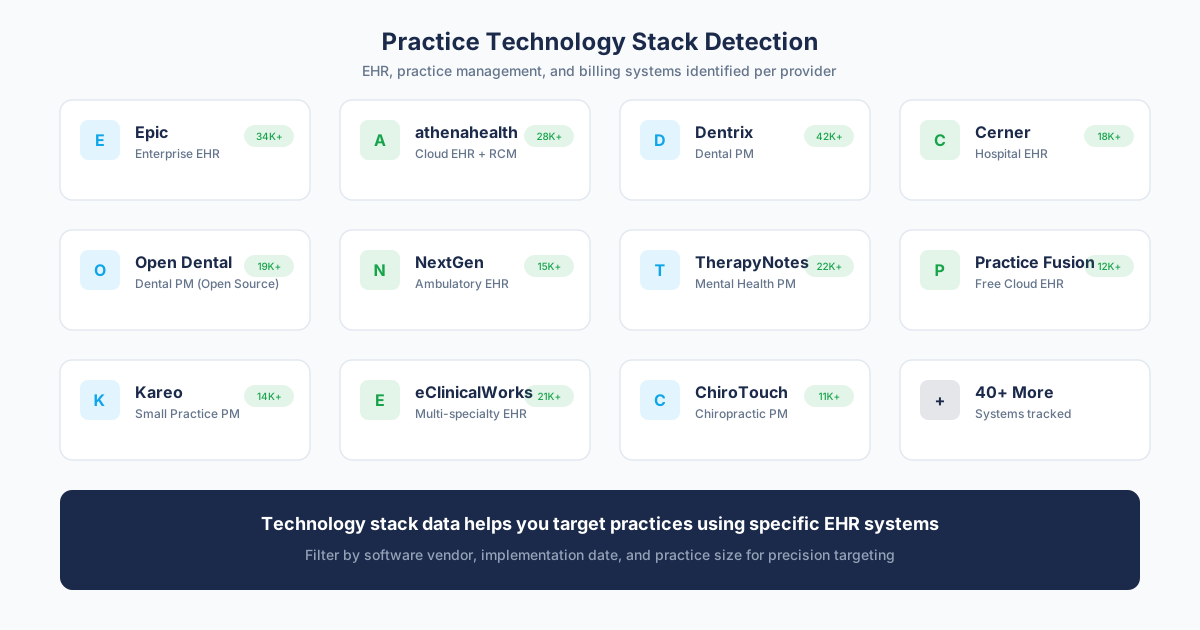
- EHR/PM system:: What software they currently use. For technology vendors, this is the most valuable data point. Technology detection can identify current systems so you know who's using a competitor and who's using nothing.
- Practice size:: Number of providers at the location. A solo therapist has radically different needs (and budget) than a 20-provider group.
- Direct contact information:: A verified email and/or direct phone number for the decision-maker. For solo practitioners, that's the provider. For group practices, that's typically the owner or practice manager.
High-Value Enrichment Fields
- Telehealth capability:: Do they offer virtual visits? What platform do they use? This field has become critical since 2020.
- Specialty focus:: Within mental health, there are dozens of subspecialties: anxiety, depression, trauma/PTSD, eating disorders, substance abuse, child/adolescent, couples therapy, EMDR, and more. Providers who specialize in specific conditions often respond better to targeted outreach.
- Years in practice:: New practitioners (licensed in the last 2-3 years) are more likely to be shopping for their first EHR, billing platform, or practice management tool. Established practitioners are replacement opportunities.
- Online presence:: Website URL, Psychology Today profile, directory listings. Providers with no online presence may be harder to reach but also represent underserved prospects for marketing and website services.
How to Build Targeted Mental Health Provider Lists
Here's the practical playbook for building lists that generate meetings, not bounces.
Start with Licensure Data
State licensing boards are the most authoritative source for behavioral health providers. Every practicing therapist, psychologist, and counselor must maintain an active state license. These databases include full name, licensure type, license number, issue/expiration dates, and often a mailing address.
The problem: each state maintains its own database in its own format. Some are searchable online. Some require FOIA requests. Some update monthly; others update quarterly. Building a national dataset from state licensing boards alone is a massive data engineering project.
This is where a provider data vendor adds value. The vendor does the aggregation, deduplication, and normalization work so you don't have to.
Layer in NPI Data
The NPI Registry covers providers who bill insurance or participate in any federal healthcare program. Cross-referencing NPI records with state licensing data helps you identify:
- Providers who are licensed but don't have an NPI (likely cash-pay only)
- Providers with NPIs at multiple locations
- Group practice organizational NPIs that tell you the business entity
Enrich with Verification
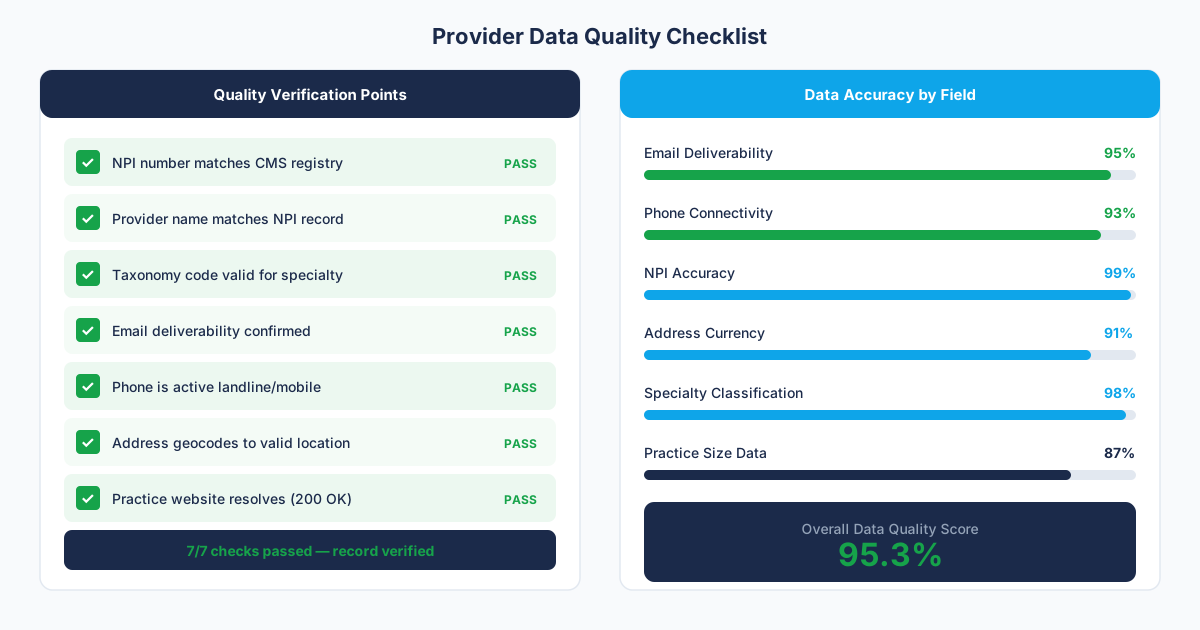
Raw licensing and NPI data gives you names and addresses. It doesn't give you working phone numbers, email addresses, or practice details. Enrichment is where lists go from "database export" to "sales-ready."
For mental health providers specifically, enrichment should include:
- Phone verification:: Call the number. Does it ring? Does someone answer? Is it the right practice?
- Email discovery and verification:: Find the provider's professional email and verify it's deliverable.
- Psychology Today cross-reference:: Over 200,000 providers maintain profiles on Psychology Today, making it one of the richest data sources for behavioral health. Profiles include specialties, insurance accepted, treatment approaches, and sometimes direct contact information.
- Website discovery:: Identify practice websites to enable technology detection and further enrichment.
Segment for Outreach
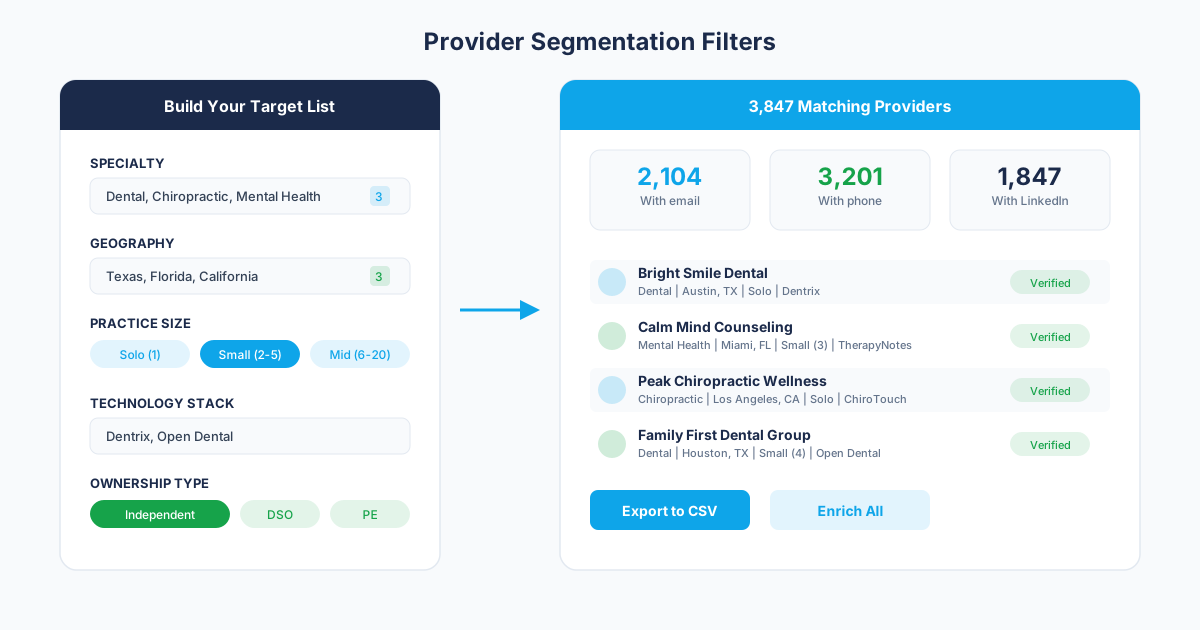
Don't blast the same message to every mental health provider. The segment differences are too large. Here's a starting segmentation framework:
- Solo vs. Group:: Solo practitioners make buying decisions alone and fast. Group practices involve multiple stakeholders and longer sales cycles, but higher contract values.
- Insurance vs. Cash-pay:: Insurance-based practices care about claims, billing efficiency, and credentialing. Cash-pay practices care about client acquisition, online presence, and payment processing.
- Established vs. New:: Providers licensed in the last 3 years are actively building their tech stack. Providers with 10+ years of experience are either loyal to their current tools or frustrated enough to switch.
- Office-based vs. Telehealth:: Telehealth providers need different infrastructure. They care about video quality, EHR integrations, interstate licensing, and virtual waiting rooms.
Common Mistakes When Selling into Mental Health
Sales teams that prospect into mental health frequently make these mistakes. Avoiding them puts you ahead of 80% of your competition.
Treating All Therapists as the Same
An LCSW running a community mental health program has nothing in common with a psychologist running a high-end private practice for executives. Licensure type, practice setting, and patient population create vastly different needs. Your messaging needs to reflect that.
Calling the Wrong Person
In a 15-provider group practice, the individual therapists don't choose the EHR or billing platform. The practice owner or office manager does. If your data doesn't identify decision-makers at the practice level, your reps are wasting calls.
Ignoring the Cash-Pay Segment
Many sales teams focus exclusively on insurance-based practices because that's where payer data gives them easy lists. But cash-pay practices represent 30-50% of the market, they tend to have higher per-session revenue, and they're underserved by vendors. If you can reach them, you face less competition.
Using Stale Data
Mental health practices have higher turnover and relocation rates than most specialties. Solo therapists move offices frequently. Group practices add and lose providers quarterly. A list that's 6 months old will have significant accuracy issues. Build fresh lists or use a vendor that continuously verifies.
The Telehealth Factor
Telehealth has fundamentally changed how behavioral health services are delivered, and it's created new data challenges that didn't exist before 2020.
Multi-State Licensing
The Psychology Interjurisdictional Compact (PSYPACT) now allows psychologists to practice across 42+ participating states. Similar compacts exist for counselors (ASWB Mobility) and social workers. This means a single provider might serve patients in 10 states but be physically located in one.
For your data, this means a provider's practice address doesn't tell you their serviceable market. You need to know their licensed states to understand their true reach.
Platform-Based Providers
Tens of thousands of therapists now practice exclusively through platforms like BetterHelp, Talkspace, Alma, Headway, or Grow Therapy. These providers are often invisible to traditional data sources. They might not have their own website, their own phone number, or even their own business listing.
Reaching them requires different channels: their personal LinkedIn profile, their Psychology Today listing, or direct outreach through the platform's provider directory.
Hybrid Models
Many providers maintain both in-person and virtual practices. They might see local patients in their office three days a week and see out-of-state patients virtually two days a week. Your data should flag this capability so your reps can tailor their pitch.
Building Your Mental Health Prospecting Strategy
Here's a concrete action plan for sales leaders entering or expanding in the behavioral health segment.
- Define your ideal customer profile (ICP).: Which licensure types? What practice size? Insurance or cash-pay? Office-based or telehealth? Get specific. "Mental health providers" is too broad to prospect effectively.
- Source your data from a vendor with behavioral health depth.: Not all provider databases are equal in this segment. Provyx's mental health provider data is built specifically to handle the challenges described in this guide, including solo practitioner coverage, telehealth-only providers, and cash-pay practices.
- Segment your lists before loading into your CRM.: Create separate cadences for solo vs. Group, insurance vs. Cash-pay, and new vs. Established. The conversion rate difference between a targeted message and a generic blast is 3-5x in this segment.
- Use technology detection to prioritize.: If you sell software, knowing what your prospect currently uses is the most valuable data point you can have. A practice running everything on spreadsheets is a different conversation than a practice using a competitor's product.
- Refresh your data quarterly at minimum.: Mental health provider data decays faster than other specialties. Budget for quarterly list refreshes or use a vendor with continuous verification.
The Opportunity Is Now
Mental health is the only healthcare segment where demand for both services and technology is growing at double digits simultaneously. Providers need tools. They're actively buying. And the ones who haven't bought yet are overwhelmed by the growth they're managing.
The sales teams that win in this segment will be the ones with the best data, the sharpest segmentation, and the most relevant outreach. Generic provider databases won't cut it here. You need data built for the unique structure of behavioral health.
Ready to build your mental health provider list? Talk to our team about targeting the exact segment of behavioral health providers that matches your ICP.
Frequently Asked Questions
How many mental health providers are there in the United States?
There are over 400,000 behavioral health providers in the U.S., including approximately 130,000 licensed clinical social workers, 100,000 licensed professional counselors, 85,000 psychologists, 55,000 marriage and family therapists, 38,000 psychiatrists, and 25,000 psychiatric nurse practitioners. This number has grown by over 30% since 2020.
Why is mental health provider data harder to build than other specialties?
Mental health has structural data challenges that other specialties don't. About 60% of providers are solo practitioners who are harder to find and verify. An estimated 15-20% practice exclusively via telehealth with no physical office. And 30-50% don't accept insurance, making them invisible to payer-based data sources. These factors create gaps in traditional provider databases.
How do I reach telehealth-only therapists who don't have a physical office?
Telehealth-only providers are often invisible to traditional data sources. The best approaches are: cross-referencing state licensing boards (all providers need active licenses), checking Psychology Today profiles (200K+ provider profiles), searching telehealth platform directories like Alma, Headway, and Grow Therapy, and using LinkedIn for professional contact information. A provider data vendor with behavioral health specialization will aggregate these sources for you.
What percentage of therapists don't accept insurance?
Estimates range from 30% to 50% depending on geography and licensure type. Psychologists and marriage and family therapists are the most likely to operate as cash-pay only. This is significant for data because insurance panel directories are a primary data source for many provider databases, meaning cash-pay providers are often underrepresented or missing entirely.
Sources and References
Related Resources
Get the Provider Data You Need
Tell us what you're looking for. We'll build a custom list matched to your target market.
Trusted by healthcare sales teams, medical device companies, and health IT vendors across the US.