
Medical Oncology Data by Tumor Type for Pharma Sales
Most modern oncology drugs are tumor-specific. Targeting 'oncologists' broadly wastes 70-90% of outreach.
2026-04-09
Why Tumor-Type Segmentation Matters
A HER2-positive breast cancer drug only matters to oncologists who treat HER2-positive patients. An ALK-positive lung cancer drug only matters to thoracic oncologists who see ALK-driven non-small-cell lung cancer. Modern oncology pharma is tumor-specific, and increasingly biomarker-specific within each tumor. Targeting 'oncologists' as a single audience wastes the large majority of your outreach on providers who do not have the relevant patient population, which inflates cost per qualified meeting and trains your reps to ignore the list.
Medical oncology is a high-stakes targeting problem because the products are expensive, the prescribing population is concentrated, and the clinical fit is binary. A drug is either relevant to a given oncologist's patient mix or it is not. Getting the segmentation right is the difference between a field force that walks into informed conversations and one that burns its credibility pitching therapies to the wrong specialists.
Major Tumor Segments
Breast oncology
Breast is the largest solid-tumor segment by patient volume. Effective targeting sub-segments by molecular subtype: HER2-positive, hormone-receptor (HR) positive, and triple-negative. Each subtype maps to a different class of drugs, from HER2-directed antibody-drug conjugates to CDK4/6 inhibitors to immunotherapy combinations. An oncologist who runs a high HR-positive panel is a different prospect than one focused on triple-negative disease.
Thoracic oncology
Lung cancer treatment is now driven by immunotherapy and mutation-specific targeted therapy (EGFR, ALK, KRAS G12C, and a growing list of rarer drivers). Thoracic specialists at academic and large community centers treat the biomarker-driven cases that justify next-generation targeted agents. Because comprehensive genomic testing is now standard in advanced lung cancer, the relevant prescribers are those whose practices order broad molecular panels.
GI oncology
Gastrointestinal oncology spans colorectal, pancreatic, gastric, and hepatocellular cancers, each with distinct treatment patterns. Colorectal has well-established targeted and immunotherapy options for specific molecular profiles; pancreatic remains largely chemotherapy-driven with fewer targeted choices. The lowering of the recommended colorectal screening start age to 45 by the U.S. Preventive Services Task Force has expanded the screened population, which feeds the earlier-stage patient pipeline GI oncologists manage.
Hematologic oncology
Leukemia, lymphoma, and multiple myeloma carry the highest per-patient drug costs in oncology, with CAR-T therapies and bispecific antibodies running into the hundreds of thousands of dollars per course. Academic centers and large hospital systems with CAR-T and stem-cell transplant programs are the primary targets, because the infrastructure to deliver these therapies is concentrated at a relatively small set of institutions.
GU oncology
Genitourinary oncology covers prostate (androgen-receptor inhibitors and PARP inhibitors), bladder (immunotherapy and antibody-drug conjugates), and kidney (tyrosine-kinase inhibitor and immunotherapy combinations). Pharma spend in this segment continues to grow as new agents move into earlier lines of therapy.
Academic Versus Community Oncology
Tumor type is the first cut, but practice setting is the second. Academic medical centers, NCI-designated cancer centers, and large hospital systems concentrate the complex, biomarker-driven, and cellular-therapy cases. Community oncology practices (many now consolidated under networks like The US Oncology Network and large independent groups) handle the high-volume standard-of-care prescribing. The same drug may need a clinical-evidence message for an academic key opinion leader and an access-and-reimbursement message for a community practice, so knowing the setting shapes both the target and the pitch.
Building Tumor-Type Data
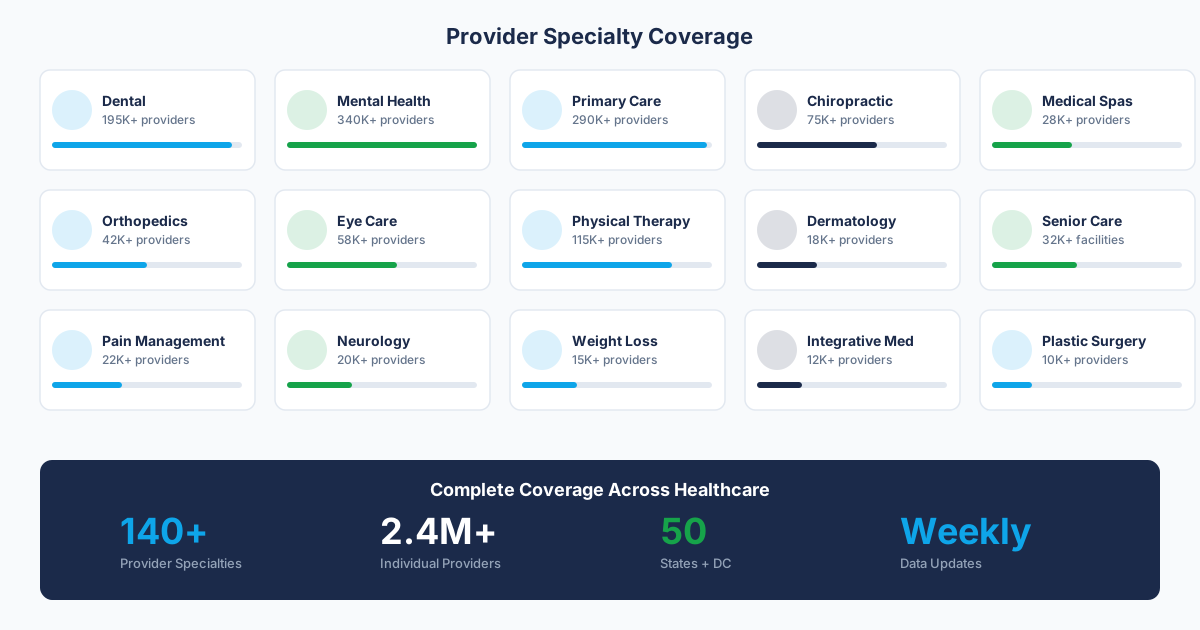
The NPI registry gives you 'Medical Oncology' and 'Hematology/Oncology' as classification categories, but it does not tell you which tumors a given oncologist actually treats. That classification has to be built by layering several public signals: peer-reviewed publication analysis (what an oncologist publishes on is a strong proxy for clinical focus), clinical-trial principal-investigator records from public trial registries, NCCN guideline-panel membership, practice and hospital website analysis, and center-of-excellence and NCI designations. No single source is complete or fully reliable on its own. The accurate classification comes from combining sources and reconciling the signals, then verifying each record before delivery.
This is the part that purchased oncology lists almost always get wrong. They tag a provider with a broad 'oncology' label and stop there, leaving your team to guess at tumor focus. We build the tumor-type and setting layer on top of the NPI base, sourced from public NPI registries, business listings, and commercial databases, and verify it so your reps walk into conversations already knowing the oncologist's clinical focus.
See our oncology data guide for the full framework, and our dermatologist data guide for a parallel specialty playbook. Get Provyx oncology data with tumor-type classification.
Frequently Asked Questions
Why segment oncologists by tumor type?
Modern oncology drugs are tumor-specific and often biomarker-specific. Targeting broadly wastes most of your outreach on providers who do not treat the relevant patient population, which raises cost per qualified meeting and erodes rep trust in the list.
How do you determine tumor-type focus?
Layer board certification, peer-reviewed publication analysis, clinical-trial principal-investigator records, NCCN guideline-panel membership, and practice and hospital website analysis. No single signal is reliable alone; accurate classification comes from reconciling several sources and verifying each record.
Which segment has the highest pharma spend?
Hematologic malignancies carry the highest per-patient cost because of CAR-T and bispecific therapies. Breast cancer typically has the highest total spend by patient volume. The right target depends on whether your product competes on per-patient value or population reach.
Does practice setting matter as much as tumor type?
Yes. Academic and NCI-designated centers concentrate complex, biomarker-driven, and cellular-therapy cases, while community oncology practices handle high-volume standard-of-care prescribing. The same drug often needs a clinical-evidence message for academic prescribers and an access message for community practices.
Sources and References
Related Resources
Get the Provider Data You Need
Tell us what you're looking for. We'll build a custom list matched to your target market.
Trusted by healthcare sales teams, medical device companies, and health IT vendors across the US.