
KOL Dinner Planning for Pharma and Medical Device Teams
KOL dinners produce the highest ROI per attendee of any physician event format. They're also the hardest to fill. Here's how to use data to solve the attendance problem.
2026-03-10
The KOL Dinner Attendance Problem
A key opinion leader dinner is a small, intimate event: 12-25 physicians at a quality restaurant, hearing a respected peer present clinical data and share their experience with a treatment or device. The format works because physicians trust peers more than sales reps, and the dinner setting creates space for candid clinical discussion.
The ROI math is compelling. A 20-person KOL dinner might cost $8,000-12,000 all-in (venue, dinner, speaker honorarium, travel). If 3-4 attendees become prescribers or device adopters at an average deal value of $25,000+, one dinner generates $75,000-100,000+ in pipeline. That's a 6-10x return.
But the format only works if you fill the seats. And KOL dinners are harder to fill than lunch and learns for three reasons:
- Time commitment is higher.: A lunch and learn fits into the workday. A dinner requires an evening away from family. Physicians are protective of their evenings.
- Seat count is lower.: You need 15-20 attendees, not 30-50. That sounds easier, but the margin for error is smaller. Three cancellations at a 50-person lunch and learn barely registers. Three cancellations at a 15-person dinner means the room feels empty.
- The audience must be curated.: KOL dinners work because the attendees are peers, similar specialty, similar case volume, similar practice profile. You can't fill empty seats with anyone who's available. The wrong attendee changes the dynamic of the entire room.
Data-Driven Targeting for KOL Dinners
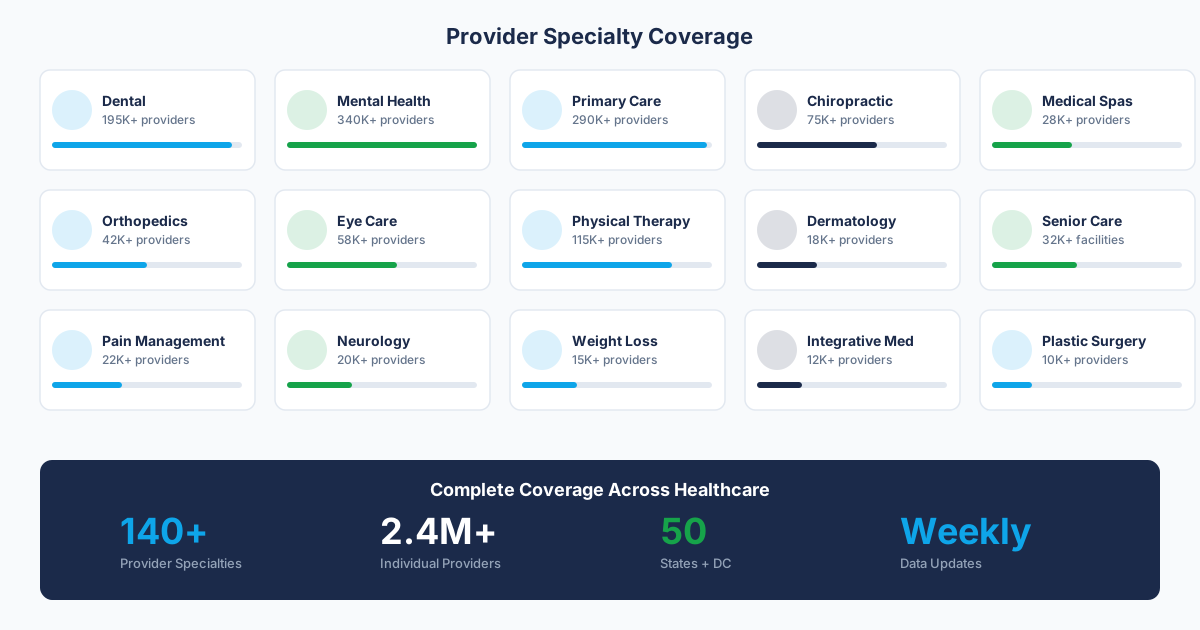
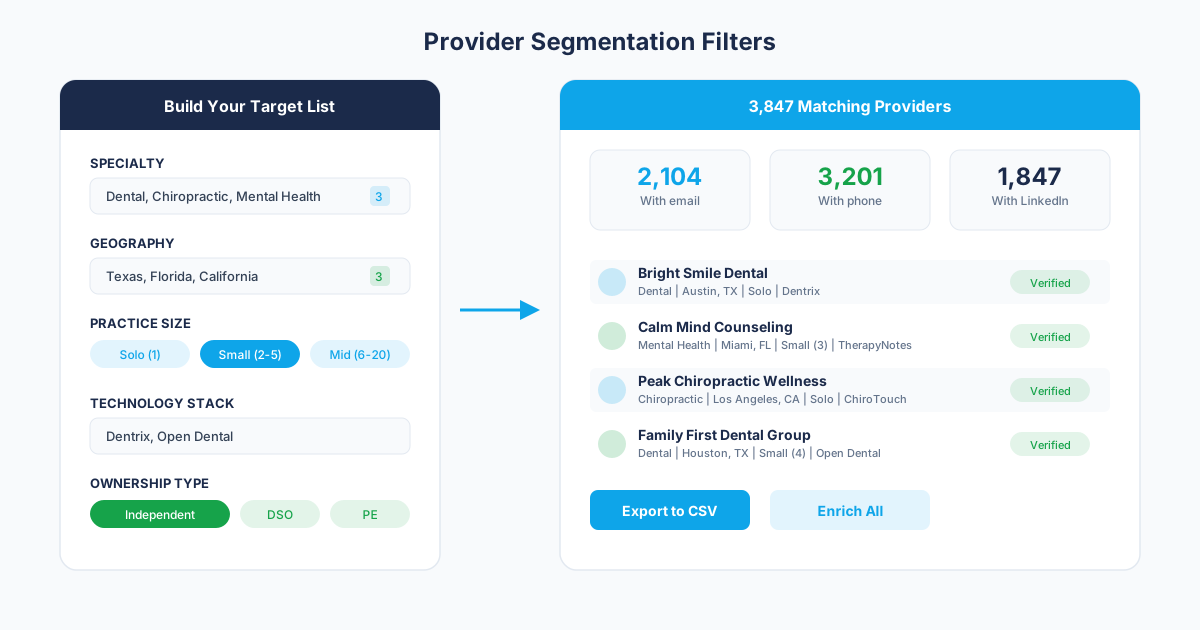
The attendance problem is really a targeting problem. If you invite the right 60 providers, you'll fill 20 seats. If you invite 60 semi-relevant providers, you'll get 8 registrations and 5 attendees.
Specialty Match
Start with the speaker's specialty. If your KOL is a board-certified dermatologist presenting clinical data on a skin rejuvenation device, your invite list should be dermatologists and aesthetic medicine practitioners. Adjacent specialties (plastic surgeons, med spa owners) might be appropriate depending on the clinical content, but the core audience shares the speaker's specialty and credentialing.
Filter your provider database by specialty classifications and sub-specialty. NPI classification gets you to the specialty level. Practice website analysis, procedure data, and credentialing data help you identify providers who actively perform the relevant procedures. A dermatologist who only does Mohs surgery isn't the right audience for an aesthetics-focused dinner.
Geographic Radius
KOL dinners have a tighter geographic radius than lunch and learns. Providers will drive 15-20 minutes for lunch. For a dinner that starts at 6:30 PM and runs until 9:00 PM, with the commute home after, the practical radius shrinks to 20-25 minutes from practice or home. In dense metros, that's manageable. In sprawling metros like Dallas-Fort Worth or Los Angeles, you might need to position the dinner strategically between two high-density clusters.
Practice Profile
The best KOL dinners have attendees with similar practice profiles. Solo practitioners and small group owners think about purchasing decisions differently than employed physicians at large health systems. Mixing the two creates awkward dynamics because their decision-making authority and budget processes are fundamentally different.
Where possible, target a cohort: independent practice owners with 2-5 providers, or medical directors at multi-location groups, or employed specialists at community hospitals. The more similar the attendees' practice contexts, the more relevant the peer discussion.
Personalized Invitations
Generic invitations don't work for KOL dinners. A physician receiving an invitation that says "You're invited to a dinner with Dr. Smith" treats it like marketing. A physician receiving an invitation that says "Dr. Mitchell, Dr. Smith will be presenting new clinical data on [procedure] outcomes in practices like yours, we'd like to include you in a small group discussion" treats it like a personal invitation.
What Personalization Requires
- Provider name and credentials:: Address them correctly. Dr., not Mr. Or Ms. Include their specialty if it's referenced in the invitation copy.
- Practice name:: Mentioning their practice shows you know who they are, not just that they're on a list.
- Clinical relevance:: Why this dinner is relevant to their specific practice. If they're a high-volume cosmetic derm practice, the invitation should reference cosmetic applications. If they're a general derm practice exploring aesthetics, the angle is different.
- Pre-filled registration link:: When the physician decides to RSVP, one click. Name, email, practice, specialty all pre-populated. No form to fill out. The invitation itself is the registration mechanism.
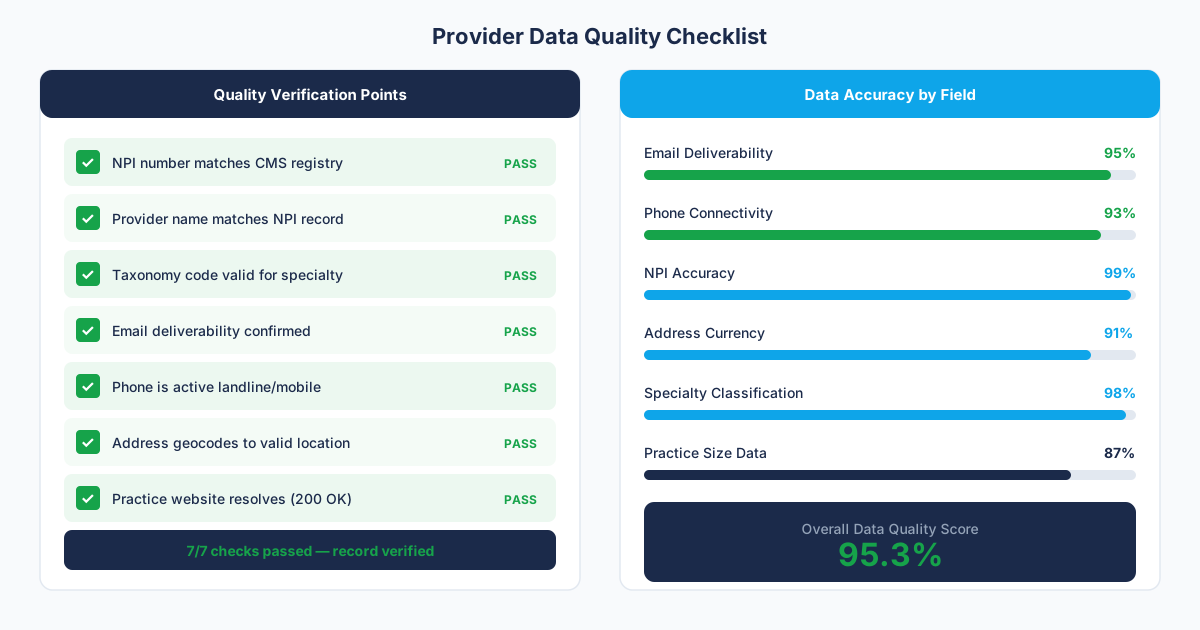
This level of personalization requires accurate, verified provider data, not a stale list purchased six months ago. For building the curated invite lists that KOL dinners require, see our provider contact data service.
Venue Selection for KOL Dinners
The venue matters more for a KOL dinner than for any other physician event format. The setting communicates respect for the physicians' time and creates the atmosphere for peer discussion.
What Works
- Private dining rooms at quality restaurants.: Not the main dining floor. A private room with a door that closes, seating for 20-25, and space for a small presentation screen. The restaurant handles service, and the private setting allows for clinical discussion without background noise.
- Upscale but not extravagant.: A nice restaurant where a $60-80 per person dinner is appropriate. Not a casual chain. Not a three-Michelin-star destination. Somewhere that communicates "we value your time" without triggering compliance concerns about excessive hospitality.
- AV-ready or AV-friendly.: The speaker needs a screen for slides and clinical images. Some private dining rooms have built-in screens. Others can accommodate a portable setup. Check this before booking, wrestling with a projector while guests arrive undermines the professional atmosphere.
Compliance Guardrails
The PhRMA Code on Interactions with Healthcare Professionals and the OIG Compliance Guidance set boundaries on what's permissible for meals with healthcare professionals. Key points for KOL dinners:
- The meal must be modest and subordinate to the educational purpose.: A dinner is appropriate when it accompanies a substantive clinical presentation. A dinner without educational content is a gift, not a program.
- No entertainment.: The venue should be a restaurant, not a sports bar with games on during dinner, not a venue with live entertainment, and not any location that could be construed as recreational.
- Guest limitations.: Spouses and other guests who aren't healthcare professionals generally shouldn't attend. The program is for HCPs with legitimate professional interest.
- Documentation.: Record attendee names, business purpose, meal cost, and program content. Your registration and check-in system should automate this.
The Invitation Sequence for KOL Dinners
KOL dinners require a different cadence than lunch and learns. The audience is smaller and more selective, so each touchpoint carries more weight.
6 Weeks Before: Personal Outreach
Start with the rep's top 10-15 targets. These are physicians the rep already knows and wants in the room. A personal email from the rep (not a mass send) or a phone call: "Dr. [Name], we're hosting a dinner with [KOL] on [date] to discuss [topic]. I'd like to include you. Can I send you the details?"
This personal layer isn't scalable, and it doesn't need to be. You're filling 5-8 of your 20 seats with high-value targets the rep handpicks. The remaining seats come from the broader invite list.
4 Weeks Before: Targeted Email
Send a well-crafted invitation email to the broader list (40-60 providers). Personalized with name, practice, and clinical relevance. Pre-filled RSVP link. Emphasize the speaker's credentials and the intimate format: "Limited to 20 physicians."
2 Weeks Before: Follow-Up
To non-responders only. Include an updated seat count: "12 seats filled. 8 remaining." Social proof and scarcity are real motivators for an intimate dinner format.
1 Week Before: Final Confirmation
Email registrants to confirm attendance. Include venue details, parking, dress code. Ask for dietary restrictions (this shows care and reduces last-minute complications). For non-registrants, send one final "last seats" email if you have capacity remaining.
Post-Dinner Follow-Up
The dinner conversation opens doors that don't stay open long. Follow up fast.
Within 24 Hours
Email every attendee a brief thank-you with the speaker's presentation slides or a summary of key clinical data points discussed. This gives the physician something to reference when they're back in the office the next morning thinking about whether to adopt the treatment or device.
Within 48 Hours
The rep calls each attendee individually. The dinner conversation makes this call warm instead of cold. The rep references something specific from the dinner: "You mentioned you're seeing a lot of [condition] patients. Based on what Dr. [KOL] presented, here's how other practices in your situation are approaching it." Offer a 1:1 follow-up: office visit, trial, peer-to-peer call with the KOL.
Within 1 Week
Share relevant case studies or clinical papers that support the dinner discussion. Personalize by specialty and practice profile. The derm attendees get derm-specific follow-up. The attendee who asked about insurance reimbursement gets reimbursement resources.
For the full spectrum of physician event formats, from KOL dinners to lunch and learns to multi-city speaker programs, our event marketing service handles registration, provider targeting, and pre-filled invitations. For pharma-specific use cases, see our pharma sales page.
Frequently Asked Questions
How many invitations should I send for a KOL dinner?
For a 20-seat KOL dinner, plan for 5-8 seats filled through personal rep outreach and 12-15 seats from a targeted email invite list of 40-60 providers. The total invite pool is smaller than a lunch and learn because the audience must be highly curated by specialty, geography, and practice profile. The 8-10x invitation-to-attendance ratio used for lunch and learns doesn't apply here. KOL dinners rely more on personalized outreach than volume.
What are the compliance rules for KOL dinners?
The PhRMA Code and OIG Compliance Guidance require that meals be modest and subordinate to a legitimate educational purpose. Venues must be appropriate for informational exchange, no entertainment, no recreational settings. Attendees should be healthcare professionals with legitimate professional interest. Guest/spouse attendance is generally not appropriate. Document everything: attendee names, meal costs, business purpose, and program content. Your company's compliance team should review the program before invitations go out.
What's the ROI of a KOL dinner compared to a lunch and learn?
KOL dinners cost more per event ($8,000-12,000 vs. $5,000-10,000 for a lunch and learn) but typically produce higher per-attendee ROI because the intimate format and peer credibility drive stronger conversion. If 3-4 of 20 attendees become adopters at $25,000+ average deal value, that's $75,000-100,000+ in pipeline from a $10,000 investment. Lunch and learns produce more total leads but typically lower per-lead value. The best programs run both: KOL dinners for high-value targets, lunch and learns for broader territory coverage.
Sources and References
Related Resources
Get the Provider Data You Need
Tell us what you're looking for. We'll build a custom list matched to your target market.
Trusted by healthcare sales teams, medical device companies, and health IT vendors across the US.