
Interventional Cardiology Data for Device Sales
2026-04-09
The Interventional Cardiology Market
Finding interventionalists is the easy part because they appear in the NPI database. Useful targeting requires procedure volume, current device preference, institutional buying authority, and sub-specialty focus across coronary, structural heart, and peripheral work. Generic targeting wastes outreach on low-volume operators and misses the cath labs that drive purchasing decisions.
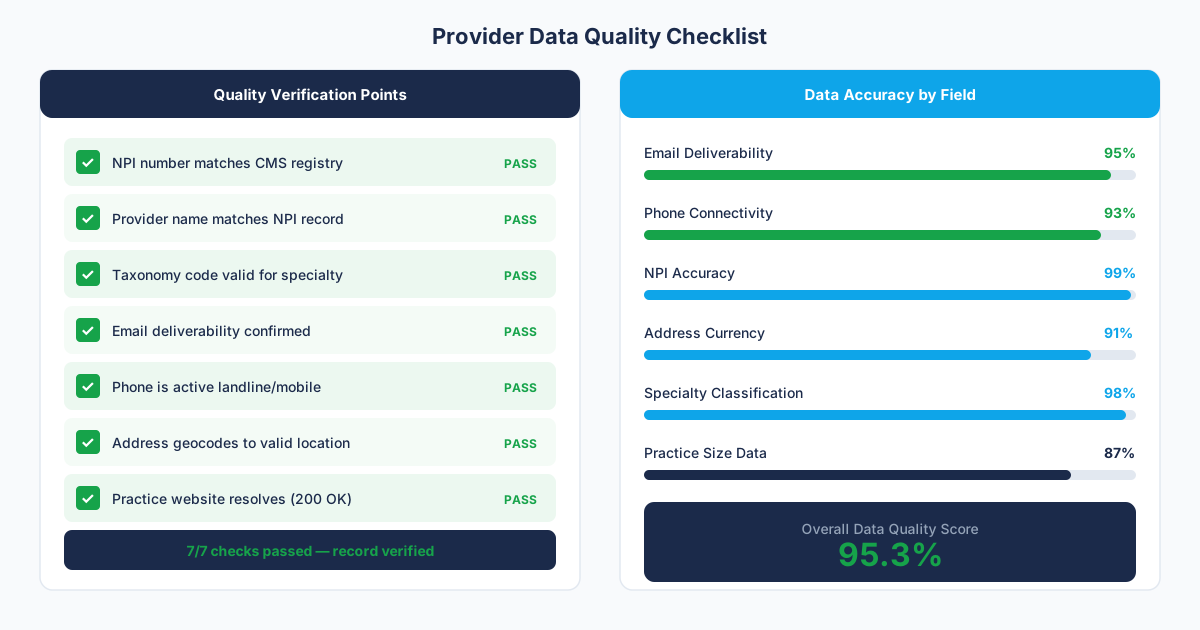
Fields That Determine Account Priority
Procedure volume
Cath lab affiliation and role
Identify whether the interventionalist directs the cath lab, shares influence as a group partner, or works as a hospital-employed proceduralist with limited purchasing authority. Cath lab directors help choose stent platforms, imaging systems, and catheter inventory.
Device brand preference
Most cath labs standardize on one or two stent platforms. Knowing whether a lab runs Abbott, Medtronic, or Boston Scientific stents tells you whether you're selling a replacement or a complement.
IVUS and OCT adoption
Intravascular imaging is increasingly standard for complex PCI. Labs that have adopted imaging represent higher device sophistication and higher per-case device spend.
How should a device team build the account map?
Build one account for the facility and connect every clinical and operational stakeholder to it. Start with the hospital or ambulatory facility where procedures occur, then attach the cath lab director, high-volume operators, service-line leader, value analysis contact, and supply-chain contact. Keep employment and practice affiliations separate from procedural location. A physician may belong to a cardiology group while operating at several hospitals, and each facility can have its own contract and inventory policy. Source: BLS healthcare occupations.
The account map should record the source and check date for each relevant role. Hospital department pages can identify directors, but leadership pages often lag after a transition. Conference programs, clinical-trial records, and recent institutional announcements can confirm who is leading a program. Conflicts belong in a review queue. Sending a rep to the wrong facility or attaching a physician to a former lab damages the territory plan before the first call.
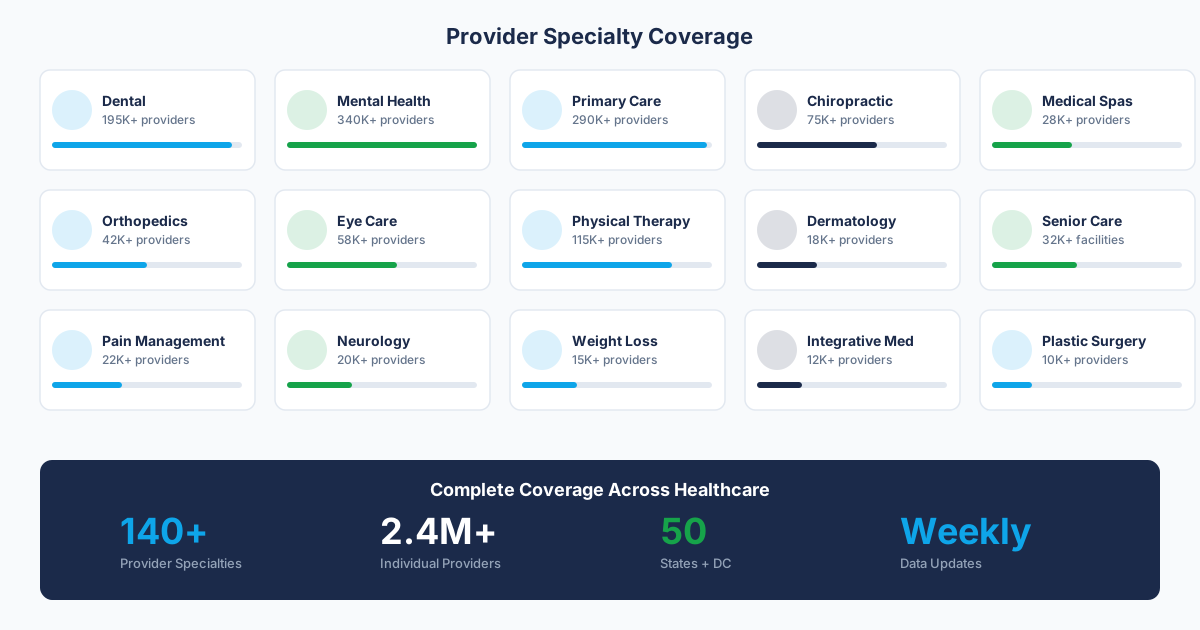
What makes a procedure-volume estimate usable?
A usable estimate states the period, facility, procedure family, and source. Keep coronary PCI separate from structural heart and peripheral procedures because the same physician can have different volume across those categories. Facility totals also need careful handling. A hospital-level count cannot be divided evenly among the affiliated interventionalist. Use clinician-level public data when available and label modeled allocations as estimates.
Show the range and confidence behind the estimate. Sales operations can prioritize a high-confidence recent count, while an older or modeled signal can trigger research before outreach. The CMS data catalog is a useful starting point for public utilization data, and the facility's own service-line materials can confirm whether the program remains active. Save both links with the record.
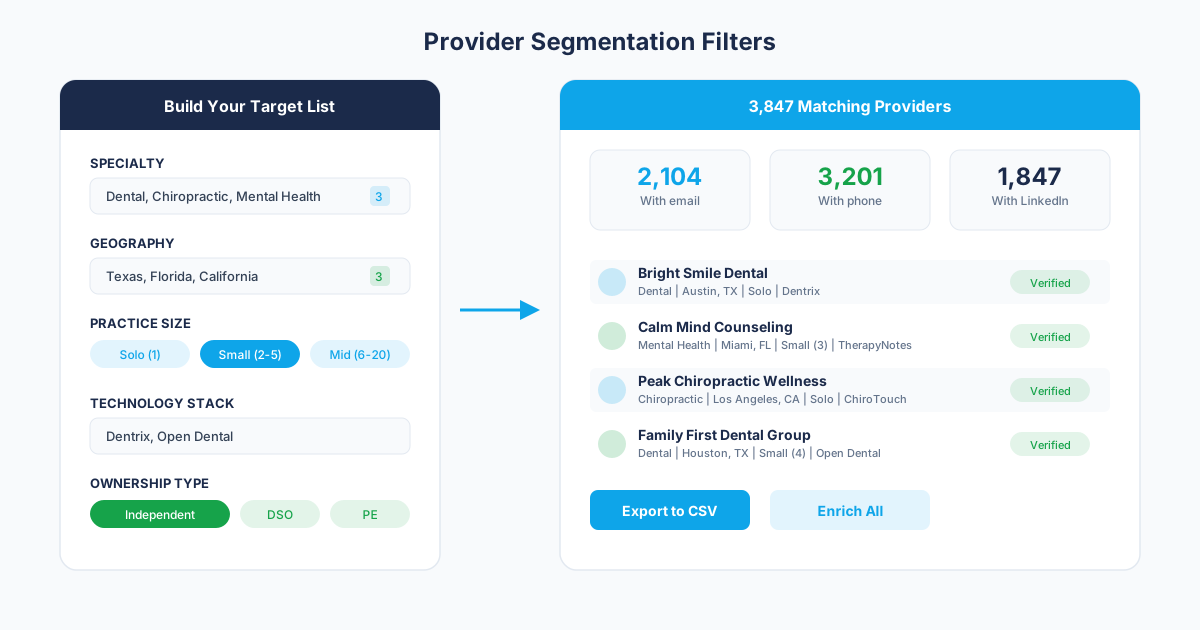
How do contract timing and installed equipment change priority?
Installed equipment identifies the competitive context. A replacement campaign needs the current platform, approximate install date, service arrangement, and evidence of a capital review. Public requests for proposals, board minutes, construction documents, job postings, and vendor announcements can supply pieces of that timeline. Treat each as a signal. A job posting that names a platform may prove staff familiarity, while a recent capital announcement is stronger evidence of an active installation.
Refresh these fields before each territory cycle. Capital decisions move slowly, but contacts and committee membership change during the process. A dated account brief lets the rep see which facts are current, which are inferred, and which need confirmation in discovery. It also prevents an old installation signal from being presented as a current purchasing event.
How should the first sample be tested?
Draw the sample from the same region and facility mix as the planned campaign. Check the NPI, current practice, procedural facility, director role, and business contact route for each record. Have the territory team review the highest-priority accounts because reps often know about local affiliations that have not reached public directories. Record each field as pass, fail, or unresolved, then revise the matching rules before scaling the build.
Start with NPI specialty classification 207RI0011X (Interventional Cardiology), then add procedure volume, cath lab role, and device preference. The result is a segmented list where directors and active operators at relevant facilities receive priority. For the broader framework, see our cardiology data guide and the American College of Cardiology. Get Provyx interventional cardiology data.
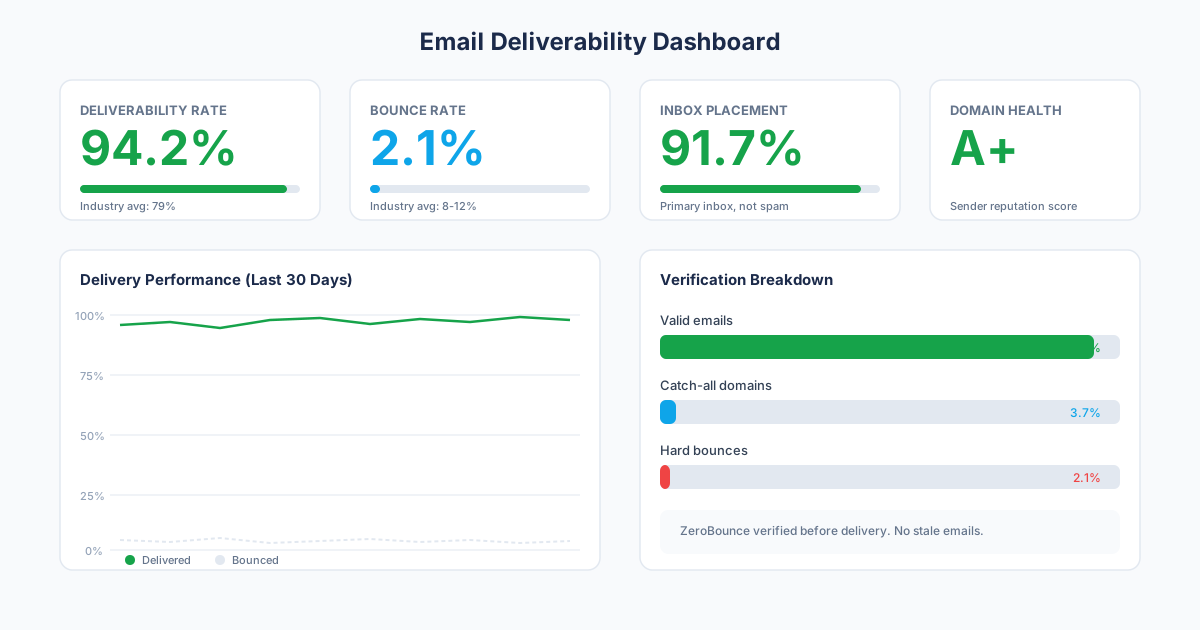
Which fields belong in the delivery file?
Keep observed facts separate from estimates so a rep can judge the evidence without opening a research system. Core columns should cover provider name, NPI, specialty, current practice, procedural facility, cath lab role, facility address, business phone, and verified business email when available. Add procedure family, estimated volume range, installed platform, source URL, source date, and confidence level as distinct fields. A blank is more useful than an unsupported guess because it tells the territory owner where discovery is still needed.
Include parent-system ownership and purchasing contacts beside the facility record. A local lab may influence the clinical choice while a system office negotiates the agreement. Keeping both levels in the same account structure prevents duplicate outreach and helps sales operations assign the right owner. Before delivery, deduplicate physicians who operate at several facilities without collapsing those facility relationships. The same clinician can carry different influence at each site, so the account map needs to preserve both the person and the location.
Frequently Asked Questions
Who decides which stent platform a cath lab uses?
The cath lab director, in coordination with the hospital's value analysis committee and supply chain team. Sales motions need both the clinical champion and the institutional decision-maker.
What is IVUS in interventional cardiology?
IVUS (intravascular ultrasound) is an imaging modality used during PCI to visualize coronary arteries from inside the vessel. Labs that use IVUS represent higher device sophistication and spending.
Which facility relationships matter for cath-lab outreach?
Link each clinician to the facility where procedures occur, then distinguish the health-system parent, cath-lab leadership, supply chain, and value-analysis contacts. Those relationships shape routing and account ownership.
How should procedure-volume data be evaluated?
Record the procedure family, facility, reporting period, and source. Keep coronary, structural-heart, and peripheral activity separate so a broad volume estimate does not distort the target list.
What should a stent-sales territory file preserve?
Preserve provider identity, current facility affiliation, clinical role, decision-maker relationships, source URLs, and observation dates. Conflicting affiliations should remain visible until a reviewer resolves them.
Sources and References
Related Resources
Get the Provider Data You Need
Tell us what you're looking for. We'll build a custom list matched to your target market.
Trusted by healthcare sales teams, medical device companies, and health IT vendors across the US.
How should the blog interventional cardiology data for stent sales workflow be documented?
Define the territory decision before collecting cardiology signals. Keep physician identity, current cath-lab affiliation, procedure family, volume period, facility, and decision-maker role as separate fields. Store the source date and mark modeled volume explicitly so a representative can distinguish direct evidence from a planning estimate.
Separate identity from enrichment
Confirm the person or organization before attaching practice, role, location, or contact details in the blog interventional cardiology data for stent sales process. A correct email attached to the wrong entity still creates a bad record. Store each relationship explicitly and preserve conflicting observations in an exception queue rather than forcing a completed value.
Review a representative sample
Draw the blog interventional cardiology data for stent sales sample from the same segments the operating team will use. Apply the field definitions consistently, record accepted, rejected, and unresolved outcomes, and review recurring failure patterns before the full file moves forward. Save the sample and decision notes as the baseline for the next refresh.