
Gastroenterology Practice Data for Endoscopy Device Sales
14,000 gastroenterologists, high procedure volumes, and physician-owned ASCs make GI one of the most lucrative specialties for device and pharma vendors.
2026-04-09
The GI Practice Landscape
Gastroenterology is one of the larger procedural specialties, with roughly 14,000 practitioners in the US. The specialty is heavily procedure-oriented: screening colonoscopies, diagnostic and therapeutic upper and lower endoscopies, and advanced interventional procedures such as ERCP and endoscopic ultrasound. On top of the procedure revenue, GI practices prescribe expensive biologic therapies for Crohn's disease, ulcerative colitis, and other inflammatory bowel disease. That combination of high procedure volume and high-cost drug prescribing makes GI one of the most lucrative specialties for both device and pharma vendors, and one of the most rewarding to target precisely.
The screening population for GI has expanded in recent years. The U.S. Preventive Services Task Force lowered the recommended start age for colorectal cancer screening to 45, which enlarged the eligible screening pool and reinforced colonoscopy volume across the specialty. More screening volume means more scope use, more disposables, and more downstream pathology and follow-up procedures, all of which sharpen the case for targeting high-volume practices.
Three Sales Channels
Endoscopy equipment
This channel covers scopes, accessories, AI-assisted polyp detection software, and single-use endoscopes. High-volume practices (2,000 or more procedures per year) consume significantly more disposables and replace capital scopes on a faster cycle, so procedure volume is the field that most directly predicts equipment spend. AI polyp-detection adoption is also a useful technology signal, separating practices investing in newer platforms from those running legacy equipment.
Biologic medications
Infliximab, adalimumab, ustekinumab, and vedolizumab are mainstays of IBD treatment, and many are delivered by in-office infusion. GI practices with in-office infusion suites are the primary biologic pharma targets, because they capture both the prescribing and the administration economics. Participation in the 340B drug pricing program changes the acquisition cost of these drugs and therefore the contracting strategy a pharma rep should bring to the conversation.
ASC products and services
Gastroenterology has unusually high rates of physician-owned ambulatory surgery centers (ASCs). A GI physician who owns a stake in an ASC controls both the clinical decision and the purchasing decision for that facility, which makes physician-owners the highest-value contacts for ASC-directed products and services. Understanding whether a practice operates a physician-owned ASC or refers to a hospital outpatient department is essential for this channel.
Practice Consolidation Is Reshaping Who Buys
The GI market has consolidated rapidly under management services organizations (MSOs). Platforms such as GI Alliance, US Digestive Health, Gastro Health, and One GI have rolled up large numbers of independent practices, and that shift changes where purchasing authority sits. In a consolidated group, individual physicians may retain clinical input but procurement moves to the platform level. A vendor selling into a GI Alliance-affiliated practice is, in effect, selling into a procurement organization that standardizes vendors across dozens of locations. Knowing a practice's affiliation status up front determines whether you are running a local sale or a platform sale. For the mechanics of selling into consolidated groups, see our DSO and MSO consolidation guide.
Key Data Fields
Practice ownership: Independent, MSO-affiliated (GI Alliance, US Digestive Health, Gastro Health, One GI, and others), or hospital-employed. This single field reroutes the entire sales motion.
ASC ownership: Physician-owned ASCs versus hospital-based outpatient departments, which determines who controls facility purchasing.
Procedure volume: High-volume endoscopy practices are the primary equipment and disposables targets, and volume is the best proxy for spend.
340B status: Hospital-affiliated practices participating in 340B acquire biologics at discounted prices, changing infusion economics and the right pharma contracting approach.
Infusion capability: In-office infusion suites identify the biologic pharma targets that capture both prescribing and administration revenue.
How to Build GI Practice Data
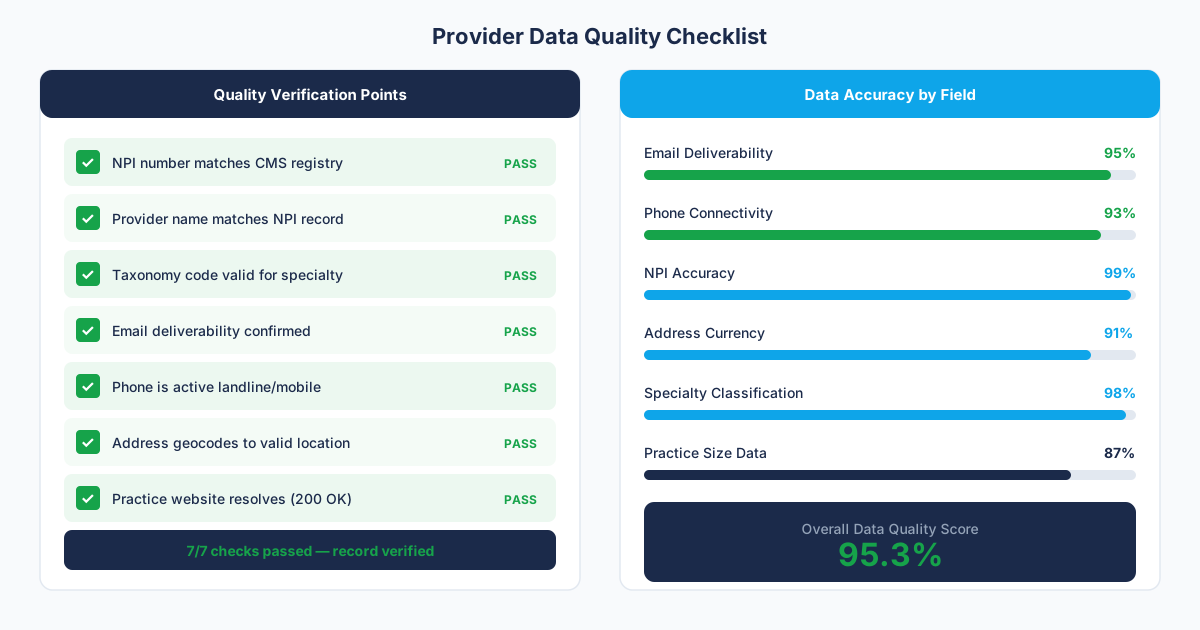
Start with NPI specialty classifications 207RG0100X (Gastroenterology) to define the provider universe, then build the practice layer on top. Affiliation and ownership data come from practice and MSO websites, ASC licensure records, and business registrations; procedure-volume estimates come from CMS public reporting; and 340B status comes from the public 340B covered-entity database. None of these fields lives in the NPI registry, and none is reliable from a single source. Accurate GI targeting comes from combining sources, reconciling them, and verifying each record before delivery, sourced from public NPI registries, business listings, and commercial databases. The affiliation field in particular goes stale fast because the consolidation wave is still active, so a list built a year ago will misroute a meaningful share of your accounts today.
For the broader consolidation playbook, see our DSO/MSO guide, and for hospital purchasing committees see our GPO guide. Get Provyx GI practice data with ownership, ASC, and 340B fields.
Frequently Asked Questions
How many gastroenterologists practice in the US?
Roughly 14,000, making gastroenterology one of the larger procedural specialties. It combines high endoscopy procedure volume with high-cost biologic prescribing, which gives it significant device and pharma revenue.
What is the GI MSO consolidation trend?
GI Alliance, US Digestive Health, Gastro Health, and One GI are leading platforms that have rolled up many independent practices. Consolidation shifts purchasing authority from individual physicians to platform-level procurement, so affiliation status changes how you sell.
Why does 340B matter for GI pharma?
Hospital-affiliated GI practices participating in the 340B drug pricing program acquire biologics at discounted prices. That changes their infusion economics and the contracting strategy a pharma rep should use, so 340B status is a key targeting field.
How did the age-45 screening change affect GI targeting?
The U.S. Preventive Services Task Force lowered the recommended colorectal cancer screening start age to 45, which enlarged the eligible screening population. More screening colonoscopies mean more scope use and disposables, reinforcing the case for prioritizing high-volume endoscopy practices.
Sources and References
Related Resources
Get the Provider Data You Need
Tell us what you're looking for. We'll build a custom list matched to your target market.
Trusted by healthcare sales teams, medical device companies, and health IT vendors across the US.