
Electrophysiology Lab Data for Ablation Device Sales
Around 2,500 EP specialists run the ablation labs and CIED programs that drive the highest-margin device revenue in cardiology.
2026-04-09
Why EP Is the Highest-Value Sub-Specialty
Electrophysiology labs generate more device revenue per procedure than any other cardiology sub-specialty. A single AFib ablation uses $15,000-30,000 in catheter disposables. A CIED implant (cardiac implantable electronic device, meaning pacemakers and defibrillators) uses $10,000-40,000 in device cost. EP mapping systems represent $500K-1M capital purchases. For device vendors, EP is the highest-margin segment in cardiovascular medicine, which is exactly why the targeting has to be precise.
There are roughly 2,500 board-certified EP specialists in the US, a number small enough that you can build a near-complete target list and large enough that untargeted outreach still wastes most of your effort. The market is smaller than interventional cardiology but the per-provider revenue is higher, so the cost of a wrong record (a phone call to a general cardiologist who does not run ablations) is proportionally more expensive in lost rep time.
The Buying Committee Behind Every EP Purchase
EP device decisions almost never come down to a single signature. A capital mapping-system purchase moves through the EP lab director, the hospital's value analysis committee, the cardiovascular service-line administrator, and supply chain. A disposables contract (catheters, sheaths, diagnostic tools) is influenced heavily by the operating physicians but gets executed through the group purchasing organization (GPO) the hospital belongs to. If your data only identifies the physician, you have half the map. Pairing the clinical champion with the institutional decision-maker is what separates a list that books meetings from a list that stalls in procurement. For how those committees evaluate vendors, see our GPO and value analysis committee guide.
Key Data Fields
EP lab director
The EP lab director makes catheter inventory, mapping system, and CIED vendor decisions. Identifying the EP director at every target hospital is the single most valuable contact you can find, because that one person sits on most of the decisions you care about. Director identification rarely comes straight from the NPI registry; it usually requires cross-referencing hospital department pages, society directories, and published procedure literature.
Ablation volume and type
AFib ablation dominates the procedure mix. Volume estimates segment high-volume labs (200+ ablations per year) from low-volume ones, and the difference matters because a high-volume lab consumes far more disposables and replaces capital equipment on a faster cycle. Pulsed-field ablation (PFA) adoption signals technology-forward buyers who are willing to evaluate new platforms, which makes them either your best prospects or your toughest incumbents depending on what you sell.
Current mapping system
Most labs standardize on Abbott EnSite or Biosense Webster CARTO. Knowing which system a lab runs tells you competitive positioning before the first call. If you sell the incumbent system, you are protecting a renewal; if you sell the competitor, you are timing a switch. Contract renewal timing is the selling window, and capital cycles for mapping systems typically run several years, so a lab that bought three years ago is a different conversation than one that bought last quarter.
CIED implant mix
Pacemaker, ICD, CRT, and leadless pacemaker vendor mix (Medtronic, Abbott, Boston Scientific, Biotronik) determines competitive dynamics. A lab that already implants your competitor's leadless pacemaker is a displacement target; a lab with no leadless program yet is a greenfield. The implant mix also signals how conservative or early-adopting a center is, which predicts how a new-technology pitch will land.
How to Build EP Lab Data
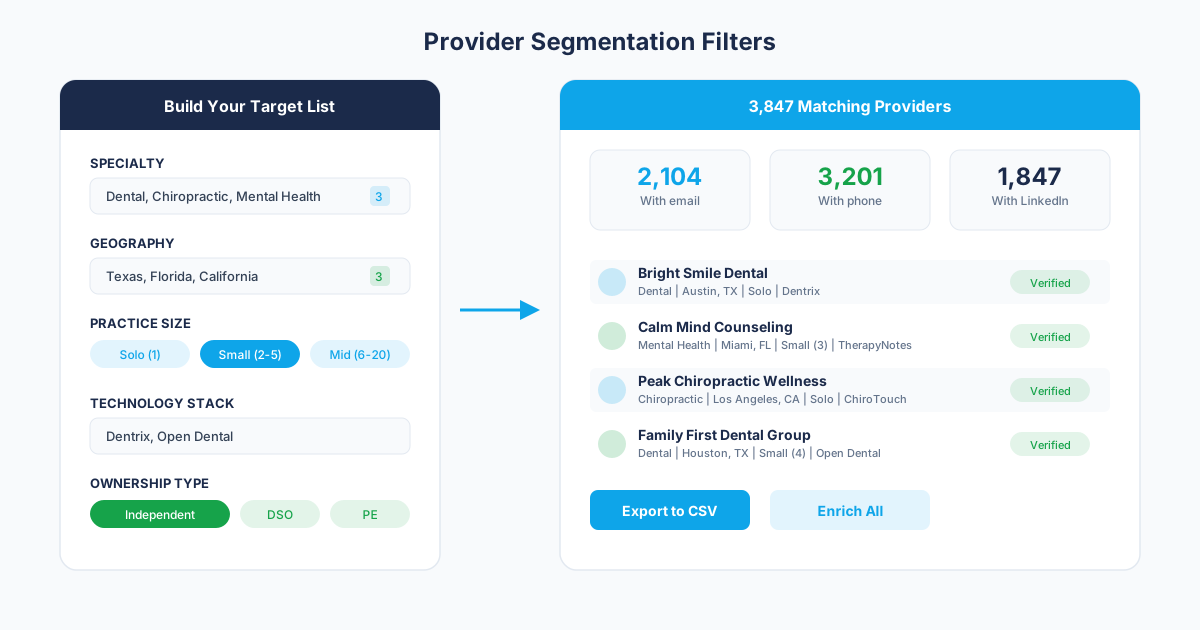
Start with NPI specialty classifications 207RC0001X (Clinical Cardiac Electrophysiology). That gives you the universe of EP-credentialed physicians, but it does not tell you who runs which lab, how much volume each one does, or what equipment they use. Those fields come from layering additional public and commercial signals: hospital cardiovascular service-line pages for director roles, Heart Rhythm Society and ACC affiliations, CMS procedure reporting and hospital quality data for volume estimates, and published clinical literature for technology adoption. No single source carries all of it. The accuracy comes from combining sources and verifying each record before it reaches a rep.
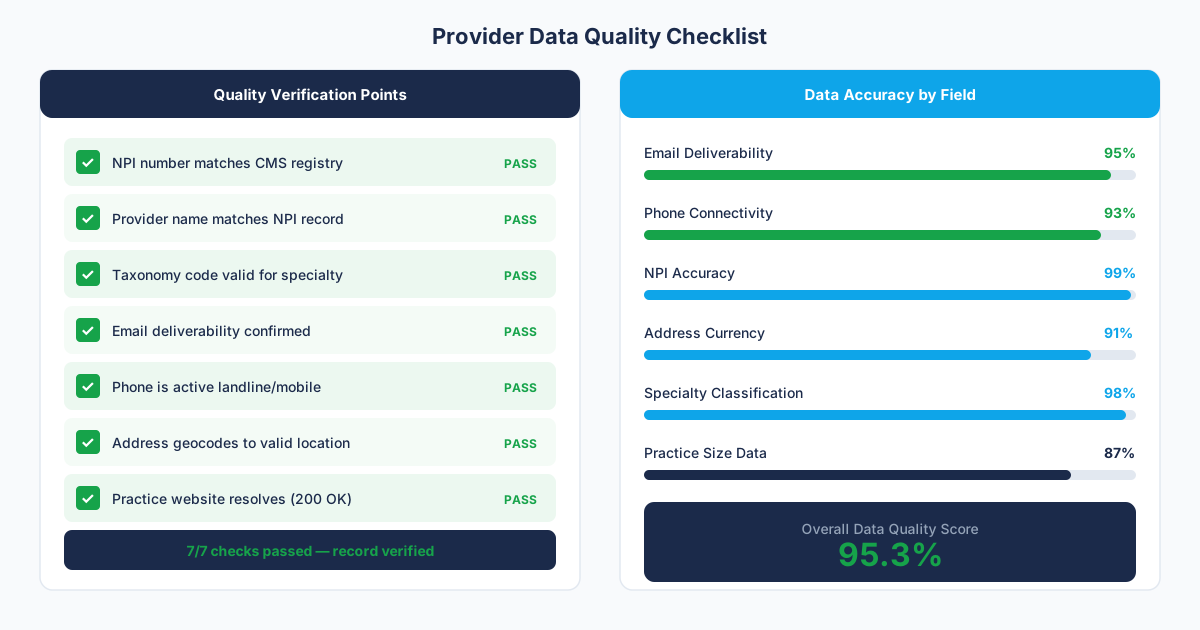
That verification step is where most purchased EP lists fall apart. A list that was accurate eighteen months ago is now wrong on a meaningful share of records because directors rotate, labs merge, and equipment gets replaced. Every record we deliver is checked against current sources at the time of delivery, sourced from public NPI registries, business listings, and commercial databases, so your reps spend their time selling instead of correcting bad data.
Common Targeting Mistakes
The most common mistake is treating all cardiologists as one segment. A general cardiologist and an electrophysiologist share a board specialty on paper but buy completely different products. The second most common mistake is targeting the physician and ignoring the lab director and procurement committee, which leaves your champion without the budget authority to actually buy. The third is using stale volume data: a lab that was low-volume two years ago may have recruited a high-volume operator since, and you will miss it if your data is frozen. For the broader cardiology framework that sits above EP, see our cardiology data guide. Get Provyx EP lab data with director identification and volume segmentation.
Frequently Asked Questions
How many electrophysiologists practice in the US?
Approximately 2,500 board-certified cardiac electrophysiologists, concentrated at hospitals with dedicated EP labs. The market is small enough to cover completely but specialized enough that untargeted cardiology outreach wastes most of your effort.
What is pulsed-field ablation?
PFA is a non-thermal ablation technology that uses electrical fields to target cardiac tissue while preserving surrounding structures such as the esophagus and phrenic nerve. It is among the fastest-growing EP procedure types, and labs that adopt it tend to be technology-forward buyers.
Who decides which EP mapping system a hospital uses?
The EP lab director drives the clinical decision, in coordination with the hospital value analysis committee, the cardiovascular service-line administrator, and supply chain. Most labs standardize on Abbott EnSite or Biosense Webster CARTO, so the renewal window is the practical selling opportunity.
What NPI specialty classifications identifies electrophysiologists?
207RC0001X (Clinical Cardiac Electrophysiology). That code defines the universe of EP-credentialed physicians, but lab-director roles, procedure volume, and equipment data require layering hospital pages, society directories, CMS reporting, and published literature on top of the NPI base.
Sources and References
Related Resources
Get the Provider Data You Need
Tell us what you're looking for. We'll build a custom list matched to your target market.
Trusted by healthcare sales teams, medical device companies, and health IT vendors across the US.