
CME Event Registration: Platforms, Compliance, and What Works
Most event platforms weren't built for CME. Credit tracking, specialty segmentation, compliance documentation, these aren't features you can bolt on. Here's what actually works.
2026-03-10
Why Generic Event Platforms Fail for CME
Continuing medical education events have requirements that standard event registration platforms don't handle. A marketing webinar and a CME dinner program look similar on the surface: both need a registration page, confirmation emails, and attendance tracking. But CME adds layers of complexity that break generic tools.
The Accreditation Council for Continuing Medical Education (ACCME) sets the standards for CME accreditation. If your event offers CME credits, you need to comply with their requirements for documentation, disclosure, content independence, and credit reporting. Your registration platform is where most of that compliance data originates.
The AMA PRA credit system defines how credits are designated and reported. Physicians need accurate credit documentation for licensure renewal, hospital credentialing, and specialty board maintenance of certification. If your registration system can't generate proper credit certificates with the right designations, your attendees leave frustrated.
Here's what CME registration needs that generic platforms don't provide:
- Credit type tracking:: AMA PRA Category 1, AAFP Prescribed, ANCC, pharmacy CE, and others. Different attendees earn different credit types based on their license and specialty. The system needs to know which credits each attendee is eligible for.
- Disclosure management:: Faculty financial disclosures, commercial support acknowledgments, and conflict of interest statements must be presented to attendees and documented. ACCME requires this before educational content begins.
- Attendance verification:: CME credits require verified attendance. The system needs to confirm who actually attended (not just who registered) and for how long. Partial credit for partial attendance is common.
- Credit certificate generation:: Post-event, each attendee needs a certificate with their name, the activity title, credit hours, credit type, accreditation statement, and date. Generating these manually for 50-200 attendees is an administrative nightmare.
- Specialty segmentation:: If your CME event covers multiple topics relevant to different specialties, you need specialty-specific registration paths so each physician sees content relevant to their practice.
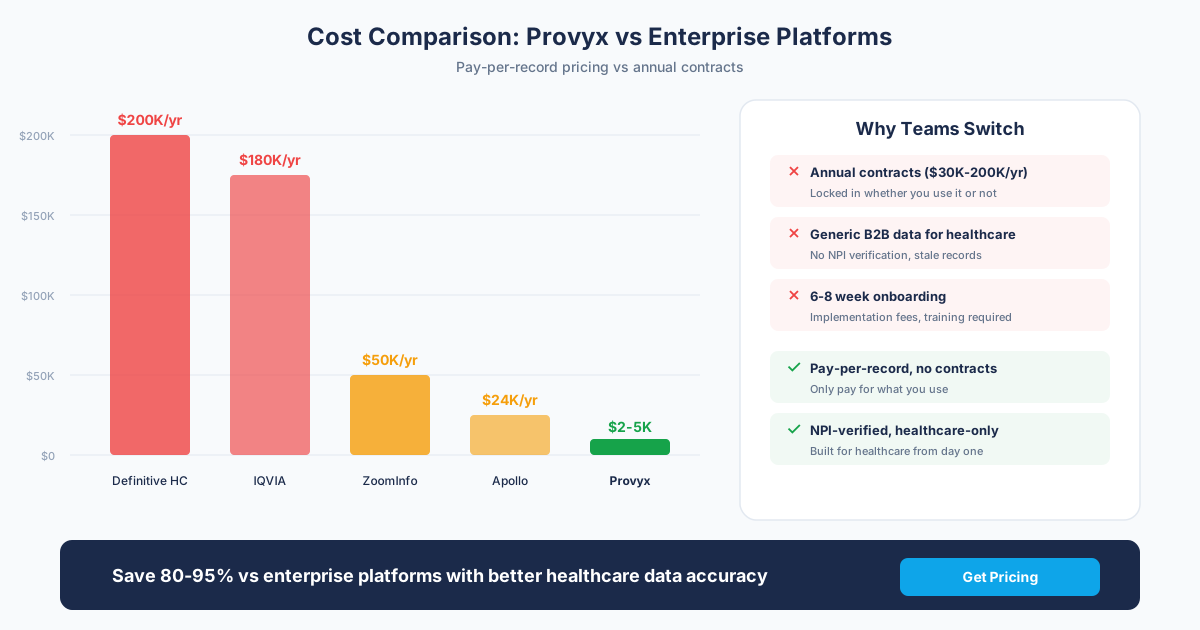
Platform Comparison
Eventbrite
What it does well: Fast setup, low cost (free for free events, 3.7% + $1.79 per ticket for paid), familiar to attendees, decent mobile experience, good SEO for event discovery.
Where it breaks for CME: No credit tracking. No disclosure management. No credit certificate generation. No specialty segmentation. No pre-fill from provider databases. Eventbrite treats every registrant the same, there's no way to route a dermatologist to derm-specific content while sending an internist to primary care content. You'd need to create separate events for each specialty, which fragments your data and complicates reporting.
When it works: Free or low-cost educational events where CME credits aren't offered. Grand rounds, journal clubs, case conferences where the organizer just needs a headcount and a registration list. If you don't need credit tracking or compliance documentation, Eventbrite is fast and cheap.
Cvent
What it does well: Enterprise-grade event management. Registration, housing, travel, session tracking, badging, mobile app, post-event surveys, and reliable reporting. Cvent handles complex multi-day conferences with hundreds of sessions and thousands of attendees.
Where it breaks for CME: Cvent can be configured for CME but it's not built for it. Credit tracking requires custom fields and manual configuration. Certificate generation needs third-party integrations or custom development. The platform is designed for corporate events and association meetings, and CME requirements are an afterthought. Setup is complex, and the learning curve is steep. Pricing is enterprise-level: $15,000-50,000+ per year depending on volume.
When it works: Large medical associations running multi-day annual meetings with 1,000+ attendees, dozens of sessions, and dedicated event management staff. If you're running a 5-day national conference with CME tracks, Cvent's session management and badging justify the cost. For a single lunch and learn or dinner series, it's overkill.
Specialty CME Platforms
Platforms like EthosCE, CME Tracker, and similar tools are purpose-built for continuing education. They handle credit tracking, certificate generation, ACCME reporting, and learning management.
What they do well: Credit type management, learner transcripts, certificate generation, ACCME and specialty board reporting, assessment and evaluation tools, joint providership support.
Where they break: Most CME platforms are learning management systems (LMS), not event marketing tools. They track credits and education but don't handle event registration marketing, specialty-specific landing pages, personalized invitations, pre-filled registration from provider databases, invitation sequence automation, or attendee targeting by geography and practice type. You end up with two systems: a CME platform for credits and a separate tool for marketing and registration.
When they work: Organizations that run ongoing CME programs (hospitals, medical schools, CME providers) and need a persistent system for tracking physician credits across multiple activities over years. Less useful for device and pharma companies running periodic promotional education events.
Custom-Built Registration with Provider Data Integration
This approach builds the registration system around your provider database. Specialty-specific landing pages, pre-filled registration from verified NPI data, credit tracking, disclosure presentation, certificate generation, and post-event reporting, all integrated with the provider data that drives your invitation targeting.
What it does well: Everything is connected. The same provider database that generates your invite list also pre-fills registration, segments by specialty, tracks attendance for credit purposes, and feeds post-event follow-up. You don't have data in three different systems. You don't manually reconcile registration lists with credit rosters.
Where the tradeoffs are: Higher upfront cost than Eventbrite. More complex initial setup than a plug-and-play platform. Requires a data partner who understands both provider data and CME compliance requirements. Not the right choice if you're running one event per year.
When it works: Device and pharma companies running 4+ events per year across multiple markets. Teams that need specialty-targeted invitations and pre-filled registration because their target physicians won't fill out generic forms. Organizations where CME credits are part of the event value proposition and credit tracking can't be an afterthought.
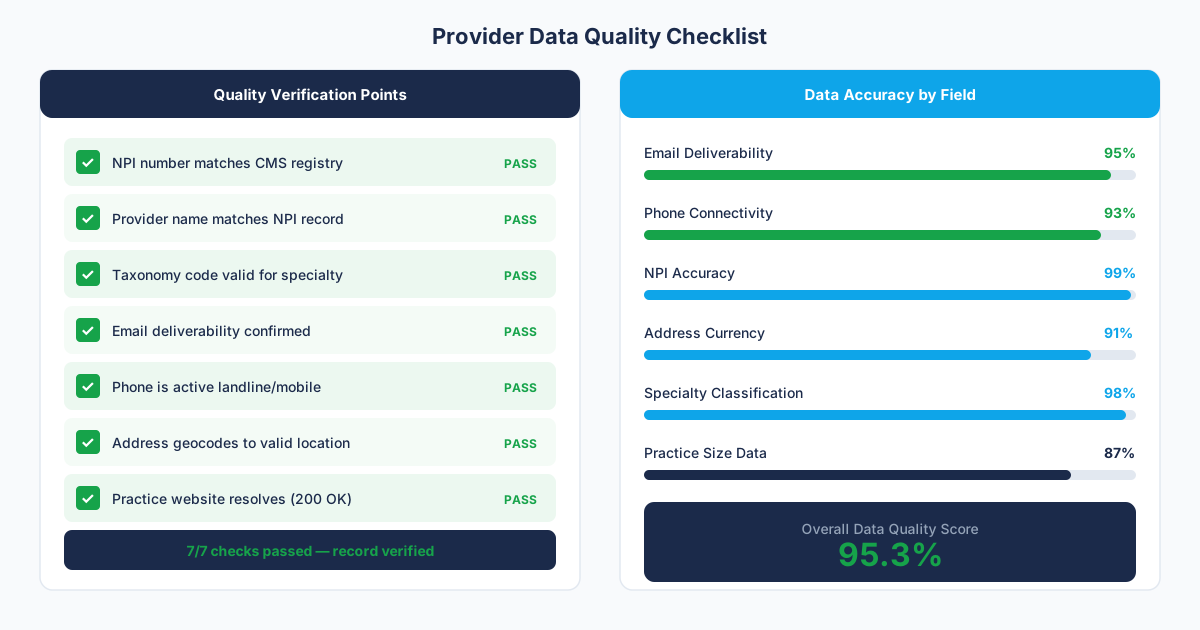
CME Compliance Checklist for Registration
Regardless of which platform you use, your CME registration system needs to handle these compliance requirements:
Pre-Event
- Accreditation statement:: Displayed on the registration page. States the accrediting body (ACCME, state medical society), the credit type (AMA PRA Category 1), and the number of credits designated.
- Learning objectives:: Listed on the registration page so physicians can assess relevance before registering.
- Faculty disclosures:: Financial relationships between speakers and commercial supporters must be disclosed. ACCME requires this before educational content is delivered, but best practice is to include it on the registration page so attendees know before they commit.
- Commercial support acknowledgment:: If a device or pharma company is providing financial support, this must be disclosed to learners.
During the Event
- Attendance verification:: Sign-in and sign-out times for credit calculation. For multi-session events, per-session tracking.
- Evaluation forms:: ACCME requires activity evaluation data. Digital collection (tablet or phone-based) during the event produces much higher completion rates than paper forms or post-event email surveys.
Post-Event
- Credit certificates:: Generated and delivered within 2-4 weeks. Each certificate includes learner name, activity title, date, location, credit type and hours, accreditation statement, and unique activity ID.
- ACCME reporting:: Activity completion data reported to ACCME within required timeframes. If you're a joint provider, your accredited partner handles this, but you need to supply the data.
- Attendee transcripts:: Physicians may request proof of attendance for credentialing or licensure. Your system should be able to produce individual learner records on demand.
Choosing the Right Approach
The decision framework is simpler than it looks:
- Running 1-2 events per year, no CME credits:: Eventbrite. It's free, fast, and good enough.
- Running 1-2 CME events per year:: Specialty CME platform for credit tracking + Eventbrite or a simple registration page for marketing. Accept that you'll have two systems and some manual reconciliation.
- Running 4+ events per year across multiple markets with CME:: Custom-built registration integrated with your provider database. The upfront investment pays back through lower per-event costs, better targeting, higher conversion, and automated compliance.
- Running a multi-day annual conference with 500+ attendees:: Cvent or a comparable enterprise platform, possibly integrated with a CME platform for credit management.
Most device and pharma field marketing teams fall into the third category. They're running enough events to justify the investment, and the combination of specialty targeting, pre-filled registration, and compliance tracking produces measurably better results than stitching together generic tools.
For a registration system built around provider data, specialty segmentation, and CME-ready compliance tracking, explore our event marketing service. For the underlying provider data that powers specialty-targeted invitations, see our conference registration best practices guide. For cost analysis of different event approaches, read our event marketing ROI guide.
Frequently Asked Questions
Can Eventbrite handle CME event registration?
Eventbrite works for basic event registration but lacks CME-specific features: no credit type tracking, no disclosure management, no certificate generation, no specialty segmentation, and no pre-fill from provider databases. It's fine for free educational events without CME credits. For accredited CME activities, you'll need either a specialty CME platform, a custom build, or you'll spend significant time on manual credit tracking and certificate creation.
What does ACCME require for CME event registration?
ACCME requires that CME registration and delivery include: an accreditation statement identifying the accredited provider and credit type, learning objectives, faculty financial disclosure statements, commercial support acknowledgment (if applicable), verified attendance for credit calculation, learner evaluation collection, and timely credit certificate delivery. Your registration system needs to capture and display these elements at the appropriate points, disclosures before content, evaluation during or immediately after, certificates within 2-4 weeks.
How much does a CME event registration platform cost?
Eventbrite is free for free events, 3.7% + $1.79 per paid registration. Specialty CME platforms (EthosCE, CME Tracker) typically run $5,000-20,000 per year depending on activity volume. Cvent starts at $15,000-50,000+ per year for enterprise plans. Custom-built registration integrated with provider data costs $5,000-8,000 for initial setup with $1,500-2,500 per additional city or event. For teams running 4+ events per year, the custom approach is typically cheaper per event than Cvent and more capable than Eventbrite.
Sources and References
Related Resources
Get the Provider Data You Need
Tell us what you're looking for. We'll build a custom list matched to your target market.
Trusted by healthcare sales teams, medical device companies, and health IT vendors across the US.